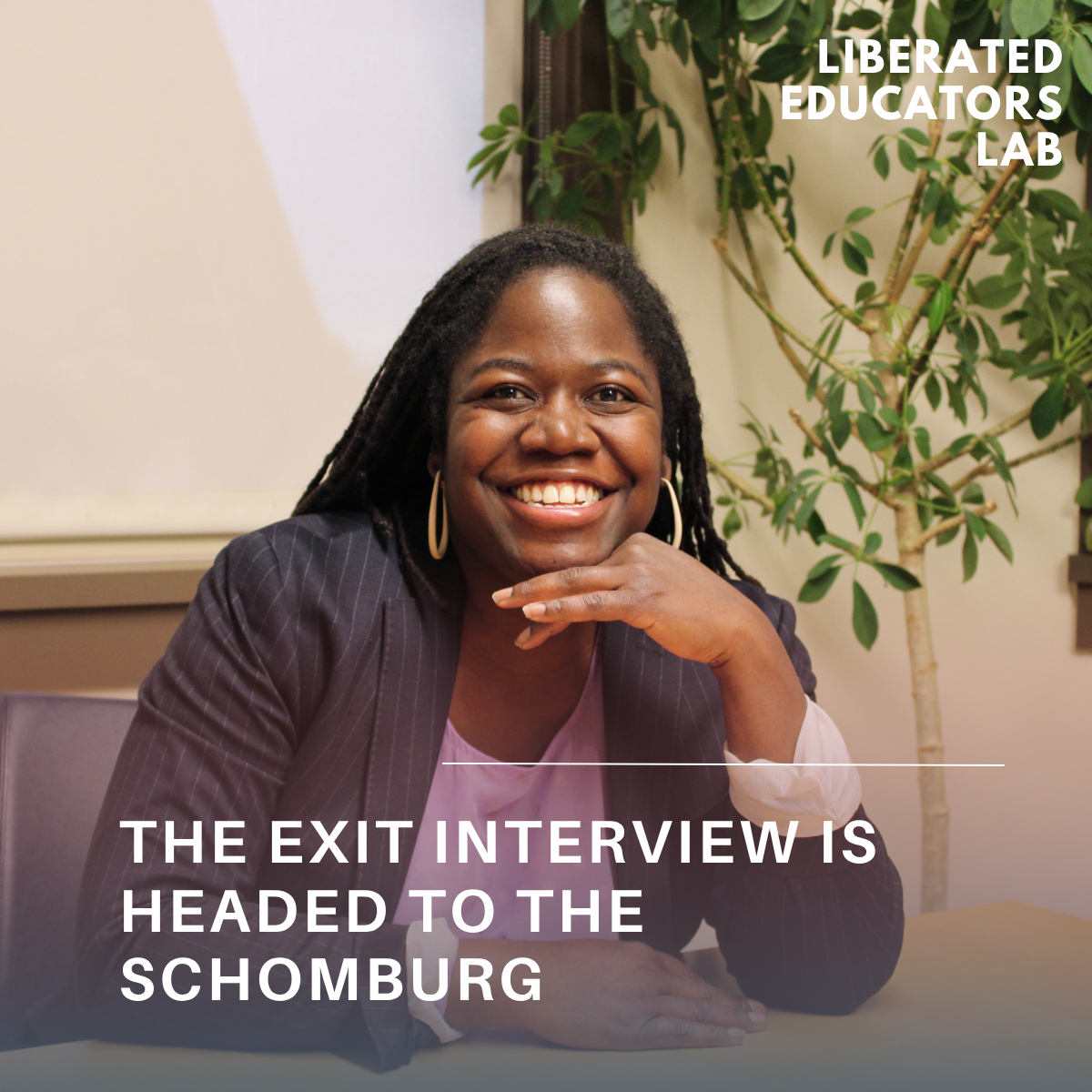
In Front of the Classroom to Behind the Camera with Stacie McClam

Stacie McClam went from being bused to "better" schools as a Black child in LA, to teaching across DC, Japan, Denver, and Kuwait, and what she found everywhere was the same broken system dressed up differently.
She became the "fix-up lady," repeatedly hired mid-year to salvage classrooms other teachers fled. She watched Black and Latino kids get pushed through grades without learning to read, saw phonics stripped from US curricula that worked brilliantly in Kuwait, and fought systems that celebrated bare minimum as excellence. The toll was real: shingles, hair loss, depression, and a PTSD diagnosis when it was all over.
So she quit. Both teaching and law were another system she found too biased to use. Instead, Stacie picked up a camera. Her film production company, School Dismissed, is making a trilogy of narrative fiction films tackling AI surveillance, education inequity, and what Black students deserve. Her first film, Mr. Advocate, premieres this month.
Her message is clear: the system isn't failing by accident. And she's done explaining that in words nobody reads now; she's showing it on screen.

 RSS Feed
 Apple Podcasts
 Spotify
 Amazon Music
 iHeartRadio
 PlayerFM
 Deezer
 Key Takeaways
- Stacie McClam's journey from being bused to 'better' schools in Los Angeles to teaching internationally revealed that the educational system is universally broken beneath different surface-level facades.
- Repeatedly brought in as a mid-year 'fix-up lady' to salvage abandoned classrooms, Stacie witnessed systemic failures firsthand, including students pushed through grades without learning to read.
- The chronic stress of navigating toxic school environments took a severe physical and mental toll on Stacie, resulting in shingles, hair loss, depression, and a PTSD diagnosis.
- Finding both teaching and law too biased to enact real change, Stacie pivoted to filmmaking and founded School Dismissed, a production company dedicated to exposing educational inequity through narrative fiction.
- Stacie's debut film, Mr. Advocate, tackles critical issues like AI surveillance and systemic education inequities, proving that visual storytelling is a powerful tool for truth-telling and resistance.
The Exit Interview – Episode: "In Front of the Classroom to Behind the Camera with Stacie McClam"
Episode Summary
Dr. Asia sits down with Stacie McClam, a former educator turned filmmaker, whose winding path through teaching took her from Washington, D.C. to Japan, Denver, Kuwait, and back to Los Angeles — before landing behind the camera. With candor and depth, Stacie shares the systemic frustrations, personal toll, and unexpected pivot that led her to use film as a vehicle for education advocacy.
What We Cover
- Stacie's early recognition of educational inequity as a child being bused out of her all-Black neighborhood in Carson, CA
- How her grandmother's legacy as a teacher in segregated Virginia shaped her reverence for the profession
- Her journey from Howard University (graduate credential program) into the classroom — often hired mid-year to "fix" classrooms abandoned by previous teachers
- Teaching experiences in D.C., Japan, Denver, Kuwait, and South Los Angeles — and the stark contrasts she witnessed between education systems
- Why she went to law school (and ultimately walked away from practicing law)
- The phonics debate: what she observed in Kuwait's schools and why she believes its absence in U.S. classrooms is not accidental
- The cumulative physical and mental health toll of teaching — shingles, hair loss, depression, and a PTSD diagnosis upon leaving the profession
- Her advice for parents: show up unannounced, build real relationships with teachers and school secretaries, and ask questions beyond grades
- Why she chose film as her advocacy medium — and how her production company, School Dismissed, was born
- Her upcoming feature film "Mr. Advocate" — a narrative fiction film about Black male educators navigating AI, school politics, and parental advocacy, premiering at the Brave Maker Film Festival in Redwood City, CA
- Her distribution plan: licensing the film to school districts and HBCUs as a professional development tool with facilitated discussions
Educators Shouted Out
- Mrs. Jackson – Stacie's high school English teacher, whose high standards and no-nonsense approach helped Stacie find her voice as a writer
- Dr. Pedro Noguera – Professor at UC Berkeley, whose course Race and Culture in the School System gave Stacie the language and framework to understand her lived experiences
- Professor Catherine Smith – Law professor who opened her office hours to all students and gave Stacie the individualized support she needed to master legal reasoning
What Does It Mean to Be Well? Stacie shares her current wellness practices: weekly therapy, walking in nature (especially a nearby regional park), yoga at a Black woman-owned studio, and the ongoing work of learning to say no and set boundaries.
Connect with Stacie & Her Work
- Film Production Company: School Dismissed
- Feature Film: Mr. Advocate (film festival run underway; August 15th premiere at a local movie theater; distribution deal signed)
- Reach out through the show notes on the Exit Interview website for more information
If this episode resonated with you, share it with a Black educator in your life. And as Dr. Asia always says — drink your water, get to therapy, and tell your therapist the truth.
First of all.... have you signed up for our newsletter, Black Educators, Be Well? Why wait?
Amidst all the conversations about recruiting Black educators, where are the discussions about retention? The Exit Interview podcast was created to elevate the stories of Black educators who have been pushed out of the classroom and central office while experiencing racism-related stress and racial battle fatigue.
The Exit Interview Podcast is for current and former Black educators. It is also for school districts, teachers' unions, families, and others interested in better understanding the challenges of retaining Black people in education.
Please enjoy the episode.
Peace out,
Dr. Asia Lyons
Frequently Asked Questions
Who is Stacie McClam?
Stacie McClam is a former educator who taught across Washington D.C., Japan, Denver, and Kuwait before leaving the profession to become a filmmaker and founder of the production company School Dismissed.
What is the film production company School Dismissed?
School Dismissed is a film production company founded by Stacie McClam that is creating a trilogy of narrative fiction films tackling AI surveillance, education inequity, and what Black students truly deserve.
What health impacts did Stacie McClam experience as a teacher?
Due to the extreme toll of navigating broken and toxic educational systems, Stacie suffered from shingles, hair loss, depression, and ultimately received a PTSD diagnosis after leaving the profession.
stacey mcclam
dr--asia-lyons--she-her-_1_07-08-2026_111227: [00:00:00] All right, folks. Welcome back to the Exit Interview, a podcast for Black educators with me, your host, Dr. Asia. So glad that you all listened to me again. we're almost at 100 episodes, folks, and I'm just so honored to be able to share stories with you all that come from Black educators all over the country. And of course, I have another fire episode for you. We have a filmmaker in our presence today, folks, and I'm excited to learn more about that. But I'm jumping ahead as usual. Welcome to our show, Stacey McClamb. How are you today?
stacie-mcclam_1_07-08-2026_101227: I'm doing well, thank you. How are you?
dr--asia-lyons--she-her-_1_07-08-2026_111227: I can't complain. It's beautiful here. I'm well rested. I'm well moisturized. I was putting on lotion, of course, before we got on, um, on this camera. But I'm doing really well, and I'm excited to have you here. I've been [00:01:00] following you on LinkedIn and your journey, and I'm so glad... I think I reached out to you or you re- reached out to me.
Either way, I'm glad to have you on the show. Um, you're doing well. And, and where are you coming from?
stacie-mcclam_1_07-08-2026_101227: I am in the San Francisco Bay Area
dr--asia-lyons--she-her-_1_07-08-2026_111227: Yeah, yeah, beautiful California. So, and we'll talk about that too because lots of things are gonna be on this show, but let's go ahead and get started. Tell us a little bit about yourself
stacie-mcclam_1_07-08-2026_101227: Yes. So I am from the Los Angeles area, small city called Carson in Los Angeles County, and I am a former teacher, of course. I taught across the United States and abroad. So mostly taught first grade. The highest grade I taught was fourth. And yeah, I've had a journey from teaching, um, to law school and now a filmmaker.
Not planned.
dr--asia-lyons--she-her-_1_07-08-2026_111227: Yeah, that's a lot. That's a whole thing, right? I think you might be one of the first folk, folks who've gone to law school who've come on the [00:02:00] show. So, well, let's just go ahead and jump in. So tell us about your journey into education. How did you know that education was for you?
stacie-mcclam_1_07-08-2026_101227: Yes. Well, I was bused to schools outside of my neighborhood from first grade through high school, so very early on I knew that schools were different. Um, as a little girl, my parents didn't have to tell me why I was being bused. I figured it out 'cause all the kids in the neighborhood, you know, were less than five minutes away and I'm like, "How come it's dark outside?
I'm up getting dressed and no one else is... Everybody else is asleep in the neighborhood. That's weird. I'm... You know, how come they're not taking the bus with me? Why am I not going down the street?" So I, my neighborhood was an, um, all Black neighborhood, and the schools that I was bused to were white and Asian mostly.
I was in the magnet program, the gifted program. And so yeah, I was just like, "Oh, okay. So the gifted program, that's where the white and Asian students are. Interesting." I was [00:03:00] six years old, I'm figuring this out. And then I had experiences, um, negative experiences growing up in the school system from tracking in middle school and high school, a high school counselor who wouldn't let me take AP classes.
Uh, my grandmother was a teacher in segregated Virginia. I was very close to her, and my mom used to tell me when I was little that her family was respected for the simple fact that her mother was a teacher, my grandmother. So I always respected teachers, put them on a pedestal. Um, the pictures that I saw of my grandmother, it looked like they were going to church, but they came to school with the kitten heels, the long matching skirts, you know, the,
dr--asia-lyons--she-her-_1_07-08-2026_111227: Yeah
stacie-mcclam_1_07-08-2026_101227: it?
The matching suits, hats, gloves, and they taught elementary. I was like, "They, they're going to school like that?" But like in my little girl brain, and maybe it wasn't really like that, but because I wasn't there, I'm just going off of [00:04:00] what my mom told me how these teachers presented themselves. I just thought teachers were everything.
And so based on bas- hearing that from my grandmother and my mom and then seeing the realities, I'm being bused, I'm seeing these tracking issues in schools, I'm like, that doesn't add up to what my grandmother was, you know, s- talking about teaching was such a wonderful profession. She's building the community and all this.
It didn't make sense, so I w- I wanted to become a teacher to try to bridge the gap, I guess.
dr--asia-lyons--she-her-_1_07-08-2026_111227: Hmm. Thank you. And I think that you're-- uh, it's a couple folks who've come on who've had a similar experience where they've noticed inequities really young, either because they were bused or somebody said something to them or their sibling experienced some type of tracking and they're like, "Well, I have to s-support, like solving this problem." So you went to school right away and got your bachelor's in education or how did that go?
stacie-mcclam_1_07-08-2026_101227: Um, my major was social welfare [00:05:00] because my university didn't have, um, an education major. They only had a minor, which I did minor in, so I figured the closest would be social welfare or sociology. So I just chose social welfare, um, but never went into social work. But actually teaching d- does involve social work
dr--asia-lyons--she-her-_1_07-08-2026_111227: say that is 100% social work. That's all it is some days.
stacie-mcclam_1_07-08-2026_101227: Right
dr--asia-lyons--she-her-_1_07-08-2026_111227: so tell us about your, your time coming out. What grades did you teach? What was that experience like? Where were you living at that time?
stacie-mcclam_1_07-08-2026_101227: Yes. So I started, um, I went to Howard for my, um, for graduate school to get my teaching credential, so that was in DC, and started teaching there. During my student teaching, we had... We were at schools that were in the, where the diplomats send their kids, so these are really good public schools. And then when I graduated, I was placed in a school in the middle of the [00:06:00] school year in March because a teacher left.
So, you know, when there's openings in the middle of the- Mm-hmm. Yeah. And most, all, three out of the four experiences that I've had teaching have been in the middle of the school year
dr--asia-lyons--she-her-_1_07-08-2026_111227: Mm-hmm.
stacie-mcclam_1_07-08-2026_101227: for different personal and professional reasons. That's how it worked out. So I got good at being the fix-up lady. Um, quickly being able to reestablish a classroom culture that had been damaged.
At one school, I was teacher number 20, literally, is what a parent told me.
dr--asia-lyons--she-her-_1_07-08-2026_111227: Wow
stacie-mcclam_1_07-08-2026_101227: But that took a toll on me. Um, and I don't know if as a Black educator, I just naturally did it, did, did what needed to be done, and I wasn't realizing the toll it was taking on me over the years, but it did. And yeah, it's just a high teacher turnover at the schools, the type of schools that I taught at
dr--asia-lyons--she-her-_1_07-08-2026_111227: Yeah. I mean, I know I just heard you say the 20th teacher in a year, [00:07:00] and, um, I just think about that, the students were feeling, how the kids were feeling, how the, the, the community itself, the school, like what the environment was like. But telling us about, you started in March at a particular school.
Tell us about that journey. Were you able to get support from folks there? How long were you there for? What did you teach?
stacie-mcclam_1_07-08-2026_101227: That was first grade, and I taught, um... Did I get support? Yes, I did. I did. They had a really good veteran teacher who was assigned to me. Um, but it was still hard.
dr--asia-lyons--she-her-_1_07-08-2026_111227: Yeah
stacie-mcclam_1_07-08-2026_101227: was supportive. It was just a tough school. At this elementary school, there was a, a security guard. So this was a DC, um, northeast pre-gentrification near Gallaudet University.
So it was- Mm-hmm ... it was a lot going on in an active neighborhood. And, um, it wasn't-- I, I don't even know. It's not even the [00:08:00] kids, it's the s- the system, but just things shouldn't have happened, um, that happened at the school and, and we broke the kids' trust. We made the culture not, uh, productive for them and healthy and happy for children, even at, though even with Black administration
dr--asia-lyons--she-her-_1_07-08-2026_111227: Yeah. Tell
stacie-mcclam_1_07-08-2026_101227: So
dr--asia-lyons--she-her-_1_07-08-2026_111227: that
stacie-mcclam_1_07-08-2026_101227: Um, I don't know why it hap- how it happens specifically. That's why I said it's just systemic 'cause I've had some good principals who really tried. They do the best that they can, but they're still in a system. So it's still certain things they just can't do, and that bothered me. I think I felt like I was fighting myself because I knew people would say, "Oh, you're a great teacher.
You're so good." [00:09:00] But I knew I could do more and the students deserve more, but I couldn't do it. I couldn't do more because of systems outside of my control, no matter how, how hard I worked. N- it couldn't... You get what I'm saying? 'Cause of the... I know you know what I'm talking about, but the systems were in place where you can't.
You're-- It's designed to keep students, um, in, uh, these schools mostly that I taught were, um, predominantly Black students to not be successful, so
dr--asia-lyons--she-her-_1_07-08-2026_111227: Mm-hmm. Yeah. Yeah, I get what you're saying. Yeah, and you know, and like you just said, you know that there's way more that you can do. You know that there's way more you can expose your students to. There's more resources, there's more everything. and families are probably, like you said, super appreciative that you were able to do what you did and in, in their eyes it's like, oh my-- maybe I'm filling in some blanks here, like, oh my gosh, you're, you know, turn the school around, you turn the classroom around, you're creating miracles.
[00:10:00] Peop- the kids, the culture is great, everything feels good. But you had yourself experienced what it looks like, and like you said, these schools that had more resources in your own childhood, and then to say like, "Uh, this is, this is bare minimum as to what kids deserve and what's out there for kids to have."
Yeah. That's gotta be really tough.
stacie-mcclam_1_07-08-2026_101227: It was, and it, it was so, I won't say bad, but just maybe I didn't feel fulfilled that I left and went to teach in Japan. So I finished out that year, taught another year, then I was like, I can't... In my mind, I was like, "I can't do the US."
dr--asia-lyons--she-her-_1_07-08-2026_111227: Yeah
stacie-mcclam_1_07-08-2026_101227: just one school, one location, I was just like, I know this is nationwide.
So I went to Japan and taught. When I was in Japan, I was like, "I don't wanna go back to the US and teach. What else can I do?" I was like, maybe I can use the law to impact education. Um, went to [00:11:00] law school in Denver,
dr--asia-lyons--she-her-_1_07-08-2026_111227: Mm-hmm.
stacie-mcclam_1_07-08-2026_101227: graduated, and then while I was waiting for my bar results, I said, let me, you know, go back to teaching.
Got my Colorado certification, and I was placed in the middle of the school year about, uh, Halloween because a teacher had left. That was the opening. And I remember when I submitted the application, it was red and it's, it was a high needs, I forgot the exact term they used. But again, that's, that lets me know, like, why do we say that?
Why is why? Why? Why are you telling me? And I think we got a certain percent more because, uh, of the, the concerns. But in Denver, that environment, it doesn't even look like it would be conducive to the kind of mental health issues and just trauma that was there. And I'm like, how, where did this come from?
It, this neighborhood does not look like that. And not that there's a look or [00:12:00] environmental racism type things, but it just... I was so shocked at Denver. I had no idea. Then I went to teach in Kuwait 'cause I was like,
dr--asia-lyons--she-her-_1_07-08-2026_111227: on. You
stacie-mcclam_1_07-08-2026_101227: oh.
dr--asia-lyons--she-her-_1_07-08-2026_111227: you jumping ahead of me.
stacie-mcclam_1_07-08-2026_101227: Sorry.
dr--asia-lyons--she-her-_1_07-08-2026_111227: get the pause in because I wanna s- I wanna start talk back up a little bit about Japan. because you said something really interesting. You said, "I was still thinking about the education system in the United States, and like certainly has to be something done about this." What would make-- You didn't stay there for long, or you still, you, you didn't stay long enough. Obviously, you moved. When you were in Japan, what did you notice about their education system that you felt like maybe could work in the United States or could not work in the United States based on, like you said, environment, based on systems and things like that? Uh, what was it? And on top of that, what made you come back? So those two questions, like what did you see, what did you notice, and then what made you come back?
stacie-mcclam_1_07-08-2026_101227: Yeah, [00:13:00] so Japan was different because I was at a private English language school,
dr--asia-lyons--she-her-_1_07-08-2026_111227: Mm-hmm. Mm-hmm
stacie-mcclam_1_07-08-2026_101227: so not a public school. Or, you know, uh, like in Kuwait I was actually, uh, had my own class, but in Japan I had maybe 30 or more classes ranging from children to adults, and I was just talking, just conversation. They already know grammar very well, more than us.
For English, they just need practice talking. So I had three-year-olds, I had 80-year-olds, different classes based on their age, of course. But, um, even at this private language school, just the respect for the teachers of, of course, um, just the profession. Um, yeah, it- it's just embedded in the culture, even the name Sensei is, yeah, very respectful
dr--asia-lyons--she-her-_1_07-08-2026_111227: so why come back? [00:14:00] What made you decide it was time to come back?
stacie-mcclam_1_07-08-2026_101227: Uh, well, one, I did get stalked, so I had to leave after about 10 months. The police wouldn't help me. It was a mess. Um, they tried to, they s- tried to move me to another school, but I felt like the s- stalkers knew where I lived. They did, so even if I changed schools, that didn't help. I would need to change apartments.
So, um, and yeah, my, my time there was served. I didn't wanna s- stay there any longer. And my n- my intention was never to stay there. You know, I wanted to come back to the US. I just, I guess, was trying to reset when I left
dr--asia-lyons--she-her-_1_07-08-2026_111227: Sure
stacie-mcclam_1_07-08-2026_101227: and went there. So, um, yeah, I guess it was just time to come back.
dr--asia-lyons--she-her-_1_07-08-2026_111227: I mean, if I was getting stalked by somebody, I think it would be time for me to come back too, uh, to be fair. And while this is happening, and I'm just, I-- it's just, you just said so much in this last couple sentences, I just wanna back up. So while this is happening, you're moving to [00:15:00] Japan in, in the starting the school year in March and others in DC. What was the c- conversation that you had with your family or community about what was happening? What did they say about you moving on the other side of the globe to continue teaching? Did you feel like you received support? Were people skeptical? What was that conversation like?
stacie-mcclam_1_07-08-2026_101227: Not skeptical. Um, both of my parents were very supportive and open even though they never traveled like that. They just kind of, "Oh, you know, that's what Stacy does. She grew up differently than us." Um, my city that I grew up in had a sister exch- high schools exchange program
dr--asia-lyons--she-her-_1_07-08-2026_111227: Mm-hmm.
stacie-mcclam_1_07-08-2026_101227: with Japan as their sister city.
So I had gone in 10th grade through the city. The city took seven students every other year. And so I, you know, met people there my age. So then when I went to Japan, I requested to be near my Japanese friend's house. So I was, I [00:16:00] had support from, you know, her and her family when I was there. And then, um, so my family was used to me...
Not used to me, but I had already been to Japan, so it wasn't out of the ordinary for them. So they were fine. I don't think they really, they don't, um, understand what my struggles were throughout my, any of my journey, which is why I'm making films, because I would try to explain it to pe- people who weren't educators.
I would try to explain it to them. They didn't understand. They're just like, "Oh, they're kids. They're first grade. They're cute." I'm like, "It's not, it's not even like... You have no idea. You have no idea." School politics, all the, the stuff that teachers go through. Mm-mm.
dr--asia-lyons--she-her-_1_07-08-2026_111227: It's
stacie-mcclam_1_07-08-2026_101227: didn't understand. Yes
dr--asia-lyons--she-her-_1_07-08-2026_111227: and, and just thinking about this too, so you come back you move to Denver. Is that correct? Why Denver?
stacie-mcclam_1_07-08-2026_101227: Uh, that's where I was [00:17:00] accepted to law school
dr--asia-lyons--she-her-_1_07-08-2026_111227: But why, why Apply? Like of all the places
stacie-mcclam_1_07-08-2026_101227: Oh, um, I mean, I applied to many and wasn't accepted to many, so that was one of the ones that I was accepted to. So I was like, "Okay."
dr--asia-lyons--she-her-_1_07-08-2026_111227: I
stacie-mcclam_1_07-08-2026_101227: Yeah
dr--asia-lyons--she-her-_1_07-08-2026_111227: that's, that's the right answer. I mean, if why not? So tell us about your experience you started going into it. Tell us about the experience that you had teaching in the, I'm assuming Denver Public School systems because there's lots of school systems here, but tell us a little bit about the, that experience.
stacie-mcclam_1_07-08-2026_101227: Yes. So the teacher, like I said, left. Um, I included in my book, um, that I have that I wrote when I left teaching, experiences that happened where, uh, I walked in and the kids were running circles around the classroom like it was a track field.
Um, I've seen, uh... What's the code they call on students or any mental health, uh, [00:18:00] 5-0?
No. Whatever. I've seen people then have to call that code for a student in distress. I've had a first grader pick up one of those big, those old heavy computers
dr--asia-lyons--she-her-_1_07-08-2026_111227: Mm-hmm.
stacie-mcclam_1_07-08-2026_101227: the table, turn and drop it.
dr--asia-lyons--she-her-_1_07-08-2026_111227: Hmm.
stacie-mcclam_1_07-08-2026_101227: Um, just it was unreal. And I thought DC, I won't say bad, I don't know how, uh, what other, like, politically correct term to use.
Uh, but each experience was different, but they were still very traumatizing and just things that I did not expect,
dr--asia-lyons--she-her-_1_07-08-2026_111227: Mm-hmm.
stacie-mcclam_1_07-08-2026_101227: um, that w- were happening at elementary schools, first grade. Like why is this all happening? And it's not to blame the kids or the parents or to say anything, um, to pathologize the neighborhood.
It, it's the kids can bring, I feel, whatever they want to the school, but if the school culture isn't breeds that negativity, [00:19:00] it's you're gonna have a different output. You're gonna have fights at the school constantly, and I've been at schools where there are constant fights. But some schools, if the school culture is good, whatever the kids bring to the school is gonna be positive.
Like the negativity gets shut down because the school culture is so positive, but that's not...
dr--asia-lyons--she-her-_1_07-08-2026_111227: yeah
stacie-mcclam_1_07-08-2026_101227: Yeah, systemically that can happen. When you have teachers leaving like that or being fired, there's reasons why.
dr--asia-lyons--she-her-_1_07-08-2026_111227: Yeah.
stacie-mcclam_1_07-08-2026_101227: Mm-hmm.
dr--asia-lyons--she-her-_1_07-08-2026_111227: Yeah.
stacie-mcclam_1_07-08-2026_101227: So your question... Sorry, I forgot your question.
dr--asia-lyons--she-her-_1_07-08-2026_111227: Go ahead. I was just asking when you got to Denver, what was that experience like for you teaching and what did you notice? And you're, you're talking a lot about that. Um, and you know, like you say, f- young children running around the classroom, being hired in the middle of the school year again, right?
And so there's that lack of trust with the kids. And at that age, they're so young, they're maybe [00:20:00] processing it as abandonment, right? And so that trying to build that trust up again with another teacher again, and the family trying to build up trust again with another teacher can be so challenging. So you were just talking about that. Um, you have any... And, and said that, um, you had some support while you were there. Did you have mentorship and what was that like?
stacie-mcclam_1_07-08-2026_101227: Yes, they did have a veteran teacher at that school help me. So she would come in, um, and yeah, even offered to help organize the teacher closet because that was a mess. Um, so she was helpful too, but, uh, it was still stressful. The principal was very helpful. The assistant principal was there. Um, they bought me a bunch of those computer games to-- because at one point we just had to, uh, quiet, get, get not under control, I don't know how to say it, but get some order
dr--asia-lyons--she-her-_1_07-08-2026_111227: Yeah.
stacie-mcclam_1_07-08-2026_101227: a good way.
dr--asia-lyons--she-her-_1_07-08-2026_111227: Yeah[00:21:00]
stacie-mcclam_1_07-08-2026_101227: we just needed computer games, the handheld ones, so the principal bought a bunch of those. We would have pizza parties. We were doing these things, incentives quickly to try to help establish a positive school culture. Um, so even with support though, it was still a lot, um, a lot on me, very taxing. Um, I did it because it was a job.
Um, and again, I was younger. This was probably 20 years ago, so I didn't know. You know, I'm just doing what I think I'm supposed to, just doing my job
dr--asia-lyons--she-her-_1_07-08-2026_111227: Yeah, of course
stacie-mcclam_1_07-08-2026_101227: you know, and do care. So, um, I heard in your previous episode that, uh, Dr. Jameda Horton, the principal said she cared too much.
dr--asia-lyons--she-her-_1_07-08-2026_111227: Yeah
stacie-mcclam_1_07-08-2026_101227: did I care too much?
But Denver, uh, so while in DC the school that I taught at was all Black students and staff, in DC, [00:22:00] uh, it was mixed, so Black and Latino, but then we also had a lot of Somali immigrant children. Um, yeah, those were the three. I didn't have many
dr--asia-lyons--she-her-_1_07-08-2026_111227: In DC or
stacie-mcclam_1_07-08-2026_101227: Asian in Denver.
dr--asia-lyons--she-her-_1_07-08-2026_111227: Okay. Yeah,
stacie-mcclam_1_07-08-2026_101227: Yeah. Yep. And yeah, there were things, this is a side note, but the Somali immigrant students were, uh, very high readers.
dr--asia-lyons--she-her-_1_07-08-2026_111227: Mm-hmm.
stacie-mcclam_1_07-08-2026_101227: I, I don't know how that happened. I'd like someone to do the, an anthropological study. But even being, having been in refugee camps, and polite, respectful, and I remember one of my African American students could not read, and it was time for summer, for the summer, summer school, and he didn't qualify. And I was like, "Don't all students get to go to summer school if they want?
Like, what do you mean he doesn't qualify?" But the English language learners [00:23:00] were able to, were qualified, so the Somali students who could already read way above and past second grade level got to go to the summer school, but the Black student who needed it wasn't allowed. So I just thought that was ... I don't know how their ELL works now.
Like I said, this was years ago, but I was just like, okay. And you know, me trying to advocate, I didn't. Uh, just so many factors and things going on. But yeah, that was unfortunate
dr--asia-lyons--she-her-_1_07-08-2026_111227: Yeah. Can you tell me while all this was happening, you were having a lot of things happen in the classroom, a lot of changes. You just moved back from Japan where you experienced some trauma, obviously from being stalked. were, how were you taking care of yourself, if at all, during this time and making sure that you were well? And I ask that question because, you know, at the end of the, the episode we'll talk about w- how you take care of yourself now, but I'd be curious to know 'cause you did, you did a lot of moving in a short amount of time. What [00:24:00] was care, what did it look like at that time in your career?
stacie-mcclam_1_07-08-2026_101227: It was nonexistent. I didn't know anything about care, self-care, wellness. I didn't know that was a thing. Yeah, I, I could tell you what happened when I left teaching and what I did. Uh, like you said, we'll talk about what I do now. I didn't know about grief, moving from different places, the kind of grief that would...
I didn't know that was a thing or a term that could be used for jobs.
dr--asia-lyons--she-her-_1_07-08-2026_111227: Mm-hmm.
stacie-mcclam_1_07-08-2026_101227: didn't know
dr--asia-lyons--she-her-_1_07-08-2026_111227: Yeah, we've come a long way in our talk, communication and talking about community care and self-care and grief and workplace trauma and things like that. Um, and like you said, that was 20 years ago. So, so for some, so many of us, it's like 20 years too late, and for some of us, there's still obviously time to heal and to be well. left this particular school, how long were you there for?
stacie-mcclam_1_07-08-2026_101227: Um, three years.
dr--asia-lyons--she-her-_1_07-08-2026_111227: Okay.
stacie-mcclam_1_07-08-2026_101227: years.
dr--asia-lyons--she-her-_1_07-08-2026_111227: that, where did you go? Did, did you finish law school? You [00:25:00] sound like you were in school at the same time
stacie-mcclam_1_07-08-2026_101227: no, I went to law school first, graduated, then taught in Denver. Then, yeah, I went to Kuwait 'cause I was like, I don't... 'Cause I was like, "I don't know what to do." I felt like I-- the education system wasn't working for me. I felt the legal system wasn't gonna work for me because I knew I didn't wanna practice law.
Once I went to law school, I was like, "Okay, the law is biased. They're not trying to change anything." I can't, for me personally, can't use or don't want to try to use the law to impact education. There's a lot of great education attorneys out there. It just wasn't for me, the actual practice of law, no. But I do appreciate the skills, um, and perspectives that I gained while in law school, and I can use it now in my filmmaking, but mm-mm.
So I didn't-- I was like, "I don't know what to do with my life." Like, I kind of felt like I wasted time. I'm like, "What am I doing?" So I was like, "Well, let me go abroad and teach again."[00:26:00]
dr--asia-lyons--she-her-_1_07-08-2026_111227: I mean, what a sobering... We'll talk about Kuwait, but what a sobering experience to, like you just said, go into law thinking you're gonna be able to do, you know, "Here's some goals I have set out for myself," and then realize, like you just said, the law is biased. And, and so I'm glad you gave that context because I imagined that you had finished work at this school and then went to law school, and you said, "No, I was teaching afterwards."
And so this is a lot of layers, a lot of parts, moving parts that you're, like, discovering, and lots of different fields and lots of different countries too. Uh, so tell us about your experience in Kuwait, and why Kuwait?
stacie-mcclam_1_07-08-2026_101227: Yeah, so I applied to different schools, different countries. China contacted me and then the Kuwaiti school, and I can't remember. I, I think I w- yeah, I was accepted to both. I can't remember why I didn't choose China, but when I went to Kuwait, the US embassies were closed [00:27:00] in Kuwait. So it could have been what I thought was harm's way, and I still went.
That's the thing. That's how bad it was teaching in Denver that I was like, "I will go to another country where I don't know anybody." The US embassy's closed, but it's still better. I knew it was still better. And once I got there, it was. It was not like the media portrayed. People, you know, are at the mall every day relaxing on yachts, chilling.
It's fine But I, yeah, I just knew it was better than the US education system. So I had a first grade class, mostly Kuwaiti chi- uh, kids, some Egyptian. It was a private school, but they used American curriculum, and they used phonics, um, which they don't teach anymore in the US, but that's what helps Black-- students of color.
And so that's why they don't use it in the US, and so they used Open Court. And Open Court [00:28:00] back in the day was what we used, um, in schools, and it worked, but they took it away in the US. But so in Kuwait, that's what they were using. The k- those kids knew how to read way better than any kids I taught in the US because we were doing like three hours of phonics a day.
So yes, rote memorization. Yes, they're coloring. It looks like they're not doing anything, but those sounds are getting in their head. And so when these kids, their first language is, um, Arabic, totally different alphabet.
dr--asia-lyons--she-her-_1_07-08-2026_111227: Mm-hmm.
stacie-mcclam_1_07-08-2026_101227: How are they able to... You know, and of course, there are different factors. They're rich.
They have nannies. Parents may have more time 'cause they have the nannies, just different lifestyle. But I still think a lot of it had to do with that three hours of phonics every day when bef- at the schools I taught at, they were barely letting us do 15 minutes, if that.
dr--asia-lyons--she-her-_1_07-08-2026_111227: 嗯,
stacie-mcclam_1_07-08-2026_101227: They need-- Kids-- Our kids need that.
If you don't have-- [00:29:00] come from a house that there's a lot of reading and literacy involved, you need it at school, direct instruction, and that's not what is happening in schools.
dr--asia-lyons--she-her-_1_07-08-2026_111227: So this is really fascinating. When you got to Kuwait and you realized what was happening and they were getting the phonics aware- phonemic awareness and all these things were happening these couple hours a day, did you call back to your folks here and say like, "This is what's happening. We should be doing something about it"?
Was there the sense of urgency to come back to United States and try to push this idea? What was like stirring up inside of you? 'Cause to me, I think I would be so frustrated and want to, even though I don't know if it would change anything, tell someone back here in education, "This is what I'm noticing.
This is what I'm seeing. We should do something about that." Like, what was that? there like a push, pull, or a tension about the kids in DC, thinking about the kids in Denver? Or like what was your mindset like at that time?[00:30:00]
stacie-mcclam_1_07-08-2026_101227: No, there actually wasn't tension because I know how the system here operates. So they took phonics away for a reason, because it worked. So I'm like, I'm not, I'm not gonna try to advocate. Like they know. They've-- the research shows they know it. I... Yeah. What am I, what am I gonna do? If the system is set, I... I know it doesn't sound hopeful, but it just my reality of how I see the system.
That's why my film production company is called School Dismissed, 'cause to me it's like, no, I'm, I'm dismissed. The sch- it's over, the school system. Like I can't... I need separation. I can't do that
dr--asia-lyons--she-her-_1_07-08-2026_111227: Hmm.
stacie-mcclam_1_07-08-2026_101227: So I wasn't frustrated. Uh, I mean, frustrated in that, yes, I wish they used it back in the US but the reality that I know they aren't for a reason.
They stopped open court. So
dr--asia-lyons--she-her-_1_07-08-2026_111227: So it [00:31:00] was what it was
stacie-mcclam_1_07-08-2026_101227: Yeah. I mean, because they would say it was rote memorization, it's boring, the kids aren't learning anything. But the kids, they were fine for three hours talking and coloring and learning and laughing. They didn't even realize it's rote memorization. Some things you do need to just learn the sounds 'cause you don't know 'em.
dr--asia-lyons--she-her-_1_07-08-2026_111227: Yeah
stacie-mcclam_1_07-08-2026_101227: And if your first language is Arabic, it worked perfectly. So they, like I said, far surpassed any of the students I taught in DC or Denver
dr--asia-lyons--she-her-_1_07-08-2026_111227: Yeah. Thank you. And how long were you there for?
stacie-mcclam_1_07-08-2026_101227: A year.
dr--asia-lyons--she-her-_1_07-08-2026_111227: Yeah. So
stacie-mcclam_1_07-08-2026_101227: was... Mm-hmm.
dr--asia-lyons--she-her-_1_07-08-2026_111227: go ahead, go ahead
stacie-mcclam_1_07-08-2026_101227: Oh, I was just gonna say it was, it was a great experience. It was a great experience
dr--asia-lyons--she-her-_1_07-08-2026_111227: So leaving there, why did you leave?
stacie-mcclam_1_07-08-2026_101227: Um, my contract was only a year and I had, didn't wanna stay longer, not because anything was wrong with the place or the school. I just, uh, I wanted to come back [00:32:00] to the US again. I always wanted to be in the US, I just couldn't make it happen in the school system for me. So I, I came back 'cause I wanted to.
It was time
dr--asia-lyons--she-her-_1_07-08-2026_111227: Yeah. And where did you go from there?
stacie-mcclam_1_07-08-2026_101227: There I went back to my home city, Carson, and taught in a school district, uh, near Compton, Los Angeles County,
dr--asia-lyons--she-her-_1_07-08-2026_111227: Mm-hmm
stacie-mcclam_1_07-08-2026_101227: but not LAUSD. Uh, so I taught there. That was, uh, my first time with a predominantly Latino population, and that was fourth grade. And that was different. I I don't know how real I wanna be on this podcast, Dr.
Asia.
dr--asia-lyons--she-her-_1_07-08-2026_111227: to you. It's up to you
stacie-mcclam_1_07-08-2026_101227: Yeah, I just feel like I feel like people think Latino students are dumb. Um, I think that with Black students too, but I feel like with Black students they just think, they think we can't [00:33:00] even learn. Like we're, you don't have the brain capacity, mental capacity to think. So that's one thing.
Yes. And there was a student who could not read at fourth grade, and his mom wanted him to be retained, and I, I re- made the request, but he had to move on, and she asked me why, and I'm like, "It's not my choice." Even when I had first graders who couldn't read, um, I had to move them on, and it only gets worse.
I'm like, "Why are they doing this?" It's, it's not social promotion, it's not helping. Not for us. Uh, we need to be reading fluently at kindergarten because at the end of first grade, it's, uh, essays, or it looks like an essay, like five paragraph essays, a whole page, very intense, very, um, dense text that kids are expected to read at the end of first grade.
It's not baby work. [00:34:00] They're expected to know a lot. And then you have this fourth grader got 10 pages that he can't read, but you're moving him on. It's like, I, I just-- These are the systemic things that I don't think should be, and if a parent is requesting, which parents are they listening to? If it had been another parent, would you have...
And she was a, an, an immigrant with not good English, but so you, you don't listen to her request
dr--asia-lyons--she-her-_1_07-08-2026_111227: Yeah
stacie-mcclam_1_07-08-2026_101227: her kid can't read?
dr--asia-lyons--she-her-_1_07-08-2026_111227: Yeah
stacie-mcclam_1_07-08-2026_101227: I can't be in a system like that
dr--asia-lyons--she-her-_1_07-08-2026_111227: What's really interesting listening to your story is, um, in my mind I have a map and I'm thinking about you've been on the East Coast, you've been in the Mountain States, you've been on the West Coast teaching, you've been in Japan, you've been in the Middle East. and you-- So you have a very broad perspective about what education looks like all, not all over the world, obviously, but in so many [00:35:00] places. I just keep thinking about, like you said, the things that we're celebrating our children for in one school not be celebrated somewhere else. And so, like, is the gap where we need to be pushing? Not necessarily, y-yes, our students, but asking systems, asking administrators, asking and school boards, like, why are we celebrating these things? Probably in the same district, but then 20 miles east or west or north or south, that same district, a different group of kids, this wouldn't be good enough. so, like, how do we end up falling down? We know, we know the history. I don't wanna say, how do we know? I mean, how did that happen? But I just think it's so fascinating that you got to see and to zoom out and notice all the indifference, because there aren't a lot of people, in particular, who get a chance to see these different differences in education because you, you have your one [00:36:00] kid and they, or two or three, whatever, and they kind of stay in the same district typically, or stay in the same state.
But you got to see it all over. private and public, s- 80-year-olds and four-year-olds, right? Um, I'm, I'm just sitting here processing and thinking through that. And in my mind, as you're talking, I'm thinking about the urgency of education and like you said, the phonemic awareness and the types of curriculum and rote memorization, if it's good for you or not, and that conversation we've had for years, and you're saying it worked for kids who are learning English after knowing Arabic, which is not the same, you're right. So like, why couldn't it work here? And we already know why. Um, it's just a lot. You're, you've seen so much in your time in education on top of going to law school and understanding law and the biases of, of, of the law in the United States. So particular question about that. I just thought that was just so fascinating, the way [00:37:00] that you have been able to move throughout your life. When you left or you were still, you're, in this conversation, we're still in California. What year is this that you're talking about?
stacie-mcclam_1_07-08-2026_101227: Uh, 2000, like '14 to '16 maybe. No. 'Cause yeah, about. And then, so after that school I went to another school that was Los Angeles. It was a charter school in Los Angeles County, um, South LA, and that was an all Black school down the street from where Nipsey Hussle was killed.
dr--asia-lyons--she-her-_1_07-08-2026_111227: Mm-hmm.
stacie-mcclam_1_07-08-2026_101227: just the, um, grief and trauma even when he...
So I had already left that school at that time. That school didn't have a library.
Um, and when I left that school, that's when Nipsey was killed, and I texted those [00:38:00] teachers and asked, "Hey, did they have a, anything at the school for this?" No. And it's like, where's the care?
dr--asia-lyons--she-her-_1_07-08-2026_111227: Mm-hmm.
stacie-mcclam_1_07-08-2026_101227: Like, this is a, someone they know, I mean, they heard of in the community who's been tragically murdered.
Yes, it happens, people are murdered, but are we not gonna address it? Like, even with Black administration, like where, i- isn't, th- that just seems natural to me. Like, can't you hire, uh, some therapist or just ha- even a school, uh, community meeting? I don't know.
dr--asia-lyons--she-her-_1_07-08-2026_111227: something.
stacie-mcclam_1_07-08-2026_101227: Something
dr--asia-lyons--she-her-_1_07-08-2026_111227: and yeah, to pause
stacie-mcclam_1_07-08-2026_101227: Yeah, or let the kids speak or th- they have thoughts.
They've seen stuff. Just we don't, just li- let's not move on like it's a regular school day.
dr--asia-lyons--she-her-_1_07-08-2026_111227: Mm-hmm.
stacie-mcclam_1_07-08-2026_101227: Just the kind of things that happen, those are examples of I'm just like, I, I don't know. I don't know
dr--asia-lyons--she-her-_1_07-08-2026_111227: Yeah. [00:39:00] that next school, uh, and let me-- Well, I, I wanted to save this question, but now I've decided to just go ahead to ask it. Um, and then we can go and talk about the next school you went to. Thinking about across your career in education, in teach, 'cause you're still education, obviously, but in the classrooms, what is something that you would say to parents right now are listening to this episode who have a first grader or, you know, a, a three-year-old or even a high school student, what would you want them to know? How would you want them to advocate? What's something that you've realized that they need to understand they have their kids, and myself included, having our kids in school systems, whether public or private or whatever, that you feel like everyone should know this and understand this?
stacie-mcclam_1_07-08-2026_101227: Hmm. I, I definitely think if parents can sometimes, uh, take off work if they have a, a [00:40:00] regular 9:00 to 5:00 and drop in on the school, even unannounced if your school, if it's an open campus and lets you. Because you're not gonna see the real real unless you're in the c- the classroom or unless you can walk the hallways and see fights or, you know, see kids having sex in the stairwell.
You, you have to be in it to see it. Um, and I've been at schools where they're, the fights are so regular that the kids are immune to it, and they get juiced and pumped and wanna see, "Ooh, ooh, ooh." They wanna see the fight 'cause they're so... I was at a K-8 school also, so the middle schoolers would be fighting all the time.
Well, the whole school, but when the, when it was recess, uh, lunch, after lunch is when we would hear it, hear them walking up the stairs. And my kids were so juiced about that, and I was like, "This is the wrong thing to get excited about."
dr--asia-lyons--she-her-_1_07-08-2026_111227: Mm-hmm.
stacie-mcclam_1_07-08-2026_101227: Like, but there would be fights, and I couldn't break them up. And, um, [00:41:00] we'd, you'd have adults that would just walk by, but it's 'cause it was so common, and we couldn't, you know, touch the kids anyway.
But they wouldn't even try to break up a fight. It's like you just let the kids fight. And I wouldn't open my door 'cause I didn't want to get... You know, I was trying to protect my 30 first graders. So I would just hear it. Um, sometimes I would call the office. But they knew. They could see it in the, the cameras.
We had a security guard. I don't know. It's just layers of dysfunction, I guess. Um, and I lost my train of thought. What was your question?
dr--asia-lyons--she-her-_1_07-08-2026_111227: My question was like, what would you like to tell parents?
stacie-mcclam_1_07-08-2026_101227: Oh, right. Yes. So seeing that s- many of those parents had no idea all that was going on at the school. Um, some teachers, I think most teachers have good intentions. Some, uh, don't. And so as a parent, I would maybe say, uh, go, go [00:42:00] talk to the teacher outside of, um, you know, regular conferences. Just, just email, and email not about the kid's grades or assignments, just a, a quick check-in because, you know, when you know people, they're gonna look out for your kid, and you can s- they might, the teacher might naturally just end up telling you about, uh, the, the school politics just because they're dealing with a lot that you don't see.
dr--asia-lyons--she-her-_1_07-08-2026_111227: Mm-hmm.
stacie-mcclam_1_07-08-2026_101227: And so I want parents to be mindful of that, one, and then also to actually know what's going on. And the only way I can think of would be to be on campus sometimes if possible and/or communicating with the teachers on occasion. It doesn't have to be regularly. But if you even schedule it in your calendar, you know, knowing the secretaries,
dr--asia-lyons--she-her-_1_07-08-2026_111227: Mm-hmm.
stacie-mcclam_1_07-08-2026_101227: not, like I said, not just when you're picking up the child, [00:43:00] but the...
You're gonna get information if you're friendly with them and... 'cause they know everything that's going on at the school. And some of it you would not be happy with if you knew
dr--asia-lyons--she-her-_1_07-08-2026_111227: Yeah. uh, and when you're saying what you're saying about the fighting and, you know, all the things that happen in the stairwells, I know that some families are gonna say, "Oh, that's extreme." Like, "That's ex- that doesn't happen." Um, and I will tell you that it does happen, and it has happened here in Colorado.
Um, it's-- I, I've witnessed a lot of things in, in schools, not just in the school where I taught, but outside of schools. It's happening all over. Um, and so I love that, that you're telling families, like, drop in at, you know, um, because you're right. The kids, you know, "What happened at school today?" "Oh, nothing. Nothing." Especially if they're used to fighting or they're used to the... Then it's just like same old same. And so what is happening to our [00:44:00] kids when we're not around is a really great question, and getting in contact with, like you said, the secretaries and teachers and, and asking questions and just making sure that your kid is, is feeling safe and seen. I think that's one of the things that's really been hard in education that I've heard over and over again is not so much the classroom, like in the classroom. Sometimes it's just like the environment around this classroom. What's happening in the lunchroom, what's happening after school, what's happening at the bus stop that can be really great for kids or really, really hard for students because of all the, the things that could happen when adults aren't around.
Or like you just said, the adults are there, they witness it, and then nothing happens because both the children and the adults are immune to what's happening in the schools. I appreciate you sharing that piece of information. You went on to another school after this, and you're continually teaching first graders.
I'm just thinking about this, like [00:45:00] all these first graders, all these first graders and where they are now, right? Um, that's gotta be so hard to see them witnessing, yeah, somewhere in your classroom, there are also some that were in the hallway going to the bathroom and saw a fight, and like how does that normalize in their mind that that's okay? Um, but where did you go after that school?
stacie-mcclam_1_07-08-2026_101227: Uh, yes, to a school in, uh, you mean the South LA school? The last, that was the last school that I was at.
dr--asia-lyons--she-her-_1_07-08-2026_111227: about that was your last school.
stacie-mcclam_1_07-08-2026_101227: Mm-hmm.
dr--asia-lyons--she-her-_1_07-08-2026_111227: Okay, and
stacie-mcclam_1_07-08-2026_101227: Yeah
dr--asia-lyons--she-her-_1_07-08-2026_111227: that, so you-- what, what made you decide you went from school to school to country to country, right? Why, why did you, like what was that like, "I'm done. That was the last straw. I can't go any further in, in this, this form of education"?
stacie-mcclam_1_07-08-2026_101227: Yeah, I just, um, my physical, mental, and emotional health was suffering. Um, back at the school with the Latino students, I had shingles, and then at this last school my hair was falling out, um, in the back like [00:46:00] this size, just, uh, straight, uh, bald. And so yeah, I was like, "This is not healthy." It was affecting me personally, personal relationships.
I just was, uh... You know, I look back now and know that I was depressed. I didn't know it at the time. And when I left teaching, I was diagnosed with PTSD from teaching, is what the therapist told me. And I said, um, I said, "I thought that was for Vietnam vets," 'cause I, I don't know. This is-- She said, "No." She said, well, she said, "Your-- What you're describing, these symptoms, this matches the same thing, the kind of when you drive in the school parking lot and your body gets tense.
The, the environment of the school, that's a, a bodily reaction of, you know, protection." And I forgot how she described it, but, um, no, she, she said it's the same symptoms, and so that's what I was diagnosed with. Um, and e-even with the fights, like I said, it would [00:47:00] be a- A wave of like a, of just a feeling of a negative feeling,
you know, that would come over when you hear students fighting.
Like, why? Yeah, it just ... It's not healthy. And so, and it didn't have to be also. But so what broke my, the, the camel's back, I guess, was many things, but I think, um, a student, a first grade student, uh, bucked up on me after recess. Not scared of the little boy, it was just the fact that he thought he was upset about some recess issues, but if we had, uh, if they had taken the teacher's advice about how to better structure the playground, then it would be safe and orderly so when we came in, we wouldn't have fights and he wouldn't be upset.
But, [00:48:00] um, I, I felt like disrespected because he didn't know how hard I'm trying for him, and then to take it out. He was taking his frustration out, out on me, but I'm like, "I'm the adult. What are you ... Like, to even think you're gonna buck up on me?" I was like, "This is ridiculous." I wrote about it that, um, 'cause it, it took me back to my grandmother, like segregated Virginia, and then I'm here and you wanna buck up on me? Like, that's not what I knew education ... I know, uh, that's not the brilliance I know of Black people.
So
dr--asia-lyons--she-her-_1_07-08-2026_111227: Mm-hmm
stacie-mcclam_1_07-08-2026_101227: sorry, it, it was a like cons- like what are you doing?
dr--asia-lyons--she-her-_1_07-08-2026_111227: Yeah. Thank you for sharing that. And yeah, that's, that's really hard. And, and you know, this is a six-year-old and,
stacie-mcclam_1_07-08-2026_101227: his fault. Yeah
dr--asia-lyons--she-her-_1_07-08-2026_111227: and yeah, not his fault. And like you just said, all these things are happening, but then you, like you said on the [00:49:00] back end, you were experiencing fatigue, you were experiencing PTSD, you were experiencing trauma.
And so all of you are just bouncing all that trauma and fatigue off of each other, and that has to be really, really hard. You're not in education in that way anymore. Tell me, what are you doing now?
stacie-mcclam_1_07-08-2026_101227: So I'm a filmmaker. I gave up on those two systems, and I was like, "Let me try to use film to advocate for education issues." So that's what I'm doing. I have the freedom to, um... I'm not constrained by a system,
dr--asia-lyons--she-her-_1_07-08-2026_111227: Hmm.
stacie-mcclam_1_07-08-2026_101227: and so I can make the films that I want. So I have a trilogy of narrative fiction feature films.
Uh, I made two short films last year and three narrative fiction feature films. So the first one will come out, it's actually this Saturday at the Brave Maker Film Festival in [00:50:00] Redwood City, which is near San Francisco, and we have other premieres coming up. And, um, there it's a trilogy. There... The, the theme is AI, um, benefits and challenges.
So this first one is neutral to the idea of AI. The other two show the challenges in terms of surveillance, privacy tracking of Black students, and the billion-dollar industry that, um, the AI security systems are. Uh, but this first one I wanted s- hoping s- school districts, it'll start a conversation with school districts because we're not talking about it.
But my-- I want people to be thinking about, uh, even if you're not having students use it in schools, I think we still should address it
dr--asia-lyons--she-her-_1_07-08-2026_111227: Mm-hmm.
stacie-mcclam_1_07-08-2026_101227: it's here and not going anywhere, and teach students how to use it ethically, even if they're not using it as a tool. Just let them know there's an ethical way to do this and what it is, 'cause the students already know [00:51:00] anyway.
And then who's owning these AI systems? It just seems like AI is gonna be an... It is another way to track, and we're not gonna be a part of the puzzle because, um, most of our schools don't even have STEM, so let alone, they're not gonna be talking about AI. So I just feel like it's gonna make us, um, behind, put us behind, and I'm just trying to r- raise awareness about that.
So it's about a teacher who's trying to have an AI show at his school, and the principal is against him. There's a lot of school politics involved, grief. They are all Black male educators, and, uh, the superintendent is a woman. She's the only woman in the film. But we have a group of dads that are in the film.
They're advocating for their kids. It's called Mr. Advocate.
dr--asia-lyons--she-her-_1_07-08-2026_111227: Okay
stacie-mcclam_1_07-08-2026_101227: essentially, it's what I wish I could have done in education,
dr--asia-lyons--she-her-_1_07-08-2026_111227: Mm.
stacie-mcclam_1_07-08-2026_101227: but [00:52:00] couldn't. And it was easier for me to use male educators 'cause when I tried to write them as women, it was too triggering for me,
dr--asia-lyons--she-her-_1_07-08-2026_111227: Hmm.
stacie-mcclam_1_07-08-2026_101227: So I made them male, and it put distance, so I could be vulnerable more so
dr--asia-lyons--she-her-_1_07-08-2026_111227: Mm-hmm.
stacie-mcclam_1_07-08-2026_101227: in the writing.
And yeah
dr--asia-lyons--she-her-_1_07-08-2026_111227: Yeah. Why filmmaking? Of all the things to do, how did you come u- up to, to decide that filmmaking was the medium that you were going to use?
stacie-mcclam_1_07-08-2026_101227: Yeah, it was happenstance 'cause I was not the kid who watched movies, um, all the time. Did not have a camera as a child. I was not... It's so random, but I guess I just kept wanting to show people 'cause they didn't understand. Even my mom would, um... I would complain to her, and she'd be like, "Do something about it," like, "I don't wanna hear that.
I don't want it..." 'Cause, you know, her mother was in segregated Virginia, and they were doing the thing. So she didn't [00:53:00] understand. And I'm like, "No, you don't get it." And sh- she's like, "But this is first grade." And I'm like, "You don't get it. It's the whole system. It's not that." And so I would think, "Dang, if I could show people 'cause they're not...
Me describing it, they're not getting it."
dr--asia-lyons--she-her-_1_07-08-2026_111227: Yeah
stacie-mcclam_1_07-08-2026_101227: So it just seemed to me that film would be... No one's gonna read an... Now I won't say no one's gonna read an article, but a certain demographic will read an article. But maybe to get it to the masses more if... I thought, "Well, maybe film." Even my book, nobody's gonna read my book.
You know what I mean? So I'm like, "Maybe if I use film, that can help show people visually what is going on."
dr--asia-lyons--she-her-_1_07-08-2026_111227: And that makes a lot of sense because you're right. I always said that, you know, my topic's on, um, my dissertation is on racial battle fatigue, its impact on Black educators and our families. I said that if a Black educator was experiencing racial battle fatigue, they're not gonna read my dissertation. nobody, if you're ex- [00:54:00] experiencing PTSD, no one's gonna sit and, like, read chapter upon chapter upon chapter. But film, podcasting, music are all ways that people can, um, hear and understand as they're going back and forth, um, all the different ways. So I love that you were thinking like, what's the way that people can grasp onto this and understand it?
And like you said, Black male educator too, also on top of that, we know there are less than 2% of Black male educators. So that's probably, even though you have your reasons that you chose, I'm sure that that will also inspire more Black educator or Black men to be educators and young men to be educators too. Um, so tell us more about the film festivals. Tell us more about that work. Um, have you found it to be as rewarding as you thought it was going to be? We wanna know all the things.
stacie-mcclam_1_07-08-2026_101227: Yes. So, um, we have submitted to many festivals, so we planned a, we are doing a film festival run, [00:55:00] waiting to hear back from other festivals. Um, on August 15th, we're gonna have our own premiere at a movie theater out here. And, um, I have signed a distribution deal, so I'm waiting to see if any streaming platforms are interested, but I'm not relying on that.
So I also am doing my own distribution where I will license the film to school districts, colleges, and universities as a, um, PD, so showing the film and then having a facilitated discussion with the staff, um, through their RFPs or vendor pools at the school districts.
dr--asia-lyons--she-her-_1_07-08-2026_111227: Mm-hmm.
stacie-mcclam_1_07-08-2026_101227: then, um, doing a California college tour and an HBCU college tour
dr--asia-lyons--she-her-_1_07-08-2026_111227: Awesome. That's fantastic. And yeah, well, definitely I know that in our show notes there'll be information about all, all your bio and things like that and the [00:56:00] information for the film, so I'm excited for people. So if you're listening to this and you wanna learn more, go back into the Exit Interview podcast website and click on Stacy's, um, information.
It's gonna be at the very bottom. My next question is, in all your time, you talked about your grandmother, you talked about all the places you've been. that time, have you found a Black teacher, Black educator, or multiple that you feel like should be shouted out on our show?
stacie-mcclam_1_07-08-2026_101227: Yes. They were, or actually yes, three.
Um, I shouted them out for, uh, teacher appreciation week, uh, a couple of months ago. Yes. One, um, why is her name es- oh, Mrs. Jackson, my English teacher in high school, a Black woman. Uh, she was mean and I liked it. That's what we needed. She didn't play 'cause she wanted us to learn. You were gonna learn in her class.
[00:57:00] No- Yeah ... no slouching, no being lazy. Like you were gonna get the information 'cause she cared. She was mean because she cared, and I very thankful to her. Um, she, she, in her class I was able-- That's when I first started to express, uh, myself completely on paper.
dr--asia-lyons--she-her-_1_07-08-2026_111227: Mm-hmm.
stacie-mcclam_1_07-08-2026_101227: Um, then also Dr. Pedro Noguera
dr--asia-lyons--she-her-_1_07-08-2026_111227: Mm-hmm.
stacie-mcclam_1_07-08-2026_101227: Yep. Yep. He was my professor.
I took his class at UC Berkeley in 1997 or
'98. Uh, Education 40, Race and Culture in the School System. That, that lecture hall had maybe 300 students, and he knew my life story. He knew all of our life stories because of the work that he's done. Wow. And I was like, "Oh, so this happens. Oh, this, oh, this is tracking. Oh, this is other people experience that too?
That's just not in my... Oh, that's world, that's nationwide? Oh, okay." 'Cause we would be there [00:58:00] like nodding our heads.
dr--asia-lyons--she-her-_1_07-08-2026_111227: Yeah
stacie-mcclam_1_07-08-2026_101227: yeah, it was crazy. And he taught us, he introduced me to so- to tracking. Jeanne Oakes at UCLA, um, her work, research on tracking. Um, how the, the Irish became white, uh, the Asian model minority myth, all this stuff I saw growing up, he addressed it, and I appreciate that he was bold with it.
He, he just said what was, and it was our reality 'cause m- most of us were Black and brown in that class. And then, um, Professor Catherine Smith, my law professor, um, these are all Black educators. She, uh, she opened up her o- office hours to everyone. So Black teachers doing the most 'cause none of the other professors did that.
And you could come back as many times as you want with the [00:59:00] practice exams, and she would go over it and tell you what to do, and I mean, how to structure it in the right way because you use the IRAC system in law school: issue, rule, application, conclusion. And I didn't understand it, and I just needed someone to show me.
And so me going back and back every time with the same essay or, you know, test every time, practice test, then I finally got it after three or four times. And I'm like, "Oh, now I get it. Now I can apply this to the other classes." It's just one little tweak that I needed someone to show me, and she did that.
And she was, um, strict too, mean. Not mean, but sh- uh, you weren't gonna play with her. She took it, her work seriously, and you were gonna learn, and I appreciate all three.
dr--asia-lyons--she-her-_1_07-08-2026_111227: Yeah. Thank you.
stacie-mcclam_1_07-08-2026_101227: Yeah.
dr--asia-lyons--she-her-_1_07-08-2026_111227: the last question, you know, we talked about this earlier and I'll circle back to it. So our last question is, [01:00:00] you've experienced a lot in education. You're still working, um, in education, trying to make sure that communities understand what education could look like and what it does look like. Um, and that's a lot of work. So for you on this side, you know, all these 20 years later, for you, what does it mean to be well?
stacie-mcclam_1_07-08-2026_101227: Yes. I'm still... I actually have my therapist appointment before you today, before this podcast. I meet with her every week, and she's g- she gets on me about, uh, she's asking, "What'd you do for yourself?" Or, you know, even if it's little things, she, she stays on me. I'm trying. Um, definitely keeping my appointments, weekly appointments with her.
I do go walking, and I've changed... I used to walk at the marina, which I still do sometimes, but now I discover the regional park, which is not too far. But it's very [01:01:00] calming. The wind, um, is, I f- it f- it's like healing. It breezes over me. When I leave- Yeah ... I didn't realize, but every time I leave there, I'm like, "Oh, I feel like refreshed, rejuvenated," just from the wind and being in the nature, the trees, the water is there.
So I'm gonna go there more. I do have yoga. I have a yoga m- membership. Um, it's a Black woman-owned spot, and rates are very reasonable, so I incorporate yoga as well, walking. And other than that, I, I need to, uh, say no more and have better boundaries
dr--asia-lyons--she-her-_1_07-08-2026_111227: Mm-hmm.
stacie-mcclam_1_07-08-2026_101227: with just being overloaded with work. Um, and the film distribution and marketing, it's a lot of administrative and business legal work behind it.
But, um, I need to practice saying no [01:02:00] more, just putting boundaries.
dr--asia-lyons--she-her-_1_07-08-2026_111227: That's all of us.
stacie-mcclam_1_07-08-2026_101227: Yeah.
dr--asia-lyons--she-her-_1_07-08-2026_111227: feel like that's all of us. Well, Stacy, this is the end of, uh, our podcast. Thank you so much for coming on. Thank you for your vulnerabil- vulnerability. Thank you for, um, teaching us something today 'cause again, you're the first person that we've had on that's, like, been on multiple countries teaching, and so you allowing us to understand what it could look like in education. Um, folks, make sure that you're taking care of yourself. Make sure you're drinking your water, you're walking, you're doing your yoga, you're getting to that therapy appointment, and don't lie to your therapist. Tell your therapist the truth, right? Um, and we'll see you on the next episode. All right. Peace
stacie-mcclam_1_07-08-2026_101227: Thank you
dr--asia-lyons--she-her-_1_07-08-2026_111227: episode.
All right, peace
Filmmaker/Educator/Author
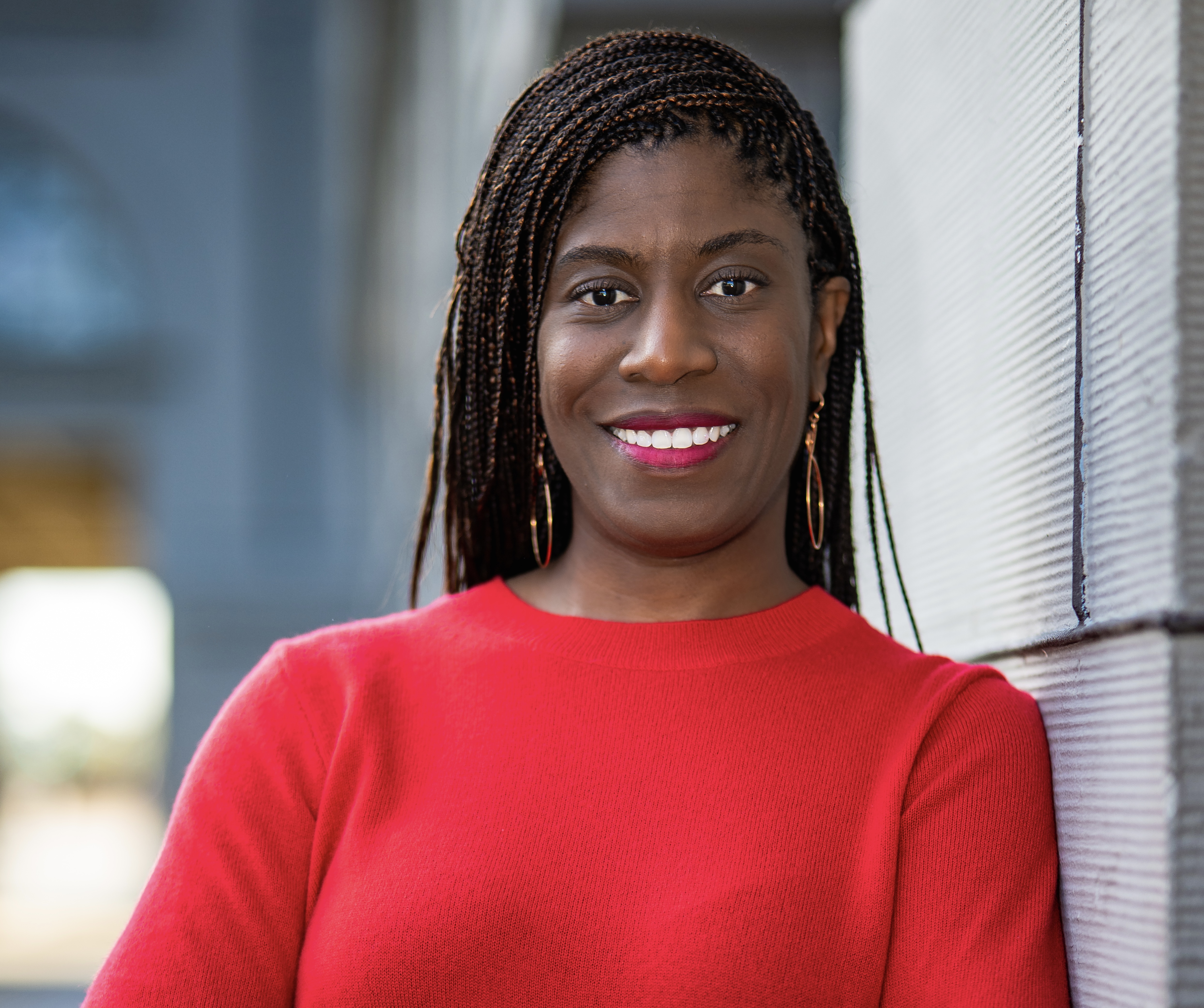
Stacie McClam is a filmmaker, educator, and author. Her film production company, School Dismissed, focuses on films about K-12 education issues and solutions. Through film, Stacie exposes the realities that many students and staff face inside schools and reimagines education's future. She draws on years of teaching experience across the United States and abroad to tell stories rooted in real schools.
As a law school graduate, her legal education shapes her perspective in storytelling. Her upcoming trilogy of narrative fiction feature-length films about the benefits and challenges of AI in elementary, middle, and high schools is called THE SYSTEM Trilogy. The first film in the trilogy is MR. ADVOCATE releasing in summer 2026.