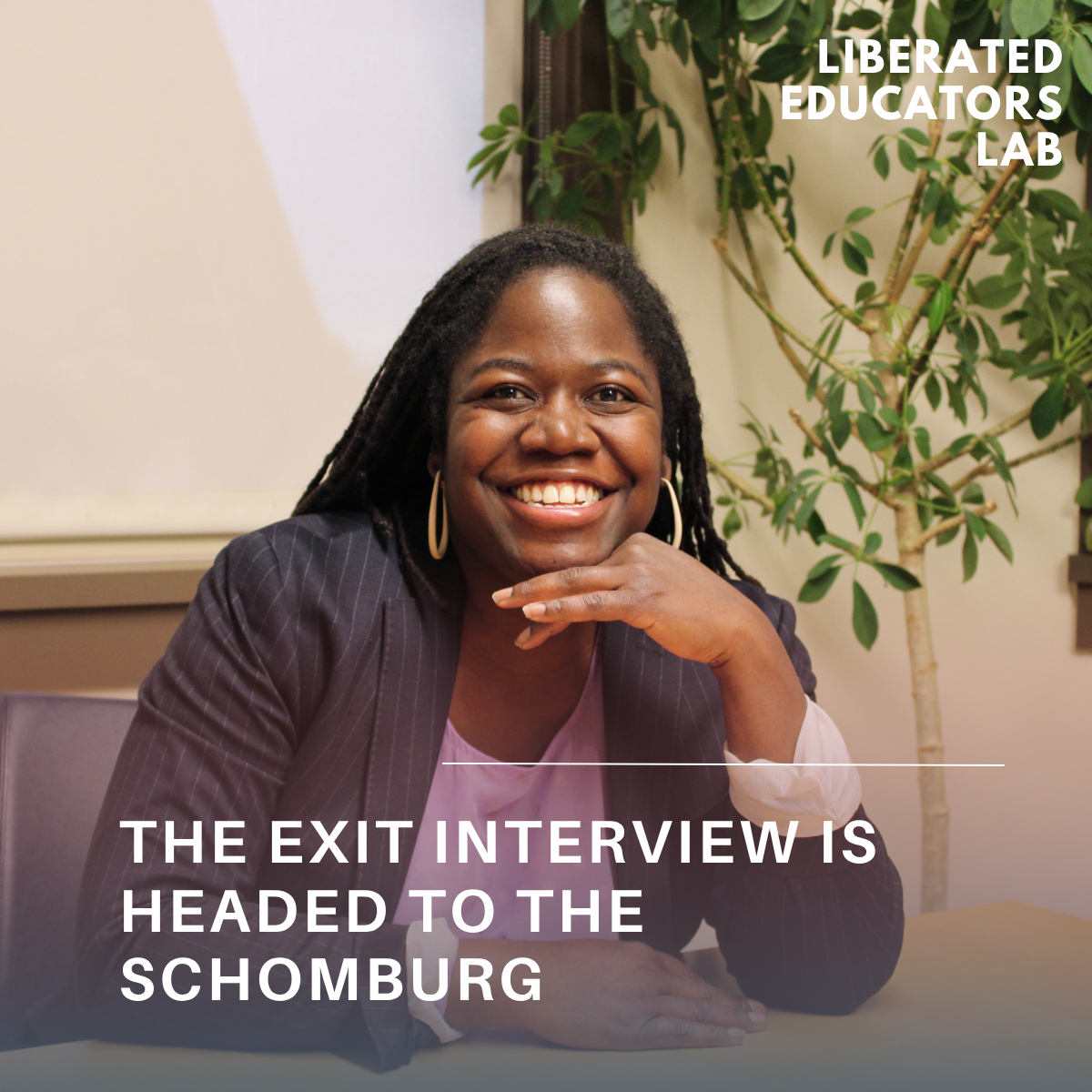
More Than A Diversity Hire with Dr. Melissa Leonard-Goodlett

Melissa Leonard-Goodlett, EdD. knew she was a diversity hire. She took the job anyway because she was also the most qualified person in the room.
In this episode of The Exit Interview, Dr. Melissa breaks down a career that went from dyslexic kid playing teacher with her siblings, to AP English instructor watching Black students pay for a high school education they never actually received, to burning out at a wealthy PWI where parent surveys went straight to HR and her principal never once stepped foot in her classroom.
She saw the literacy crisis from both sides: underfunded schools pushing kids through, and affluent schools inflating grades to protect their reputation. Same problem. Different zip code.
After years of microaggressions, invisibility, and hives she couldn't explain, she resigned. Now she's an educational consultant, reclaiming her why one new teacher at a time.

 RSS Feed
 Apple Podcasts
 Spotify
 Amazon Music
 iHeartRadio
 PlayerFM
 Deezer
 Key Takeaways
- Black women, education, teacher, superintendent, racial battle fatigue, Philly, TFA, burnout
First of all.... have you signed up for our newsletter, Black Educators, Be Well? Why wait?
Amidst all the conversations about recruiting Black educators, where are the discussions about retention? The Exit Interview podcast was created to elevate the stories of Black educators who have been pushed out of the classroom and central office while experiencing racism-related stress and racial battle fatigue.
The Exit Interview Podcast is for current and former Black educators. It is also for school districts, teachers' unions, families, and others interested in better understanding the challenges of retaining Black people in education.
Please enjoy the episode.
Peace out,
Dr. Asia Lyons
More than a Diversity Hire with Dr. Melissa Goodlett
dr--asia-lyons--she-her-_1_04-01-2026_150954: [00:00:00] Welcome back to the exit interview, a podcast for black educators with me, your host, Dr. Asia. And today we're in a studio with, now she said don't call her doctor, but y'all know how I do.
Dr. Melissa, uh, Leonard Goodlett. So glad you are on the show today. Um, we were just chatting before we started, like it's been a minute since we talked, I think February and it's April 1st. The time has flown by. Uh, and we're just trying to catch up and figure out all the things. Uh, she is getting married soon.
So super excited for that. And I'm like, I'm from, I, my wedding dress came from Davis Bridal 20 years ago, so. Like the whole idea of wedding dress shopping is so, you know, it's foreign to me. 'cause I just told her, I said I wouldn't shop. I picked out the dress off the poster, I threw it on and that was it.[00:01:00]
But, um, so, but I always say this, we're not here for wedding dress shopping conversation. We are here to hold an exit interview. How are you today, Dr. Melissa?
dr--melissa-goodlett_1_04-01-2026_160958: I am doing well, but the wedding talk makes, it, makes it fun, you know? 'cause it's stressful trying to find a dress. So anyone out there, they, they know what I'm talking about. It can be a little stressful.
dr--asia-lyons--she-her-_1_04-01-2026_150954: Yeah, it can be. It can be. Um, tell us a little bit about yourself.
dr--melissa-goodlett_1_04-01-2026_160958: Well, um, I am, I have, um, I'd like to call it a, um, varied, varied career, meaning I started off in education years ago in Heidelberg, Germany, in early childhood education. I came back to the States and went into pharmaceuticals and, um, the medical industry. And then found myself right back in education on the, um, K through 12 level and then higher education.
So education,
dr--asia-lyons--she-her-_1_04-01-2026_150954: we gonna have a lot to talk about then. Yes. [00:02:00] Yeah. Yes. Um, well then let's go ahead and jump into it. So, like you say, you've done a full loop, but tell us about your journey into education. How did you know that education was for you, that this journey of being an educator was for you?
dr--melissa-goodlett_1_04-01-2026_160958: it sounds cliche-ish, but I think that it was already chosen for me because as a kid, um, I struggled with dys. Dyslexia called that at the time. Didn't know exactly what that was. I just know letters looked weird and backwards to me, and I struggled. And first grade I remember that I purposely sought out to be the class clown because when called up on the on to read. couldn't, but then at home I would be the teacher with my siblings playing school and house and things like that. And I was the teacher. Um, my family were like, oh, you're gonna be a teacher one day. And I was like, no, I don't wanna be a teacher. I was gonna go into broadcast, you know, journalism. At least [00:03:00] that's what I told myself. But because of my struggles, I knew from, from early on, um, I wanna say about six or seven years old, I knew that I wanted to be educator in some sense. I didn't know what trajectory in education, but I knew I wanted to be an educator. So it started a long, long time ago.
dr--asia-lyons--she-her-_1_04-01-2026_150954: So you went directly into education classes, um, in undergrad, or did you take a different route?
dr--melissa-goodlett_1_04-01-2026_160958: I took the route for journalism and broadcasting undergrad. Um, and then I circled back. To education.
dr--asia-lyons--she-her-_1_04-01-2026_150954: So tell us about that part. Did you finish up in journalism and then graduate, or what was that like?
dr--melissa-goodlett_1_04-01-2026_160958: I, I did not finish up in journalism. Um, my dad kind of saw me as a broadcaster, and I, I certainly liked to talk, but, um, what was pulling at me [00:04:00] was I knew in my own educational journey, like I struggled to read, and it was support that I got from family and from teachers, honestly, that made me realize, well, it was probably a lot more people out there like me that struggled because it was embarrassing.
dr--asia-lyons--she-her-_1_04-01-2026_150954: Mm-hmm.
dr--melissa-goodlett_1_04-01-2026_160958: from the time I was six or seven, I carried around at the SARS and the dictionary because I wanted to sound smart because I felt so deficit in it.
dr--asia-lyons--she-her-_1_04-01-2026_150954: Um.
dr--melissa-goodlett_1_04-01-2026_160958: um. So I went off to college and it was broadcasting journalism that I started off with and just got like a general education degree because I realized I wanna be a broadcaster.
I like journalism, but I don't wanna be a reporter. Um, so I kind of stopped there, got my undergrad, and then when I got back from, married, went off to Europe, went to Gelbar, Germany. But when I came back when I started like education journey, [00:05:00] like rigorously.
dr--asia-lyons--she-her-_1_04-01-2026_150954: Yeah, so
dr--melissa-goodlett_1_04-01-2026_160958: I'm
dr--asia-lyons--she-her-_1_04-01-2026_150954: go ahead.
dr--melissa-goodlett_1_04-01-2026_160958: up my, finished up my master's, two master's in education, then my doctorate, I mean all within quick succession. Um, so it was almost like myself, my being was like, you should have did this before. And because I wanted to do what I thought maybe family wanted me to do,
dr--asia-lyons--she-her-_1_04-01-2026_150954: Mm-hmm.
dr--melissa-goodlett_1_04-01-2026_160958: that, but came back because it was, I realized was a passion early on.
dr--asia-lyons--she-her-_1_04-01-2026_150954: Yeah, so I, when you're flying, you're coming back from Germany. This is the part we want to hear. Was this something where you were in Germany and you were, as it was time to come back home, you're like, well, I think this is gonna happen when I get back. Were you at home for a little bit? Because like to say two masters and a doctorate, it something in you lit up.
And so what was that moment that you decided, when I get back home, I'm gonna put the pill to the metal and like really study education.
dr--melissa-goodlett_1_04-01-2026_160958: It was, um, a couple of friends [00:06:00] that I had in Europe that, um, that were educators. um, I went to, like I said, I I, I worked with very young kids. I worked, it was pre, through kindergarten, and, um, had some colleagues and we just got to talking about education and, um, it was from those conversations that I realized, you know, I, I really. I think when I get back home, I'm just going to enroll back into school and focus on education. Um, so that's what I did when I got back home from Europe. I started my educational, started my master's while still work, you know, and, but my job, you know, my
dr--asia-lyons--she-her-_1_04-01-2026_150954: Hmm.
dr--melissa-goodlett_1_04-01-2026_160958: mm-hmm. Was work for America. but I was going to school to get my education degree at the same time, super stressful. But, um, I knew then I wanted [00:07:00] to, I felt like I missed those years in education and I wanted to make up for it. So it happened in really quick succession. Um, and I, I don't regret it looking back on it.
dr--asia-lyons--she-her-_1_04-01-2026_150954: Yeah. So you, you kind of mentioned that your dad was the one that was kind of pushing you in one direction and you decided to go on another.
dr--melissa-goodlett_1_04-01-2026_160958: Yeah.
dr--asia-lyons--she-her-_1_04-01-2026_150954: Did you have a chance, do you have an opportunity to talk to your dad when you got back and say, surprise, I've changed my mind. And if, if you did have that conversation with him or other family, what was that like?
dr--melissa-goodlett_1_04-01-2026_160958: I did have the conversation with my dad and he agreed that it was a good choice for me. Like I knew you were going to either be talking or an educator or something, you know, and, um, you made the right choice for you. So we did have that, we did revisit that conversation and even now he was like, you made the right choice.
dr--asia-lyons--she-her-_1_04-01-2026_150954: Yeah,
dr--melissa-goodlett_1_04-01-2026_160958: full circle it. It was something in the making, I would say all, all along I
dr--asia-lyons--she-her-_1_04-01-2026_150954: yeah.
dr--melissa-goodlett_1_04-01-2026_160958: did other [00:08:00] things, but it was there that love all along for education.
dr--asia-lyons--she-her-_1_04-01-2026_150954: Yeah. So you went through two Masters and a doctor's straight through. Did you teach in between? Tell us what you majored in. We wanna know
dr--melissa-goodlett_1_04-01-2026_160958: Okay. Well, I, um, taught in between, so I first did multidisciplinary studies because I thought I wanted to be an, uh. Elementary teacher, bless
dr--asia-lyons--she-her-_1_04-01-2026_150954: why. Why did you smile like that? What, what, what? Tell us a story about that part.
dr--melissa-goodlett_1_04-01-2026_160958: I started subbing at elementary schools and I love kids by the way. Disclaimer. But, um, I didn't know the life of a elementary teacher was so busy. They do it all. And, um, love kids. I was sick. My immune system could not deal with the environment of small children sneezing and all of those things that happened in elementary school. And so I started off [00:09:00] multidisciplinary studies and um, then I went into, then I majored in English and then educational leadership. So all of this was going on. As a matter of fact, I was going so hard at it. My advisor said, you know, when you graduate, you're gonna have two masters. I am.
dr--asia-lyons--she-her-_1_04-01-2026_150954: Hmm.
dr--melissa-goodlett_1_04-01-2026_160958: Yeah, and that's where the two came in with multidisciplinary studies and my master in my master's in education.
dr--asia-lyons--she-her-_1_04-01-2026_150954: Got you. And you know what? You're right. I taught elementary and middle and taught elementary school first. As far as my immune system, it recovered. But the busyness, I don't think that people understand that elementary school teachers are on all the time, especially if you don't have a setup at your school where you send kids to science or send kids to other places that you're teaching every subject.
Except for like the electives, your PE and art. Yeah, your specials. And so it is not for the week. And I remember going over. Leaving fifth grade and then going to [00:10:00] teaching sixth grade at another school and thinking, oh my God, they have so much time up here. And I, and this is of course in comparison to elementary, in reality, teachers never have enough time.
But in comparison to being a fifth grade teacher, the sixth grade I taught two subjects. I had time. Right. I mean, it was lovely. So I a hundred percent agree with that. Um, tell us about your doctoral program and then what you did after that.
dr--melissa-goodlett_1_04-01-2026_160958: Um, so again, this all happened in quick succession. Um, so with my doctoral program, um, I taught ap so I went, so after my cent in elementary, I went to, um, high school. in high school is where I really found my love for. Um, I mean, high school students, they're their own people. But, um, that was easier for me because I've always loved the literature, always loved the literature.
And [00:11:00] so, um, I was an English teacher for several, several years. And then, um, then I, one colleague that taught advanced, placed advanced placement English was leaving. And thought I should apply for the role. And I did. And in that role, I started working, um, with high school students transitioning. We were doing the, the 1 8, 1 8 program or the dual enrollment, dual credit. And so, um, from there I would adjunct with the local college as well. So I, I had the best of both worlds. I would work with young people, um, helping them with their college career readiness, um, helping them, you know, pass the a EP exam or even giving them information about it at the district I was at a lot of, um, especially African American students, really didn't know about these programs, so it gave me an opportunity to teach it, to mentor, and then [00:12:00] also adjunct at the local, um, college nearby.
And so it was there that, um, I really delved into literacy. What I saw is that a lot of, um. A lot of my students in the AP class, they were taking ap, but their reading, their literacy was really behind. It just didn't match here in the AP class. But I noticed a lot of my students, and even students that graduated and came back would say, I'm like, why are you back?
And they just said they just couldn't cut it at a four year. Um, yeah, they really couldn't cut it at a four year. So I'm making the correlation that, okay, a lot of our students are taking these advanced placement classes in high school, but in actuality when they, they're not quite ready. Um, and since I did teach English, I'm noticing these gaps.
You know, 11th, 12th grade [00:13:00] reading on maybe a sixth, seventh grade level.
dr--asia-lyons--she-her-_1_04-01-2026_150954: Mm.
dr--melissa-goodlett_1_04-01-2026_160958: Oh, and one, like where is, how does that happen? How within a school they graduate you or allow you to take these courses, but then you're not and at, and I didn't research it earlier at the time, I'm like, is that a numbers thing where you get these kids to take these classes?
But I noticed that correlation and even when I would adjunct, I noticed my, know, college one or English one students, composition students were having like the same issue. And so, it was from there that I thought I should go into, um, my going to, you know, investigate how this looks like in higher ed.
So I began asking, um, college professors, um, what correlations do you see? What gaps do you see? And they would tell me, you know, overwhelmingly that students are just not. [00:14:00] Prepared when they come to college. Um, and honestly, pursuing my doctorate, I, I thought pursuing that, um, pursuing that for higher ed because my, my doctorate is in higher ed and not K through 12.
So there was that gap, right? Mm-hmm. And so um, after having conversations, okay, maybe it would be a little bit easier, um, to kind of parlay over to higher ed and work from that lens. Like, okay, the students that are coming in, um, working with like the TRIO programs, um, because they also work with a lot of students that there's still a need, they're still, um, kind of navigating that.
So I just decided, you know, go get your, your doctorate, um, you've gone this far, um, and then see how that, you know, in that role working in higher ed, how that could help you with, um. Students that are, you [00:15:00] know, those students that are coming in, first generation college students coming into college for the first time.
They've got a lot of gaps. They have a lot of struggles. Um, because you've seen that on the K through 12 lens. So maybe, you know, you could help in that role. And so
dr--asia-lyons--she-her-_1_04-01-2026_150954: Yeah,
dr--melissa-goodlett_1_04-01-2026_160958: feeling at the time when I pursued my doctorate.
dr--asia-lyons--she-her-_1_04-01-2026_150954: so this is really interesting because, um, we've had folks who've kind of gone on the same track. They see an issue in education when they're in K 12, and then they go to either start teaching in higher ed or go back for their doctorate or master's to think about how to solve the problem. Right. Uh, and, and I wanna talk about that, but I also want to, to think about and pause for a second that you said something that was really interesting, which is that you had students in advanced placement courses who read at a middle school level who were 11th and 12th graders.
There [00:16:00] is an assumption, I think for parents, for families, for community, that advanced placement is the, is the standard. It's the same across the country. And that in order to be in AP classes, you have to have a certain level of understanding achievement, literacy skills, mathematics skills. But what you're saying is that's not necessarily true.
And I, and I wanna be clear before I a ask this next question, that I don't think that geography matters. I think this is a national issue, but we haven't talked about where you were living during this situation. So what city, what state are you in when you're starting to notice these gaps between what students know and what they should know?
dr--melissa-goodlett_1_04-01-2026_160958: Um, in the state of Missouri.
dr--asia-lyons--she-her-_1_04-01-2026_150954: Okay.
dr--melissa-goodlett_1_04-01-2026_160958: in particular live in St. Louis County, Missouri. um, yeah, it exists where, yeah, the, the, um, assumption is that if you're taking an advanced placement or AP course, [00:17:00] you know, even students like, oh, I take an AP course, so therefore, you know, I have the standard. But as a teacher, you know, um, in AP I noticed that more often than not, there are students who are not, who are not quite prepared for it.
And I don't wanna say, because the, you know, what an administrator told me at the time was, well, if they show the capability to do, to do, to do so, um, that if they're willing to do the work, and even if they don't, you know, get a five or a six on the AP exam, if they go through the course, they'll come out the better because they've had the challenges of an AP course. And I think in theory maybe they thought that was great. But, um, the real truth is I'm no noticing this big gap in literacy and reading and, um, since, and it stuck out to me and I noticed it, I think because of my own [00:18:00] struggles. Like I could have been that kid that, um, I mean, I was in elementary, but again, I had a lot of support, but I could have been that kid that was graduating or in an AP course or, in these, this, these advanced courses.
But I'm, I'm not quite proficient in reading. Um, and it's, you don't notice it until you leave school, how much literacy matters. And so I, I've lately been on this, this, um, I don't, guess crusade, to, to help students that. Are secondary ELA or secondary students or college one even to read.
That's a real problem happening now where, and it's, and it's something my colleagues and I started collecting data for. [00:19:00] Like these students are junior, freshman, sophomore, freshman, sophomores, junior, senior. And they're reading on some of them unfortunately in, um, fifth grade level, and they're not in the supported or tiered classes. That's, that's a major issue.
dr--asia-lyons--she-her-_1_04-01-2026_150954: Yeah. I, I, I, there's so much, there's so much to talk about with this
dr--melissa-goodlett_1_04-01-2026_160958: it.
dr--asia-lyons--she-her-_1_04-01-2026_150954: because I'm thinking about my own, my own rearing in De Detroit public schools and how I went to a school that was supposed to be for gifted intelligence students into AP classes there flunk out of my four year college and had to go to community college.
And for a long time I thought like it was a me problem, but as I've lived my life and as I was an educator, I've realized like, no, the system just kind of said, well, she can do the work, or she didn't get in trouble, or whatever the situation. And there's so many of us who thought because we were in certain [00:20:00] classes or we were in certain spaces, that it was good enough.
And I just, I'm thinking so much about how you talk about students who d said they couldn't cut it and had to come back to community college. They're essentially paying for their high school education. Right. Unless they scholarships or anything. If you're getting a student loan to pay for community college, or you're working extra shifts or whatever you're doing, that means that all the education you should have got in high school or even K 12, you're now having to pay for on your own.
dr--melissa-goodlett_1_04-01-2026_160958: it. Yes, you
dr--asia-lyons--she-her-_1_04-01-2026_150954: Yeah.
dr--melissa-goodlett_1_04-01-2026_160958: for it. And, um, even, you know. Your graduation is even pushed off. You know, you go to college and you're not graduating in four years. You're graduating maybe in six or
dr--asia-lyons--she-her-_1_04-01-2026_150954: That was me.
dr--melissa-goodlett_1_04-01-2026_160958: these remedial classes first. And a lot of students in my experience that came back to talk with me, said in college, they wound up taking, um, [00:21:00] like a remedial class first before they could take comp one. And, um, that's, that's, that's, that's an issue because you are at that point now paying for what you should have got in school. Um, so we co colleagues and I noticed that the, um, the GPA, where these kids are prof proficiency wise with reading, they're just, they aren't, they're not quite matching and, um, yeah,
dr--asia-lyons--she-her-_1_04-01-2026_150954: it depends on the city, the state, the,
dr--melissa-goodlett_1_04-01-2026_160958: does.
dr--asia-lyons--she-her-_1_04-01-2026_150954: the other things. Yeah. So I wanna, I wanna back up a little bit. 'cause you said, I spoke to the principal about our administrator about this and they said, you know, if they can do the work, could you talk to us about that conversation specifically?
'cause you started to notice and you're like, I'm gonna say something. So what was that conversation like? And folks, if you, if you are watching this on, if you're listening to this and I watch this on [00:22:00] YouTube, you miss a eye roll. I just wanna say that there was a slight something there. Uh, so I just wanna put that out there.
dr--melissa-goodlett_1_04-01-2026_160958: I'll, I'll just, okay. It's just a little disclaimer. They say that educators, that we're the experts. Okay. And, uh, unfortunately, some administration, administrators don't treat us that way. Like, we're noticing this. We're in the classroom, we are working with these kids, these students every day. Um, we build rapport, rapport with them.
And if you're doing your due diligence as a, as an educator, you're, you know, you're given summative assessments, formative assessments, and you notice this and you can present data your administration to say, Hey, I've got these students, and this is year after year. This isn't a, you know, I, I just did this one day, but I, I
dr--asia-lyons--she-her-_1_04-01-2026_150954: Or first semester or something. Yeah.
dr--melissa-goodlett_1_04-01-2026_160958: semester. This is what I'm noticing, and I, [00:23:00] I'll give you a little bit of a backdrop. colleague and I were fighting for an African American, um, literature class. We were, we were fighting for that we took it to our administration and they've decided, no, we're gonna, we're gonna, um, introduce advanced placement the curriculum.
And that was fine. Um. So they, you know, decided not to go and, and get an African American studies class. They decided to do the AP route. However, when I brought up and this, and this was maybe a year or so into the program, they, uh, just said if, even if they don't do well or score five or six on the AP exam, just, you know, if they show that they can do the work or even, you know, even if they don't thrive in it, at least they have taken the course, they'll, they'll be better.
Because, you know, apparently the taking an AP course, um, it's weighted differently than regular courses. [00:24:00] So at least, you know, they've went through it. They'll be stronger when they, you know, leave. The course Didn't make sense at all to me. Um, didn't make sense at all to me. So. Um, that's how that conversa, that conversation went like, thank you for letting us know this. Um, and that's when I realized that, know, a lot of K through 12 is very politicized and I, I won't say that higher ed isn't, but, um, there's a lot of red tape and bureaucracy mm-hmm. And K through 12 and it's like mud trying to navigate through it. So that was a battle I just didn't think I was able to win.
So, I mean, you present the information, the data you work with these students, and if they're set on for whatever reason, this is the program program we're gonna keep, well then,
dr--asia-lyons--she-her-_1_04-01-2026_150954: just what it is.
dr--melissa-goodlett_1_04-01-2026_160958: that's what it is.
dr--asia-lyons--she-her-_1_04-01-2026_150954: So tell me, from that conversation forward, [00:25:00] how long did you teach, um, English language arts? I don't know all the terms for high school. How long did you teach there? Did you move on to a different school? What was your journey like after that conversation?
dr--melissa-goodlett_1_04-01-2026_160958: Um, believe it or not, uh, you know, I would say with the conversation I had with my administrator, I will say that since it was a new course at the time, at our, at our district, um, they gave me a lot of autonomy in teaching it, and I absolutely loved it. And I did notice these gaps in literacy. Even with that, I found innovative ways to engage students and they loved the course.
And then administrators would come into the class and say, wow, look at this. So I would engage in Stu in Stu. Students in debate taught AP Lang. So that's taking real world rhetoric and things that, speeches and things that [00:26:00] with every day. Um, so I, I taught it on that lens, like, you know, teaching them about using their words, um, using their rhetoric to invoke change. And so I just added my spin and, and wound up really enjoying the class immensely. Taught that for about eight years. Um, and enjoyed it Um hmm. For about eight years. And then I went to, um, A PWI and that's when my life changed. That's one of
dr--asia-lyons--she-her-_1_04-01-2026_150954: And we wanna hear all about that. So first, you said you were teaching there i eight years students at that time, I'm sure you had, you know, you had the siblings and you were teaching, you know, you had the big brother and little sister and, and the community knew you. Yeah. And, but there was something inside of you that said it was time to shift or something happened.
What was that, that situation that said that it was time for you to transition, whether you chose that or not, to go from the school that you had, [00:27:00] you know, really fought your footing in and then transfer a shift over to a PWI.
dr--melissa-goodlett_1_04-01-2026_160958: There are even right now there are a lot of, um, top heavy changes in the St. Louis area, St. Louis area school dis districts. And I'm sure you know, all you need to do is Google it or look at local news. But you know, like with St. Louis Public schools, there's just a lot of top heavy change going on at the district I was in. Um, we had, I was there about nine years. In, in nine years. We, I've seen four or five administrators, like superintendents, um. Principals leave. And there was all of this change going on during the time I left. It was right at the cusp of COVID. And there was another change, yet again, like the, uh, principal that was recently hired. thinking, oh wow, this [00:28:00] is gonna be a lot of change. This is great. This is gonna work. And informed us that he was leaving and I thought there's, so I really enjoyed teaching. Um, but all of the changes there just, I just thought it was time for, it was, there was time for me to leave. There were so many changes and, um, administrative changes, um, so quickly. So there was no continuity in leadership. You, you know, once you got used to one principal. There's another principal. Um, and there was all of this change going on. There was interim principals, and so there was a lot of top heavy change. And I thought, let me go somewhere a little bit more stable. And honestly, um, honestly, I thought going to the school, which was very affluent in the area, I thought, all right, um, I'd applied [00:29:00] for the school before a lot of educators trying to get into the school, and I thought, wow, you know, let me try And, uh, got hired, but I didn't know it at the time. That's, that's kind of where all of my, uh, struggles began as an educator.
dr--asia-lyons--she-her-_1_04-01-2026_150954: Before we get into that, I, I'm interested to know, did you have a chance to talk to any of the administrators as they were coming or going, um, just to [00:30:00] find out why they left or was it something that just happened so quickly or you didn't feel like you built relationship with them? I'd love to know if you know what any of the perspectives that those administrators had as they were coming in and out so quickly.
dr--melissa-goodlett_1_04-01-2026_160958: I didn't really get a chance to, um, a couple of those edu uh, those administrators absolutely loved. They were very, um, integral to my formative years working, um, at that particular district. And they were strong educators and strong leaders and I admired that. Um, and some left rather abruptly. So I didn't get a chance really to find out why they left. I have heard from colleagues that were there for years that, you know, the school district was more reactionary instead of proactive. Proactive. So a lot of times we find out after they left there was an issue, but I did, I did not get a chance to sit down and say, Hey, why are you, how'd you leave?
dr--asia-lyons--she-her-_1_04-01-2026_150954: [00:31:00] Mm-hmm.
dr--melissa-goodlett_1_04-01-2026_160958: so no, I didn't.
dr--asia-lyons--she-her-_1_04-01-2026_150954: Mm-hmm.
dr--melissa-goodlett_1_04-01-2026_160958: It was a lot. And so, um, myself and a lot of other educators were just really tired of all the change because that much change that quickly within an organization. Um, there's a lot of, you know, fear of who's next. And
dr--asia-lyons--she-her-_1_04-01-2026_150954: Sure, sure,
dr--melissa-goodlett_1_04-01-2026_160958: really the morale suffered greatly. It
dr--asia-lyons--she-her-_1_04-01-2026_150954: sure.
dr--melissa-goodlett_1_04-01-2026_160958: the morale suffered greatly. Um, a mass exodus of teachers, you know, and. At that particular time, I thought, well, you know, let me do what's best for me. And, um, up started applying for other districts and, you know, wound up at the school, um, I was at. So I,
dr--asia-lyons--she-her-_1_04-01-2026_150954: Yeah. So tell us about that. 'cause you said, you just said that's where the trouble started. Tell us about that school district and your experience there, [00:32:00] what you taught, um, and you, you got into like, this is what I thought was gonna be versus what it really, uh, really was. So tell us more about that.
dr--melissa-goodlett_1_04-01-2026_160958: So I, okay. Um, so I applied there again, this was, so now this was, um, yeah. Right at the cusp of COVID. So schools, yeah, right. I applied. Right. Yeah. Right during COVID or Right, right in the midst of COVID, I believe. I know it was still when schools were asynchronous online. And I applied then and, um, got, you know, it was interviewed, it was very rigorous interview process. Um, this is a very, you know, preeminent school in the area. And I thought, wow, it looked great to be a part of this school. Um, it's a public school, [00:33:00] but it's almost like public private of where it's located. So I thought, wow, this will be great to apply for this, you know, apply here. And I did. Um, I knew one of the administrators who had left my previous district and reached out to them and asked, you know, was there any openings? Um, they informed you, informed me that there was, and so I applied. Now, I will say I knew when I applied, I knew I was a diversity hire. This was all within the George Floyd initiatives going around the countries, you
dr--asia-lyons--she-her-_1_04-01-2026_150954: Sure,
dr--melissa-goodlett_1_04-01-2026_160958: every place from target to schools and everyone making these mission, these, these DEI statements.
And
dr--asia-lyons--she-her-_1_04-01-2026_150954: sure. Yes.
dr--melissa-goodlett_1_04-01-2026_160958: changed since then. But this is during the midst of all of that. And so I knew I was a diversity hire. I knew me, myself, and a couple of colleagues that we were diversity hires. You know, I knew that, but I
dr--asia-lyons--she-her-_1_04-01-2026_150954: Mm-hmm.[00:34:00]
dr--melissa-goodlett_1_04-01-2026_160958: I may be a diversity hire, but I, I'm equipped to do the job.
dr--asia-lyons--she-her-_1_04-01-2026_150954: Yeah.
dr--melissa-goodlett_1_04-01-2026_160958: Um, so, um, even before I started, I informed them.
I was very upfront. So I'm, I'm enrolled in my doctorate program and just that okay, they told me, you know, that it would not the, oh, this is even. You know, I got a school that's going to allow me to do these things. This is great. And, uh, in many ways it was great because I think as an educator, it doesn't matter what setting you're in.
I mean, as far as the students, I'm talking about the students. when you have a love for students and when you have a love for education, a lot of times you can withstand knowing that you're making an impact on the kids. But then when an environment is toxic on you for so long, you get burned [00:35:00] out. And, um, when you get discounted for so long, um, especially when it's from where you previously came from.
Um, my previous district had a lot of issues. It did. However, I never felt disrespected as an educator. They had their issues, but I never felt disrespected
dr--asia-lyons--she-her-_1_04-01-2026_150954: Sure.
dr--melissa-goodlett_1_04-01-2026_160958: and I never felt like the inno innovative things I was doing in my classroom. Um, those were appreciated at my previous district, uh, at the newer district I went to. It wasn't, I began to realize that, um, def I began to feel like a diversity hire
dr--asia-lyons--she-her-_1_04-01-2026_150954: Mm-hmm.
dr--melissa-goodlett_1_04-01-2026_160958: in there. and I thought initially, oh, this is great. They, you know, they, um, they have these equity statements and this is great, you know, um, and this is, you [00:36:00] know, this is, um, this may be a great move for me, but it wound up being very different than what I had thought it would be.
dr--asia-lyons--she-her-_1_04-01-2026_150954: So you're saying, you've said this a couple times, that you, you like, I'm, I'm realizing like I know I'm a diversity hire, but I can do the job. And it sounds like they're saying you're a diversity hire and we don't know if you can do the job, and we probably don't believe that. So tell us about when you started first seeing like, okay, we're going to, this is not what I thought it was.
What are some of those situations that happened that helped you come to that conclusion?
dr--melissa-goodlett_1_04-01-2026_160958: Well, um, when at this district, when I started off, when I started, you know, from day one, there were these programs that you're, you know, you're still a new teacher to the district, so there is still an acclimation process when you're a new teacher to the district. And, um, I've, you know, I've talked to the professional, the PD department and said, look, this is the background I come in with. Um, um, [00:37:00] I think maybe I could be a benefit when it comes to these particular topics. And it was almost like a one size fits all. Like, it doesn't matter what experiences that you come in with or have, this is what we do for new teachers. Um, they paired me up with a mentor. That was their process at that institution.
They paired me with a mentor who had honestly not a clue about diversity. Um, was, um, a mentor who's only taught in that particular school. So no cultural awareness
dr--asia-lyons--she-her-_1_04-01-2026_150954: sure.
dr--melissa-goodlett_1_04-01-2026_160958: this. You know, this African American teacher that's come in the mix, um, did not have the same years of experience, just was like a newer teacher. And, um, realize that this was a paid, you know, that they got a stipend for doing this. But, um, from day one, never really asked me anything about myself. Would just come into, you know, the office and say, how you doing? What can I help [00:38:00] you with? Do you need anything? Well, if you're doing this in a room full of people, might you think a new person might say? Oh, I'm okay.
dr--asia-lyons--she-her-_1_04-01-2026_150954: Yes.
dr--melissa-goodlett_1_04-01-2026_160958: Well, I noticed then it was like, oh, um, Melissa. you know, she doesn't want my help, or she is saying that she doesn't, you know, need help. You are asking me if I need help in front of a whole group of other teachers.
dr--asia-lyons--she-her-_1_04-01-2026_150954: Yeah.
dr--melissa-goodlett_1_04-01-2026_160958: time to get to know me and ask me one-on-one like you're supposed to do. Because if you're getting paid for it, then you, you don't, men, you don't mentor someone in, in front of a group of other people while they're eating lunch. You go to them and ask, Hey, what do you need? So day one, I thought, this is if you really want to know me and have and build a rapport with me.
And then you go about the proper way to talk with someone in private, and ask them about their [00:39:00] experiences. There was another experience when, um, a colleague there told me, they gave you the worst, the worst class, um, the worst students right now. And maybe it's an initiation process. And I laughed it off like initiation. Um, but it, it really was some very difficult students. um, one teacher asked, how are you doing? I said, well, you got, kind of got some challenging students in there. She said, really? The next thing I know I got called into the office like, are you having trouble with the kids in your class? I never said I was having trouble with the students in my class. Um, I, I do have some challenging students in the class. Um, and I, and I wanna situate the context here at this particular institution and, and it's a PWI, I didn't know coming in that the class level, I was teaching seniors very first, very first class. I was, it was all seniors. I [00:40:00] didn't know the, I didn't know how, um, it's a district ran by parents, right?
I'm gonna say that I didn't know
dr--asia-lyons--she-her-_1_04-01-2026_150954: Yes.
dr--melissa-goodlett_1_04-01-2026_160958: I didn't know coming in that. Um, it, it was different from, from the school I was in, but I didn't know coming in that, um, from day one they're on you about how, how is my kid doing so that they can get into
dr--asia-lyons--she-her-_1_04-01-2026_150954: Yeah.
dr--melissa-goodlett_1_04-01-2026_160958: And that kind of, it kind of, uh, shocked me when parents, I mean, we're not even, we're not even really in second quarter yet, and they're all on me about, you know, their college essays.
I'm like, well, mean, we haven't really started that. And that was the thing I didn't know until one, um, white male colleague of mine said, listen, let me tell you the real deal that in, they should have, they're not gonna let you know, you know, you have to have somebody in here to kind of [00:41:00] know these, these things. The school is ran by parents, um, and this school, you know, they take, um, you know. Seniors very seriously. Like they're, they're dogmatic about deadlines and all of these things. And they probably should have, they probably should have started you with a different class as you got acclimated to this particular school instead of throwing you into this.
Because I, I didn't know. I'm like, wow, I didn't know um, this process was this way. So it was just different incidents like that made me go, wow. but then it's like, well, you've been a, a master teacher at your old school. Yes. Yeah. And this is a new school two.
dr--asia-lyons--she-her-_1_04-01-2026_150954: Can I. Yeah, I, I wanna say something about the parents running the school, because I came from a district where the parents ran the schools and people saying like, oh, that's awesome. The parents are involved. No, this is not the same as involved parents, parents running a school [00:42:00] district or a school and parents being involved.
It's two different things. When we talk, and I'm, I'm, I'm speaking for, uh, for you Dr. Melissa, but when you're talking about parents running in school, for me it was folks who felt like they can just come into your classroom and sit in your classroom, observe. It was, respond to this. We, we were mandated to respond to parents within 24 hours.
Right. And if we, and so for some parents, 24 hours was too long. And so they would call the principal and then the pri right. And it, it was, there was the, there was no, you had no, um, autonomy. You had no, uh. It was, it was it to me and it for, for me to be very clear. The district, some parts of the district, the parent, it all depended on the zip code
dr--melissa-goodlett_1_04-01-2026_160958: Yes.
dr--asia-lyons--she-her-_1_04-01-2026_150954: our district span across zip codes and it was, it was a nightmare.
Especially when they're not happy with you, they gang up, right? There's that mobbing that parents can do. Specifically in my situation, white parents and and [00:43:00] brown parents as well would do this mobbing where they would all come together and I remember finding out. That a parent group had made a, um, a chat and they were trying to figure out how to get me fired and what a black mom had snuck into the chat and was like screenshotting all the conversation and sending it to me.
Right. And that's how I really got to see that the underbelly of the school district and how they really know how to gang up and push people out. And so I just wanted to make sure that the audience understands an evolved parent is a teacher's dream,
dr--melissa-goodlett_1_04-01-2026_160958: Love it.
dr--asia-lyons--she-her-_1_04-01-2026_150954: right?
dr--melissa-goodlett_1_04-01-2026_160958: Involved parents.
dr--asia-lyons--she-her-_1_04-01-2026_150954: We love an evolved parent. We do not love when parents run a school district, when parents run the principle, when parents couldn't feel like they could do anything that they want.
Um. And it's so funny that I, I support a summer program here, and the summer program had the, some folks in that same district who were, uh, setting up like a overnight experience. [00:44:00] And they were like, the, the, the school, the families are calling all the time. And I said, oh, what district? They told me, I said, what school told 'em?
I said, oh yeah, be prepared. They're gonna be calling about every single thing. This is to a camp that has nothing to do with the district, but they're going to push that onto any other space because of their entitlement. Right. And I just wanted to pause you to say that because people, if you've never been in a PWI or a space where that kind of privilege exists, you would not know.
And I think that some people will say, well, that's what you get for supporting pwi. That's what you get. And it's easy to assume that all. White schools or PWIs are like that. There are schools for folk with folks of color in the, the same. Right.
dr--melissa-goodlett_1_04-01-2026_160958: Yes,
dr--asia-lyons--she-her-_1_04-01-2026_150954: Um, but I just wanted to pause you and, and talk about that because Oh, that is just something that we need to understand that these parents are just, ooh, they're aggressive.
The word is aggressive.
dr--melissa-goodlett_1_04-01-2026_160958: Very
dr--asia-lyons--she-her-_1_04-01-2026_150954: They're aggressive. Yes.
dr--melissa-goodlett_1_04-01-2026_160958: very aggressive, very [00:45:00] straightforward. Um, I learned to grade inflate while at this institution.
dr--asia-lyons--she-her-_1_04-01-2026_150954: Yeah.
dr--melissa-goodlett_1_04-01-2026_160958: I learned to grade inflate. Um, it was at an African American, um, like cocktail. You know, the few, the very few African American staff that were there have these, um. Meetings, and it was an educator that said, have you been, have you been, um, scolded yet by a parent for giving like a C or
dr--asia-lyons--she-her-_1_04-01-2026_150954: I.
dr--melissa-goodlett_1_04-01-2026_160958: She said, I had to learn to not give those. We don't, there's no C's. You don't give out C's or, or B minuses. um, it's very much true, very much true at a parent teacher conference. Well, my, my student, you know, my child has never gotten a B
dr--asia-lyons--she-her-_1_04-01-2026_150954: Yes,
dr--melissa-goodlett_1_04-01-2026_160958: Okay before,
dr--asia-lyons--she-her-_1_04-01-2026_150954: yes, yes.
dr--melissa-goodlett_1_04-01-2026_160958: this is a more challenging class. You know, they are challenged from the previous year. No, you don't understand. My child does not get B'S on essays. [00:46:00] And, um, I learned how to gradate there because if, I mean, I've had students go to the principal and say, well, Ms. Ms. Good gave me a b plus on this essay. I said, your essay was good. Well, she said my essay was good. Well, B is good. I didn't say it was excellent.
I said it was good. I, I realized that, um, you're challenged on every corner. Again, I go back to if you've got the education, the degree, the experience, that, that didn't really mean anything. If the parent says that my student, um, usually gets a's, then you better find a way to push it to an A slowly I began to, um, I mean this is just not as an educator, this is just not what I do. Um, I'm equitable in my grading, but I had to learn to inflate because too many B's or too many C's. Oh, definitely not a C. [00:47:00] Like, I don't know if I gave, I don't know if I gave c's. Honestly, if I did, I can count on one hand if I did. But I learned to grade inflate because, um, it looked. You were challenged if you, if you did that.
And so I think and a couple of my colleagues learned to try and exist within the, the underbelly and just don't make waves, don't say anything. Stay quiet. and you learn to kind of function like that because if you make waves or say that isn't fair, um, now it's, you know, you're angry or you're discontent or you should be happy to be at the school.
Pay was great. It's not all cracked up what it's meant to be though. The pay was great. Um, however, what you have to deal with on a daily basis, um, even colleagues challenging or [00:48:00] undermining you contribute. I do remember when, because I'm an educator, you know, my pre previous district, we had great PD. Came in and said, okay, um, where's our, our pacing guide? you know, what are the standards for this particular lesson? Well, what do you mean? I mean, what's the pacing guide for this? Where's your, you know, where's your, what, what standards are we teaching? I mean, we teach them. I'm sure you do, but it was told to me.
Well, I mean, our, our students get 36, their averages are 36 on the a CT. We're obviously teaching standards.
dr--asia-lyons--she-her-_1_04-01-2026_150954: Wow.
dr--melissa-goodlett_1_04-01-2026_160958: Wow. Okay.
dr--asia-lyons--she-her-_1_04-01-2026_150954: Can I pause you for a second because I'm thinking too, this is what's really interesting is that you got to kind of see, it's like two sides of a coin in that you had students who shouldn't have been getting the grades they got in your last district, right? They were in [00:49:00] AP and all these things and, and then
dr--melissa-goodlett_1_04-01-2026_160958: Absolutely.
dr--asia-lyons--she-her-_1_04-01-2026_150954: you saw what was happening.
Sounded like a lot of them were like pushed through to graduate and then had to come back. And I'm thinking about these, the students in this particular situation and this PWI as well, where their grades were also inflated. And I wonder, not that you have an answer for this, but I wonder how many of those kids had to go back to community college.
dr--melissa-goodlett_1_04-01-2026_160958: I would love to know that data because what I found, you know, again, um, the assumption, you know, it's, it's versus reality. So the perception is you go to this affluent, PWI, and I'm, I even honestly doubted myself as an educator. Wow. Will I be rigorous enough for these students? You know, am I, am I going to not challenge them?
Because of course, you know, when you're at a school district and you have to slow your pace. And you're told no, you have to accelerate your pace. 'cause these students are this, this, this. thought, oh my gosh, I don't [00:50:00] know. Am I ready? Am I not gonna challenge them enough? No, no, no. I found out lot of these kids are struggling just as much. does not illuminated, like at a predominantly black school is not illuminated. It's, um, again, the grade inflation and, you know, I, I'm telling, you know, a white parent that, you know, Johnny is really below proficient in his reading. No, absolutely not. Okay then he's not, and you don't challenge it because if, you know, you might get called into the office or, you know, the teacher, I mean, she's obviously doesn't know what she's talking about, but you have the same thing. Um, just, it's, it's, it's packaged a lot differently. And I, I worked with many students there and I thought, oh, I had nothing really to worry about because, um, I'm seeing the same challenges here. [00:51:00] um, and not to mention black students at these schools, to mention that they're really struggling, and it isn't to say that some aren't thriving.
Certainly you have these resources, but I noticed that a lot of black students that were struggling readers in secondary ELA were in these like learning centers the kids get to pretty much do what they wanna do and it's under the guise of they're getting this extra support. A lot of those students just really kind of did what they want, wanted to do. and I'd love to do a study on, on that data. I'd love to do that study.
dr--asia-lyons--she-her-_1_04-01-2026_150954: Yeah.
dr--melissa-goodlett_1_04-01-2026_160958: a lot of schools that are affluent don't wanna skew their numbers, and so I, I really want, I'm, I'm interested to see many students that struggle that they don't add to their, their data. You know, just
dr--asia-lyons--she-her-_1_04-01-2026_150954: Or they get, they, they get admitted to a school, to a [00:52:00] college spaced off the, the name of the school. They come, came from the high school or whatever. And then I wanna know how many of those students come complete college within four to five years. 'cause that's interesting too, right? There's just so many we could nerd out on this.
Um.
dr--melissa-goodlett_1_04-01-2026_160958: I've always said that I, I'd love to go back and do some research
dr--asia-lyons--she-her-_1_04-01-2026_150954: Yeah.
dr--melissa-goodlett_1_04-01-2026_160958: and, and see actually, especially being in you
dr--asia-lyons--she-her-_1_04-01-2026_150954: Yes.
dr--melissa-goodlett_1_04-01-2026_160958: I'd love to see that.
dr--asia-lyons--she-her-_1_04-01-2026_150954: Yeah,
dr--melissa-goodlett_1_04-01-2026_160958: the struggle and seeing the struggle like, wow, they're struggling here too.
dr--asia-lyons--she-her-_1_04-01-2026_150954: yeah,
dr--melissa-goodlett_1_04-01-2026_160958: But you never really get a chance to see that, um, because of the perception versus reality.
dr--asia-lyons--she-her-_1_04-01-2026_150954: yeah.
dr--melissa-goodlett_1_04-01-2026_160958: You know, it's,
dr--asia-lyons--she-her-_1_04-01-2026_150954: So
dr--melissa-goodlett_1_04-01-2026_160958: fluent in school, you know, but
dr--asia-lyons--she-her-_1_04-01-2026_150954: I am sure that was, I can't even, I, I, I mean, I can't imagine, but I can because I was in the PW school district. Oh, actually it's interesting 'cause I taught my first six years in the, all, the whole time, the same district. But the zip [00:53:00] code was different by one street. And it made such a difference in what I saw, and family and parent, all the things.
It's very eye-opening. Uh, so how long were you at that school and how did you know it was time to transition?
dr--melissa-goodlett_1_04-01-2026_160958: I was there for, um, uh, there was, I was there for four years and
dr--asia-lyons--she-her-_1_04-01-2026_150954: a long time.
dr--melissa-goodlett_1_04-01-2026_160958: it is it, or it was, I knew, um, I knew early on that it probably wasn't the place for me. now mind you, with all of these things going on, even within, even with my colleagues, oh, so you're going to get your doctorate. Um. what are you gonna do when you, when you do that?
Are you gonna try and become an administrator here? I just got all of these questions and I'm a pretty private person. I became even more private there. Um, because anything I said, anything I went through, everybody knew about it. [00:54:00] And I learned, okay, let me just keep to myself. So, um, love the, the other two colleagues I worked with, African American women, great educators. Um, but I was told, well, you don't act like them. In what way? Have one, one colleague very vibrant, you know, and that's her personality. I'm a little bit more reserved. Well, you don't act like her. No, I don't because I'm, I'm me. This is, this is me. This is what you get. but I would get that from colleagues.
Oh, you act so different. How did you think I was supposed to act?
dr--asia-lyons--she-her-_1_04-01-2026_150954: Mm-hmm.
dr--melissa-goodlett_1_04-01-2026_160958: what, what did you think versus what you're getting? Did you think I was supposed to be talkative? Loud? I mean, what did you expect? I'm not quite sure what you mean by, I don't know. I'm not sure [00:55:00] what you mean by, you know, your heart to read or you don't act like this teacher. I didn't, I don't understand that. Um,
dr--asia-lyons--she-her-_1_04-01-2026_150954: All the code, right?
dr--melissa-goodlett_1_04-01-2026_160958: code.
dr--asia-lyons--she-her-_1_04-01-2026_150954: that, yeah, all that. Dog whistle politics, all these like, yeah, exactly. You don't act like them. You're not suppo, you're different. You are not as chatty. You don't share your, your whole life story with us, so we can't read you, so we don't know how to control you.
dr--melissa-goodlett_1_04-01-2026_160958: Right. You, you can't read me. Um, now if it's, I can help you with an educational question, and I know as, as I've been an educator long enough to know you form many families. I mean, you're in this there's a lot, I mean, that all educators share. So I understood from that, that from that lens, however, working in that environment, I learned to really privatize a lot of my thoughts. Um, I would notice microaggressions and like, let [00:56:00] me just not say anything. I'm to get through my program. I'm trying to make an impact on the students, and I will, I will definitely say the students were glad to have black teachers.
dr--asia-lyons--she-her-_1_04-01-2026_150954: Sure.
dr--melissa-goodlett_1_04-01-2026_160958: told me, I mean, it's, you're my first black teacher, Ms.
Goodley, and it's great, you know, to see or hear your perspective. And I, I could never say it was the students.
dr--asia-lyons--she-her-_1_04-01-2026_150954: Oh, of course not. Yeah.
dr--melissa-goodlett_1_04-01-2026_160958: could never say it was the students, but I knew it was time. I, first of all, I never thought it was for me. They had these parent surveys and, um, my colleagues would warn me, well, when you get the parent surveys, they can be really hurtful.
And I thought, what? Parent surveys, they can be really hurtful. They're gonna say some mean things. I was told this and, and I thought, wow. I, and it was for new teachers. New teachers. I think they do it the first three years of your [00:57:00] service there, you get these parent surveys. Um, and it's really at the discretion of whether the parent likes you or not.
dr--asia-lyons--she-her-_1_04-01-2026_150954: Sure.
dr--melissa-goodlett_1_04-01-2026_160958: Um. My first set and it goes to hr. It goes to hr?
dr--asia-lyons--she-her-_1_04-01-2026_150954: Oh wow.
dr--melissa-goodlett_1_04-01-2026_160958: goes to hr. So you never know what you're, you might get. And so you're really, you're really on guard, like, oh, um, I don't, some behaviors that,
dr--asia-lyons--she-her-_1_04-01-2026_150954: Oh, let me pause you for a second. So I just wanna go back to what I said before. This is what it means when parents run the school.
dr--melissa-goodlett_1_04-01-2026_160958: yes,
dr--asia-lyons--she-her-_1_04-01-2026_150954: just doubling down on what we just talked about a while back, this is an excellent example of when parents run the school, the fact that their surveys go to hr. The fact that the survey exists, first of all, and yeah, feedback is great, but then you know what that survey is about.
And then for it to go into your records in HR is wild to me.
dr--melissa-goodlett_1_04-01-2026_160958: very wild. I, um, [00:58:00] I've always done this ever, ever since. been teaching, um, even when I was teaching littles, you know, I love doing surveys about myself because I want to improve as an educator. So even if it's a simple survey, but even at, you know, when I transitioned here, I would do a Google survey about how the students felt I was teaching them.
I wanted to get that feedback. Um, and I'll, I'll get back to that in just a second. But they had these parent surveys, the first one that I got. Um, I mean, I wouldn't say it was as brutal as I thought, and I thought, okay, cool. So I'm in the school district when, I mean, there was some, you know, um, comments that were off the wall, but for the most part it was okay to be a, what I thought, um, to be a new teacher in this district. and, um. You know, I, I, I took it. Um, but a [00:59:00] couple of the surveys were, you know, not for this school district, you know, may maybe in another school district not good for this school district. Um, and that's, I received a couple of those comments and I thought, you know, tongue in cheek, what can you do about that?
You're not gonna, like, every, every parent isn't gonna like, you just, just period. Um, but they had these surveys and, um, necessarily agree with that because, um, if you're new to a district, you're still acclimating. how is that fair? And okay, if you get this information, what are you going to do to support the teacher?
Then Uhhuh, like, I always wondered and never really knew what the purpose of the, the purpose of those surveys were for. Um, because students can do it too. You know, at this particular school, a student could tell on a teacher, and it's anonymous. You don't know who, tell who, who might, know. about you. Um, and those are [01:00:00] not good. Those are not good for the teacher if you get those. So there's so many ways, I think, to, um, to bottleneck a teacher. So I, I got those surveys. I can't say that they were horrible, um, but I just knew based on administration at that time, I was going through insurmountable issues.
My sister, who's since passed, um, was in a coma, you know, when I first started the school, she was in a coma. um, to add on to what was happening at school in my personal life, I was dealing with, you know, a a, very ill family member. And, um, I didn't feel like I had a lot of support there. Um, in addition to my, you know, going through my program, um, didn't feel like I had anyone to talk to. Like I could not, I mean, I did have colleagues I could talk to as far as administration. Never came to observe my class. no support [01:01:00] that way. like my principals, um, principal never came to really visit my class. Um, I think I got a meeting one time, like, how is it going here? And that was very, very early on.
And I said, well, it's, it's going okay. I'm, I'm glad to be here. and it was just kind of like, are, are you doing okay? There was nothing, nothing after that to really find out how you could do. I mean, as an educator, you want to be better.
dr--asia-lyons--she-her-_1_04-01-2026_150954: Yeah.
dr--melissa-goodlett_1_04-01-2026_160958: um, I didn't get either way. Like, if you observe me or evaluate me, what can I do to be better?
What do you observe or see? So it, I would never get that. would never get, um, well, you're doing this well and you may need a little more support here. It was just kinda like, how am I doing? You know, am I doing [01:02:00] well? Am I not? Um, besides the students telling me I'm doing great, I don't really know from my administrators if I'm doing well. Um, didn't really, you know, ask about personal things going on with me. and to be honest, looking back on it now, um, maybe, I don't know, maybe as an educator when you're, when you're in those environments as a black educator, maybe you, um, I know I felt very ostracized and alienated.
dr--asia-lyons--she-her-_1_04-01-2026_150954: Sure.
dr--melissa-goodlett_1_04-01-2026_160958: if I do talk to someone, what'll happen. Um, and I began to physically suffer. So, um, just randomly breaking out in hives,
dr--asia-lyons--she-her-_1_04-01-2026_150954: Mm-hmm.
dr--melissa-goodlett_1_04-01-2026_160958: um. And didn't really know what that was, um, fatigued all the time. And I, I just didn't know that the disserta, my dissertation was, um, African American women at PWIs. [01:03:00] Right. And there's racial battle fatigue. I know that you did your dissertation there.
That, that, that, um, those tenants are there as well. And I didn't know I would be living it. I didn't know I would be
dr--asia-lyons--she-her-_1_04-01-2026_150954: Yeah.
dr--melissa-goodlett_1_04-01-2026_160958: I didn't know I would be living it. And, um, nothing I did was recognized. So I would submit for topics to present at PDs. No consideration there. I would submit to mentor newer teachers. Well, we're just, we're, it's full. And then I'd see a teacher who's been teaching two years teach, you know, in-service teachers. I did that all the time at my last school. And I knew it was time to, to exit that. no support. I knew it was, you know, I, I knew early on, but I, I thought I, I have to leave this place
dr--asia-lyons--she-her-_1_04-01-2026_150954: Mm-hmm.
dr--melissa-goodlett_1_04-01-2026_160958: beginning [01:04:00] to feel and suffer. And that, um, there was just burnout. Burnout. and I couldn't wait to get up out of the place. Like I, I, great salary and all. It didn't matter.
dr--asia-lyons--she-her-_1_04-01-2026_150954: Yeah.
dr--melissa-goodlett_1_04-01-2026_160958: what the
dr--asia-lyons--she-her-_1_04-01-2026_150954: we get to that place, when we get to a place of racial battle fatigue, like you talked about, burnout, compassion can fatigue. People think that a bonus, a pay raise, a bonus, a mo. These things matter. But when you're talking about, like you just said, hives for so many people, hair loss, resentment, uh, anxiety attacks, none of that matters because you're spending the extra money from this district on therapy on medications.
dr--melissa-goodlett_1_04-01-2026_160958: Definitely therapy. Yes,
dr--asia-lyons--she-her-_1_04-01-2026_150954: Yes, yes.
dr--melissa-goodlett_1_04-01-2026_160958: Um, definitely therapy. Um, and I knew it was just time to go. When,
dr--asia-lyons--she-her-_1_04-01-2026_150954: I.
dr--melissa-goodlett_1_04-01-2026_160958: um, it was right, it was during the week I found out my sister passed. Now they knew [01:05:00] that this was happening. I was very transparent about that. And, um, here in the St. Louis area, there was a major, it was like a, um, there was like a tornado and so there was a lot of damage and we had a PD that day. Um, I attended the morning pd, got the news about my sister, and, um, couldn't reach like my team lead. So, um, I didn't attend the afternoon pd. Two weeks after that, I got an email from my principal saying that, oh, it wasn't professional. Um, you're expected to attend PD like everyone else. Something like that.
If you have any questions, contact me at that time I did. I, I did wanna contact him and so, and no conversations with this, this person, I've been there, mind you, for almost four years at this time. So I wrote down my concerns, met with him [01:06:00] after school, and laid out my concerns, and the meeting became evaluative.
So he started evaluating me as a teacher. In the very same meeting, I came to address some concerns with you, some legitimate concerns. How did this turn into a performance review? I knew, I, I knew, I knew prior to that, but I knew okay, a performance review. so I knew something was up and, um, you, you're, you can request like, um, representation, you can request that. um, I mean, at the time I didn't think to say, Hey, I'd rather stop this and have a union representative come. But I answered his questions. Um, now he's never done this ever, but now, oh, I wanna see your, I wanna [01:07:00] see your lesson plans. Um, I wanna see how, I mean, I wanna see how you grade this. Okay. Um, okay. That, that, that's fine. So he summarizes the meeting in an email and send it to the assistant principal and, um. There was a bunch of, a bunch of points that we talked about in the meeting that he didn't mention in the email to the assistant principal. And I responded, well, we also talked about these other issues, personal issues that I brought up that he never did address, and I don't think he liked that. Um, so now I'm getting, so right at the end of the semester when almost every teacher is either, is either showing a movie or doing that right before the end of the semester and grades are due, I didn't do that. My students had a so it was a presentation day. and all of a sudden he comes in and that was a, um, that was [01:08:00] my teacher's observation, which I had already done.
So I was done with my cycle of teachers, teacher's observations, but he came in and did a, an evaluation. So I, I get an email saying, oh, I noticed the kid should have been doing this, this, this, this, and that again, in four years. He's never. that.
dr--asia-lyons--she-her-_1_04-01-2026_150954: Yeah. Here we go. Here we go.
dr--melissa-goodlett_1_04-01-2026_160958: And I thought, how interesting that it's at the end of the grading period, end of the quarter, the second to the last day before students go on break. I have so many of my colleagues showing PIC movies and it's kind of relaxed now because we've done all of our summatives. My students are doing a valid presentation. I believe it. I don't remember the topic it was on, but students had a valid presentation and that it's, he chooses today evaluate me. That's interesting. I could not even enjoy my, [01:09:00] my winter break because I knew something was up. I just felt it in my soul, felt it in my soul that something was up. And um, I had already talked with my fiance and said, I've gotta go. I had already said that I've gotta go, um, because it's time for me to make an impact in education in a different way. Previous school district I did love, but all of this, all of the red tape, all of the changes there. Um, but at least they let me teach and enjoy my students and expand my They, they allowed me to learn. Um, this school district not so much. Every single move is questioned, micromanaged, or a microaggression. Um, your everything is just discounted. And so, um, I had already decided it was time to go at that [01:10:00] time. So, um, I put in my resignation, um, and I'm, I'm happy that I did. I don't miss it at all.
I put in my, um, letter of res resignation when I got back.
dr--asia-lyons--she-her-_1_04-01-2026_150954: okay?
dr--melissa-goodlett_1_04-01-2026_160958: it was, it was told to me, you know, I don't think you're a good fit for this organization. Um, is what he said to me. don't think you're a good fit.
dr--asia-lyons--she-her-_1_04-01-2026_150954: Mm-hmm.
dr--melissa-goodlett_1_04-01-2026_160958: And, um, you know, honestly, I think my being fearless because I was tired of living under the radar, like, oh, I can't express what my white colleagues could freely express. I began to be silent and I'm, I'm not a ignatious person by any mean. However, I advocate for myself. I did not. Um, the first few years that, that I was there and, but when it came to, and maybe it was the death of my sister and just realizing, you [01:11:00] know, everything that I experienced is real. It's valid. And, um, I have a legitimate concern and I should be able to address it if people are trying to, you know, if, if in theory you're here to support educators, I'm having some, some concerns and, um, let me rewind a little bit. A white colleague, that same day, that same day of the PD was never, never talked to, was never addressed. Let me just say that. that was the reason I wanted to meet with my principal. So there was another white, another colleague, a white colleague, white male, and he just left. I mean, I don't know his reasons.
I know when I got the news, um, that afternoon, um, it was like a tornado here. There was a lot going [01:12:00] on, and it's not something that I had a habit of doing. So let me just, let me just puffer that it wasn't like that's ever happened. My, um, my department head knew that white male colleague never got an email, never had an issue, but this person had been there for years and, you know, part of that climate.
So never got, you know, an email I did. And so that's when I addressed those issues. And it was a thing I've learned, um, over the years for any job. I always, I always write down, um, how I feel. I'm, I write down my reflections. I'm a writer, so I write. So from day one, these. When I would notice these things happening, I wrote them down. Mm-hmm. And so these points, I was able to reference the dates, you know, I had a whole like, you know, and referenced these [01:13:00] things and brought those up to him. And the only thing he said to me before it be became evaluatory, I mean, I'm sorry. Okay. It was just like, okay, well, sorry. Um, with a shrug, like, sorry, I wanted to ask you about this.
That's how, how, that's how the, the meeting went. after, um, after I got back from break, I, I put in the resignation when someone tells you, and, and it, it, it was, it's twofold. I already felt burnt out and was like, you know, I think I can be better served, elsewhere in your education. Um, and it was, you're not a good fit. I don't think you're a good fit. That I, I knew it was time for me to exit out because it's not worth my health, mental health, professional identity. All of that stuff took a hit. It took a hit and it's taken a long time for [01:14:00] me to even recover. Like professionally. When you give your all to your, um, when you give your all to your students and to your work, um, they smack your identity like that, it was extremely hard to get to a place where you, um, felt revalidated. Um, knowing like, yeah, I am definitely the person who I am. I am a great educator. Um, and it's not based on the awards I've gotten, it's not based on the degrees. Um, it's based on bonafide experience of students that I'm looking at all of the. Um, if I had a wall, you know, I have that many students that have come back to say, you've made a difference in my life. I've had, um, my new teacher, mentees come back and say, oh, I feel like I'm a, a better educator after working with you. It's those things that I had to remember. Um, [01:15:00] it was, I mean, I'm a consultant now, but even the teachers that I work with now and their feedback, um, but it, it took a long time because my professional identity and sense of self just obliterated during that time, and it physically took a toll on me.
dr--asia-lyons--she-her-_1_04-01-2026_150954: Yeah. Thank you for sharing that. There's so many of us who, it just takes time and I think that there's, there's folks who say, well, I'm just gonna try a different district. I'm just gonna become a principal now. I'm just gonna go to the state level and never give ourselves time to, to heal and to, yeah. To think of,
dr--melissa-goodlett_1_04-01-2026_160958: It's a relationship. after
dr--asia-lyons--she-her-_1_04-01-2026_150954: Yeah.
dr--melissa-goodlett_1_04-01-2026_160958: any toxic or bad relationship, you have to give yourself time
dr--asia-lyons--she-her-_1_04-01-2026_150954: Yeah.
dr--melissa-goodlett_1_04-01-2026_160958: that you're right. Because what I want to do, if, whether I'm working with adults or children, I want to work in the right space [01:16:00] and not from, you know, I don't have to prove or validate myself to anyone. Um, and I had to get past a lot of Um, I had to go on a spiritual, spiritual quest to get back to me and my why in the first place. And I had to go back to that little girl I struggled with reading. I had to go back to her. Why? I had to go all, you know, I had to go back all of those years and peel back the why all of the students that I impacted to say, wait a minute, you, you see this need, the need hasn't went away. You were in a space four years that didn't honor those experiences. And, um, did it, did it for the, I guess the diversity, uh, the diversity kick they were on at the time. [01:17:00] But no, it was a checklist, right? It was not real diversity. It looked great on paper, but actually enacting diversity within the system, just it, it was a buzzword for them.
It was, I mean, I'm
dr--asia-lyons--she-her-_1_04-01-2026_150954: Sure.
dr--melissa-goodlett_1_04-01-2026_160958: it was a checklist. what are you actually doing to include your educators,
dr--asia-lyons--she-her-_1_04-01-2026_150954: Yeah.
dr--melissa-goodlett_1_04-01-2026_160958: hiring them and then, and then making them feel included and give them, giving them a sense of belonging. Those are two different things. So, um, when you asked me earlier, how am I doing, I'm getting back on the path of wellness and that's taken a while.
I did not know, and then I did not know it would take me this long. I really had some things to unpack and it, it's been really heavy. But now, you know, um, the more I immerse myself in work and [01:18:00] research and, um, I'm like, okay, your, your why never left. It never left, you know, and don't ever let an institution or a person. that from you because you find bonafide joy. Just as much joy as I did as a kid, teaching, being the teacher, teaching my sisters and brothers of like that same light is what you have when you, when you teach from the heart. And that was kinda ripped away, you know? And, um, my hives are gone, like I'm not at the doctor, be, you know, being treated for hives and all of these, um, physical issues that I had while I was there are gone, you know?
dr--asia-lyons--she-her-_1_04-01-2026_150954: Yeah,
dr--melissa-goodlett_1_04-01-2026_160958: yeah.
dr--asia-lyons--she-her-_1_04-01-2026_150954: I love this so much. And in that same vein, you've talked about the healing, you say you immersed yourself in the work. So tell me, what are you doing now?
dr--melissa-goodlett_1_04-01-2026_160958: So
dr--asia-lyons--she-her-_1_04-01-2026_150954: I.[01:19:00]
dr--melissa-goodlett_1_04-01-2026_160958: I'm an educational consultant and it gives me, it gives me, um. So much purpose to work with new teachers. So me and my consulting group work with new teachers. We, um, evaluate teachers, not, I mean, so we evaluate them based on what they say they need. So I love working in partnership with teachers and these are, um, one to three years.
So newer teachers working with newer teachers, um, with culturally relevant pedagogy in their classrooms, mentoring new teachers. And so my group does that. We travel, um, to neighboring, neighboring states like Illinois to work with teachers. And I love that work. Um, because if you have a stronger teacher, and I know it sounds like a cliche, but really when you have a well supported teacher or a teacher with so many strategies in her toolbox, his or her toolbox to deal with this, it affects your [01:20:00] students. You know, it
dr--asia-lyons--she-her-_1_04-01-2026_150954: Yeah, of course. Of course.
dr--melissa-goodlett_1_04-01-2026_160958: and, um, how you show up in class definitely affects your students. My students at my last school could tell every time. They
dr--asia-lyons--she-her-_1_04-01-2026_150954: of course.
dr--melissa-goodlett_1_04-01-2026_160958: me every time, are you, they would ask, are you happy here? You
dr--asia-lyons--she-her-_1_04-01-2026_150954: Mm
dr--melissa-goodlett_1_04-01-2026_160958: G? sure. I'm happy. Sure, I'm happy. Um, but they could tell. Sure.
dr--asia-lyons--she-her-_1_04-01-2026_150954: sure.
dr--melissa-goodlett_1_04-01-2026_160958: that, so doing the consulting work, and now venturing on my own to start my own work with secondary, literacy, because that's a real issue it takes me back to the younger me that was dealing with that. And it had not had I had, had I not had interventions, how that could have easily been me.
And now I'm like, I'm a writer. I'm a teacher. I'm, I'm an educator. I love, love reading. But that could have not been the case.
dr--asia-lyons--she-her-_1_04-01-2026_150954: [01:21:00] Mm-hmm.
dr--melissa-goodlett_1_04-01-2026_160958: And, um, just being out in the world and to not read proficiently, dangerous in the 21st century. Dangerous. And, um, unfortunately, underfunded schools, those students are affected the most. 'cause I've worked at the schools where there's no textbooks. the resources are very few, like before, you know, yeah. I've worked in school districts where the teacher has to make, do with what have or, you know, go own pocket because the school doesn't have those resources. And so, um, now I'm, I'm shifting to more literacy work because that's, I saw the greatest need there. And I know who it, who it impacts the most. So, um, now I'm [01:22:00] pivoting. Um, and I'll be honest, it took me the longest time. I'm, I'm a spiritual person. Um, uh, I'm a Christian person and, I think God all along was telling me, you need to venture out.
dr--asia-lyons--she-her-_1_04-01-2026_150954: Sure.
dr--melissa-goodlett_1_04-01-2026_160958: Sure. Do this. And I was just scared, like, no, I'm not gonna do it.
dr--asia-lyons--she-her-_1_04-01-2026_150954: Sure.
dr--melissa-goodlett_1_04-01-2026_160958: I, I need for this to happen, you know? Um, I, I need this amount of money. And I had all of these excuses about, uh, on, on, you know, on why it's not the best time to start. Um, and then I listened to some great podcasts, yours being one. Um, some, some, some great supporters. And they've told me, listen, going. Going, um, the routes to entrepreneurship and starting your own thing, a lot of people are making it up as they go. Like, it's just to get started. Like start, you're not gonna do anything if you don't start, if you sit and, you know, [01:23:00] tell yourself, well, I need these things to happen first. It's never going to be the perfect time to start, but to start.
dr--asia-lyons--she-her-_1_04-01-2026_150954: Mm-hmm.
dr--melissa-goodlett_1_04-01-2026_160958: And so I, you know, within the last three weeks there's been a lot of personal things happening, but it's like, start anyway.
dr--asia-lyons--she-her-_1_04-01-2026_150954: Mm-hmm.
dr--melissa-goodlett_1_04-01-2026_160958: And I've been really, I've really been following that practicing self-care because I didn't, I didn't, I worked, I mean, and many teachers will, educators will tell you this, we work around the clock and especially when you feel like your professionalism is under scrutiny.
I worked even harder.
dr--asia-lyons--she-her-_1_04-01-2026_150954: Yeah, that's right.
dr--melissa-goodlett_1_04-01-2026_160958: Sunday nights, I, I was con continuously lesson planning, continuously trying to prove myself, and that is exhausting to constantly try and prove yourself [01:24:00] when, you know, they don't care anyway because the narrative is already in their head, so they don't care anyway. now I can say I'm on the road to wellness because it, it, it took a lot out of me. And unless you experience it, you just really don't understand
dr--asia-lyons--she-her-_1_04-01-2026_150954: That's exactly right.
dr--melissa-goodlett_1_04-01-2026_160958: until you experience it. Um, you may not even have all of the words, and I'm an educator, but you sometimes don't even have the words to really express day after day how that makes you feel and how that slowly, you know, eats away at your professional identity and personal too sometimes, but. Doing that work, um, working with new teachers and making that impact, having those conversations with educators of all, you know, backgrounds, has been really for me.
dr--asia-lyons--she-her-_1_04-01-2026_150954: I love this. [01:25:00] Thank you so much. Um, so you've talked about your wellness, you've talked about what you're doing now. I love to know, are there in your journey from your own little classroom as a kid to where you are now, is there a black educator or black educators that you would like to shout out?
dr--melissa-goodlett_1_04-01-2026_160958: Oh my gosh. Um, so Mr. Taylor, my sixth grade teacher, awesome. Um, he was funny um, made us, made me feel seen. Um, I just, you know. just remember him. And you know what, I'd also like to shout out? Now this um, an African American educator, but I would say, I didn't even know I had dyslexia. You know, it wasn't talked about like it is now. And it wasn't until an educator, [01:26:00] Mr. Bear, if he's out there somewhere, red hair. And I didn't like him at first because he, my, my beautiful black teacher left. I don't know why she left. I was in second grade or third grade and she left and our new teacher was Mr. Bear. I'm like, Ugh. He has red hair and red chest hair would show in his shirt.
I didn't like him, but that man sat me down and kind of realized what was going on with me and reached out to my parents 'cause they were gonna put me in special school districts. back then, you know. To be on a yellow bus. Kids made fun of you really, really bad. I already,
dr--asia-lyons--she-her-_1_04-01-2026_150954: Yeah.
dr--melissa-goodlett_1_04-01-2026_160958: and, um, he realized what my issue was, so I would like to shout out him, you know, and like I said, um, he did recognize that and I was able to get the help I need. Dr. Audrey Lee, she was my first educator. I mean, my [01:27:00] first administrator, um, at, um, at my last school district, well, my previous to last school district, resilient, fearless, supported teachers all the way. Loved the kids, but she supported her teachers. And, um, Ms. Mabel Clark, those were two very strong African American administrators that, um.
Um, fearless in the face of, fearless in the face of, being seen at, I mean, they just, they walked in their and were not afraid who like it, um, and supported me when I needed it the most. So yeah, those are some educators I'd love to shout out.
dr--asia-lyons--she-her-_1_04-01-2026_150954: All right, folks, we've come to the end of our [01:28:00] show. Uh, Dr. Melissa, I really appreciate you sharing all that you've shared. I know, like I said, this is pretty, this is still fairly fresh for you, and so for you to come on and say like, I'm ready to share this part of my life, we honor you. We appreciate you for that.
Um, all right folks, we need you to take care of yourselves, take care of each other, and we'll see you on the next episode of the Exit interview, a podcast for black educators. All right, peace.
Educator/Consultant
Melissa Leonard-Goodlett is an experienced educator, instructional leader, and literacy advocate with over two decades of experience spanning k-12 and higher education. With advanced degrees in education and educational leadership, she has served as an English and AP teacher, curriculum writer, mentor, and instructional coach dedicated to improving outcomes for diverse learners. Melissa is now launching a consulting business focused on advancing literacy in secondary and higher education through culturally responsive practices, teacher development, and evidence-based instruction grounded in the science of reading.