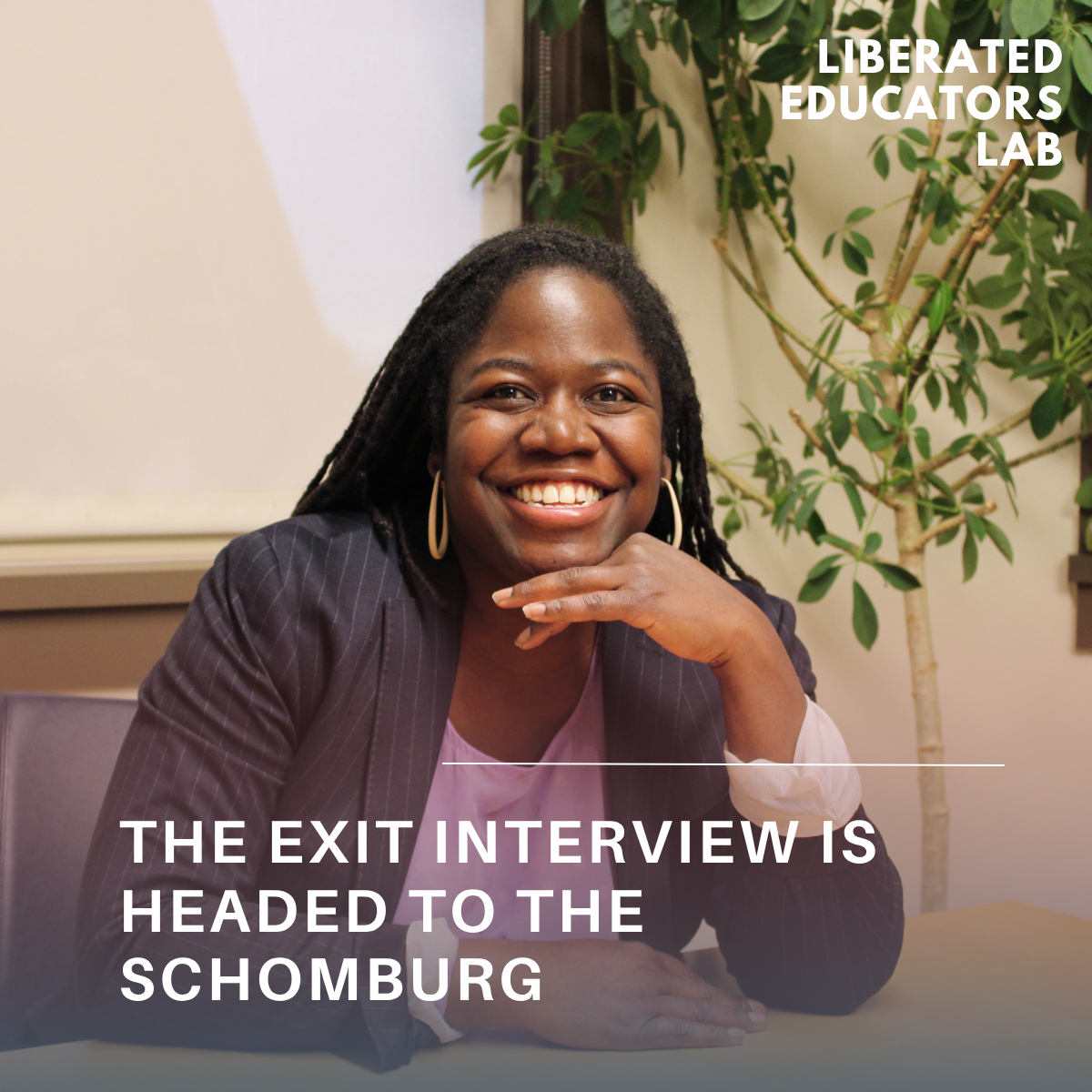
Pressing the Reset Button with Dr. Jamita Horton

What happens when the system tells you that you "care too much"?
For Jamita Horton, Ed.D, that moment in a Milwaukee principal's office was the beginning of a decade-long journey of pressing reset on her classroom, her career, and ultimately herself.
In this episode of The Exit Interview, Dr. Horton takes us from Sunday school teacher's aide to kindergarten teacher to assistant principal, unpacking how rigid behavior management, a lack of mentorship, and the slow erasure of her identity pushed her out of traditional K-12 spaces not once, but twice.
She gets real about what COVID revealed (protected planning time IS possible), what it feels like to leave a school after six years with barely a goodbye, and why she finally had to ask: "Who am I outside of the classroom?"
Now running a teacher policy fellowship at Teach Plus Dr. Horton has found her sweet spot developing educators and advocating for change at the systems level, without losing herself in the process.
Whether you're a kindergarten teacher holding the line on productive noise or a burned-out administrator questioning your next move, this one's for you.

 RSS Feed
 Apple Podcasts
 Spotify
 Amazon Music
 iHeartRadio
 PlayerFM
 Deezer
 Guest Introduction
Dr. Jamita Horton is originally from Milwaukee, Wisconsin, and has lived in Denver, Colorado for about 10 years. She describes herself as "a kindergarten teacher at heart," trained as an educator with roots in Black feminist and international studies. She has a dog, loves her community, and calls herself "a little Black girl from Wisconsin making it in this world."
Journey into Education
Jamita long resisted becoming a teacher despite her family constantly telling her she had a gift for it — she was the older cousin always caring for younger kids at family events and teaching Sunday school preschoolers. At UW-Madison, she worked with refugee and immigrant youth through the PEOPLE Program, which solidified her passion for working with children and their families. She also studied abroad in Spain and worked at a refugee school there. She majored in international studies and women's studies, earned a certificate in education policy, and only fully embraced teaching in her final year of college. Rather than redo four years in the School of Education, she joined Teach For America (TFA) to earn her credentials quickly.
TFA and Early Teaching in Milwaukee
Jamita was placed at a Christian choice school in Milwaukee — not the public school she had envisioned. Though initially upset, she stayed for three years because she loved the community, which was close to her grandmother's house. She built murals, created a little free library, and invested deeply in students and families.
However, she grew increasingly conflicted with the school's rigid behavior philosophy (influenced by "Teach Like a Champion"), which demanded silent classrooms, hands folded in laps, and strict compliance — an approach she felt ran counter to the developmental needs of kindergartners and dehumanized young Black students. The breaking point came when she spoke up during a staff meeting about coded, harmful language administrators were using to describe Black students. She was called into the principal's office and told she "cared too much." That was her final red flag. It was time to go.
Moving to Denver and Resetting
Jamita and her husband chose Denver partly because his stepfamily was in Colorado. Her options were Denver, Washington D.C., or Portland — she later visited Portland and was glad she didn't choose it. She saw the move as a complete identity reset: a chance to define herself as a teacher on her own terms. She visited a school in southwest Denver and was stunned — students of color were walking the halls happily, classrooms had productive noise, people were smiling. Having been so jaded, she didn't believe it was real at first. A mentor reassured her: these places exist, and she could help create them. She took the job.
Growth as an Educator in Denver
At her Denver school, which served primarily Latin American students, Jamita taught kindergarten for most of her time there. She also mentored student teachers, which deepened her own practice. She later moved to third grade (after being denied her first choice of pre-K) and found she loved it — third graders still adored their teachers but had more independence. When the school shifted to departmentalization, she focused on literacy and phonics intervention, leveraging her kindergarten expertise to identify gaps that colleagues without early childhood experience couldn't easily spot. This era also pushed her to collaborate deeply across her grade-level team.
COVID-19 and the Illusion of Change
Jamita describes the COVID era as paradoxically the most sustained she ever felt as an educator. Protected planning time, only two meetings a week, smaller student cohorts, and deeper relationships with families — seeing each other's real home environments broke down barriers and humanized the teacher-student dynamic in ways she hadn't experienced before. She clarified her "must-haves" versus "nice-to-haves" as a teacher. She hoped the pandemic would permanently shift school culture toward something more humane.
When schools returned to the pre-COVID status quo — meetings every hour, rigid structures, data-driven pressure with no acknowledgment of collective trauma — she was furious. The golden window to do things differently had been wasted. She felt unwell, and it showed in everyone around her.
Transition to Assistant Principal
Her principal encouraged her to apply for a newly created AP role overseeing pre-K through second grade — a role that appealed to Jamita because it kept her close to early childhood. As an AP, she tried to invert the traditional power dynamic: when a student had a crisis, she would coach the teacher through it and take over the full classroom so the teacher could build their own relationship with the student — not have admin swoop in and become the authority.
However, she constantly felt squeezed between the charter network's top-down demands and what she knew teachers and students actually needed. Without a mentor to guide her through the transition, and as one of the only Black administrators in the building, she was either micromanaged or left completely unsupported. She sacrificed her own wellbeing entirely — skipping meals, working nonstop, dreaming about work — telling herself it was worth it if the kids and teachers were okay.
When she left after six years, there was virtually no recognition — no party, barely a goodbye — while she had watched others leave with full celebrations. It was deflating and confirmed how unhealthy the culture had become.
Identity Crisis and Reckoning
Leaving forced Jamita to confront a difficult question: Who is Jamita outside of "Ms. Horton"? She had tied her entire identity to her role and institution — twice. She realized she had spent over a decade being so laser-focused on her career identity that she never asked who she simply wanted to be. She vowed never again to let any organization absorb her full sense of self. In leaving, she rediscovered hobbies: reading, writing, board games, video games, walking her dog, and casual time outdoors ("a walk, not a hike").
Moving into Nonprofit/Policy Work
Jamita had been involved with Teach Plus, a teacher policy fellowship, even while still teaching kindergarten. After leaving the AP role, she decided to commit fully to policy work. The shift was jarring in the best way: she could use the bathroom whenever she wanted, take a real lunch break, and work remotely. As an introvert, working from home with her dog was a dream.
She found a "sweet spot" in her current role — still developing teachers through the fellowship while also advocating for systemic change at the state level, meeting with legislators and agency officials. A highlight: watching a fellow named Garfield confidently advocate for his students in front of a state legislator. "That gives me joy," she said, "because they're standing in front of people and advocating in ways they never thought they could."
Retention of Black Educators
Jamita offered several concrete ideas for retaining Black educators:
- Mentorship — not just for new teachers, but through all career transitions, including into leadership roles.
- High-quality coaches who honor a teacher's individual voice and identity rather than mold them into a prescribed type.
- Strong peer relationships within buildings — access to trusted colleagues across roles, not just coaches or supervisors.
- Protected planning time and lunch — systemic, non-negotiable, not eaten up by meetings.
- Clear, diverse career pathways — options beyond "stay in the classroom" or "become an administrator," with visible on-ramps and institutional support to pursue them.
She referenced a Teach Plus report titled "If You Listen, They Will Stay", focused on teachers of color, emphasizing that being believed and genuinely heard is foundational to retention. She also called for schools to actively dismantle anti-Black systems — not put Band-Aids over them — and to interrogate why those systems exist in the first place.
Shoutouts to Black Educators
- Mr. Glenn Allen — her middle school history teacher in Milwaukee who held high expectations for every student, centered Black history in his curriculum, and challenged Jamita in ways that opened doors to deeper academic exploration. She believes he is still teaching in Milwaukee Public Schools.
- Dr. Lolita Tabron — her doctoral professor at the University of Denver who taught her to interrogate data critically, listen deeply through empathy interviews, and think rigorously about policy analysis. She credits Dr. Tabron with shaping how she shows up in her work today.
Wellness Now
Jamita describes her current wellness through several practices:
- Firm boundaries: no email on weekends, clear start/end times, protecting personal time as non-negotiable.
- Community with Black women in Denver — finding her people, sharing resources (including the best braiders in town), and holding each other accountable around rest and self-worth.
- Hobbies: reading, writing, gaming, walking her dog, low-key outdoor time.
- Balance: being both Jamita the full person and Dr. Horton the professional — without sacrificing one for the other. "That's what keeps me well," she said.
The episode closes with Dr. Asia directing listeners to the "If You Listen, They Will Stay" report and reflecting on how education systems absorb educators' entire identities — and how reclaiming self, rest, and joy is an act of resistance and survival.
First of all.... have you signed up for our newsletter, Black Educators, Be Well? Why wait?
Amidst all the conversations about recruiting Black educators, where are the discussions about retention? The Exit Interview podcast was created to elevate the stories of Black educators who have been pushed out of the classroom and central office while experiencing racism-related stress and racial battle fatigue.
The Exit Interview Podcast is for current and former Black educators. It is also for school districts, teachers' unions, families, and others interested in better understanding the challenges of retaining Black people in education.
Please enjoy the episode.
Peace out,
Dr. Asia Lyons
Dr. Jameeta Horton (0:00): I really wanted to become a better teacher and so. Being really strong coaches who deeply care about me and the way that I want to show up as an educator, not the way that they believe that I should show up or try to mold me into what I should be as an educator is really important. Having those strong relationships within the school building, think is also incredibly important.
Dr. Asia (0:24): Welcome to The Exit Interview, a podcast for black educators. This podcast is more than storytelling, it's archival justice. For too long the voices of black educators who have left traditional spaces in education have been silenced, dismissed or left out of the record. Here we reclaim that narrative. Every interview is a living archive capturing the wisdom, resilience and truth of black educators who have shaped classrooms, communities and generations.
Dr. Asia (0:54): Together we name the challenges racial battle fatigue, systemic inequities, the weight of caring too much, but we also honor the brilliance and joy that Black educators bring. The creativity, the innovation, the care and the deep legacy of resilience. Each episode is both a testimony and an offering, an act of preservation for those who came before and a guide for those still walking this path today. By listening you are helping to ensure that these stories are not lost but held celebrated and passed forward. So take a breath, settle in and join us as we honor the past, uplift the present and reimagine the future of education together.
Dr. Asia (1:39): All right, folks. Welcome back to the exit interview, a podcast for black educators with me, your host, Doctor. Asia folks. It's been an amazing season six. We've had so many wonderful guests come on and tell their stories.
Dr. Asia (1:53): If you haven't had a chance to listen to those episodes, go back and listen. If you haven't had a chance to read some of those articles I've written about those episodes, go back and listen and read them. Fantastic. But we have another episode to move on to Doctor. Jameeta Horton is here to share her story.
Dr. Asia (2:09): Welcome to the podcast. How are you today?
Unknown Speaker (2:12): I'm doing pretty well. How are you?
Dr. Asia (2:14): You know, I cannot complain. I cannot complain. I got to sleep in I did my journal work. I did my meditation. I was moving slow today.
Dr. Asia (2:22): I moisturize so period, right? I was looking at myself this morning. I was going to do a little pulse and I said girl you dry no. Let's start over. Let's go in that bathroom and put some moisturizer on.
Dr. Asia (2:35): But yes, but we're not here to talk about my skin care routine, right?
Unknown Speaker (2:39): I mean, we could.
Unknown Speaker (2:40): We could. That's another day. It's another day. Tell us a little bit about yourself.
Dr. Jameeta Horton (2:45): Yeah. So I am Doctor. Jameer Horton. I am originally from Milwaukee, Wisconsin. And so that is where my childhood is.
Dr. Jameeta Horton (2:53): That's where most of my references are from being from the Midwest. But I moved to Colorado about ten years ago. Oh, it feels kind of gross to say ten years. Like, time is, like, yucky. Yeah.
Dr. Jameeta Horton (3:04): Moved to Colorado ten years ago and have no desire to move anywhere else for the time being. I am trained as an educator. I'm a kindergarten teacher at heart. You still can see me, you know, showing kindness to people and calling people my friends. It's part of my speech, part of who I am.
Dr. Jameeta Horton (3:21): And, yeah, like anything else, let's see. I also have a dog. I don't know. Like, I'm just a little black girl from Wisconsin. Just trying to make it in this world, you know?
Dr. Asia (3:31): Get that I have a person that I'm mentoring. Her name is Ariana Dixon. She's a therapist getting her doctorate. Do you know her?
Unknown Speaker (3:39): I went to high school with her.
Unknown Speaker (3:42): Shut up.
Unknown Speaker (3:44): It's so funny. What a small world. Oh, that was very on addiction. I
Dr. Asia (3:52): was gonna say she's the only other black person, but no, there it is. That's cute. Wow, folks. Okay. So yeah, Ariana Dix, I was going to shout her out because I was gonna say, hey, but I have to text her and tell her after the show like, look who I'm ready to.
Dr. Asia (4:07): So that'll be awesome in her. I'm getting her on the episode on the show and a little bit because she's therapist for black women, but that's a different day. A different time. It's not about her, it's about you. So Wisconsin we talked a little bit.
Dr. Asia (4:21): You started in education and TFA, but I'll let you tell that story. Tell us about your journey into education. How did you know that education was for you?
Dr. Jameeta Horton (4:29): Yeah, so I never really, I had a fight when it came to becoming a teacher. I was a kind of person where my family always told me that I would be a great teacher because I was the older cousin always taking care of all the younger kids at every family event. I was also the one who was at Sunday school with the preschoolers teaching those classes. Right? So I know a lot about the old testament.
Dr. Jameeta Horton (4:54): I could teach it to kindergarteners at any time. Like, ask me about Noah's Ark and I got you. Right? So that was a lot of my childhood. But then like when I got into college, I really found myself still gravitating towards wanting to help children and wanting to work in different communities.
Dr. Jameeta Horton (5:11): And so when I was in I must have been in my freshman year when I started working for a refugee community in Madison. So I went to school at the University of Wisconsin Madison. And the program that got me through college was called the people program. And they actually started a people program mentorship for younger students. And so I got to really lead that program.
Dr. Jameeta Horton (5:37): And I spent a lot of time working with students who were from refugee communities and who were immigrants. And that really got me invested in like, okay, this is something I really care about. Like, I really love spending a lot of time with these students working with them, working alongside their families and really honing in on what is it that their families want to be true for their futures. And then just I don't know. Like, the kids were just so funny.
Dr. Jameeta Horton (6:05): They had never like, I was one of the first, like, kind of adult people who was not like a full adult like their parents, but kind of like a sort of adult because I was in college. And so it was really cool to be able to introduce them to UW Madison and some of my college friends. And I got a lot of my college friends to be mentors to a lot of these students, especially a lot of my friends who did the people program who were also like the only BIPOC people in all of Madison, which is like basically a PWI. And so I saw a lot of great examples of what it looked like for kids to be mentored and spend time with people who look like them. And it just really showed me like, oh, as much as I'm fighting the idea of being a teacher and being in a classroom, I really love working with these students.
Dr. Jameeta Horton (6:50): I really love working with kids. And I also like working with younger kids, not older kids, because I kind of look like a child myself.
Dr. Asia (6:57): And we all have our preferences. We we all know where we belong in the world of education. And some of us are meant for kindergarten and some of us are ready for twelfth grade. But yeah, we know we fit.
Dr. Jameeta Horton (7:08): Yeah, I was not going to be anything above sixth grade. Like I'm short. I'm five four like that just it wasn't going to work out for me. So I knew exactly like where I belonged, but I didn't come to that conclusion until my final year of college. So it took me like three or four years of being in Madison.
Dr. Jameeta Horton (7:26): I also traveled and studied abroad in Spain for a semester, and I worked at a refugee community in Spain at a school. And so like, I was like, I know I really wanna do this, but I've decided this too late. And so now like I'm not going to go back and redo four years at through the Department of Ed or through the, you know, School of Education in in Wisconsin. And so that's when I found Teach for America and ended up going through TFA so that I could get my teaching qualifications and then work at a school back in the hometown.
Dr. Asia (7:58): Let me ask then what was your major before like this whole time?
Dr. Jameeta Horton (8:03): That's a good question. I'm just one of those people who I can't stop doing things. So I had multiple jobs in college and my other job was working at the campus Women's Center. And so I was very focused on like women's studies, black feminist studies, international studies. So yeah, my major was international studies and women's studies.
Dr. Jameeta Horton (8:23): And then I got a certificate in Ed policy. And I was like, know education is where I need to be. At the very end, I finally just succumbed to the truth that I would be a great teacher. And so I went for it.
Dr. Asia (8:36): I asked this question all the time you were going through school for four years. Family said you talked to your family community at the end like guess what I want to be a teacher. What was that conversation or did you talk to them at all about the change? Did they say like we knew that you should have been a teacher? How did that go?
Unknown Speaker (8:52): My mom was like, well, duh.
Unknown Speaker (8:53): Of course, of course. Thanks mom.
Dr. Jameeta Horton (8:56): She was like, doy. So my mom wasn't surprised at all. My stepdad was surprised. He's like, I thought you were going to be traveling the world and doing all these things. And then I came back home.
Dr. Jameeta Horton (9:07): So I think there was a sense of disappointment that I was. I did all that and then I became a teacher and I came back home. But for me, was intentional and super important for my foundations as an educator. It was really important for me to go back in the district in the area that I grew up in, to be able to interact with families and kids that look like me and experience similar things that I did as a kid. So yeah, it was mixed reviews from my family.
Unknown Speaker (9:35): Mixed positive, mixed negative, depending on who it is.
Dr. Asia (9:38): Yeah, that makes sense. That totally makes sense. But you do what you love to do, right? And you were led there the whole time. So you finish school.
Dr. Asia (9:46): You go into TFA. Tell us I know that we've had lots of people on here who've gone through TFA, but we'd love to hear how it was for you, how the programming was, what it felt like the whole process with behind it.
Dr. Jameeta Horton (9:59): Yeah, I met some really great people doing TSA, one who I just was recently speaking to. A lot of me and my friends who did TFA are kind of like on parallel lines, even though we live in different places, like both getting our doctorates at the same time or both wanting to be principals at the same time. So I would say that my experience with TFA in Milwaukee was challenging. I mean, I had an idea of what being a teacher was and what school was like. But then to be on the other end of it and having 30 little little eyes and bodies staring at me wanting me to give them direction was just so overwhelming.
Dr. Jameeta Horton (10:38): I remember thinking to myself constantly like I don't know if this is the right thing for me. I don't know if I could do this. I also really remember when I was being placed. I was placed in Christian Choice School. I don't know if you know anything about just like the Choice and Charter program in Milwaukee.
Dr. Jameeta Horton (10:52): It's a very complicated thing. That's a whole another conversation. But I was placed into a Christian Choice school. I mean, I really wanted to work in a traditional school. But with TFA, like wherever you get places where you go.
Dr. Jameeta Horton (11:04): And so that is where I went. And that is one thing that made my family happy because my family is super religious. So they were very happy about that.
Unknown Speaker (11:12): They're like praise the Lord.
Unknown Speaker (11:15): This. You taught preschool or like, you know, to school.
Dr. Asia (11:18): I want to address you for a second because you are the first person who's come on from TFA. You talk about being placed in a religious school. I didn't think that was something that could be done. I don't know if I thought about that. I just assumed that everyone was going to be placed in a public or public Charter, but not into like a specific religious religious school.
Dr. Asia (11:39): So was that a shock to you? Did you know that that was happening to other people?
Dr. Jameeta Horton (11:43): I had no idea. I always just had in my mind that I would be able to teach at a public school and that was super important to me because growing up, my experience in education was varied when I was younger. Because in Milwaukee, it's like my mom spent a lot of time trying to figure out what is the best path for me to go into. What's like the best school entry point, what's the gateway to get me onto the path in order to get to college. Right?
Dr. Jameeta Horton (12:10): And so that meant that my elementary school experience was me hopping from one elementary school to another. I've been in church school in the basement of a church. I have been in public school. I've been in charter school. I've been in any kind of school, private school, like I've been in any kind of school that you can think of.
Dr. Jameeta Horton (12:29): And then by the time I got into middle school, I ended up being on the path. And so I got into like the gift in talent program and all of that. But in hindsight, as I reflect on it right now, I really wanted to be in a public school because I feel like that's where I finally felt most accepted. And I found my people when I was in a public school, and that's where I got, like, the best education is when I was in a public school. And so it was really important to me to go back to Milwaukee and to teach in a public school, and I didn't get that.
Dr. Jameeta Horton (12:59): I remember being pretty upset. I was trying to convince the person like, no, no, no. I know that they want me here, but like, can you make an exception or something? Because I'm from here and they're like, nah. So it didn't work.
Dr. Jameeta Horton (13:10): It didn't work out. They told me no. And it's interesting because I stayed at the school for three years. So TFA is normally two years and then people may dip or they may go to a different school. I stayed there for three years because I loved the community so much.
Dr. Jameeta Horton (13:28): Like I was down the street from, you know, my grandma's house. I was like, not far from where I lived. Like we did murals. I built a my little library outside of the front today. Like I love that place so much.
Dr. Jameeta Horton (13:40): And I also just felt like this was at a time where, like teach like a champion and all of that was really huge. And I just remember feeling so conflicted because I was so ingrained in the school there. And it just really messed with me and my integrity and what I believe to be true about teaching children. And so that's ultimately and I ended up seeing like that's how a lot of schools in Milwaukee were operating at that point. And so at that point, I was like, got it.
Dr. Jameeta Horton (14:09): It's time for me to move to leave. And that's how I ended up moving to Colorado.
Dr. Asia (14:14): Can you back up a little bit and tell us a little bit just in case folks are not familiar with teach like a champion or you talked about this conflict? So can you tell us a little bit about that? What was happening in your mind and versus what you were expecting was happening at the school? I'd be interested to talk more.
Dr. Jameeta Horton (14:30): Yeah, kindergarten for me is as much about the academics as it is about the social emotional. And this is how you act as a human in a collective space and how you learn about yourself as an individual and how you relate to others like that is a huge part of kindergarten to me. And the way that behavior management looks at the school that I was in was very controlled. Like you have to sit this way. If I you have to watch this person at any moment, like all students have to have their eyes on you.
Dr. Jameeta Horton (15:01): Their hands have to be folded in their lap. Everything is quiet. You have to get up. It just felt like a prison sometimes. Right?
Dr. Jameeta Horton (15:09): And I believe in productive noises kindergarten. Like, kids should talk to each other. Kids should play with each other. So that was really a challenge for me and I just it that environment just wasn't the right fit for me at all. And so I wanted to find something that had the right balance of emphasis on academics and making sure that kids can read and count.
Dr. Jameeta Horton (15:29): But then I really cared about making sure that it was holistic so that students felt like human beings in my classroom and that they like, I don't know, I just didn't want to run a dictatorship with bureaus. I just wasn't really what I wanted to do.
Dr. Asia (15:45): Yeah, yeah, I can totally understand what you're saying about that and you wouldn't be the first person who's come on and was forced into these like systems and rules and processes that did not align with the developmental abilities of the children at that age. So I totally understand that. So you decided still love kindergarten, but I need to move and you picked Denver. Tell us about that because I know I got here, but how did you get here?
Dr. Jameeta Horton (16:14): That's funny. Actually, do want to say something because I realized I can remember the exact moment when I was like I gotta leave this space. We were in a meeting about behavior or something on the bus. I don't remember. I was also the grade level chair at the time.
Dr. Jameeta Horton (16:29): And we ran a meeting with admin. And the administration was discussing the student and how we needed to change some of these rules, and we need to be more strict with this kid. And I remember getting pretty upset because of the way that they were just talking about black students. Everything that they were saying was super coded. Like, these people, they're like, I don't know.
Dr. Jameeta Horton (16:50): It was just like super coded. And I was the only I was like one of two black people in my school at the time. And I remember getting really, really upset and saying like, we need to be conscious of how we're speaking about students, how we're speaking about their families. We are supporting them when it comes to their academics and not like trying to control them. And I remember I had a follow-up meeting with the principal afterwards.
Dr. Jameeta Horton (17:13): I was called into the office and he was like, you care too much. He said you care too much about this. You're too passionate. You care way too much. And I'm like, what?
Dr. Jameeta Horton (17:23): Like, what? How can I so that is when I knew that it was time for there were signs and then that was just like the the biggest red flag that I couldn't ignore when someone tells me that I care too much about the kids that look like me and just saying we should treat them like human beings? So that's when I knew I needed to leave Milwaukee or at least that school and I needed to change. I found Denver because my husband has stepfamily in Colorado and one I knew we had to leave and I was like, okay, we're either going to Denver. I don't know why I made these options up.
Dr. Jameeta Horton (17:57): Denver, Washington DC or Portland, Oregon. Well, I don't know why I picked these three choices.
Unknown Speaker (18:02): We're not here to judge folks. We're here to just listen to the story. Okay. No judgment. Why did we gonna go from the driest place possible over to the moistest place possible?
Unknown Speaker (18:13): The politically most inflammatory. Okay, you know what? Just go ahead and go girl finish the story.
Dr. Jameeta Horton (18:20): I don't know. I have no idea why those are the three choices. I went to Portland recently and I did not love it there, so I was so glad that that was not where I just blindly went to. I love DC, but I came to Denver and I came to visit a couple schools and I just fell in love with the school that I ended up going to. I remember talking to one of my mentors at TFA at the time and I was like, feel like they're tricking me.
Dr. Jameeta Horton (18:46): I feel like whatever I walked into just wasn't real because everything was calm. No one was screaming at kids. The kids weren't running in the hallway screaming. People were smiling. People were happy.
Dr. Jameeta Horton (18:58): And I just don't believe that this can be true. I didn't believe that there could be a place where students of color were happily walking the halls and in classrooms with productive noise where they were able to play and learn at the same time. It just felt too good to be true to me. And I remember that person looking at me and they're like, girl, it can exist and it you can make that exist. And so you're really jaded right now.
Dr. Jameeta Horton (19:24): You really need to get get out of that mindset and start thinking about what it is that you wanna create in your classroom. What is it that you wanna create in the school environments that you are in? But like those places can exist and you did. You did see when not everything is a trick. And so that's how I ended up coming here because I found that school and I really loved it.
Dr. Asia (19:44): I want to dig into that in a second, but this idea of being jaded is a question or a conversation I think is worth having, which is you left the school in Milwaukee or in Wisconsin Milwaukee. Okay, Milwaukee is in Wisconsin. Was thinking Madison, but I got confused. Was there a time between you leaving there starting at your school in Denver where you had a chance to process what happened? Because you said that the principal conversation was just like the final push to get you to move, But did you feel like you needed at that time time to process?
Dr. Asia (20:19): Do you feel like Okay, just a clean slate at a new school in a different state was good enough? What was happening at that time as far as you like your your way of thinking about that situation and thinking about it? As you've reflected on your teaching career going forward.
Dr. Jameeta Horton (20:34): That's a really good question. I remember when we were moving that I saw the whole thing is a reset. That I was going to go in and actually decide who I wanted to be, the kind of teacher I wanted to be, the kind of classroom I wanted to create. Like, I got to decide who Jameeta Horton was, and I wasn't going to let anyone else push all of these beliefs upon me. And I mean, I don't have any family out here in Colorado.
Dr. Jameeta Horton (21:02): And so that was one of the reasons why it felt easier for me to be able to press that reset button and figure out who because I spent so much of my life in Wisconsin around my family. And I love my family and all of that. But it was really a great time for me to push myself and figure out who I was. And even as I think about leaving the profession as a whole, which we'll get to, that's what kind of has happened to me every time I've had to leave. I realized I was conforming to something that I necessarily didn't agree with.
Dr. Jameeta Horton (21:34): That felt like I was I felt like I wasn't being I wasn't showing integrity, right? Like there are things that were rubbing against my morals and values. And then I needed to reset. Right? But I would say in that transition from Milwaukee to Denver, I was resetting myself and who I was when it came to being a teacher and what I thought was possible for me to create within my classroom.
Dr. Jameeta Horton (21:56): I still was very like my identity was still Ms. Horton. Like I was not necessarily Janita yet, but I was still very much like trying to figure out what could it look like for me to just start over. And I don't know, actually, trust myself when it comes to teaching kids because, you know, I've been teaching kindergarten for three years. And so I felt like I know some stuff and there are things obviously that I don't know.
Dr. Jameeta Horton (22:21): And maybe I can trust myself a little bit more if I go into this new environment and completely reset.
Dr. Asia (22:27): Yeah, I appreciate you answering that question for us. So you get here, you find a school where students are children first. It sounds like tell us about that experience.
Dr. Jameeta Horton (22:38): It was interesting because Okay, so in Milwaukee I taught in a primarily African American school. And then here I moved to Southwest Denver, and I taught in a school that was primarily Latin American, right. And there were some African American students, maybe some like little mixed populations here and there, but it was mostly Latin American and so that like a Latino population. So that was. Something that I.
Dr. Jameeta Horton (23:06): I didn't thought about until I was in it. And then it just became like, I don't know. Fell in love with the Southwest Side Of Denver, Colorado. I like I even now like I go there all the time. That's I worked right on Federal right and so on Federal and Alameda.
Dr. Jameeta Horton (23:24): It's like the perfect fusion of Asian foods and, like, Latino foods. Right? And so, like, I could get dim sum and then get pho and then go to the taco. Like, it was great. Like, I love that area.
Dr. Jameeta Horton (23:37): And the school, it was a great fusion of that as well. And so coming to Denver, there, I still was a little bit jaded. I'm not gonna lie because I just, you know, I don't know, you just I just was not sure. But I felt more open to the possibility of being able to create a loving and nurturing academic environment for students more so than I felt like the years before.
Dr. Asia (24:05): And so how long were you there? Did you only teach kindergarten? Tell us more about that as well. It sounded like when you were back home you had a leadership position in your grade level. Was an opportunity that you had a chance to experience at this new school too?
Dr. Jameeta Horton (24:23): Yeah, so I was able to also be a mentor for new teachers. I became. I don't remember what the role is called like an advisor. I had a second person in my class when I was teaching how to be a teacher and that was really eye opening for myself because I realized, oh, these are this is an opportunity for me to give someone a positive experience in a classroom that I didn't necessarily have. Because in TFA, like it's you and them children, right?
Dr. Jameeta Horton (24:50): Like, that's it. You got to figure it out on your own. And I did not want that for anyone who was my mentor teacher. So that actually pushed me with my academics. I learned a lot from my mentor teachers, to be honest with just like, how to be a better teacher, to listen better, how to teach other people how to be a teacher better, right?
Dr. Jameeta Horton (25:10): And so I feel like I really developed as an educator over the think I was there for six years and while I was there I talk kindergarten for most of that time. And then I wanted a new challenge. I really wanted to move to pre K, but they wouldn't let me go to pre K.
Unknown Speaker (25:29): Oh, that would have been a new challenge.
Unknown Speaker (25:32): They're like no, no, no. Usually go to third grade and like third grade.
Unknown Speaker (25:35): They were pushing that license.
Unknown Speaker (25:38): Yeah. It's like what those kids are big.
Unknown Speaker (25:41): They're grown. Those kids are grown at third grade. Yeah, compared to kindergartners.
Dr. Jameeta Horton (25:45): They like talk back with full sentences like they don't. They like actually understand sarcasm a little bit. So yeah, it was I but I love third grade. It's so funny. I don't know if I would go to fourth or fifth because they feel like third grade is they still love you.
Dr. Jameeta Horton (26:00): But they want to be more independent. They're able to do their own thing. I remember being, I think my first week in third grade. And I'm so used to giving kindergarteners directions. And I would give the third grader directions and they would just do it and I was like, oh, this is weird like that we didn't have to repeat that
Dr. Asia (26:19): or I did too hard to kindergarten. Listen, I student taught in third grade and I was like this is the lowest I would go and ended up getting placed when I got here in fourth grade looped up with my kids to fifth and then taught six eventually and every year got better and I but everyone who knows me knows that I kept at six because seventh graders made their teachers cry and I have a seventh. I was seventh grader right now and I'm like oh you're making my life so hard right now so but anyway could see you.
Unknown Speaker (26:51): Yeah, no, I could see that. So I was like, because we were also in a building with middle school and so I knew.
Unknown Speaker (26:55): Okay, you understood. Yes.
Dr. Jameeta Horton (26:58): I understood like even when I was in Milwaukee, I forget this but I was in a building up until eighth grade. So I always knew like my threshold is somewhere. I actually thought it was second grade but they pushed me And they were like, you can do this. And I went into third grade. And I remember at first I had a self contained classroom and then they decided that they wanted to shift it to departments.
Dr. Jameeta Horton (27:20): And then we were departmentalized, which was very new to me. Because that's more like high school or like middle school because they're shifting changing, like classes and all of that stuff. But what I will say about the departmentalization is that I ended up focusing on literacy and focusing on filling in the gaps for the students who were struggling with phonics, which was perfect for me because I taught kindergarten, right? So as a third grade teacher, I could more readily identify what their gaps were because I knew from the younger grades from teaching phonics, whereas like some of my colleagues had taught that young, so they they didn't have those skills. Yeah.
Dr. Jameeta Horton (27:57): It really pushed me on how to work better as a team because it just wasn't about me and those structures in my classroom. We all had to be very clear on like what were our expectations for third grade as a whole. We really leaned in on like this. This grade is our grade and we're all responsible for teaching them and making sure that they're on track. And so that ended up being even though I rebelled against at the time ended up being a really like positive experience for me.
Dr. Jameeta Horton (28:23): And I really loved team based teaching. And then COVID happened. And that's when it was really great. But I taught third grade because I couldn't imagine teaching kindergarten during COVID. But yeah, I taught third grade during that time.
Dr. Jameeta Horton (28:37): And I honestly one of the things that I reflect on a lot is how I felt most sustained. I also had someone I was mentoring at that time then but I felt most sustained as a teacher during COVID. And when we came back, their COVID, because that was the only time where I had protected planning times and protected lunch times. And there were half the school wasn't or at least one classroom out of every grade wasn't there. So like a third of the school wasn't there.
Dr. Jameeta Horton (29:06): And it was during that time where I was like if this is my life every year minus obviously the life threatening pandemic that was happening. Like this like that felt the most sustainable that I've ever felt because I had time that wasn't taken up by a lot of meetings and like it just it was a calmer time that and it's very strange to think back on that time is calmer and more sustainable. But for me, it really was.
Dr. Asia (29:31): During COVID there was a time where we weren't at school yet. Right. And I've had folks say that during COVID Specifically black people that they really enjoy being at home and teaching because just having the safety of their own home. It was at that same experience for you where you you. I wouldn't say preferred, but it was something that you didn't mind as much because you had the safety of your own home or was this fine for you?
Dr. Asia (30:00): What was that experience like?
Dr. Jameeta Horton (30:02): I'm a homebody and a bit of a nerd, so I do like staying at home and COVID. That's a really good question. I don't know if the word safety is one that I would use. But I would say that that it pushed me to actually build way stronger relationships with students and their families because we were all at home in like this. You saw my natural environment as it was.
Dr. Jameeta Horton (30:30): You heard the dog barking in the background when it was a snow day. We would all like put on their comfy clothes and like I would go in front of the fireplace or the kids would go snuggle somewhere. So we got to really see each other as human and it wasn't just a teacher student dynamic. You also learned like, okay, this student also has to help her brother take care of their little sister at that time. So they might be off camera or they might be a little bit more distracted.
Dr. Jameeta Horton (31:00): I just feel like I learned a lot more about students and their families during COVID as a result of that. And I also became very clear on what are the things that must haves for me when it comes to teaching. What are some things that are nice to haves that I don't necessarily need. Like do I need kids sitting crisscross applesauce on the carpet with their hands in their lap the time? No, we can learn while you're laying down on the car or you know, like I just became it pushed a lot of my rigidity when it came to what the classroom and look like during COVID.
Dr. Jameeta Horton (31:37): And I had already been pushed there a lot because obviously I kind of completely rejected the environment that I was in before. But it really pushed me into thinking about we can continuously, even in third grade, find ways to be creative and find ways to play, while still learning, even when things are really hard, but then also pausing and acknowledging like, yeah, this really sucks. Like we were able to be in a school building for a week. And then one of our friends got COVID and we're quarantined. And that makes us really sad.
Dr. Jameeta Horton (32:07): And that's okay. We're still going to do a magic show. It'll just be virtual, right? So it just really forced us to be it forced me to be versatile in a way and creative in a way that I had been forced to be before that.
Dr. Asia (32:21): Yeah, I appreciate you explaining that and you said that you felt like if school was like it wasn't COVID where you had that protected time, That would be the dream, but obviously it didn't stay that way, right? When you started to see that school was returning to a school does, what was going through your mind at the time?
Dr. Jameeta Horton (32:42): I was furious. To be honest, I remember there felt like a golden window during COVID where it was like everything is going to change and we're going to be different. And it felt for a moment like we could be, right? We I saw what it looks like for teachers to have unprotected planning time. I was a teacher who had protected planning time, and only two meetings a week versus a meeting like every single day every hour on the hour, right.
Dr. Jameeta Horton (33:07): And I just remember questioning my what are we doing? Right? We say we want to be changemakers. We say that we want to do things differently. We care about wellness.
Dr. Jameeta Horton (33:17): We care about mental health. We care about our students and what's best for them. But we're going back to the same things and doing the same things even though we know that they don't necessarily work or we know that we don't have to do that. We've we've been able to experience that it could look a little different. And so that was a really frustrating time for me.
Dr. Jameeta Horton (33:37): I also think when I think back to that time, I don't think anyone was well. I don't know. I just remember during that time, during COVID, I felt sustained. And then when the school year started after that, I just felt like I wasn't well because we had just gone back like everything was normal and everything was the same. And put a band aid over that whole pandemic thing and just pretended like it's just easier to go back to the status quo than it is to acknowledge what we all just went through as a country, not just with COVID, but with all of like the Black Lives Matter.
Dr. Jameeta Horton (34:14): Like, just I just remember not feeling well after that COVID time where I finally felt sustained and everything just went back and I just was like,
Dr. Asia (34:27): Can you tell us more about that? When you say you could see in people's faces that you weren't well, what did that look like?
Dr. Jameeta Horton (34:34): Yeah, so that was the time when I transitioned to being an assistant principal and because I knew what it felt like to be. Sane, at least for that year, I'm protecting planning time. It was really important for me when I was developing educators and supporting educators that I was doing it in a way that made sense for them. That also was actually supportive of their students and that I was not just dictating who they should be and how they should respond. And so a concrete example of this would be when, let's say, like a student was having a moment, and I would go approach the room, and then I would coach the teacher on what to do with the student.
Dr. Jameeta Horton (35:11): But then I would take over the classroom and be with the full classroom while that teacher is working with the student so that I'm not taking over that relationship with the student and then the student only listens to me. I kind of flipped that because I thought it was really important for that teacher to give those at best to have that time with that student and then build that relationship because often the relationship gets built in those really, really hard moments. So that's like one example. But I also just saw the things that I wanted to implement and try because I was a part of a larger charter network. And we also had a lot of changeover at that time.
Dr. Jameeta Horton (35:50): People just wanted to go back to how it was and it became just micromanage, micromanage, enforce, enforce, enforce. These are the top goals. Anything that you're doing that's not related to these don't matter. And in theory that is right, but in practice right after COVID with everything that we had just gone through, the kids were struggling, right? Like the adults are struggling.
Dr. Jameeta Horton (36:13): It was just a real tension that I had to push up against and because I was an administrator, I just constantly felt like I was in the middle between doing what the network wanted me to do. And I did fulfill the needs that I knew that the teachers and students needed. And that's where I started to get really burnt out because I constantly felt that tension between the network and then what I saw as a need in front of me.
Dr. Asia (36:43): Yeah, it makes a lot of sense. Every voice on the exit interview carries wisdom, resilience and the reminder that black educators deserve more than survival. They deserve to thrive. At Lyons Educational Consulting, we create spaces where that wisdom lives on in practice. For individual black educators our workshops offer room to breathe, to pause, and to rediscover purpose.
Dr. Asia (37:11): For schools and districts our consulting opens pathways to build equity centered environments that honor black educators and ensure they are seen, valued and supported. These conversations don't stop at the end of the podcast episode. They ripple outward into classrooms, into leadership decisions and into communities that benefit when Black educators are well. You're already a part of this story just by listening. If you're ready to take the next step whether as a Black educator seeking wellness or as a leader reimagining your school's future, we'd love to walk with you.
Dr. Asia (37:45): Connect with Lions Educational Consulting by connecting with me Doctor. Asia on LinkedIn or join me on Instagram. Together let's transform stories into sustainable change. Now let's get back to the interview. I want to back up a little bit because you were teaching third grade and then you just mentioned that you became an assistant principal.
Dr. Asia (38:08): What made you decide or what happened to help you decide that it was time to shift into leadership? Was it kovid? Was it something else?
Dr. Jameeta Horton (38:17): I was speaking with my principal at the time and. He mentioned to me that they were going to be changing some of the models for the administration, and that we would be having someone who's overseeing and supporting pre K through second grade and someone that's focusing more on third through fifth grade. And I just thought that that was super interesting. And he suggested to me, she was like, how do you consider, you know, going from a teaching role to administrator role? And I hadn't, not really.
Dr. Jameeta Horton (38:48): But she really encouraged me to do that. And I'm glad that she did because I hadn't thought about myself in that light. Like I was just miss Horton teaching third grade with a classroom where you know we learned. I don't know like I was just a reading teacher in third grade so I never thought of myself in leadership in that way. But the idea of being able to support pre K through second grade because my I really love early childhood.
Dr. Jameeta Horton (39:15): So that's like if I can be in a preschool classroom and support a preschool teacher because I wanted to be in pre K. If I can be in second grade and support a second She grade teacher
Unknown Speaker (39:24): didn't let it go, folks. Was still in her spirit. She's still bitter about it. So if you've got an opportunity out there for a side hustle, pre K all day, reach out.
Unknown Speaker (39:34): I really have been trying to find one. I'm not gonna lie. I'm like, maybe I could just like super part time at a preschool.
Unknown Speaker (39:39): Go back to Sunday school. Sunday schools need you. Okay, it's plenty of
Unknown Speaker (39:44): churches. Didn't even go back.
Dr. Asia (39:46): Listen, I'm changing lives every day. Go find you a church or wherever you at right now. Go back there to the Sunday school. Miss Janet or whoever's back there is gladly take your expertise. Okay.
Unknown Speaker (39:57): Yes. Come on now.
Dr. Jameeta Horton (40:00): It is so true. Oh my god. Yeah. So yeah, that is how you know the position you came about. She was telling me about it.
Dr. Jameeta Horton (40:08): I applied for it. I got it. And then it was just a huge learning curve for me. And I wasn't really getting support. And I think that is the biggest gap that I've noticed.
Dr. Jameeta Horton (40:22): I was like the only black person at my school, number one. So not the whole time. Most of the time I was either like one, maybe no, at that year, I was one of two, but I was the only black administrator. And maybe there was like one black teacher, maybe two black teachers, like it slowly increased over time. But being the black woman, like there wasn't it was mostly just me and one other person that was a black woman.
Dr. Jameeta Horton (40:53): And so that was hard. And then most of the administration is that the Charter Network was white women. And so what support looks like from me, it was it really depended it was either I was being micromanaged, and told that I wasn't doing enough and I don't care about students because the data wasn't where I needed to be. Or it was completely hands off. And they were like, why don't you just do this work at relay?
Dr. Jameeta Horton (41:25): Do these monthly things, and we'll never check-in on you. And like, hope for the best. But then like, I wish if I would have had someone who was a strong mentor who could have supported me on what does it look like to maintain my sense of self while still supporting other teachers because I really felt like I was 100% just focused on how can I support my teachers and how can I support my students? Like that's what my attention was on and like my own well-being just kind of like went out the window because it was it just didn't, it really didn't matter at that point, because it felt like it was survival, right? And our second grade during that year, it was really challenging because kids were struggling.
Dr. Jameeta Horton (42:03): And I just remember telling myself like, what matters most is that this kid is okay. And this kid is okay. And this kid is okay. And this teacher is supported. And so even if that means that I'm eating my lunch in the back of the classroom with the teacher or like I don't even have a lunch at all.
Dr. Jameeta Horton (42:20): Like that's fine. Because at least like I know that I'm supporting these students and these teachers. And if I would have had someone to be like no, Jamita, that's not sustainable. You're going to burn yourself out. You're going to be tired all the time.
Dr. Jameeta Horton (42:34): You're going to be dreaming about work that is just not the right way to balance what you need and what the school needs that I would have been able to sustain that position longer. But I just wasn't receiving that. I just was receiving a lot of negative feedback whenever we did have people from the larger network coming for the most part.
Dr. Asia (42:58): I appreciate your honesty on that. When you talk about, you know, you are at a kindergarten at back at home and not well coming out of that and then you were Living the life in third grade and in kindergarten and go into leadership for them not to support you, right? And this is different when people are trying to bang at the door and I really want to be a leader versus being invited. And the expectation is Okay. Well, you're inviting me in, that means you have something to support me.
Dr. Asia (43:26): And then you're talking about here again. I'm not well, I'm not eating the way that should be scarfing my food down, not eating at all. Was there a conversation with your community outside the school or with your husband? They said like hey girl, you you're not well what's going on or was it like just hang in there or did you keep it to yourself and and put up a front so everything was good? What was that like during that time?
Unknown Speaker (43:50): Yeah, I laugh because I had one of my best friends like girl, you need to get up out of there. Now I remember.
Unknown Speaker (43:57): What's her name? What's her name?
Unknown Speaker (43:58): Her name is Gethsemane.
Unknown Speaker (43:59): Gethsemane, shout out to you sis. Shout out to you sis. No, we do dropping names. Gethsemane, thank you. Thank you for what you've done.
Unknown Speaker (44:08): But go ahead.
Dr. Jameeta Horton (44:09): Yes, you like. Yeah, no, this is not good for you anymore. Like she'd actually been telling me that I need to get out of there longer because she sees flight that I choose to ignore. She's just one of those friends, right? Like you I feel like every person needs a friend who's going to be like, yeah, no, like, here's what it actually is.
Dr. Jameeta Horton (44:27): And you're you're right. And I'm telling you this because I love you. And she is definitely that person. So I would say on the home front, like my partner use like you're not good. Are you sure this is what you want to do?
Dr. Jameeta Horton (44:39): Then I have my friend who was literally like, sending me job applications to be anywhere about there, right? And then I would say while I was at school, I just felt so isolated and momly like that. Honestly, my last year there, even though I'd been there for six years, and I knew I had known a lot of the staff there for years and years and years, I had seen how other people had left. I had watched people leave and getting like parties and celebrations and like we love all of this about you and I got nothing. Like I got I barely got people saying bye to me.
Dr. Jameeta Horton (45:12): I think it was more so about how the culture of the school was at that moment because as I was saying like everyone was so tired. And so even in those last days, my attention is on making sure that the teachers are having a wonderful time closing out the end of the school year, that they're seeing me smiling that everything is just like, ending on a good note, even though inside I was like, not doing well at all. And so even like, with my administration team, it was just nothing. It was really sad after I'd been there for so long. And I remember when I left thought to myself, oh, I'm just like I can be Jameeta now.
Dr. Jameeta Horton (45:50): Like who is that? I don't know who Jameeta is, right? I've been Miss Horton for so long and I love that place. And for me to leave the way that I did just felt, I don't know, it just felt deflating. And I was like, Okay, my whole identity was way too tied up into this place, right?
Dr. Jameeta Horton (46:08): Like my whole identity was being a teacher, or being a principal, or working there. And I really had to sit with myself and be like, Who are you outside of the classroom? Who are you outside of this school building? And so that's when I remember leaving thinking to myself, like, I need to figure out who Jameeta is because we haven't been Jameeta for for over a decade at this point. You've been so focused on being Miss Horton.
Dr. Jameeta Horton (46:33): So focused on like, what is the next step when it comes to my career? Who is it that I want to be when it comes to my career? I never sat down and thought to myself, who is it that I just want to be period or question mark? It was a bit of a reckoning with myself leaving there.
Dr. Asia (46:48): I appreciate you sharing that and I've I'm reflecting on my own journey in education and how education systems can silo us. Or we choose to be in a silo where we speak the language of that district or that organization. We only hang out with people from the organization. We just like there's nothing but that organization or that district in our life. And when we decide to leave or pushed out or burn up or whatever and we come out and like, Oh, where am I?
Dr. Asia (47:21): Who am I? I'm ten years older and who do I know outside of the school? Are people going to still talk to me? Am I still going to have friendships? What do I like to do for fun?
Dr. Asia (47:32): And we're start for many of us, not all of us. We're starting all over again. And like you said, if you've been in a same space of education, K12 or whatever for the last ten years, there is this reckoning that we have to have with ourselves. Like what did I miss? Am I?
Dr. Asia (47:51): Passing of opportunities to go on vacation or hang out with my friends or do different things on weekends because I was grading papers or I was trying to make sure I had that one more thing finished up and missed out on so many opportunities just to be ourselves just to be in community. To take care of self. And so I'm glad you said that because I know that there are so many folks who like you say you open the door and you close it behind you and the birds are chirping in the sun is out and you're like. It was here the whole time. And I just didn't notice.
Dr. Jameeta Horton (48:24): Yeah, it was like, oh, now what? That's how I felt. I was like, oh, now you gotta figure out like you. I can't just hide behind who I was like I now have to figure out who I am and who I want to be and what are the things that makes me happy. What are the things that I'm passionate about?
Dr. Jameeta Horton (48:42): And I also, as I reflect on my time there, I don't regret going into administration. It taught me a lot about how to coach people how to be better, like a better just manager of people, right and how to show up as a supervisor and also taught me a lot of things I should never do again when it comes to showing up for myself. And just also being at that school and in that network, I learned a lot about how just like functioning school can look. It wasn't that way every year. But I did learn in some of the years that I was there.
Dr. Jameeta Horton (49:14): I did learn about how it can look and that has stayed with me. But since leaving, I've discovered I have hobbies that I didn't realize that I had like I hadn't read a book in years and I love reading a part of that was because I did my dissertation. So that's also another reason why I wasn't reading anything because. I couldn't pick up anything that had words. Different type of different type, you know.
Dr. Jameeta Horton (49:43): And I was like, oh, you know, I love traveling and I love playing video games, like playing board games, all of that. I actually like spending time walking the dog and being outside. So leaving I really it was really a process of finding finding myself. And I also learned the lesson that I will never hit my entire identity to an entity or an organization For again, I can believe in the mission of an organization, I can believe in the vision of the organization and do everything to make sure that I'm supporting students and teachers. And I cannot let my entire identity be wrapped up into that.
Dr. Jameeta Horton (50:25): Because I've done that twice. And I don't want to lose myself again. And so that that's something that has really, really stayed with me and making sure that I am very clear about who I am and holding my identity and holding that balance of holding boundaries when it comes to my work.
Dr. Asia (50:41): Yeah, yeah, I love that so much and that's an important lesson to learn and to keep remembering because systems policies things can suck us back in. We have to constantly speaking for myself. Do a check like hold on. How much time my spending taking care of me and community, my hobbies, and how much am I spending on things that at the end of the day are a lot of times out of my control where I only have so much control over. So I appreciate you saying that because that's really important.
Dr. Asia (51:11): Think for the audience they need to keep hearing that right now. Can't let our whole identity be wrapped up and I think in. Education what I found is I think a part of their way that systems wrap us up in them is that teachers when they tell people their educators they get the oh and I. You're a teacher. Oh my God, he over there with this so great and that feels the ego, you know.
Dr. Asia (51:39): And so when you have nothing left or you're like I work in the bank, you know there's no. There's nothing about that. There's no like what grade it. That's so awesome and you're a hero and that that feeds on the ego and so when there's nothing left, it's just like this is just who I am and I meet without a lot of applause. Like who are we?
Dr. Asia (51:58): So like thinking back on your time in your K3 experience in your AP experience and you mentioned there's not very many black people you worked with over that time. But you had an opportunity from different views to see what education looked like. Can you tell us some ideas that you have around? What do you believe that schools, districts and unions can do to retain black educators?
Dr. Jameeta Horton (52:24): I think mentorship is super important and not just when you are teaching. I think mentorship is also important as you're moving through the education system and doing different roles. If I would have had a mentor to help support that time going from being an educator into an AP, I would have been able to at least sustain that role for longer. If I would have had someone who had gone through a similar experience than able to coach me through that. Another thing I just also believe in a high quality coaches like when I was a teacher, I really looked to my coach for how to become a better teacher.
Dr. Jameeta Horton (53:03): Teachers want to become better. They want to become really great at their craft. I believe that teaching is a craft, right? It's it's it's a skill. It's it's a science like it's it's all of those things.
Dr. Jameeta Horton (53:14): And teachers really, I really wanted to become a better teacher. And so being really strong coaches who deeply care about me and the way that I want to show up as an educator, not the way that they believe that I should show up or try to mold me into what I should be as an educator is really important. Having those strong relationships within the school building, I think is also incredibly important because my time when I felt like I had really strong relationships in the building between just like my peers and other staff, whether they were a pair or whether they were an assistant principal or whatever. Even though I was largely like the only black person, I still knew that I had someone else in the building that I can go to if I needed to ask a question or talk to. That wasn't my coach.
Dr. Jameeta Horton (53:57): It wasn't anything but just a friend. I also think that it's important to to build relationships, strong like relationships within school buildings amongst staff so that teachers have other people that they're able to go to whenever things are happening or if they want to ask for advice. Something else that I think would help with retention outside of like relationship building mentorship is creating systems where teachers have protected weed. One of the things that we talk about at my current organization is strategic staffing models and team based teaching. And it's not just departmentalization where like, they only teach literacy and someone only teaches math.
Dr. Jameeta Horton (54:40): And it's also about I have protected time to plan. I also am not watching Billy Joe Bob while he's crying or, you know, like, that's all part of being a teacher. And it's also super important that teachers have time to plan and not do all of the other tasks because I will find myself I'm sure most a lot of teachers find this right like in my plan time that little forty five minute chunk, I'm trying to fit as much stuff in there as possible to just get through the day because my time was taken up with the meeting previously. And so I'm planning at home for the most part, right? That was not doable, but it's not necessarily sustainable or a best practice.
Dr. Jameeta Horton (55:26): So I really believe that teachers should have that protected time to be able to plan and to be able to, like not have to also cut that time with lunch. Right? Like if there's any protected time for teachers. And then the last thing, there was one other thing that popped into my mind, but it might have fallen out. And that's okay.
Dr. Jameeta Horton (55:46): But for now, I think that those are the things that I think about. One more thing is also having clear pathways, having lots of different pathways that teachers can take, if they want to stay in the classroom, if they want to leave the classroom, being very open with teachers about what those pathways are, and the support needed for them to get to that next step. So if there's someone who's a teacher, and they also want to be an instructional coach, making sure that they have the support and the opportunities to actually be able to do that while they're teaching. And it's just like part of the norm of what the school is. And I would say that's especially true for black teachers, because we're always trying to do a lot.
Dr. Jameeta Horton (56:26): Right. And we're, don't know, like, always felt like I never knew what was available to me until someone invited me or someone told me about these things. And so if we have clear ways of like, if I want to get into curriculum instruction, do I have to go back to grad school and be able to do that? Or is there a pathway for me to be able to do that within the school system Or within while staying a teacher at the same time? Like, can I do a part time role or do it?
Dr. Jameeta Horton (56:54): I don't know for 25% of my time, but think having clear pathways for educators when it comes to careers that don't just say you have to stay in the classroom or you have to be an administrator. I think that that would be really helpful with retaining teachers in general, but also specifically teachers as well.
Dr. Asia (57:13): This idea of opportunities is really interesting because I think about being a educator and how limited the opportunities were in a major school district, even. Invited you were invited to do something or no one else do but one or two other people. And I remember applying to. Go to a conference. Courageous conversations has a major organization.
Dr. Asia (57:37): They had a conference back when I was teaching. I remember needing the funding to go and I talked to people in my district and the executive director of my particular area of the district. He said, you know, we don't typically. Give money to teachers for these kind of things because you might quit, and I don't mean to say that you're a waste of money, but you know it's just not worth it. Yeah, and I remember thinking this is how they think about us.
Dr. Asia (58:08): Like that's why the opportunities aren't coming to educators about conferences and things with the fund them on our own and apply, because for some of us they think it's a waste of money and that when he said that to me, it's not through someone else to me. Was just thinking wow. That's how you feel and that's how someone else. That's what they told you and somebody. And so that was really disheartening.
Dr. Asia (58:29): And so I'm just doubling down on this idea of opportunity. Yes, for courses. Yes, for other things, but also the conferences, the trainings. The healing spaces like provide funding and opportunities for those things because they sustain educators. We cannot have one conversation over here about the pipeline and then this other one about like, but you know you kind of not worth it because you're not a principal or you cannot worth it.
Dr. Asia (58:58): And at this time I had been teaching for maybe. I'd say ten years in the same district, right? So it wasn't like I just got there and I'm not even going to justify it even if I was.
Unknown Speaker (59:09): And even I was like, even if you did,
Dr. Asia (59:11): even if I got there yesterday doesn't matter, right? Somebody would be very disappointed in me that I didn't leave at that moment, but.
Unknown Speaker (59:19): She would actually
Unknown Speaker (59:20): be like girl. Yeah, girl, would you do here this application to work at this bank, right? Did. I did her on the show. I've everybody else though.
Unknown Speaker (59:29): She's so funny.
Dr. Asia (59:29): Yeah, so thank you for sharing that. So the next question is thinking about your journey as a child going through your own K12 hired experience and then teaching and being an AP. Is there a black educator or black educators that you would like to shout out?
Dr. Jameeta Horton (59:45): The first person who comes to mind is Mr. Allen. He was one of my middle school history teachers. And you asked me the question about retention. As I'm reflecting on what what helped me stay and what helped me continue to be invested in myself as an educator and then also wanting to come back again and again for students.
Dr. Jameeta Horton (1:00:05): I think a lot about Mr. Allen, and a lot of the things that he instilled in me. He believed me and believed in me. He trusted me, but he also pushed me. I wasn't a kid who got in trouble a lot, but I remember one time I said something and he gave me a look and I was like, oh god, I'm in trouble with Mr.
Dr. Jameeta Horton (1:00:25): Allen. I've never been in trouble. Like, right, like, he was one of the best teachers that I've ever had. And he was also a black male teacher in a middle school. And he taught us about like black history.
Dr. Jameeta Horton (1:00:38): He taught us about like current events are related. It was the most opening class that I had had. And it just really it really pushed me as a kid, obviously, because he challenged me in ways that I didn't expect because he just his bar was here for not just for me, but for everyone, right? But then he also showed me what it looked like to follow your interests. Right?
Dr. Jameeta Horton (1:01:05): Because I remember that there were there were things where he would be like, here's the structure of a project, but you should do it in a way and focus on things that actually interest you. And so it didn't feel so narrow. Like I could I I remember doing projects just in it led me later on to doing projects about like the Harlem Renaissance, right? If I hadn't had Mr. Allen and known like, you can venture into black history when you're doing academic projects, like, that's the thing that you can do.
Dr. Jameeta Horton (1:01:33): If I had not had him, I would have never like eventually done more of those things as I got into high school and then got into college. So he's one person that I think of all the time. And I'm pretty sure he's still teaching in Milwaukee right now. Think he's still a teacher. So yeah, he's just a phenomenal educator who I constantly about.
Dr. Jameeta Horton (1:01:52): His name is Glen Allen. I think he's Milwaukee Public Schools. So yeah, him and then I also want to shout out my professor. I know it's not like in elementary school or middle school or high school, but my professor at the University of Denver, Doctor. Lalita Tabrin.
Dr. Jameeta Horton (1:02:13): He also was what like he pushed me so much to just use another example of her having just super high expectations and not dropping the bar. She was empathetic and will listen and all of that but the bar still stayed the same. And without her I I don't know, I would call my mom like, hey, this is what I just learned in my my qual class or my quant class or my stats class. My mom will be like, that's super interesting. I'm calling my mom about my doctoral classes.
Dr. Jameeta Horton (1:02:43): Like, does that? I just learned so much from doctor Taber and about not just taking numbers the way that they are, and really thinking about stats is like, people like to tell their own stories and make a biases with numbers too. Right? Like, just because it's a number doesn't mean that you necessarily need to trust the story that's being told behind it. And she really pushed me when it came to my dissertation and really thinking critically.
Dr. Jameeta Horton (1:03:05): And that goes up with the work that I do now with teachers. It's like, without her, I wouldn't have learned how to do like policy analysis in the way that I do. Conducting empathy interviews and really getting outside of myself and really listening to other people is something that she has really instilled in me. So I when I think of like two black teachers who have really stood out in my life, I would say Doctor T, Mr. Allen R.
Dr. Asia (1:03:32): Thank you. You I've I've heard Doctor T's name and community so she's definitely. Yeah, she's definitely well loved here in Denver and probably beyond. I'm sure. You left me in an AP and now you're in nonprofit sector.
Dr. Asia (1:03:49): Tell us about this decision to not go into another role as an AP or principal or go back to teaching. What was it that made you decide that it was time maybe to try something totally different? And what's that been like for you in the nonprofit sector?
Dr. Jameeta Horton (1:04:04): Yeah, when I was a teacher, I did the program that I'm currently running. So for about at least one year or two years while I was teaching kindergarten, I stumbled upon the program. The fellowship is called teach plus don't remember how I stumbled upon it. But I mentioned earlier that I had a certificate in education policy. And so that policy brain never left me.
Dr. Jameeta Horton (1:04:30): But I also like to figure out how can I continue to do multiple things at once because I'm an overachiever and I really got to tackle that perfectionism, The trade white supremacy in myself, but I'm
Unknown Speaker (1:04:40): just toss that in there right quick? We could talk about white
Dr. Jameeta Horton (1:04:44): supremacist culture and perfectionism go hand in hand into something I'm working on. Something I'm working on, I recognize. And during that time, I really wanted to get out. You mentioned the bubble and how like in districts you can really feel siloed and like those are your friends and these are the people that you're constantly around. I wanted to be pushed myself outside of that bubble.
Dr. Jameeta Horton (1:05:07): And so I joined the policy fellowship. And I got to meet people all over the state who are interested in policy, who have been teaching and wanted to make a difference. And so that's how I first initially got introduced into policy. But then I kind of fell off from the organization for a little bit, became an AP. And I remember I was sitting at my sitting at home one day and I was like, maybe I should just give it all to policy.
Dr. Jameeta Horton (1:05:34): Because I've always lived in half where half of my a lot of my attention is on school and being a teacher. And then I'm also doing like this policy work on the side. I had also started my doctoral program. And so I was still living kind of like in both worlds of teaching, being in schools and still doing policy work. And I figured I should just take the leap.
Dr. Jameeta Horton (1:05:58): And I saw a position come open, I applied for it, ended up getting it and I worked at a nonprofit and it was it was so funny. The first week of work, I was astonished that I could just I'm like, oh wow, I could go to the bathroom whenever I want. I could eat lunch, but I can go outside, right? Like those things are foreign to me. That was a big difference because I mean even as a principal.
Dr. Jameeta Horton (1:06:27): The minute it felt like the minute I would start to walk to my car because I potentially wanted to go get lunch somewhere that wasn't at the school. I would get a call on my phone because something was happening. And so I didn't have that tie to a building or to yeah anymore working in the nonprofit space. I also got to work remotely. And so as introvert love that get to hang out with my dog all day.
Dr. Jameeta Horton (1:06:53): So yeah, that transition was different. It was hard to because I was still in that process of figuring out who I was and also determined not to tie myself completely in my whole identity to an organization, right? And so in nonprofit world is just I still worked at an education nonprofit. So it was still education adjacent, still working with teachers, but it it was different. I don't know not being responsible for 30 kids.
Dr. Jameeta Horton (1:07:23): All day, right? Going to the capital meeting with people from different agencies and talking about policy talking about. School funding, right? Like I got to zoom out completely versus obviously when I was in a classroom, my main focus was on the kids in front of me and or any policy that I was advocating for. But yeah, being at the being at a nonprofit and working in policy, really got to zoom out in a way that I basically enjoy, because I'm still doing that work more or less, while still advocating for teachers and students and communities.
Dr. Jameeta Horton (1:08:00): So I feel like in my current role, I found the sweet spot because I still get to develop teachers. I love developing teachers. I love helping them see that they know more than they thought they did or they have more power than they thought that they did. Right? Like, nothing is better than having I think of one of our fellows.
Dr. Jameeta Horton (1:08:23): His name is Garfield. He he's an amazing teacher at DSST. But like, nothing is better than watching Garfield go into a room and talk about the work that he does with students and how this directly ties to a policy impact. And he's talking to a legislator or he's talking to the commissioner of education, right? Like, that that gives me joy because they're able to stand in front of people and advocate on behalf of their communities in ways that like maybe a year or two ago, they never thought that they could.
Dr. Jameeta Horton (1:08:50): So that's why I love my work now because I do really get to balance both half of the things that I really enjoy working and developing teachers and then also working in the policy space.
Dr. Asia (1:09:03): This is a super side note question, but in your work either in your own organization in the nonprofit you're working with or just being in the community of policy. Have you heard of folks trying to figure out like retention, black educator retention issues and challenges either in Colorado or beyond? And if so, have you heard anything that you feel like could make a difference in our retention struggles here in Colorado? About two years ago,
Dr. Jameeta Horton (1:09:35): each plus drafted a report called If You Listen, They Will Stay and it was specifically about teachers of color and retention. And I remember speaking to one of our alumni and she said that she noticed that her school has started to implement some of the things that were important. And I think one of the biggest things that is in that report is mentorship and making sure that there's space where teachers of color, black teachers are able to express their concern and be believed. Right? When I think about my experiences, that is what has really when I felt like I've expressed my concern and it was minimized, that is where I took a turn from that organization or when I felt like I was so lonely and so siloed that I was just a lone person by myself trying to make a change.
Dr. Jameeta Horton (1:10:32): That's when I usually was like, okay, it's hard for me to pivot. In that report. When I read it initially, that is what stood out to me is just like the need to like, listen to the concerns that your teachers are saying that your black teachers are saying. Take it seriously. And then actively make adjustments.
Dr. Jameeta Horton (1:10:52): If they are saying that they need mentorship, give them mentors. If they are say so I think that was one of the the reports that stood out to me based on the work that we are doing. Also, as just like an organization in general, teach plus does a lot of work around retention. So like this year, a group of teachers who are specifically thinking about special education teachers, and how can we ensure that they are retained in the classrooms and in schools, especially if they are in charter schools more specifically. So that's just like one aspect of the work.
Dr. Jameeta Horton (1:11:27): But when I think about just retention strategies for teachers of color, specifically, and for black people more specifically, that's the report that I think about. If you listen, they will stay. The other thing that I constantly think about is people need to be trained in anti blackness and need to continuously monitor their systems and make sure that they do not have systems that are inherently anti black, and that they don't just put band aids over those systems that they actually interrogate why those systems existed in the first place. And then figure out alongside their staff, what are better systems that we can have in place that don't uphold these white supremacist values. And I see that a lot when it comes to just like education spaces, in general, like I felt like we don't even have time to rest sometimes, right?
Dr. Jameeta Horton (1:12:15): Like, rest is looked at as a bad thing. Right? So that's a whole tangent. But I do believe that that report is super helpful. And when I think about people working on with like black men, I know that you talk to, like the Colorado Men of Color Collaborative, for example, they've been doing a lot of work around mental health, specifically with black men.
Dr. Jameeta Horton (1:12:40): But if I think of anything else, I'll definitely get back to you because that is a good question. And it's an important question because we need retention is so important and a lot of the teachers that I talked to right now, when it comes to the issues that are mine, it's retention, retention, retention because people are. Leading the classroom.
Dr. Asia (1:13:01): Yeah, yeah. Thank you for sharing that. And our last question is. We've talked about, you know your your lack of Wellness when you were in the traditional KAP space. But what is your Wellness look like now?
Dr. Asia (1:13:21): What does it mean for you to be well? Yeah, and this this version of yourself.
Dr. Jameeta Horton (1:13:28): I've learned that boundaries are healthy and great. My friend is somebody is Tommy
Unknown Speaker (1:13:35): that I mean yeah, we're on the show ASAP. Okay, this closes up. Pushed out because we're talking to the wrong person. You know what I mean? Gesemity is
Dr. Jameeta Horton (1:13:45): no. I gotta just call her it like it's only it's I'm taking over but. She has really boundaries have really been helpful for me. When it comes to not putting my whole identity into my work and tying it up into organizations, right? Being very clear about I don't stop work at a certain time every single day.
Dr. Jameeta Horton (1:14:12): I won't start work at a certain day. I don't check emails on the weekend, like being very strict about myself has been incredibly helpful to my Wellness routines. And then also just building that community and talking to my friends like honestly. Being relationships with other black women has been so helpful to me, especially in Colorado. When I first moved here, it felt very lonely for a variety of reasons, but I've been able to.
Dr. Jameeta Horton (1:14:42): More black women and be in community with them and I'm like, oh my God, I found my people like I can breathe. I can be myself. Like, we can find who are the best hairstylists and braiders, you know, like those things are really important when I don't know. It they're just really important to well-being and wellness. So that has been really valuable to me.
Dr. Jameeta Horton (1:15:03): And then also being in community with women who have either been in the education space or who have either mastered the things that I am working on when it comes to creating boundaries and finding joy or who are also like, yeah, I struggle with resting too, because I really make myself feel like I'm not being productive enough for I'm not doing enough. And so being able to help each other and hold each other accountable with that, that's been really great. But yeah, I find my wellness in community. Find my wellness in doing the hobbies that I love like reading, dating, being outside, limited time, like I like to be outside, but I don't like to like do nature. You know what I mean?
Unknown Speaker (1:15:43): So
Unknown Speaker (1:15:46): diet outdoors that not the full full calorie, right? Just yes.
Unknown Speaker (1:15:51): Yeah, like not maybe a walk but not a hike. You know, that's what I
Unknown Speaker (1:15:55): mean. Beats of sweat now slow down.
Unknown Speaker (1:15:59): Yeah, yeah, that's
Unknown Speaker (1:16:00): going hard for me.
Dr. Jameeta Horton (1:16:02): So that has been really helpful. And then I feel like my video games and just I don't know I I really. Been enjoying finding myself while also feeling success at the work that I do and that is the right balance that I want to. Never want to go all in on one or the other. Again, I always want to be at that happy medium where I feel like I'm I am Jamita, I am myself and I can also be Doctor.
Dr. Jameeta Horton (1:16:24): Horton and run this policy fellowship and do a great job at that. If that's what happened medium. That's, that's what keeps me well.
Dr. Asia (1:16:30): Doctor Jamita, thank you so much for coming on the show. I've learned a lot. I know that our audience has learned a lot. Folks take care of yourselves. We're going to you to take care of ourselves.
Dr. Asia (1:16:44): Doctor Jamita, I'll see you out in community as we run into each other and you all make sure that you take a look at if you if you listen, they will stay. That's only something that's going to be in our show notes because people need to be reading that piece. And we'll talk to you in the next episode. Have a great rest of your day peace. Thank you for joining us for today's episode of The Exit Interview, a podcast for black educators.
Dr. Asia (1:17:21): Every story shared here is a reminder that our wellness matters and that thriving in education is possible when we create spaces of care and belonging. If today's conversation spoke to you, we'd love to keep in touch. You can sign up for our newsletter at xinterviewpodcast.com or connect with me on LinkedIn to stay up to date on upcoming workshops, consulting opportunities, and ways we're transforming stories into solutions through Lions Educational Consulting. And before you close out, take a deep breath. Remember that caring for yourself isn't extra, it's essential.
Dr. Asia (1:17:54): Whether you're an educator seeking rest or a school leader reimagining support, you're part of this growing community of care.
Educator. Advocate. Connector.
Jamita Horton, Ed.D., is a Denver-based education leader and advocate committed to building an education system where every student — and every educator — can truly thrive. As Executive Director of Teach Plus Colorado, she leads Policy Fellowships and drives initiatives that center educator voices in the decisions shaping our schools. With over a decade of experience spanning the classroom, school leadership, and policy spaces, Dr. Horton holds a Doctorate in Educational Leadership and Policy Studies from the University of Denver and is driven by a deep belief in equity, storytelling, and the power of Black educators to transform communities.