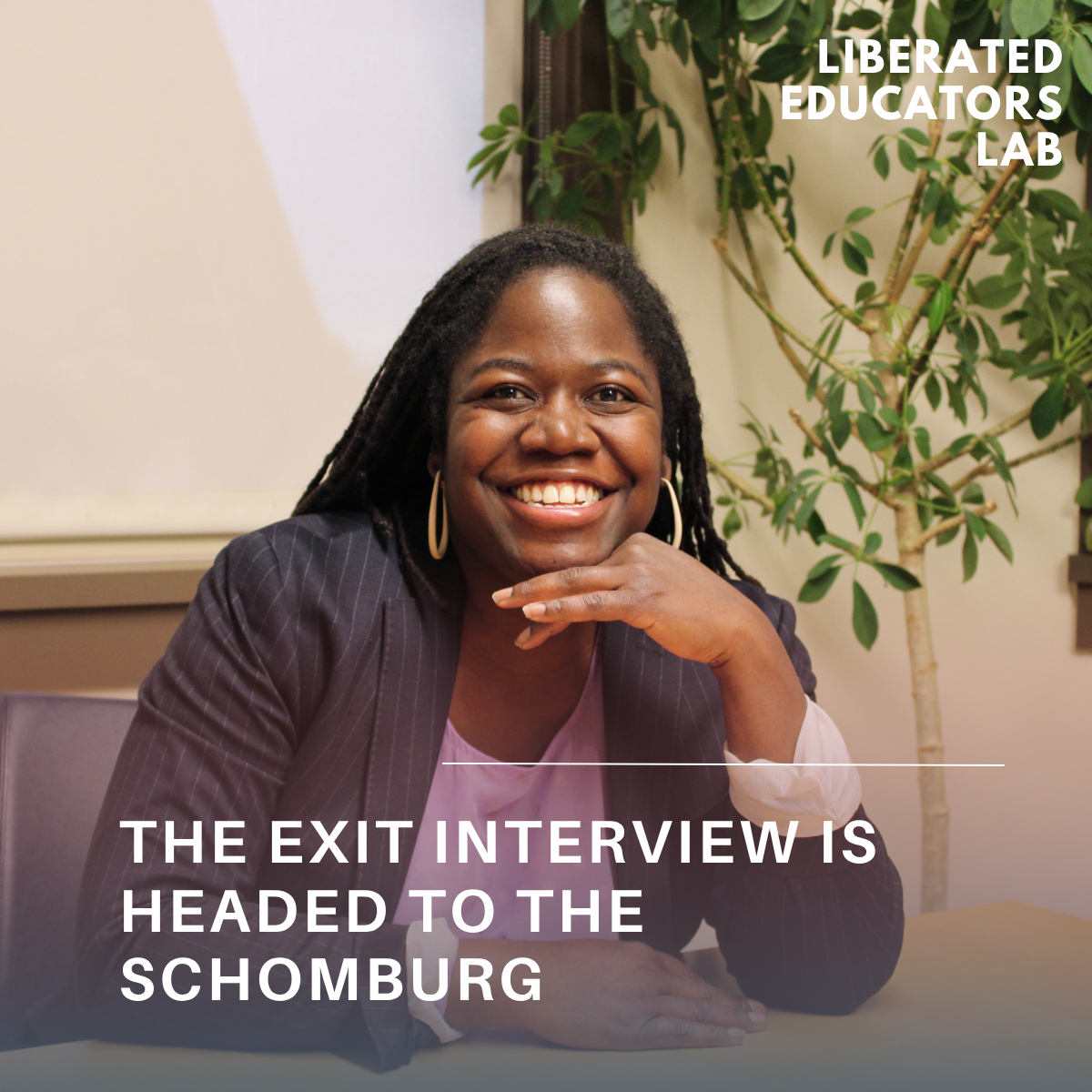
Community, Calling & The Climb with Dr. Nadia A. Bennett

Dr. Nadia A. Bennett doesn't just talk about leading; she's lived it, from an air mattress on the floor of a Philly apartment to founding her own national education consulting firm, When Brown Girls Lead.
In this episode of The Exit Interview: A Podcast for Black Educators, I sit down with Dr. Nadia for a raw, spirit-filled conversation about what it actually takes to climb the educational ranks as a Black woman. Dr. Nadia shares the unlikely moments that shaped her path: a stranger's advice in a retail store, the loss of a beloved cousin, and a woman in a Howard cohort who looked her dead in the eyes and said, "You're called to this." She talks openly about the grief of leaving a school where she poured everything, the tokenism she faced as a charter superintendent, and why she walked away from a six-figure leadership role without a plan.
This episode is just as much about what comes after the exit. Dr. Nadia breaks down how she built a thriving consulting firm powered largely by Black women, why psychological safety matters more than job security, and what she wishes someone had told her before she stepped into the principalship.
If you've ever felt the tension between ambition and belonging, between sacrifice and self-preservation, this episode is for you.

 RSS Feed
 Apple Podcasts
 Spotify
 Amazon Music
 iHeartRadio
 PlayerFM
 Deezer
 About This Episode
Dr. Asia sits down with Dr. Nadia Bennett — educator, turnaround leader, former charter superintendent, and founder of When Brown Girls Lead — for an honest, spirit-filled conversation about what it truly takes to rise through the ranks of education as a Black woman. From humble beginnings in New Orleans to leading schools and districts across the East Coast, Dr. Nadia's story is one of calling, sacrifice, pain, and purpose.
In This Episode, We Cover:
- How a stranger's advice in a retail store redirected Dr. Nadia back to her calling in education
- The loss of her cousin at 27 and how that grief became the fuel for her purpose
- Moving from DC to Philly with only what fit in her car — and sleeping on an air mattress for six weeks
- Being rejected for leadership positions twice before finally getting her shot as an assistant principal
- Why the assistant principalship is her favorite leadership role — and what gets lost as you climb higher
- The jump from AP to principal: what nobody warns you about
- Facing tokenism, racism, and sexism as a charter superintendent — and why she resigned without a plan
- How a single coaching conversation ignited the idea for When Brown Girls Lead
- Building a firm where 70% of staff are Black women — and why that matters right now
- The role of community, sisterhood, and psychological safety in sustaining Black women in leadership
- What wellness actually looks like now vs. what it looked like in the trenches
- Her advice for Black women stepping into leadership for the first time
Notable Quotes:
"Do what you love and the money will follow." — The words a stranger said to Dr. Nadia that changed everything.
"Pain has often been the catalyst — the thing that made me stand up and say, I'm going to become better." — Dr. Nadia Bennett
"As a Black person in leadership, I feel like I always have to prove myself while I watch white colleagues be welcomed into leadership with grace." — Dr. Nadia Bennett
"Find community and hold on to it. It matters now, but it will matter even more later in your career." — Dr. Nadia Bennett
Books Mentioned:
- Parable of the Sower — Octavia Butler
- The Bluest Eye — Toni Morrison
- The Alchemist — Paulo Coelho
- The Artist's Way — Julia Cameron
Connect with Dr. Nadia Bennett:
- 🌐 Website: nadiabennet.com
- 💼 LinkedIn: Dr. Nadia A. Bennett
About When Brown Girls Lead: A national K–12 education consulting firm offering leadership coaching, equity and anti-racism professional development, and leadership retreats for principals, superintendents, and directors.
Connect with the Exit Interview: Hosted by Dr. Asia | A podcast for Black educators
Preserving Black Educator Stories | The Schomburg Center
The Exit Interview: A Podcast for Black Educators has been accepted for archival preservation at the Schomburg Center for Research in Black Culture, part of the New York Public Library. This historic milestone ensures that the experiences, knowledge, and voices of Black educators who have left traditional education will be preserved for future generations.
Learn more: https://www.liberatededucatorslab.com/schomburg
The Migration of Black Genius
Where does Black genius go when it leaves an institution?
Through The Migration of Black Genius, Dr. Asia Lyons examines how Black knowledge, creativity, and expertise move, evolve, and expand beyond the institutions where they were once cultivated or constrained.
The Exit Interview contributes to this ongoing intellectual work by documenting not only why Black educators leave, but what they carry with them and what becomes possible afterward.
Explore the framework: https://www.liberatededucatorslab.com/migration-of-black-genius
About the Creator
Dr. Asia Lyons is a qualitative researcher, storykeeper, public scholar, speaker, and founder of Liberated Educators Lab, where research, storykeeping, and healing/wellness intersect to illuminate Black experiences, preserve community knowledge, and imagine possibilities beyond institutional boundaries.
Learn more: https://www.liberatededucatorslab.com/
Dr. Asia Lyons (0:00): We do have a choice to turn that pain into purpose, right? To turn tragedy into triumph. The human mind and the human spirit learns best when we don't always get it right.
Dr. Nadia A. Bennett (0:20): Welcome to The Exit Interview, a podcast for Black educators. This podcast is more than storytelling, it's archival justice. For too long the voices of Black educators who have left traditional spaces in education have been silenced, dismissed, or left out of the record. Here we reclaim that narrative. Every interview is a living archive capturing the wisdom, resilience and truth of black educators who have shaped classrooms, communities and generations.
Dr. Nadia A. Bennett (0:50): Together we name the challenges racial battle fatigue, systemic inequities, the weight of caring too much, but we also honor the brilliance and joy that Black educators bring. The creativity, the innovation, the care, and the deep legacy of resilience. Each episode is both a testimony and an offering, an act of preservation for those who came before and a guide for those still walking this path today. By listening, you are helping to ensure that these stories are not lost, but held celebrated and passed forward. So take a breath, settle in and join us as we honor the past, uplift the present and reimagine the future of education together.
Dr. Nadia A. Bennett (1:35): All right, folks. Welcome back to the exit interview, a podcast for black educators with me, your host, Doctor. Asia, another special guest in the studio today. So Doctor. Nadia Bennett, I was low key stalking her on her socials because she has some really profound things she's putting out.
Dr. Nadia A. Bennett (1:53): And I just messaged her like, Hey, I love for you to come onto the podcast. We had a little conversation and she's like, let me find out more about what you're doing first before we got into the studio. And I'm so glad that she said yes. So Doctor. Nadia, welcome to the show.
Dr. Nadia A. Bennett (2:07): How are you today?
Unknown Speaker (2:08): I am absolutely wonderful. Thank you for asking and thank you for having me as a guest. I'm excited to be here.
Dr. Nadia A. Bennett (2:14): Yeah, of course. So start off with, tell us a little bit about yourself.
Dr. Asia Lyons (2:18): Yes. So as mentioned, Doctor. Nadia Bennett, I am the founder and CEO of One Brown Girls Lead, an education consulting firm that serves schools and districts K to 12. I coach leaders, principals, superintendents, directors, and I also support schools with equity and anti racism work. I have been doing that for a few years now.
Dr. Asia Lyons (2:40): Before that, did a bunch of other things, which I'm sure we'll talk about in a moment. Outside of my work, I am a lover of reading. I love books by black woman authors. Those are my first choice. I love other books that just keep me engaged.
Dr. Asia Lyons (2:56): Love to read, love a good vacation, love a good trip, love time with family, friends, a good season of life.
Unknown Speaker (3:04): Yeah, I hear that. What is one of your favorite books? I know this is not a part of the list, but now you thinking about it, what's one of your favorites these days?
Dr. Asia Lyons (3:11): I would say, well, it's not a new book, but a Parable of the Sower by Octavia Butler. Definitely enjoy that one a lot. You gotta go to Tony. Anything. I mean, The Bluest Eye is just a classic.
Dr. Asia Lyons (3:22): I know that people always talk about the book, but it should be talked about if it was something that was significant for you and it helped to shift your perspective and that's what it did for me. So I'm always going to talk about Toni. So those are a couple of my favorites.
Dr. Nadia A. Bennett (3:34): Awesome. Thank you so much. Yeah. I read the bluest eye just recently. It was at an Airbnb on their bookshelf.
Dr. Nadia A. Bennett (3:42): And so during that time I was in the Airbnb, I finished it and it's been a long time since I'd read it. So I was glad to have it in my hands. Then a bookstore near my house had a first edition of Lewis Eye and it was like $20. It was bookstore. And the guy's like, I'm surprised it's still on the shelf.
Unknown Speaker (3:57): I'm like, Yes, on the shelf for me. I
Dr. Asia Lyons (4:03): will say too, those are my favorite books that, again, speak to who I am. When it comes to spirituality and growth, I also love The Alchemist. It's a classic, I recommend it. I have read that book probably 10 times in my life. So if you're growing and becoming a better version of yourself every year, you can get different meaning from it.
Unknown Speaker (4:23): Yeah, for sure.
Unknown Speaker (4:25): Yeah, that's one of my favorite reads.
Unknown Speaker (4:27): For sure. Thank you. All right. So let's just go ahead and jump into it. Tell us about your education journey.
Dr. Nadia A. Bennett (4:32): How did you know that education was for you?
Dr. Asia Lyons (4:34): I enjoy answering this question because it's interesting intuitively. I always knew that education was for me And I also got off the route a bit when I was an undergrad because I was listening to people. And I think that that's a really good life lesson that I learned at that time. So when I say intuitively, I've always known that education was for me. My mother will tell you, I always loved school.
Dr. Asia Lyons (5:01): Right. I was a person who like, you had to get me my school supplies when they would do Do them crayons late because it's gonna be an entire problem. I was definitely that person. My teacher said I need crayons and tissue. We need to go on and go to the store and get the stuff.
Unknown Speaker (5:16): Right now, yes.
Dr. Asia Lyons (5:17): Right now drove her crazy. So, always loved school. And as I've grown up and I've realized, I reflect back on that, school was something that I was good at. And I knew from the beginning that I was good at it. And so it became a safe space where I could thrive.
Dr. Asia Lyons (5:34): It would be the same as a young person playing a sport or playing an instrument. I was good at it and I enjoyed it. I always loved school. When I went to undergrad, I knew I wanted to be a teacher, but when I began to declare my major after my freshman year, people said things such as, teachers don't make a lot, why would you do that? And I come from humble beginnings.
Dr. Asia Lyons (5:58): So I had a mindset then of, I'm not going to go to college and not do something that's going to make me a lot of money. Didn't come. I'm not going to do all this for no reason. And so I changed my major to business with a minor in history because I always enjoyed history and humanities and things like that. And then I graduated from undergrad and felt just as lost as a person could be and was honestly just working jobs, wasn't really focused.
Dr. Asia Lyons (6:28): How I got into God returning me to my passion, I actually used to serve at church and I volunteered to serve with the children's ministry. I found myself being so extra in the children's ministry, just probably wearing them children out, just wanting them to do their poems right and look at the audience and speak with their passion. God did use that as an opportunity for me to see, you really enjoy working with children. And that same job, it was just a random job. It's not even worth mentioning.
Dr. Asia Lyons (7:08): But a woman came in one day, she was a black woman. Now mind you, I'm maybe 22, 23. She came in, I was in Atlanta. She had lost her luggage. She flown in from California.
Dr. Asia Lyons (7:20): She lost her luggage and it was her daughter's wedding. It was quite the event. She had to rush in and buy everything that she could because her luggage was gone and she had money. Let's say she bought tons of shoes, tons of clothes. Let's say she spent $2,000 Like it wasn't like blank.
Dr. Asia Lyons (7:36): Like it just was nothing. And so I asked her, I said, what do you do? And she said that she worked in real estate. And I said, so we started a conversation and I kind of expressed to her that I'm trying to find my way. And she said to me, do what you love and the money will follow.
Dr. Asia Lyons (7:51): And I will tell you, I couldn't pick that woman out in a lineup today. I kind of remember fair skin, but I wouldn't know if I saw her. That seed that she planted in me that day was the beginning of me having the courage to do what I knew that I love. And so that's how I got into education. I began to like do certifications and begin to, you know, start the whole process.
Dr. Asia Lyons (8:15): But that's how I got into education, how I got into leadership.
Dr. Nadia A. Bennett (8:19): Let me pause you for one second before we continue. So what's really interesting about this is that over the years of listening to people's stories, there are so many folks who will talk about some random person or someone they knew just said one thing that totally changed the trajectory of their life and that helped them to go into education. We were just interviewing another person who said Doctor. Jessica Reed Thomas, that she was in business school, I believe it was business school and the maintenance person in the Education Building where she was doing her studying said, you need to be an educator. And I drug her to find this person and she eventually got into education for myself.
Dr. Nadia A. Bennett (8:59): I was an early childcare center at a community college in business major And the person in the work study that I was working at said, I think you should be an educator. And I was also just as lost as you want to be. And so it is like, I just wanted to pause you for a second because it's so interesting how people just say one thing, one time, and it can just totally change the way that people life turn out. Yeah.
Dr. Asia Lyons (9:23): I agree completely. I'll give you another one. When I was going from principalship, I'd been an assistant principal for several years and then principal for many years. I hit some milestones very early in life. Assistant principal at 28, principal at 31, and my 30 birthday was around the corner and I didn't know what I was going to do with my life because I was like, I know I ain't going be a principal for the rest of my life.
Dr. Asia Lyons (9:47): I'm only 34 going on 35. And I began to really pray and ask God, what's next for me, etcetera. Ended up joining this cohort, urban superintendents, through Howard University, that's where I got my master's, to see if I wanted to be a superintendent. I didn't even know, just wanted to see if this was the path. And there was a woman that I met, it was maybe the fifth session, And that woman looked at me and said, a lot of people in this room want to be superintendents, but you're called to it.
Dr. Asia Lyons (10:17): And I said, well, now, you know, and once again, it started me on this path, and within a year I was a charter suit.
Unknown Speaker (10:26): I don't want you to give too much away now because
Dr. Asia Lyons (10:31): Honestly, this goes back to what I was mentioning about The Alchemist being one of my favorite books. It talks about when you're on the journey and you're present in the journey, whatever your belief in your higher power is, whether it's God, Allah, the universe, whatever you believe, I'm not here to judge what people believe, but most people believe in a higher power. Will they support your journey and your path so much that they will give you these things along the way to confirm that you're on the path? And that confirmation can come from people, an experience, something that you see, but we become so much better at figuring out life and the spirituality of life when we're present enough to pay attention to what we see across on the journey, what the universe sends us when we're on it.
Dr. Nadia A. Bennett (11:20): I always think of it as breadcrumbs, like just kind of just keep bread crummy, like, oh, there's a sign, there's a book, there's a person. You look up and you turn around like, how did I get here? It was all the breadcrumbs, all the words of wisdom, a random book. We're gonna be totally off topic, but I saw this video with Doce, the rapper, and she was saying how she had found the artist's way in a box of books on the curb when she lived in New York. And she pulled it out and she read it and she attributes that the writing in that book to her success, right?
Dr. Nadia A. Bennett (11:56): And it was someone putting that book on the curb and her pausing, going down the right street in on the right day, right? And pausing in that book out of all the whatever else was in that box and then reading it. And so you're right, it's just that's how our journeys, if we believe, if we listen and that's how it goes. But listen, you won't have me, Doctor. Nadia, let's get focused here.
Unknown Speaker (12:20): All I knew was ask a question.
Unknown Speaker (12:22): You're right, you're right.
Unknown Speaker (12:23): That's all I did.
Dr. Nadia A. Bennett (12:24): You're right. So let's back up a little bit. It sounds like you went back to school then. And so tell us about going back to school, the conversation with family, because I love to know what your family thought about that. And then where you started off after you graduated.
Dr. Asia Lyons (12:37): I will answer that question, but in a way that's very true to me. The conversations with family actually wasn't a turning point for me. For my family, it was more or less me moving away than it was going back to school. That's what it was. At the time I was in Atlanta, I have some first cousins that are basically my sisters that live in Atlanta.
Dr. Asia Lyons (13:02): And I had been down there for a few years and we were getting along just fine. Getting along with life, I mean, just fine. And then when I decided to apply for Howard and I had gotten in, it was kind of like, where are you going more than anything? But it wasn't so much of a where are you going that they were trying to hold me back. It was just, well, this is new and we're going to have to get used to this.
Dr. Asia Lyons (13:27): But what's more significant in my journey is the thing that truly gave me the courage to go back to school. I started to, as I mentioned, God showed me my passion, my love for working with children. And I began to do that process when I was in Atlanta. And then, so I was doing it, but not nearly as aggressively as I could have, but I had started on the journey, let's just say that. And then one of my first cousins, he was just a year and a half older than myself.
Dr. Asia Lyons (14:02): We grew up not too far away from each other. Mother was a nurse, father was an accountant. Their household had a lot more money than my household had. We went to the same high school. We went to first magnet school for black children in New Orleans.
Dr. Asia Lyons (14:19): And he had what people would typically look at and say like, this is a pretty steady functional household. Well, he made some choices that were not beneficial to him at all. When he was in his early twenties, he tried a drug that exposed a heart condition. And that heart condition led him to having open heart surgery at the age of 25. And lasted for about a year and a half and he passed away at 27.
Dr. Asia Lyons (14:50): And obviously it was incredibly painful, incredibly shocking. And at the same time was a big turning point in my life because it reminded me that our gifts and our talents are not for ourselves. And I remember being at his funeral and saying, I have to do more. And my desire at that time was I want to keep as many black boys out of jail and out of an early grave as possible. And the best way I knew how to do that at that time was education because education was my way out.
Dr. Asia Lyons (15:29): I had finished undergrad and I was doing okay. It was at his funeral that I decided I was going to do more. And I would say within thirty days, I applied to Howard's master's program, found out ninety days later that I got in and a year after he had passed away, I was moving to DC. I share that also because none of us ask for pain. No one wants to wake up and have to experience something so painful and to know that suffering.
Dr. Asia Lyons (16:01): And we do have a choice to turn that pain into purpose, right? To turn tragedy into triumph. The human mind and the human spirit learns best when we don't always get it right. We learn best through getting it wrong and pain. When it's great and everything's going well, most people aren't learning from that.
Dr. Asia Lyons (16:25): They're just getting along with life. I like to remind people of that because, like I said, we have that responsibility of turning our pain into purpose and that's what I did. So it's important to me as I share my journey over the years to not let my cousin's life and his legacy, I have to mention that so people know it was his passing that was the turning point for me. And I got into Howard, did that two year program in administration, and a couple years after that, I got into leadership and my career has been upward ever since.
Unknown Speaker (17:00): Yeah. Did you teach in the classroom first or were you
Dr. Asia Lyons (17:04): Yeah, yeah, yeah. So I taught what was, I taught when I was in DC and then when I got out of the program at, Howard, I actually went to Philly and I taught some more and then I got into leadership.
Dr. Nadia A. Bennett (17:15): Okay. Got you. So tell us towards the end of your time in the classroom, leadership had probably been calling you, but what was that decision like to say, Oh, you said no. No, no, no. Because
Unknown Speaker (17:29): that's another story, but
Unknown Speaker (17:31): that's this story. We want to know how you went from a classroom to leadership.
Dr. Asia Lyons (17:35): Oh, goodness. So went to Howard for two years. Now, granted, I mind you, I had taken a few years between undergrad and going into the master's program. I started to live an adult life. So I purchased a car.
Dr. Asia Lyons (17:47): I had real bills, you know? And then I went to Howard and had to take out school loans for that. And so I had more adult bills and I had done some teaching. Couldn't nobody tell me I got this master's from Howard. I'd already done my teaching and I had taken my principal certification.
Dr. Asia Lyons (18:02): I was a certified principal because I had just come out of the program. Couldn't nobody tell me I wasn't going straight into leadership. Like what are we talking about? Right?
Unknown Speaker (18:10): Oh, skipping the classroom altogether.
Unknown Speaker (18:12): Yeah. Oh yeah. I was like, I've done my time.
Unknown Speaker (18:14): Oh, okay. I did Sunday school.
Unknown Speaker (18:17): Done that.
Unknown Speaker (18:18): Easy, easy.
Dr. Asia Lyons (18:19): I got this. And so I knew, so coming out of Howard, I was applying for leadership positions. And let me clarify something coming out of Howard. It wasn't my principal cert. I had taken the test and I had packed the test because it's not just a test.
Dr. Asia Lyons (18:35): It's a couple of things you have to have, but I had passed the test. So I felt like I was good to go. I applied for some leadership positions, got interviews for a place down in North Carolina, and then got an interview for up in Philly. I was still in DC at the time. And I made it to round two or three for the one in Philadelphia.
Unknown Speaker (18:54): I didn't know anybody in Philly, by the way. They caught my eye because at the time, again, I was broke. Let's just be honest. I was very, very broke. I needed some money.
Dr. Asia Lyons (19:04): At the time they had a partnership with Howard and they were offering like a $2,500 signing bonus to people coming out of Howard. Was like, Oh, I'm definitely applying.
Dr. Nadia A. Bennett (19:13): And what year is this about?
Unknown Speaker (19:15): Oh, this is twenty ten or '11.
Unknown Speaker (19:18): Okay, some good money.
Dr. Asia Lyons (19:19): Girl, what you talking about? Yes. So thousand and nine or '10, because '11 actually started in Philly, so it was '9 or '10. And so I applied, got to like the second or third round. And I drove from DC to Philly, did the interview and drove back in one day because I didn't have money to stay at a hotel.
Dr. Asia Lyons (19:42): And when I was finishing that interview, the person doing the interview said to me, we really like you. We think you're great. We think you'd be good for the organization. And we would like for you to come in and teach here for at least a year, at least, understand our system, how we do things, and then reapply for leadership. I went home and cried and cried and cried because my perspective was, it sounds like I've done all this work.
Unknown Speaker (20:11): You didn't see the Sunday school on my resume? I thought.
Unknown Speaker (20:14): I'm so confused. I've taught already. This is funny when you think about it, right? I was like, I have a master's from Howard. Do you know what Howard University means?
Unknown Speaker (20:26): I'm black.
Unknown Speaker (20:27): Doctor Nadia, I appreciate your audacity in this situation.
Unknown Speaker (20:31): Oh, I couldn't believe this man was telling me, I was labrogasted. Like, what are you saying to me? I didn't understand. Went home and cried and cried my little eyes out. And at the same time began to pray about it.
Dr. Asia Lyons (20:45): I've always consulted God, talked to God about what my direction is. And through prayer, it was confirmed that Philly is where I needed to be. And I moved to Philly, and I want to keep emphasizing how broke I was. I was so broke that I did have a car. I moved from DC to Philly only with the things that could fit in my car.
Dr. Asia Lyons (21:07): Left, like, my bed and all the big things with someone that I knew until I got to Philly to get my first check to send back so somebody could bring my things up to me. So my first six weeks, maybe, in Philadelphia, I was on an air mattress. My TV was on the floor. I had like flipped my laundry basket over, put it on top of some books or something hard so that I could sit on my laundry basket to wash my TV that was on the floor in my living. That's what I had to do, you know?
Dr. Asia Lyons (21:38): And then when I got my first check, I sent the money for somebody to get a truck and drive my bed and things up to me. And I started teaching there, but that was enough for me because I had gotten confirmation that that's where I needed to be. I hadn't told that story in a long time. That's funny. I forgot about that, but that's what I did.
Dr. Asia Lyons (21:56): So then started teaching things were going well.
Unknown Speaker (22:00): What grade and what, like middle, high, elementary?
Dr. Asia Lyons (22:04): Yeah. So I was always a high school teacher and I always taught history. So that was in BC as well as in Philly. And so in Philly, I taught African American studies and I taught US History, African American history and US history. And so that was African American history was ninth grade, US history was eleventh grade.
Dr. Asia Lyons (22:22): So I was between the two grades and everything was going well. I was a good teacher. They had made me the history lead because I had teaching experience. I was a history lead. Then after the first quarter, the organization put out the in house application for leadership again.
Unknown Speaker (22:40): And I was like, well, I'm going go apply.
Dr. Nadia A. Bennett (22:42): They hadn't filled that role that you applied for or they just had They a different
Dr. Asia Lyons (22:47): would do general leadership. So anybody that's applying for assistant principal anywhere, it wasn't a particular
Unknown Speaker (22:54): Oh, got you. Got you.
Dr. Asia Lyons (22:55): This was a really yeah. So anyone that is applying, this is the application for it. And then once you got the job, they will place you at a particular.
Unknown Speaker (23:02): Got you. Okay.
Dr. Asia Lyons (23:03): I was just applying for the AP role and applied in October, found out in maybe January that I didn't get the job again. And I was devastated. The first time I cried, then like was able to quickly get back up and move on. Cause at least I had a job, guess maybe that wasn't my thinking. This time it was really, really tough.
Dr. Asia Lyons (23:25): And I would say for at least two months, I wouldn't call it depression because that's clinical, but I was sad for several months. And at the time I just could not understand what God was doing, you know? And then one day I'll never forget this day. I was in my classroom and this was like the end of April and I had been talking to God and my kids were about to come in. So I'm standing up to get my projector and put it in place and all that.
Dr. Asia Lyons (23:54): And I said to God, I said, if you want me to be a career teacher, then that's what I'll do. And I said, I don't know how I'm going to pay these loans back, but if that's what you're calling me to do, I'm okay with it. And that was authentic. Because see sometimes again, whatever our higher power is, we can say, okay, I surrender, but we just saying it because people say that's what you're
Unknown Speaker (24:18): supposed say. Yeah. Yeah.
Dr. Asia Lyons (24:20): That was my first time in my life where I truly understood what it meant to surrender. I had gone through the process. I had gone through the arguing and tussling and fighting with God and fighting with the decision and the tears and yada yada yada. And I came to a place of truly, I've resigned myself to, if this is your call for my life, then I'll do it. And Doctor.
Dr. Asia Lyons (24:41): Asia, no exaggeration, a week later, someone who I didn't even know at the time, no, no, one of the current assistant principals of the school where I was, he had been selected to be a principal the following year and we didn't even know it. He came down to my hallway to my classroom and he said to me, We are looking for an assistant principal. We'd like for you to apply. And I jumped in the air. I was so excited.
Dr. Asia Lyons (25:08): I was like, Yes. And he was looking at me. He said, You still have to apply. I didn't care what he was talking about, because I knew I had been with God. And I knew that this was it.
Unknown Speaker (25:19): I knew he had sent me. And I did that interview for assistant principals, the easiest interview I've ever done in my life. It's like I had the job when I walked into it. I knew everything to say. It was literally perfect.
Dr. Asia Lyons (25:30): And that was my step into leadership.
Unknown Speaker (25:33): Yeah. I love that.
Unknown Speaker (25:34): That's what happened.
Unknown Speaker (25:36): I love that. And in my mind it's still on the laundry basket with the books and the
Unknown Speaker (25:40): And
Dr. Nadia A. Bennett (25:43): people tell the story of I had X amount of dollars in my pocket. Only had so much money and we figured it all out, we're led. So yeah, I love that. So tell us then, how was that assistant principalship? It was at what you imagined it would be.
Dr. Nadia A. Bennett (26:00): Cause you kind of said earlier, I did a couple of years here, couple of years here, so on and so forth. So tell us more about that leadership part of your life.
Dr. Asia Lyons (26:07): Yeah. So let me say I was at the same school for eight years and I was a teacher there and assistant principal as well as a principal. So I climbed through ranks in those eight years. Of all my leadership roles, the assistant principal was hands down my favorite.
Unknown Speaker (26:23): Why is that?
Dr. Asia Lyons (26:24): Oh, because the higher you go in education, the further away you get from the direct impact on students. The assistant principal for me was like the perfect mix of, I still get to be super close to the direct impact on students because I'm coaching teachers. The students still know me really well. I'm in classrooms all the time. I'm very involved with the data, all those kinds of things.
Dr. Asia Lyons (26:46): But I also am in leadership and I get to support the principal and I was only responsible or mostly not only, but mostly responsible for instruction, which is what I love. So that was hands down a great season of life. It was super hard. It was incredibly hard. Anxiety all day and night.
Dr. Asia Lyons (27:04): I dealt with all the isms, the, you know, having to prove myself and, you know, people counting me out, not believing that I was as talented as I was. Then I started to get, you know, strong academic scores and people started to pay attention. If she's more than just a disciplinarian or more than just someone who has good relationships with students, this woman knows what she's doing. Cause oftentimes in education, they relegate black people to positions of disciplinarian, where you be the dean. Because it's like, go discipline those kids that look like you.
Dr. Asia Lyons (27:40): Many of us are qualified and called to lead in that instructional space. And that's what I got to do and I loved it. Principalship was the hardest thing I've ever done. Even as a superintendent, I will say principal was harder than superintendent. For sure, for sure.
Dr. Asia Lyons (27:56): Principal, it was a huge shock to me. It's almost like teacher and assistant principal, different but similarities. Principal and superintendent, different but similarities. There's a gap between assistant principal and principal, where the similarities are not nearly as frequent.
Dr. Nadia A. Bennett (28:18): I've heard that. Yeah.
Dr. Asia Lyons (28:20): Yeah. It's a huge jump and almost like a shock, like a culture shock maybe to the nervous system because you go from being responsible for academic scores, instruction, coaching, etcetera, to, you know, if the boilers break, somebody's calling you. If there's a parent downstairs that's not pleased with something, they're calling you. You're responsible for everything, like enrollment. As an AP, sometimes you would help with enrollment, nah, as a principal you're responsible for it because that enrollment is a direct connection to that budget.
Dr. Asia Lyons (28:54): You've got to have to educate them children. And so the skillset required to jump from AP to principal, I don't think that that's talked about enough. You have to have your hands in so many more things when you go from AP to principal. So to answer your question, that may be the foundation of why, because I had to learn so many other things to be successful and I didn't have a frame of reference to understand that. Maybe that's why.
Unknown Speaker (29:26): Thank you. Folks, it's me, Doctor. Asia. If you've been nodding along with this episode, I want to personally invite you to Podcast and Pause, an unbook club for Black educators. This isn't your typical book club.
Unknown Speaker (29:45): My good friend Stacy Taylor Brandon and I are hosting a virtual space that joins the stories of Black educators from the podcast and our work supporting the wellness of Black folks. No reading required, just intentional listening, deep reflection, and community care centered around the episodes of the X interview. Starting in August, we'll be gathering virtually every other week to exhale, process, and pour back into ourselves. It's a space created for us, by us, to restore what the work tries to take. This space is for current and previous Black educators, which means teachers, professors, career professionals, social workers, admin, and so on.
Dr. Nadia A. Bennett (30:21): If you're craving connection, healing in a space where your experiences are honored and held, join us. Tap the link in the show notes or go to exitinterviewpodcast.com to learn more and get on the list. All right, back to the episode. I have a question because you talked about, you know, which so many folks on the show talk about proving ourselves, like taking these leaps and seeing the resistance, either from people who don't know you at all or colleagues that people like, Oh, I thought we were at least decent to each other, and now I can see that I'm in this position and it looks so different, our relationship. Can you tell the audience, during the time of you being an assistant principal and principal, and even into your superintendency, what did wellness look like for you?
Unknown Speaker (31:13): Hey, hold up folks. If you're not looking on this on YouTube, you missed the face you just made.
Unknown Speaker (31:18): So, wellness, what you talking about? Like, that was a dream. Work life balance was a dream. It just wasn't a reality. If excellence is your goal, work life balance is really hard to achieve.
Dr. Asia Lyons (31:32): I was not very good at wellness. I would say that I didn't even really understand wellness. I thought that I understood it then, but I didn't really understand. And I understand it now. I understand what it means to listen to your body and know when to slow down and you know, but I didn't understand that then.
Dr. Asia Lyons (31:50): I was working all the time And I don't blame, I mean, it's easy to blame, you know, the districts that I work for, the organizations or the colleagues or the difficulties of the job. I don't believe that I had an appropriate and healthy definition and understanding of wellness. We being black people are socialized to believe that we have to do twice as much. We have to work twice as hard. We have to bring excellence in everything that we do.
Dr. Asia Lyons (32:22): And that's true. It's not just how we're socialized. I've had experiences where, you know, as a black person in leadership, I feel like I always have to prove myself while I watch white colleagues be welcomed into leadership with grace. Like, come over here. We're excited to have you.
Dr. Asia Lyons (32:38): Let's coach you up. Kind of like, let me see what you're going do. And then when you prove yourself, that disposition changes. So I just wasn't good at it. I don't recommend it.
Dr. Nadia A. Bennett (32:49): Yeah. Thank you so much for that transparency. I had a feeling you were going to say that, but it's always good to hear different perspective because we, like you said, the scores were changing and all these things. So this idea, there's some sacrifices involved and I don't know how many people are thinking about that when they think about leadership or they think they can handle it. I'm sure people have all kinds of things that they do as they're kind of moving through administration to, I don't want say justify, but to try to figure out how to make it work.
Dr. Nadia A. Bennett (33:24): And some people are successful like that and their own definition of success and some people aren't. You started in your superintendency, you went into the cohort. You were talking about, she walked into class and a person said you were destined for it. So start us off there and tell us about your work as a superintendent.
Dr. Asia Lyons (33:41): So, yeah, that was stated to me March 2019. And in that same time period, had a mentor who was a superintendent in Philadelphia and a position had come across his desk. It was an executive director was a title and it was a charter superintendent, for all intents and purposes. And it come across his desk and he passed that position onto me. I had made a commitment to the school where I was a principal.
Dr. Asia Lyons (34:16): I had no intentions on leaving at all. And he passed that job onto me and I looked at it and the way that it came to me, that that woman just told me that I was called to this role. I was feeling incredibly inspired and something was stirring in me. This position comes my way and it's just all these things kind of happening. And I looked at the position, was like, no, I've already made a commitment, I can't do that.
Dr. Asia Lyons (34:45): Then it came back to me again and I started the application. Last day I entered the basics, name, resume, what you've done, and I stopped. And then this was like maybe three weeks later, the person who was recruiting, because they'd hired a national recruiter, the recruiter took my phone number from that partially completed application and called me and said, we saw that you signed the application, Your qualifications aligned.
Unknown Speaker (35:16): We would love for you
Unknown Speaker (35:17): to finish the application. I didn't even know people did that. I did not let you have to finish the application for somebody to call you. I did not
Unknown Speaker (35:25): even Obviously not. Obviously not. I was like, what?
Dr. Asia Lyons (35:29): And so that was kind of like, Nadia, me talking to myself, are you running from something that's kind of at this point feels like it's chasing you down? And I had to get along and really, I sought counsel and talked to everybody I knew, which now when I'm looking, now that I've grown up and have more confidence in my own decision making, I didn't need to talk to all those people. All I needed to do was get along with God and he made it clear. But that's who I was at that time. And I did decide to go through the interview process.
Dr. Asia Lyons (36:03): The minute that I decided to go through the interview process, I informed my current supervisor. He was not happy. And I told him everything that I just told you at that time, obviously I was able to name specific circumstances and dates and etcetera. You know, I feel like this is something I have to do. And he leaned into me and he said to me, you're going to get the job.
Dr. Asia Lyons (36:26): And I said, I was like, what? He said, Nadia, you have more talent and you're pinky finger than most people have. And I was just like,
Unknown Speaker (36:35): oh wow. Yeah.
Dr. Asia Lyons (36:37): I didn't know that he thought that about me. And he walked out of that office frustrated and rightfully so, because at that point, maybe we were in the beginning of April. And so I had the largest high school, very, very difficult work. And so that means in April, he has to find a new principal for the law. So I don't him at all for being frustrated, like at all.
Dr. Asia Lyons (37:03): Again, I was honest about the process. And as he stated, I went through that process. It took maybe five to six weeks and I was offered the job. And at that time in my life, it was the hardest thing I ever had to do professionally. I cried a lot.
Dr. Asia Lyons (37:18): People, so many people were mad at me. They made it seem like it was a betrayal. Like I didn't care. Like I was just being deeply unprofessional and I was dealing with a lot of passive aggressive behaviors and just general unkindness. Up until that point in my life, had not experienced anything like that evidence before.
Dr. Asia Lyons (37:39): I mean, some people just straight up stop speaking to me. Yeah. People are interesting. Like we cheer you on, we love you, we're here for you as long as you're serving us. And when you decide to stop serving us and doing whatever you're doing that works out for us, then I got a problem with that.
Dr. Asia Lyons (37:56): And that made it more difficult. I wouldn't call them friends, but I at least called them colleagues. I'd worked with them for years and many of them turned on me like that.
Dr. Nadia A. Bennett (38:05): I was going say, how did you handle that? I mean, community, family, like how did you manage to get through? Because obviously you still had some time between the transition that you still had to see these folks and that has to feel like, I don't wanna say, yeah, betrayal, grief, like what was that like for you?
Dr. Asia Lyons (38:24): A lot of grief. A lot of grief. Was very hard. I also want to pause and say there were a handful of two of people in that same school that did not shift on me, that understood that it was a difficult decision for me and could center me as a human being and not just the principal that they'd love to work with. I just want to name that because they deserve to be named as well And they know who they are.
Dr. Asia Lyons (38:53): And for a couple of them, we're going to be friends and colleagues for the rest of our lives because you stood by my side when 80% of the people tossed me away. So how did I handle that? That did have community at the time. So that was a big one. A lot of crying.
Dr. Asia Lyons (39:12): Like, honestly, there's gotta be a lot of anger, lot of frustration. I did tell a couple of people about themselves towards the end. They earned it. I don't regret it Because the people who were nastiest to me, they got a few words on my way out. Honestly, I never felt so good.
Dr. Asia Lyons (39:25): I still don't regret it. They earned every bit of it. But until that point, I kept it very professional. I still took the leadership. I maintained my integrity.
Dr. Asia Lyons (39:35): I maintained being an exemplar even when they made conscious decisions to not celebrate the work that I had done there. When I said there, I'm talking about my assistant principals who had been in that position the longest, and in a lot of ways had more influence over certain staff members than other people did. They used that influence to turn people against me. And it was hurtful and disappointing period. And like I said, there were people who wouldn't let them influence them and still stood up and said, No, this is what Bennett has done for us and this is the respect and got me cards and all those kinds of things.
Dr. Asia Lyons (40:09): It was beautiful. But yeah, a lot of pain. I recently took part in an anthology for black women in educational leadership. And my chapter is about how God designed this path for me. And often that the catalyst to change and transformation is pain.
Dr. Asia Lyons (40:34): And that pain comes in different ways. It comes in rejection, it comes in delayed dreams, it can come in just outright unkindness from people, things like that. But that's my story. I am incredibly successful and I'm incredibly grateful and pain has often been the catalyst. The thing that made me stand up and say, okay, I'm going to change.
Dr. Asia Lyons (40:54): I'm going to become better. I'm going to do this. I'm going to go to that next level, etcetera. It's a balance of life.
Dr. Nadia A. Bennett (41:00): Thank you. Thank you. Yeah, that's tough. That's tough. As you're talking, I just keep thinking about grief and about the ways that we build relationships in schools and districts and how it can be so challenging when we're shifting because what I've seen this, I've experienced is that especially if you're in the same school district, it felt like I was siloed.
Dr. Nadia A. Bennett (41:22): Then when I moved on to do something else, all the folks, like a lot of people didn't come with me and I was starting over again and there was this like, how can you leave us? Let alone the students but like the adults and so I always ask people like what that transition was like and you won't be the first person who didn't have everyone rooting for you because of their own insecurities, their own shortcomings. And that's unfortunate in education. And I'm gonna make some assumption that since you were teaching in Philadelphia, the school population of educators was diverse at least. And so we don't always want to assume it's all one race or one gender of people who are supporting or not supporting us when we're making these transitions.
Dr. Nadia A. Bennett (42:05): So I appreciate you sharing that.
Unknown Speaker (42:08): Yeah. Just for the record, it was mainly the white people that weren't supportive, that's just people. Mainly, not all of them.
Unknown Speaker (42:13): Because there was one woman.
Dr. Asia Lyons (42:17): There was one white woman. She wouldn't want me to say her name, but this is how I'll identify her. She was my last teacher neighbor. So she'll know who she is. She would not let them bring her down to where they were choosing to operate and not let them do it.
Dr. Asia Lyons (42:36): And she stood up for me and she stood up and she celebrated my work. I love her to life and for life. And the majority, like the majority of the people who understood that it was time for me to move on, they were people who look like me. But I also want to say, I've also been in a place where people who look like me have questioned me. Even though in all of my years of leadership, I've always been intentional about supporting my people and the progress of my people.
Dr. Asia Lyons (43:06): Hiring more black male teachers, because there's just not enough of them. Encouraging people that look like me to apply for advancement and promotion. Even when I was in leadership and I learned that when I got on the other side of that table and I learned that a lot of their white colleagues were negotiating higher salaries behind the closed door. And we weren't doing that. I kind of slipped that information to my people.
Dr. Asia Lyons (43:30): Y'all better start negotiating these salaries. Made tons of decisions. And there was a moment where they didn't agree with something I did. I don't remember what the thing was, but they didn't agree with something that I did. And they didn't show up for me the way that I would have hoped that they would.
Unknown Speaker (43:46): That was a big learning lesson for me as
Dr. Nadia A. Bennett (43:47): well. Sure. Sure. Yeah, that can be incredibly painful. Thank you for sharing that.
Dr. Nadia A. Bennett (43:53): Tell us about your work as a superintendent. I think that you may be the first superintendent on the exam review. Oh, I'm so glad. Yeah. So tell us all about that work, what it was like for you and what you did after that work.
Dr. Asia Lyons (44:07): Yeah. So that was also a calling, something I was led into. The big picture, I walked into the role, it was a charter superintendency in New Jersey, and they had experienced several years of poor leadership. I don't know your main audience is on the East Coast, but Pennsylvania.
Unknown Speaker (44:29): They they are.
Dr. Asia Lyons (44:30): So Pennsylvania, Philly specifically, is more lenient on charters than New Jersey. New Jersey don't play about, if you're going to be a charter, you got to have your ish together. If not, we'll quickly put you on probation and quickly Yeah. So this particular charter network was on their way to being put on probation. And so that's why they fired the leadership before me, did a national search, brought me in there to turn it around.
Dr. Asia Lyons (44:56): The highlights of that is that I was there for three years and led the district through COVID. Even in COVID, tripled some of the literacy scores, doubled math scores, brought us way back up academically. In my first year there, the charter department from the school district visited the school two times, which I had never experienced in like two times in one year. And they came by like my first three weeks in a row and then came by six months later. And after that second visit, they said that we were no longer at threat for being put on probation and they won our academic scores.
Dr. Asia Lyons (45:34): And like I said, we doubled and those scores increased. That's the beautiful highlight of that in that I was called into a place where things were not going well. The young people though needed that school in terms of the charter school was, and maybe still even does, outperformed their district school. And so, I'm really in support of that charter network. When you pull the curtain back as I stepped out the frying pan and into the fire, and that the racism was at a higher level, the sexism was at a higher level.
Dr. Asia Lyons (46:09): All of the people on the board were middle aged white men. I was the only black woman at a chief level position. It was tokenism all the way. They hired me to be the face because communities trust black women in these leadership spaces, and they should, but it was also like, come in here, do what we say, don't challenge us, just do what we tell you to do, like a stay in your place kind of thing. And I'm a woman.
Dr. Asia Lyons (46:39): Not if I see something that's happening that doesn't benefit children that look like me, I'm not going to just sit back and act like that's not happening. So in full transparency, a lot of successful things happened on the surface and I'm grateful for that. And I was at odds with the leader of the CMO from the day that I walked in there. And that one was tougher than the principalship because again, it was also during COVID. So there was more isolation, new city, new role, new responsibilities and heightened isolation is not good for the mental health.
Dr. Asia Lyons (47:17): And so that one was really tough. I don't regret it though, because it getting so difficult is the reason that I ended up starting my own company. And I love, love, love having my own company and I just thrive in this space. But it was after years of being a black woman with exceptional performance that never felt psychologically safe. It was always safe and I've never felt like, oh, I'm getting ready to lose my job because I'm skilled and I'm smart.
Dr. Asia Lyons (47:52): But there's a difference between that and psychological safety. At any point in my leadership, being in Philly and New Jersey, I never fully felt that. I had more of it in Philly, but I never still never a 100% felt that. And I remember when it got real tough, I like resigned and didn't have another job. I gave him a ninety day notice and just knew that I couldn't continue this.
Dr. Asia Lyons (48:14): And then I was going to let life happen and figure it out on my own, which I did. And it turned out really well. But I remember saying to myself, I want to create a space for people that look like me where they can feel safe and valued and cared for and seen. And that's a lot harder than I knew it was, but I am creating it. And 70% of the people that work for my company are black women.
Dr. Asia Lyons (48:40): And it's amazing. And particularly in this current time where we have with the current person that leads our country and black women are losing their jobs at the rate that they're losing their jobs, it just feels incredible to look at my payroll and see the number of black women that are earning money doing the work that we're doing. And they feel that psychological safety. It's just incredible.
Unknown Speaker (49:07): Yeah. Well, since we're on that topic, tell us about your organization.
Dr. Asia Lyons (49:11): Oh, I would love to. So when Brown Girls Lead, again, education consulting firm, K-twelve and I coach leaders. So after all these years of being a turnaround leader and doing some of the hardest work that can be done, I think turnaround principle is like, I think it's one of the top five hardest jobs in the world. But that's just my mouth. But anyway, after years of doing that, you're required to learn a skill set that most people that hold your title are not required to learn.
Dr. Asia Lyons (49:43): And so now I use all of my learnings and my skill set to benefit other districts and other leaders. And so we are a national firm. We work with schools as far up as Massachusetts and as far West as California. Many, many districts at this point. I have coaches that work at all levels, not only in one on one coaching, but we also do retreats, summer retreats, so that the principal doesn't have to worry about that.
Dr. Asia Lyons (50:08): We do the full summer retreat, review your data, support leaders with communication skills, a united front, creating strategic priorities for the district, the whole nine. So we do a lot of work there and we do a lot of equity anti racism work in that helping people to understand what we have been socialized to believe about the intellectual capacity of black children and how that shows up in the classroom. Why people have such low expectations for black children. Again, all of it is because of what we've been socialized to believe. And yeah, we're growing and thriving and yeah, that's what we do.
Dr. Nadia A. Bennett (50:45): Yeah. Love that. If people want to reach out and connect with you, who want to talk about working with your organization, how could they find you all?
Dr. Asia Lyons (50:54): Absolutely. So my website is nadiabennett.com. You can send us a message there. You can find me on LinkedIn at Doctor. Nadia Abennett, and those are the two best ways fit the website and on LinkedIn.
Dr. Nadia A. Bennett (51:07): Sounds good. So Doctor. Nadia, I have a couple of questions when you left that school district in New Jersey, and then you have that time and the time you started your business in between that time, what was going through your mind? Well, I mean, that's the work.
Unknown Speaker (51:27): No, it's not me. Listening question,
Unknown Speaker (51:29): okay? It's not me. I'm good at it. This is what I do. Yeah.
Unknown Speaker (51:34): What was going on? So can we just talk about, imagine being a person who maybe twelve years earlier could only move from DC to Philly with what they could fit in their car.
Dr. Nadia A. Bennett (51:48): Yeah. Can we pause for a second? Cause you're saying twelve years. You said this at the beginning of the podcast, that was very quick. Twelve years for some people is just in the classroom.
Dr. Nadia A. Bennett (51:59): And you're saying you went from A to J in twelve years. So I wanted to interrupt you for that. So go ahead.
Dr. Asia Lyons (52:05): Oh, no, I think that that's important. That's when it's a calling, when there's a call on your life and you commit to that call, see, we have to be in partnership with God. Right. And that means that as you mentioned earlier, we got to sacrifice. I've sacrificed a lot of things in my life because I knew without a shadow of a doubt, this is what God was calling me to do.
Dr. Asia Lyons (52:25): And I did that with my full heart. And I allowed the blessings to God opens doors when that happens. So yeah, that was a short period. Not when I initially started teaching, but let's say when I started teaching in Philly, that was a 2011 school year and I left as superintendency 2022. Yeah.
Dr. Asia Lyons (52:46): So yeah, it was a fast God anointed climb. But going from being that person who only had enough money to get from one place to the other, to being able to say, I can quit this job and I ain't got no plan, but I'm a go and give y'all this ninety day notice. That in itself is a testimony of how much one can grow and excel in a period of time in regards to like the finances. Cause I sure enough didn't have a plan. So gave him a ninety day notice right after I sent the letter of resignation, I got so anxious.
Unknown Speaker (53:17): I was just like, stressed. I was like, girl, what did you just do? You know, you got paid whatever. So I started to look for a job within sixty days. I had been offered a role.
Dr. Asia Lyons (53:26): So I was fine. And that role was the first role where I was not going to be in the K-twelve Building. What I did was because I was in a place of not knowing what was next, the company, we made an agreement that we would give me ninety days to figure out if this work was in fact the work that I wanted to do. That was one of the smartest things that I ever did because very honest on the front end about this is different. It was more central office type of work.
Unknown Speaker (53:57): I was like, this is very different for me. I don't know if I'm going to love it. I think I'm going to love it, but I don't know if I'm going to love it. And they were like, we understand. So I was like, let's give it ninety days, sixty days.
Dr. Asia Lyons (54:08): And I was like, no, this isn't for me. I told them at the sixty day mark, we agreed that I would be done at the ninety day mark. And I maintained my integrity the whole time, right. I was upfront the whole time and knew for a fact that I didn't want to do that, but also still didn't know what was next. And I was in my doctoral program.
Dr. Asia Lyons (54:26): And I think at that point I might've said, okay, I'm just going to focus on my doctoral program right now. And I'm going to just like, try to figure it out. And so I would get phone calls from people though, because again, I've worked on this on the East Coast for so long. I know a lot of educators. And so I would get a phone call and people would say, well, Hey, we have this chief position open.
Dr. Asia Lyons (54:45): Will you apply for this chief position? And I said, no, I'm not really interested in full time work. And I got a lot of those phone calls and turned them down. And then someone called and said, well, we just hired a new principal, brand new, never done a role before. Could you come in a couple of times a week and coach that principal?
Unknown Speaker (55:04): And I said, well, I can do that. Like, you know, was like, okay, that seems like a good balance. Let me do that. And Doctor. Asia, I tell you, I kid you not.
Dr. Asia Lyons (55:14): I went in that very first week, my joy, I had not felt a joy like that since I was an assistant principal. Promise you. And that was how I felt was the only confirmation that I needed. And I said, I think I can do this. And continued coaching that person for that whole school year.
Dr. Asia Lyons (55:34): And then, not knowing what I'm doing, just kind of started to put the information out slowly. So I said in my doctoral class, I was like, I'm going to do some consulting. And one of my colleagues, we still work together today. She said, Oh my gosh, I want you to come to my school and do some equity work. Really need it.
Dr. Asia Lyons (55:50): Keep in mind though, the reason that that was her immediate response is because all while I was in those doctoral classes and courses, I'm speaking my mind. I'm being myself a 100%. And I've never been a person to fold easily in regards to like conversations about race. So people had gotten to know me to be that person. So she became my first high paying client because I didn't even know what to charge people.
Dr. Asia Lyons (56:15): I believe she identifies as a Latina woman. I will always be very grateful to her because she's the first person that showed me, Oh, people are willing to pay for good work. And that gave me some confidence. I started to say it a bit more. I said it when I went to this conference, that conference.
Dr. Asia Lyons (56:32): By the end of that year, I had five clients. And then I said, okay, let me really put my mind to it. And I started to like really establish a company by the end of the next year, had 17 clients. And so I just kept going and focusing also that's how that occurred.
Dr. Nadia A. Bennett (56:46): Want to point something out that I think I hope the audience caught, but if not, I'm going to point it out. You said when I put in my ninety day within a couple of weeks, months, whatever, people were calling me about other jobs. And I said no. And I think that right there is the part that people can think like, oh, I just need to get a job. I'll just run into something else.
Dr. Nadia A. Bennett (57:10): Even laying on the back of their mind, I need to sit down somewhere or this is not a line for me or whatever. And from the fire pan to the fire to the fire to the fire to the right on and on and on. But you already said you knew like that's not for me. No, this is not for me. This is not for me.
Dr. Nadia A. Bennett (57:25): And when you heard something that piqued you, your interest, you did, you went into that and this is where you are today. And so I just want to talk to the audience and say like, listen to folks stories, have some faith in your intuition, your gut, your ancestors, your God, whoever, as you're going through this path of like, what should I do next? Or where should I be? Or I don't belong here anymore. What's the next step?
Dr. Nadia A. Bennett (57:48): Because there's so many folks that come on the podcast who say, we just talked about this. We bread crumb a little something and next, you know, we're off and running. Yeah. Thank you for sharing that. So my next question is, is there a black educator?
Dr. Nadia A. Bennett (58:04): You've been out here for a while in this game and as a student too, right? As a child, as a K, you know, own Sunday school experience maybe all the way up. Is there a Black educator or Black educators that you would like to shout out on the show?
Dr. Asia Lyons (58:16): First up, her name is Ms. Shapital, my eleventh grade ELA teacher. I pray that she hears this podcast. I will pass it on to somebody from my graduating class that can maybe pass it on to her. Ms.
Dr. Asia Lyons (58:31): Shapital gets my very first shout out because, so I went to a Magnum High School in New Orleans, you have to take a test to get in. And if you ain't do what you're supposed to do, you can get put out. And I did not do my eleventh grade term paper because I was silly and I was playing around and living my life. I didn't start taking things as serious as I needed to until I got to college. I was just always silly.
Dr. Asia Lyons (58:54): And I didn't do my eleventh grade term paper. And Ms. Shapataw, I was at home during the summer minding my business and I got that letter that said, You cannot return. I don't know if I've ever gotten dressed and begged my mama to drive me down to that school the faster in my life, because I had been with my class since ninth grade. I had one year levy truck put me out.
Dr. Asia Lyons (59:15): I went to Ms. Chapital and I begged. She just happened to be there that day too, because it was summer. I begged and I begged. I said, What happened?
Dr. Asia Lyons (59:24): What did I do? She made it clear it was because I didn't do the term paper and I had some behavior things that I had done that year. And she just felt like I wasn't taking it serious. I begged, she allowed me to do the paper late, turn it in, and she did let me come back that year. The reason I shout out Michelle Boutol is because she found an amazing balance of high expectations, but also meeting me where I was.
Dr. Asia Lyons (59:48): She didn't give up on me. I had to do that paper, right? Oh, you're behind, ain't coming back. That's the rule. But she allowed me to turn it in now.
Dr. Asia Lyons (59:57): I'm not even saying that that should happen often with children, but when I needed it, she saw how much it meant to me and she allowed me to do that. After becoming an educator, I have a deep, deep, deep respect for who she is, how she held that bar. She didn't play with us, but she also saw us as human beings and saw we needed a second chance. So much love, much respect to Ms. Chapinthal.
Dr. Asia Lyons (1:00:22): I hope you hear this. You greatly influenced and impacted this black woman that ended up walking in your footsteps. I'm forever grateful to you.
Dr. Nadia A. Bennett (1:00:31): Thank you. And then she was there in the summertime.
Dr. Asia Lyons (1:00:34): In the summertime, you know what? I found she ended up being the assistant principal. They were promoting her. So when we went to my senior year, she was my AP. I had gotten even more trouble because I was cutting up.
Unknown Speaker (1:00:47): God's hand is off my length.
Unknown Speaker (1:00:49): But God's hand, steady.
Unknown Speaker (1:00:55): Used to cut up. Thank you, Michelle Boutell. I turned out all right.
Dr. Nadia A. Bennett (1:00:59): Thank you. I love that. Thank you for sharing that. Our last question. So in your leadership time and your time as a leader in like a traditional K-twelve space, I asked you about your wellness and you were like, come on now sis.
Dr. Nadia A. Bennett (1:01:13): It didn't exist, right? You've had lots of experiences since then. And you've gotten a chance to talk to principals and coach folks and talk to people and community. And we're asking the same question about your wellness now. For you now, what does it mean to be well?
Dr. Asia Lyons (1:01:32): It's a wonderful question. Well, I've learned a lot since then. Being well for me is meeting my definition of success, which is to be able to live out my creativity and my passion, which is through the work that I do. Being able to rest in love, love that's self love, love from people in my life, And knowing that I actually can experience love and creativity better when I actually give myself physical rest. Right.
Dr. Asia Lyons (1:02:10): And that it's almost like you gotta pause so that you may be poured into. And I'm not talking about poured into by another person. I'm talking about poured into by what that intuition, that spirit, that inner being is guiding you towards. And so I rest, I sleep and I love my sleep. I think sleep is one of the best things that God has given us.
Dr. Asia Lyons (1:02:31): I travel a lot for work, but when I'm not traveling, I rest. I rest on the weekends. I step away from the work when I can, and I spend time with friends. So I take trips with my friends, but then even outside of the trips, because travel can be a level of stress in itself. I travel so much, sometimes just getting there can feel like another stressful situation.
Dr. Asia Lyons (1:02:55): So just being in the presence of people that I love and getting energy from that and being reminded of the great things that we've done together and so on. Reading books, sitting in the sun, drinking water, exercising. Wellness for me, like I said, is to be able to operate with those higher level things that I believe feed us and fulfill us in life, like creativity and love, but then also just being. So yeah, that's what wellness looks like for me. Going to my doctor's appointments.
Unknown Speaker (1:03:29): You know, there was times when I was too busy and I would miss appointments because, you know, stuff was going on, going to your doctor's appointments, take care of your physical body. Yeah.
Dr. Nadia A. Bennett (1:03:38): Yeah. I have one more question that came up just as we were talking, or you were talking, which is there are a lot of black women in education who would like to go into leadership. And is there a piece of advice you would like to give them? They're starting to fill out. This is about the time like this is for those who are listening to this, this is April when we're recording.
Dr. Nadia A. Bennett (1:04:00): This is a time when people are getting their announcements to be principals, assistant principals are thinking about that. Is there a piece of advice that you would only give black women looking back on your own career from here back that you think would be helpful to them as they're thinking about leadership?
Dr. Asia Lyons (1:04:16): For anyone going into leadership, find and keep community. Community can look like whatever you need it to look like, but understand that the role is incredibly isolating. You are going to be faced with white rage. You're going to be faced with misogyny and the patriarchal system. Those things, those are systems that are set up in this country.
Dr. Asia Lyons (1:04:38): So it's going to happen. The odds of you avoiding that are very slim. Know that it's coming and have community and don't let it throw you off your square. Cause that's what it's intended to do. Don't let it do that to you.
Dr. Asia Lyons (1:04:51): Know who you are, know your calling, be proud of your voice, become great at your craft and have your sisterhood. It could be sisterhood, brotherhood, wherever you feel safe, have that and hold onto that. I haven't been a principal since 2019. My principal friends, who we actually were friends when we were assistant principals too, they are still some of my closest friends, 100%. I still go on vacations with them, love them to pieces.
Dr. Asia Lyons (1:05:21): We had a beautiful community and we held each other down. Holding each other down is, it looks different for some people. For some people holding each other down is, I can't figure out how to do this thing. Help me problem solve. Send me this document.
Dr. Asia Lyons (1:05:36): Holding each other down for people like me is, girl, I just need to cry real quick. Can we just meet for a drink and you hand me a napkin and let me get it out? Like whatever that is for you, find that baseline, that safety and cling to it. That matters now, but it also will matter later in your career as well.
Dr. Nadia A. Bennett (1:05:54): Awesome. Well, Doctor. Nadia, thank you so much for coming on the Exit Interview podcast for black educators. Folks remember to take care of yourselves, take care of each other, stay in community. Don't isolate, drink your water, get your breast exams, get your teeth clean.
Dr. Nadia A. Bennett (1:06:10): You know what I mean? Take care of yourself and we'll see you on next episode. All right. Peace. Thank you for joining us for today's episode of The Exit Interview, a podcast for Black educators.
Dr. Nadia A. Bennett (1:06:26): Every story shared here is a reminder that our wellness matters and that thriving in education is possible when we create spaces of care and belonging. If today's conversation spoke to you, we'd love to keep in touch. You can sign up for our newsletter at xinterviewpodcast.com or connect with me on LinkedIn to stay up to date on upcoming workshops, consulting opportunities, and ways we're transforming stories into solutions through Lions Educational Consulting. Before you close out, take a deep breath. Remember that caring for yourself isn't extra, it's essential.
Dr. Nadia A. Bennett (1:06:59): Whether you're an educator seeking rest or a school leader reimagining support, you're part of this growing community of care.
Dr.
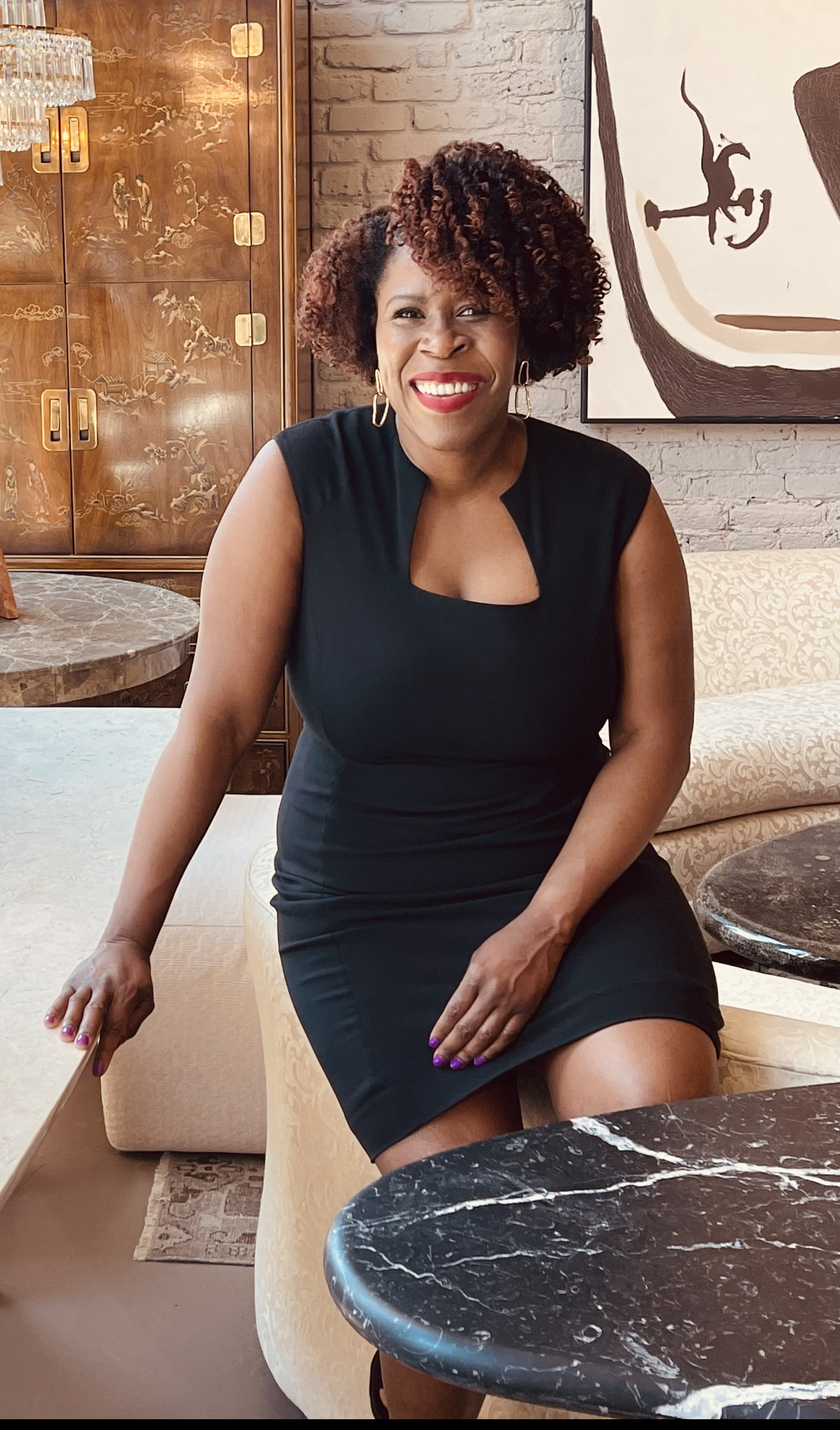
Dr. Nadia A. Bennett is the founder and CEO of When Brown Girls Lead®, a consulting firm dedicated to creating equity-driven schools and districts nationally. Through culturally relevant leadership development, she empowers educators to cultivate anti-racist schools. Her expertise is backed by a proven track record: as a former charter superintendent, she doubled ELA scores, revitalized a struggling district, and improved outcomes from attendance to staff retention.
Prior to that, as a principal, Nadia turned around Simon Gratz Mastery High School, boosting performance so significant that the school topped the Philadelphia Charter School ranking during her tenure. Her focus on data-driven decision-making, effective teacher development, and restorative practices led to tangible results for students, staff, and the community.
Fueled by a deep passion to dismantle barriers for marginalized students, Nadia earned degrees from Dillard University and Howard University, further honing her skills in the Urban Superintendents Academy through AASA. She also completed her doctoral studies, embodying her lifelong commitment to educational excellence.
Nadia Bennett is committed to closing the opportunity gap. Through her consulting, coaching, and leadership development, she works tirelessly to create schools where all children have the chance to thrive.