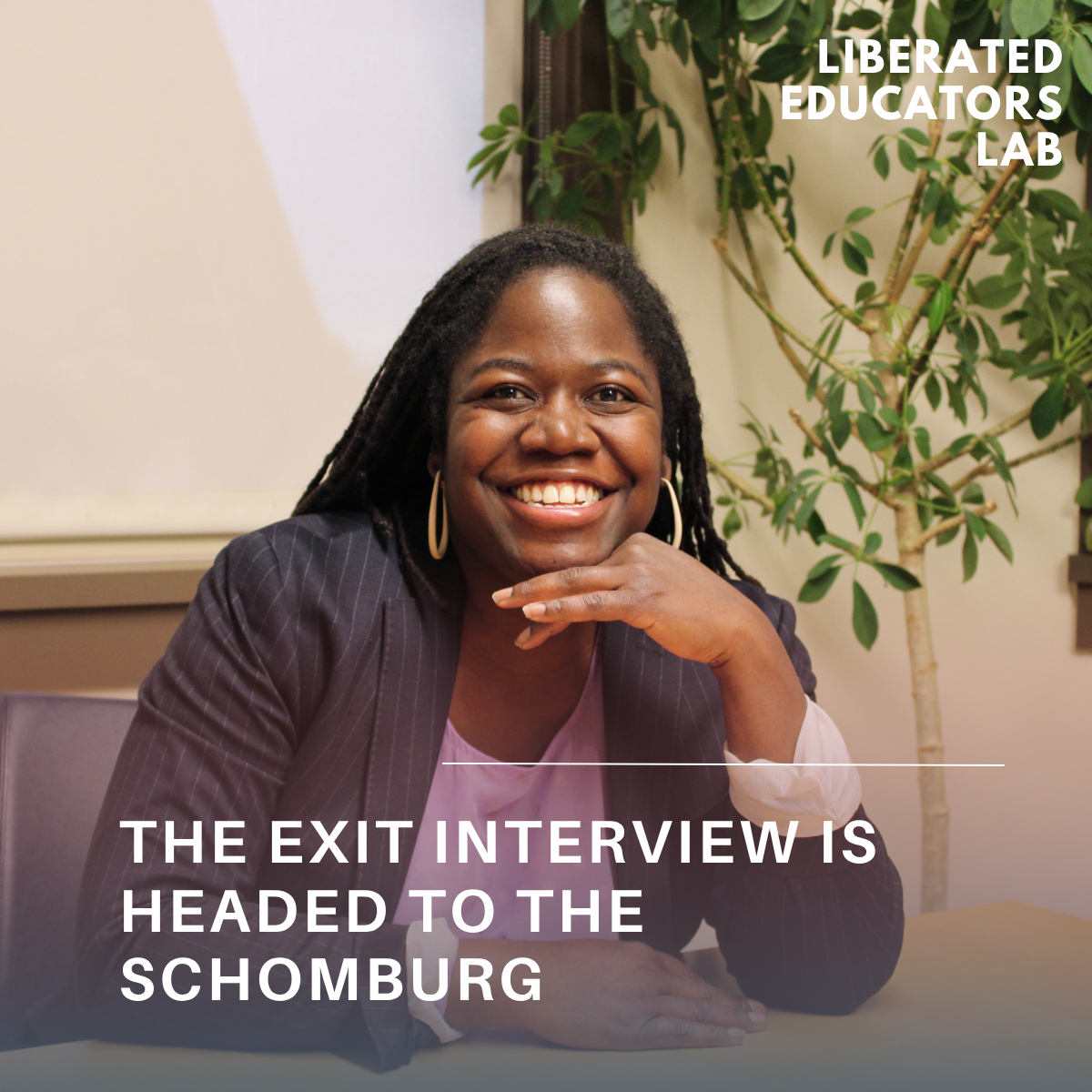
Out of the Frying Pan into the Fire with Kamye Hugley

Kamye Hugley is back, and this time, she's talking about what happens when you trade the classroom for the nonprofit world. Fan favorite Kamye returns to The Exit Interview to share her truth about making the leap from Black educator to nonprofit professional.
Spoiler: it wasn't the escape she imagined. From navigating workplace dysfunction to rediscovering her worth, Kamye breaks down how she transferred her teaching skills into a brand-new arena and what she wishes someone had told her before she made the jump.
If you're a Black educator eyeing the nonprofit sector as your next move, this episode is your required listening.

 RSS Feed
 Apple Podcasts
 Spotify
 Amazon Music
 iHeartRadio
 PlayerFM
 Deezer
 The Exit Interview: A Podcast for Black Educators "Out of the Frying Pan Into the Fire" — Kamye Hugley Returns Hosted by Dr. Asia Lyons
Episode Overview
Kamye Hugley — a fan favorite from Season 5 — returns to share her journey through nearly a decade in the nonprofit sector. After leaving traditional classroom teaching due to heartbreak over how her students with disabilities were treated, Kamye pivoted into education-adjacent nonprofit work. In this raw and candid conversation, she unpacks the highs, the workplace racism, the layoffs she survived (and resented surviving), and the voluntary resignation she wrote from her couch the night before she was supposed to return from medical leave.
Guest Kamye Hugley — Former educator turned nonprofit professional. Op-ed writer and advocate for equitable workplaces. Connect with her on LinkedIn: Kamye Hugley (all op-eds linked there)
Topics Covered
Leaving the Classroom Kamye left teaching after feeling deep grief and frustration over how students with disabilities were mistreated. Her transition wasn't just a career move — it was a trauma response. She carried guilt for her students' struggles with reading, later learning that years of systemic neglect — not her failure — were the root cause.
Translating Teaching Skills to Nonprofit Work Kamye shares practical advice for educators considering the nonprofit sector:
- Lead with leadership, not subject matter — highlight PLCs, DonorsChoose wins, tech adoption, and student data
- Quantify your impact: how many students, what proficiency growth, what did you facilitate?
- Lean on your classroom skills even when managing young adults — scaffolding, expectations, and structure still apply
Navigating the Nonprofit World Kamye worked primarily in AmeriCorps-affiliated programs throughout her nonprofit career — not by design, but organically. She grew from direct service roles into coaching and mentorship, eventually managing a team of ~8-10 AmeriCorps members (9 of whom were people of color, mostly women) at a large Miami high school.
The "We Got Y'alls" Epiphany Referencing Issa Rae's web series The Misadventures of Issa Rae and Insecure, Kamye describes her moment of clarity: "I have worked at a string of 'We Got Y'alls.'" Organizations that perform allyship and proximity to Blackness without genuine accountability.
Whiteness History Month — The Turning Point In April 2021, amid the Derek Chauvin trial and a string of high-profile murders of Black Americans, Kamye's organization sent a wellness email — then two days later sent a company-wide email with the subject line "Whiteness is toxic," including links to YouTube videos and a TikTok dance. As a newly appointed co-chair of the BIPOC affinity group, Kamye helped draft a letter signed by 8 employees pushing back on the initiative's timing, execution, and lack of inclusion in its planning. Key details:
- Leadership stood 10 toes down behind the decision
- HR launched an investigation into the letter's signatories — not the initiative
- The ordeal lasted 8 months
- Leadership admitted White fragility had been "prioritized" in the planning
- Half of the 8 signatories left the organization
Racial Grief Dr. Lyons names what happened as racial grief — the death of what you thought an organization was, the mourning of relationships you believed were genuine solidarity, and the reckoning that if this was a lie, what else is?
The Acquisition & The Slow Dimming After leaving, Kamye briefly took a role she left after three months ("I don't like it here"). Her next position felt fine-ish — until the organization was acquired by a larger, more corporate entity. Cultural shifts included:
- Partners becoming "customers"
- Materials for multilingual learners deprioritized ("That is not a priority right now")
- Two fellow Black women colleagues let go suddenly
- Kamye left alone as "the last one," questioning why she'd been kept and whether she'd become too compliant
- She intentionally went inward in meetings: "I went completely inward. I would listen for my name, but other than that, I had nothing to add."
- Managed 11 simultaneous priorities and was told by her manager: "Everything is a priority."
Taking Medical Leave — and Not Going Back After her therapist suggested leave, Kamye resisted — new house, mortgage, economy. Eventually she requested it. It was approved the next day. She took 7 weeks off. The night before she was supposed to return:
"My spirit said, 'Mm-mm.' … I was more afraid of who I would become working there than what would happen to me if I didn't."
She drafted a 3-sentence resignation letter on her couch, scheduled it to send 15 minutes before her return meeting, and resigned effective immediately. The meeting was over before 9:05 AM.
The Exit Interview Kamye has a personal policy against exit surveys — she finds them performative. But she ultimately submitted one, writing a multi-paragraph essay detailing specific incidents, dates, and her experience as a Black woman. HR responded by calling much of it "not surprising" and citing COVID as context. Kamye's reaction: "So you knew, and COVID was five years ago. What progress has been made?"
Key Themes & Takeaways
- Nonprofit ≠ safe haven from racism. The same dynamics present in K–12 education appear across sectors.
- Racial grief is real. The disillusionment of realizing an organization isn't what it claimed to be is a form of loss.
- Going inward is a survival strategy — but it comes at a cost to your sense of self and professional identity.
- "Stay ready so you don't have to get ready." Financial preparation (debt freedom, savings) is what gave Kamye the ability to choose to leave. She and her husband spent 2019–2022 becoming completely debt-free (mortgage only) and saving at a high rate.
- Your "go bag" (or "no f* you fund") — set money aside now, even if it's just one month's rent. It's not if, it's when.
- You did not fail. For educators leaving the classroom — the system failed, not you.
Kamye's 3 Strategies for Retaining Black Employees in Nonprofits (from her op-ed "Resilience Is Not a Workplace Strategy," published in The Fulcrum US)
- Set realistic workloads. Tight budgets and ambitious goals create unsustainable conditions. Everything cannot be a priority.
- Train managers to clarify decisions and priorities proactively — not reactively, and especially when managing employees who are vocal subject matter experts.
- Treat rest as a condition for sustained wellbeing. Wellness stipends, intentional PTO, and normalized rest are structural, not just perks.
On Wellness Now Four months out of full-time work, Kamye is doing contract curriculum development (civics, grades 3–5), facilitating kindness-as-a-skill sessions, working with high school freshmen on identity on Saturdays, and volunteering twice a week with elementary students on literacy — because she genuinely wants to, not because she has to. Her north star: "A job is not my source. I am the source."
Resources & References Mentioned
- The Misadventures of Issa Rae (web series) / Insecure (HBO)
- "We Got Y'all" — the fictional nonprofit in Insecure
- Beyoncé: "These people will not break my soul"
- Game of Thrones: "It was me" (Cersei's walk of shame confession)
- "Resilience Is Not a Workplace Strategy" — Kamye Hugley, published in The Fulcrum US
- Dr. Asia Lyons's wellness cohort alumni, including guest Rhonda (single mom, saved her way to 18 months off)
Connect
- Kamye Hugley — LinkedIn (search her name; all 6+ op-eds linked)
- The Exit Interview Podcast — for Black educators navigating systems that weren't built for them
Recorded January 29, 2026. Paused and resumed approximately 4 months later, around March 2026.
First of all.... have you signed up for our newsletter, Black Educators, Be Well? Why wait?
Amidst all the conversations about recruiting Black educators, where are the discussions about retention? The Exit Interview podcast was created to elevate the stories of Black educators who have been pushed out of the classroom and central office while experiencing racism-related stress and racial battle fatigue.
The Exit Interview Podcast is for current and former Black educators. It is also for school districts, teachers' unions, families, and others interested in better understanding the challenges of retaining Black people in education.
Please enjoy the episode.
Peace out,
Dr. Asia Lyons
Kamye hugley (0:00): I remember one of my colleagues asking at a, one of my very first staff meetings, you know, with
Dr. Asia Lyons (0:07): the materials, we have a lot of partners who support multilingual learners or who are multilingual educators themselves will particularly Spanish, will the materials in the revisions be translated into Spanish? And the response was that is not a priority right now. And I remember being sitting there like
Kamye Hugley (0:30): Welcome to The Exit Interview, a podcast for Black educators. This podcast is more than storytelling, it's archival justice. For too long, the voices of Black educators who have left traditional spaces in education have been silenced, dismissed, or left out of the record. Here we reclaim that narrative. Every interview is a living archive capturing the wisdom, resilience, and truth of Black educators who have shaped classrooms, communities, and generations.
Kamye Hugley (0:59): Together, we name the challenges racial battle fatigue, systemic inequities, the weight of caring too much, but we also honor the brilliance and joy that Black educators bring. The creativity, the innovation, the care, and the deep legacy of resilience. Each episode is both a testimony and an offering, an act of preservation for those who came before and a guide for those still walking this path today. By listening, you are helping to ensure that these stories are not lost but held, celebrated and passed forward. So take a breath, settle in and join us as we honor the past, uplift the present and reimagine the future of education together.
Kamye Hugley (1:45): Alright folks, welcome back to the exit interview, a podcast for black educators. Now before I get even get started, we're back with Cammy. Cammy was a favorite in season five. I had her clips went wild on the Internet and I think it's because so many people could relate to what she was talking about and she text me awhile back. We've been texting for a while now and she takes me said, hey, I want to come back on the show.
Kamye Hugley (2:11): I want to talk about my experience in the nonprofit sector. I was like, yeah, let's do it because there are so many folks in education who go into nonprofit work, specifically black folks. And this is one perspective. If people are considering like, maybe it's for me, maybe it's not. So welcome back to the show Cammy.
Unknown Speaker (2:30): Thank you. Thank you. It's good to be back and thank you for highlighting. This is one perspective because what I'm going to talk about is my own unique personal experience.
Kamye Hugley (2:40): Yeah, and we were talking before the show started. I said I don't like what we're to talk about. You know I mean? Like what questions can I ask? And the truth is we can ask the same questions that we ask on your first show, but just in this nonprofit lens.
Kamye Hugley (2:56): And I'm excited for the audience to listen to your story because there was like a lot of behind the scenes or like I forgot about that that I'm sure that will be beneficial to people. And if you are an executive director and leadership in nonprofit sector, please take note, Right. This is really important because, yes, this is the interview podcast for black educators. But a lot of things that happen in education spaces are also happening in nonprofit sector and we are not exempt from that. So ready to started, Cammy.
Unknown Speaker (3:25): I'm ready.
Kamye Hugley (3:26): All right. So first question, you left education. We left you when you left education. We kind of talked about the nonprofit. We're a little bit in your last episode, but tell us about that transition from being an educator in the classroom and then shifting into going into the nonprofit sector.
Kamye Hugley (3:47): Like what was that process like? How did you know that that was a move that you wanted to make?
Dr. Asia Lyons (3:51): For me. So I finished my last teaching assignment at a high school. I taught intensive reading. And from there I thought I was just heartbroken over how my students were treated because of their reading ability. And from the, it was just so heartbreaking to me.
Dr. Asia Lyons (4:11): I'm like, I don't know if I can do this day in and day out. And I also think I put a lot of pressure on myself and it took several people to tell me like, Hey, a lot of these students were struggling with reading before they got to you. Like, you're not going to be able to undo years and years of years of what they didn't get in a school year. And so with all that, that grief and just being frustrated with how my students were treated and what landed them in intensive reading, I said, you know, I think the natural segue for my career is to explore the nonprofit sector. I still wanted to do something that was education adjacent, but explore not necessarily being in the classroom.
Dr. Asia Lyons (4:49): And so I took a role at a nonprofit where I served as a manager, working, coaching AmeriCorps members at a large high school in Miami. And I took on that role like early into the school year. So my plan was not to leave during the school year. My plan was to leave before the school year started, but it didn't work out that way. So I wound up leaving early in the school year, maybe like, I think school had been in session for like a month if that.
Dr. Asia Lyons (5:17): And so I made that transition into the nonprofit space and that was wow, almost a decade ago that I made that transition.
Kamye Hugley (5:26): So, you know. I know that there are people right now, especially educators, are concerned about the Department of Education closing shut being shut down, I should say, and worried about where they can use their skills elsewhere and how do they take those skills of being a third grade teacher or a fifth grade teacher or a PE teacher and transferring that just for this moment? Can you tell me how it is and tell the audience what that transition looked like for you like mentally that you believed? You say I don't know a nonprofit. It made sense, but what do you have to do for your resume?
Kamye Hugley (6:02): What do you have to do for your mindset to believe that you could take that leap? Because it feels like, yeah, it's you. This teaching, you know, feel very similar, but there's still some differences. So how did you go about deciding like, Okay, I'm going to look at this resume. I'm going to change it.
Kamye Hugley (6:17): And what did you change or fix or adjust if at all to help you to start to move into that direction of nonprofit work?
Dr. Asia Lyons (6:24): I think one of my skill sets when transferring from one role to the next is I'm really good at being able to talk about my experience in a way that is accessible to people across industries. So in my resume, I tend to highlight my leadership experience. And as far as teaching, I led several POCs or professional learning communities. Got, was able to get through donors choose like laptops for my students. So I really tried to highlight those experiences, my leadership experiences in leading and facilitating.
Dr. Asia Lyons (7:00): I leaned into like the tech skills that I was able to utilize as a classroom teacher that I'm very comfortable leaning into technology and adopting technology rather quickly, as long as I feel like it's beneficial and not just another add on. And so I think the main thing is to really think about your leadership skills. How have you displayed leadership and how can you quantify that on your resume? How many students have you taught with whatever concept or subject area that you taught? Like what students were proficient, what students moved from not proficient to proficient and being able to really talk about your data in that way.
Kamye Hugley (7:38): Yeah, that makes a lot of sense. And I know you said you landed in a position, but did you have to apply for multiple roles or you just applied for this one and you got that position?
Dr. Asia Lyons (7:47): I think I applied for multiple roles. Like I was like, okay, it's March around spring break. I started thinking very intentionally about what I wanted to do next school year. And so I was just applying and putting my feelers out there. And one organization, they were like, all right, we'll, we'll interview you.
Dr. Asia Lyons (8:04): And honestly, I went into it thinking they're not going to hire me. Like I've primarily taught very young students, like preschool age students taught high school for a little bit. And so when I applied for the role, I went into it with very low expectations and I got the role. And even when I went into the role, I didn't feel confident because now I'm leading young adults. And I'm like, again, I primarily work with young children.
Dr. Asia Lyons (8:34): And so I remember having that first one on all with my manager. I told him like, oh, these young adults are frustrating me. Like I needed to come in and to work with these high school students and do the intervention. I just need to come in and do the things. And she said to me, she was like, you come from the classroom.
Dr. Asia Lyons (8:53): You have this expectation of your team, just like with your students. Have you told them what your expectations are? And I'm like, no, they're adults. Should know. And she's like, not really, not really.
Dr. Asia Lyons (9:05): So she really helped me to see the skills that I had were translatable and transferable to the work that I was doing. And I told him like, listen, I come from a classroom and she's like, lean on that. You're, I think at one point I was the only person on staff who had direct classroom teaching experience. There were other folks on staff who has served in the capacity of their AmeriCorps members, but I was the only one who came directly from the classroom. And so she was like, lean on that.
Dr. Asia Lyons (9:34): Like, you know how to teach, you know how to scaffold learning, build on those skills to support your team. And I did that. I would just facilitate professional development for them because I noticed they would ask me questions like why I'm working with ninth grade students and they don't know how to read, or they're struggling in these areas. And I was like, this is my time to shine. So after school, I would facilitate professional development to talk about the sociopolitical history of education in this country and what possibly have led to students struggling with reading.
Dr. Asia Lyons (10:07): And from that, I guess the word got around to leadership. And then I, the following year made the transition to being a coach. So instead of working with one, one team, I was responsible for, it was about eight different schools. So I just leaned and took my manager's advice, shout out to Danielle, and just utilized those skills. And those skills got me to be seen amongst folks around the organization.
Dr. Asia Lyons (10:37): So I'm one of those people at work. I go to work. I do my job. I really try not to get involved in other things that are going on in work outside of my job. Now that I wasn't school based, most of the time I worked in the office with other colleagues because primarily before in my first role, I was school based.
Dr. Asia Lyons (10:57): So I was at the schools with my Americold members most of the time. And then after that, I worked more closely with staff and I had an opportunity because I got the opportunity to visit other schools, to see how other managers ran their teams and how they supported their teams or how they didn't support their teams. And so it just gave me more of a view of what folks were doing in support of their teams and how they led their teams to support students.
Kamye Hugley (11:27): So, and thinking about that and this conversation that you, you felt like you had to have, I'm assuming about that. How did that go? And I'm thinking at can you set the stage at the context of the demographics, the racial demographics of the kid or the young people that you were supporting and then then the adults that you were supporting as the lead?
Dr. Asia Lyons (11:49): Everything. So the students was in Miami, so primarily black and brown students at these schools, lots of multilingual learners. The team that I worked on, I had a team of, well, this is a long time ago. I think I had a team about 10 Americorum members that I, that I led of the 10. I think I want to say like nine were people of color, nine were people of color.
Dr. Asia Lyons (12:14): Yeah. Nine were people of color, mostly women. I think I had one. Yes, I had one male on my team.
Kamye Hugley (12:21): So, I mean, from the sounds of it, it felt like a dream for a lot of educators, but what would have made you transfer or move from this, from working with AmeriCorps to somewhere else?
Dr. Asia Lyons (12:33): For most of my career nonprofit, I worked with AmeriCorps. Okay. Even like, yeah, for most of my, mostly nonprofits, had some type of contact or touch point with AmeriCorps programs that wasn't on purpose. It was just the roles that caught my eye because Keep for America is an AmeriCorps program. And then having served as a corps member there.
Dr. Asia Lyons (12:56): And then it just came naturally to me. Those were the roles that I saw. And I wasn't looking specifically for roles that were AmeriCorps aligned. It just, it just happened that way.
Kamye Hugley (13:07): And that makes total sense, right? If their national org has an opportunity for movement across the country. I'm assuming for people who need to or want to transfer or do something else. But you didn't do that work the whole time. What else did you do after that?
Dr. Asia Lyons (13:21): I so that role. Yeah, and then. Another role that was so brief. And I say brief, I worked at three months. And then the role after that, I worked with AmeriCorps members, but instead of supporting students in high school and middle school, I supported, I worked with AmeriCorps members who worked in preschools.
Unknown Speaker (13:44): So very similar work, just a different student population or student age.
Kamye Hugley (13:51): So I mean this is the exam interview podcast for black educators. You said I want to come and talk about my experience. You don't work in nonprofits anymore. What is it that helped you decide it was time for you to leave kind of the nonprofit sector because you were working with people would imagine is like a dream population of folks who are supporting young people. Why come on back on the show?
Kamye Hugley (14:18): Why not be a nonprofits anymore?
Dr. Asia Lyons (14:20): We're in a climate now where is it 600,000 black women? It might be more now. I don't know, are not working. And for various reasons, most from what I've been reading, a lot of it is the exits have been perhaps involuntary. However, I wanted to talk about my experience that was voluntary.
Dr. Asia Lyons (14:43): And some people say, oh, Kimmy, you're so brave. And I feel like brave or foolish. Right. But I wanted to talk about my experience because I think it's important to hear various stories and to feel like they're not alone, even though I left voluntarily. I think there are some through lines that people can relate to about, you know, what they're feeling at work.
Dr. Asia Lyons (15:08): What they're feeling is real. It is valid. It's not in your head. And I had a lot of those feelings before I decided to make that leap and just leave work, altogether, because it wasn't a decision that I came to lightly, but I think there are things that people can relate to, to help them feel like, okay, so I'm not alone. What I'm experiencing wherever I am, is real.
Dr. Asia Lyons (15:34): And this is how one person navigated those waters.
Kamye Hugley (15:38): So what are some of the through lines on the back end that you've noticed that you would want our audience to know about?
Dr. Asia Lyons (15:44): I went into nonprofit work because as an educator, I felt like the next step to do felt altruistic. And then I realized as I started to navigate the waters of nonprofit work, something about it started to feel like familiar. I'm like, have I seen this before, experienced this before? And one day I had an moment, like, so I'm a fan of Issa Rae. I'm a fan of Issa Rae.
Dr. Asia Lyons (16:11): And I remember her web series, what misadventures of awkward black girl. And I watched it faithfully just would cackle all the time at the antics. And particularly when Issa worked at, the nonprofit called We Got Y'all right. She worked at a nonprofit called We Got Y'all. And once I had an epiphany, I'm like, I have worked at a string of We Got Y'alls.
Dr. Asia Lyons (16:41): I worked at a string and we got y'alls. And I remember there was this one episode in the web series where I think, was it the web series or the show? I'm starting to confuse the two. I remember there was one of them. I saw an episode where I think they changed the logo of the organization.
Dr. Asia Lyons (16:57): And I think it was like, the hand was white or was it two white hands or something like that. And Aesop was like, what is this? And what is this? And so I remember just laughing at these episodes of the antics that we got y'all until it's like, oh, well, this is my life. This is my life.
Unknown Speaker (17:16): That's not funny. It's not funny at all. Yeah. So that's like a summary, a really high level summary of what some of my experience was at these nonprofits. Okay.
Unknown Speaker (17:29): All right. I'm, so I'm going take you from the forest to the trees.
Unknown Speaker (17:33): Alrighty. So
Dr. Asia Lyons (17:34): at this one particular organization, I'm at a lot of autonomy, which I really valued. Had a great working relationship with the local district staff that I worked directly with, but the organization itself, there were some challenges. The one that sticks out the most is whiteness history month. How can I go back and explain this? So we're going to go back to 2020, 2021, 2020 was the racial reckoning of twenty twenty.
Dr. Asia Lyons (18:06): You know, we see the black squares on social media, all that 2021 hits and it's still like the world, The U S is on fire. I want to say April 2021. I think the trial of Derek Chauvin was underway in the murder of George Floyd and another string of murders happened like the murder of Dante Wright And people were reeling from that. And so leadership at the organization that I previously worked for sent out this email just, and I thought it was a very nice email, encouraging managers to really check-in on the well-being of their people because of everything that is going on. And also urged employees to take advantage of the resources the organization had to care for themselves, like mental health resources.
Dr. Asia Lyons (18:56): And I was like, wow, how thoughtful. Two days later, this same leader says our email with the subject line, Whiteness History Month. And I was like, say what? Like, how did, how did we get here? How did we get here?
Dr. Asia Lyons (19:16): So I remember I read the email. It had like two links to watch these YouTube videos. And it also ended with the leader, a video of a leader doing some TikTok dance that was popular at the time. It was very cringey and I'm like, what is going on? And so just reading the subject line, Whiteness History Month, it had me on edge because I'm like, how did we get here in two days?
Dr. Asia Lyons (19:42): And it just so happened that I was the facilitator of our organization's BIPOC affinity group. And so I was the big, and that was not on purpose. The original leader stepped down and just randomly reached out to me. He like, oh, I think you'd be grateful. And I'm like, no, no, I barely spoke in the meetings, Doctor.
Dr. Asia Lyons (20:04): Asia. But they were like, this is great, totally fine. And I'm like, of course, when I take over the reins, Whiteness History Month wants to pop off. So I was feeling these feelings. I was feeling experiencing big feelings.
Dr. Asia Lyons (20:17): I was feeling frustration, even curiosity, like why this, why now with everything going on? And it just so happened that another member of the BIPOC affinity group messaged me and expressed her feelings about the, that email. And we were, we were going back and forth like, yes, totally agree. And she said, you know, I started jotting down my thoughts about that email. Would you mind taking a look?
Dr. Asia Lyons (20:46): Sure. So she sent over the Google doc and I was like, wow, these are some, I share the same sentiments and questions. And so it was decided, I think either, I think both of us decided and I asked if she would be okay with sharing her thoughts at our next BIPOC family group meeting, which was within the next couple of days. She was like, sure, of course. So we all came together.
Dr. Asia Lyons (21:07): We were like, no, this was, I think I skipped a moment. So yeah, she shared that with me about the email. We talked to the BIPOC affinity group and then we were like, you know, we decided to skip a step. So we are, you know, going to go to this meeting because they were going to talk about this an org wide staff meeting where we all had to be there. Like we're to keep an open mind, don't know what's going on, but we can go to the meeting and we're going to be.
Unknown Speaker (21:36): Yeah,
Kamye Hugley (21:37): I love that you say keep an open mind because I already would have had put all my stuff in my little backpack, my stapler and a stapler. They they, you know, whole punch everything and just been prepared to just walk up out of there. But you you take the open mind approach and I appreciate that about you Kim.
Dr. Asia Lyons (21:56): I really don't. It's been a work in progress. No, I had to really, I was like, Cammy, you know, see what the meeting is about. All right. So the staff meeting happens and where I work remotely.
Dr. Asia Lyons (22:10): So the staff meeting happened. And for me personally, it wasn't really clear what this, I'll call it initiative was about. I'm like, is this, what are we talking about? Because a facilitator, her tech wasn't working well. So she really didn't get to all.
Dr. Asia Lyons (22:30): I remember in, in the breakout rooms, we had to do a group activity where someone had a word. Somehow we had to guess the word. Was based on what they gave us, but I'm like, how is this connecting to what this initiative? I was confused, which frustrated me. So to your point, I was like, okay, I'm done.
Dr. Asia Lyons (22:53): I like cut my camera off. I went to the kitchen and got me a snack. I could hear people calling my name and then ask me a question. I was done. Cause I'm like, what is going on?
Dr. Asia Lyons (23:05): So the, by that ended the BIPOC offended group, we came back together. We were and people talked about their experience and their breakout rooms. Some members of our group were like, I was the only person of color in that space. And I felt really uncomfortable. And I was like, oh, well, I didn't feel uncomfortable because I had just completely.
Dr. Asia Lyons (23:23): Like deep tech. But we were all just like, we just had lots of questions. We were like, why this initiative? Why did they do this at a Why do it at this time? It felt really insensitive with all that was going on and people feeling on edge.
Dr. Asia Lyons (23:42): And the organization is based where George Floyd was murdered. So people were already feeling on edge. Like why now? And then we also had questions like, you know, we work this organization and we serve children. April is what child abuse awareness month, April is poetry month.
Dr. Asia Lyons (24:01): Why we couldn't talk about that? Like why whiteness history month? Like why that? And so as a group, we decided to come together and that letter, those thoughts that other member of our group had put together on that Google doc, we used that as the basis of a letter that we were going to, that we sent leadership. So we worked on it together.
Dr. Asia Lyons (24:25): We were editing and adding comments and notes until we got it to where we wanted it. And I was the one where those of us who were comfortable signing it, signed it. There were eight of us who signed it and I sent it off as a leader of the affinity group. It was decided that I sent it off and I was more than happy. So we were like, let's see what happens.
Dr. Asia Lyons (24:48): May the chips layer where they made. And we put all those questions in there and we just want to know what was the rationale behind this initiative now and the, and the planning of it, because it felt poorly timed and not, and poorly executed. Well, they stood 10 toes behind their decision to do white history month. So leadership, they had a meeting with all of us. So it was all of us in this meeting.
Dr. Asia Lyons (25:16): So it was about thirteen, fourteen, 15 of us in this meeting, the zoom meeting. And we had the opportunity to ask questions. We asked, you know, one of the questions that we asked was why that subject line? They said, oh, we thought it would get people's attention. And so I remember saying, oh, clickbait.
Dr. Asia Lyons (25:35): Remember saying clickbait. We talked about how we felt the timing. It was not the right timing for that. We really didn't understand the message of it. We didn't know we were talking about, like, what exactly were we talking about?
Dr. Asia Lyons (25:48): Is this celebratory? Are we talking about whiteness? Like, what are we here to discuss? Because that wasn't really clear. And again, with everything that was going on, it just felt inappropriate.
Dr. Asia Lyons (26:03): We also learned that there was a white affinity group, which we knew about. They spoke to the white affinity group in its planning, did not speak to us as people of color to talk about how we might feel about this particular initiative. They, as a leadership also mentioned that, and I'm quoting white fragility was prioritized in its planning. So the planning of it there, me, it felt like there was no consideration for staff of color. And then an investigation ensued about the folks behind the letter.
Dr. Asia Lyons (26:37): And I'm like, well, eight names are on it. My name included. I didn't understand like what the point of the investigation was. I think they were just trying to find like, who's the ring you behind the alert. All eight of us were.
Dr. Asia Lyons (26:50): And they, HR had conversations, individual conversations with all eight of us one on one.
Kamye Hugley (26:56): Hold on one second. So H. R. Is not involved in none. The whiteness history month conversations, none of the planning, one of that.
Kamye Hugley (27:04): But you are because you ask questions, because you push back, because you wrote this letter. Investigations into an organization supposedly is supporting young people.
Dr. Asia Lyons (27:15): Yeah, that's my recollection. Yes. And I was, and I'm summarizing, and this was, let me think for me, it was an eight month ordeal. It was an eight month ordeal. And then we also, I also had the opportunity to have a one on one conversation with the leader of the organization.
Dr. Asia Lyons (27:32): I was very frank with this person. I told them I wanted a public apology about how it made at least the members of the BIPOC affinity group feel like we felt unheard. We felt devalued. Our concerns were not listened to. It just, it was a pleasant conversation, but it didn't yield the accountability that I was looking for.
Kamye Hugley (27:58): This is none of this is surprising me. What I have a question about is that you said it's the eight month ordeal. My question always goes back to especially when people are experiencing harm in the workplaces. What was the reaction or interactions you have with your family around this situation? Were you at the time had a roommate or were you with a partner or with your parents or family members or whatever?
Kamye Hugley (28:23): Like how did they support and now support you? Did you feel heard? Like how did that part of your community feel the impacts of what was happening in your workplace?
Dr. Asia Lyons (28:32): I felt really supported by my, by my community in particular, my husband at this point, we'd been married about six years. I felt very supported by him. I told him, I don't know what's going to happen. He was like, whatever happens, I got your back. I have two sisters.
Dr. Asia Lyons (28:47): I'm the oldest. They were my cheerleaders. They were like, you did the right thing. You're doing the right thing. My friends were like, like, what is going on?
Dr. Asia Lyons (28:57): Like, kudos to y'all for speaking up. So people, I had people in my corner, but emotionally, I, I don't think I don't, not necessarily that I doubted myself, but emotionally I felt really hurt because I'm like, you know, I feel like we went about it the quote unquote right way. We wanted to have a conversation with leadership and they just were adamant about their decision behind that initiative, which after we met with them, it really didn't go anywhere. It kind of like dazzled out. So, you know, kudos to us for pushing, for disrupting it and encouraging that.
Dr. Asia Lyons (29:34): But it, I felt really hurt by the, and I don't know why I felt, I felt such a deep sense of hurt by this because I'm like, there are eight people. I can see if this is one person who spoke up, but eight people came together and said, we feel harmed by this. This is how we would like to address it moving forward. Let's have a conversation. And it was just like, we were told that some people felt empowered by it, but what about the eight of us who didn't?
Dr. Asia Lyons (30:07): That word empowered, that was the word. And I was like, wow.
Kamye Hugley (30:13): You know, it's really interesting about situations like that is I don't. I'm sure that some this is someone's phrase, so I'm not going to say I came up with it, but I think about racial grief and I think specifically about situations like you're explaining where before this situation people may have assumed or you may have assumed that it's a community. We're all trying to help the community. We're trying to get, you know, people. Leadership is supporting us.
Kamye Hugley (30:38): This feels really good. I'm glad that I made the decision to come to this organization, But then things like this happen. This whiteness history month and it's like a death. Of what you thought that the organization was, it's a death of what you thought that the how the people were supposed to be And for for in my own experience it has been a where you look around and you're like, well, if this is a lie, then who else is lying? Or you're everyone's faking it and I thought that you were in solidarity and it for me it felt like all of a sudden.
Kamye Hugley (31:13): I don't want to see us versus them, but very much is not the way I thought it was going to be. And then what does that mean for my time here at the organization? And I grieved all the relationships that I thought were genuine. And I grieved all the. Things that I thought I could do in that organization before I understood that it was not here to support who they said they were going to support.
Kamye Hugley (31:36): And so when people talk about the sadness or like disbelief, I always connect that to a form of grief from situations that happen like that.
Dr. Asia Lyons (31:47): Yeah, I definitely grieved. I cried a lot, not at work, but at home, I just was like, I don't understand why they just can't see or refuse to see our point of view. It caused a lot of grief, grief in the sense of, it was like pulling back the veil. Yes, exactly. Which I feel like that's what's been going on
Unknown Speaker (32:05): for the last Exactly.
Unknown Speaker (32:07): For me,
Unknown Speaker (32:07): pulling the It
Unknown Speaker (32:08): pulled back to Vail. And it's like, I immediately knew like, oh, I gotta leave. Like, I knew that immediately. So, I had to go. And it was, there were eight of us who signed that letter.
Dr. Asia Lyons (32:23): Half of us left. Like one person, when we met with leadership, I want to say a day or two later, she left. She was And she'd only been there, I think less than a month. She was like, oh, this is it for me. So I have what's left.
Kamye Hugley (32:41): For folks who were in that situation, I don't want to make assumptions, but you understand now if they're capable of this and they're capable of anything, unless you like financially is Larry's my people stay at jobs, right? But you understand, like if you stay, you're signing up for perhaps some more of this, whatever this is, or some more empowerment or bolding feelings from our white staff like, yeah, they had our back. The other four left and they could just turn that up. Whatever that is into bullying into whatever. Yeah, that's intense.
Kamye Hugley (33:17): He left. You said eight months. It took eight months to like make that decision to leave,
Dr. Asia Lyons (33:24): A must make that decision because I was still there as the Gaysian and Tomato leadership, find another role and I said, I'm about, oh yeah, I'm that's it for me. I have to go elsewhere. This is not a place where I can do my best work.
Kamye Hugley (33:38): Yeah, where did you go after that? And was there like a break or some rest and healing in between? Because we talk about that, you know, and where you are now will get into that. But was there a space where you felt, especially because your your husband was very supportive? Did you feel like I can just stay home for a little bit or you want to jump right back into work?
Dr. Asia Lyons (33:57): Oh no, I'm not. I jumped right back into work. I will, I will like create like a, between like ending one role and starting a new role, I'll give myself like
Kamye hugley (34:06): a two week break or buffer. Like, I'm
Dr. Asia Lyons (34:08): not that person who will like leave a job today and I'm starting tomorrow. No, I'll leave myself two weeks. So two weeks is it. I started another role. I left that role after like three months.
Dr. Asia Lyons (34:18): Nothing necessarily bad happened. Was like, no, don't like it here. I don't like it here. And there's a privilege in doing that that I want to name and recognize is like to your point, like, especially now in this economy, it is the recording of this. It is hard to find a new role.
Kamye Hugley (34:38): Yeah, and for reference folks, we're recording this 01/29/2026. So definitely the economy is feeling a black woman specifically are feeling job loss, but continue.
Unknown Speaker (34:50): Yeah, so I just have a lot of audacity. I have a lot of I have a lot of audacity
Kamye Hugley (34:57): and I just want say Leo vibes. Cammy and I both Leo. We exchanged memes on Instagram. It's like one red flag and it's time to pack it up, right? Yeah, that's why this podcast is called it.
Kamye Hugley (35:11): The slogan is audacity to share our stories. Like how dare you like? Yeah, I have audacity but could see you.
Unknown Speaker (35:18): Oh yeah, I really do. But I didn't know I did until people think people like girl you'll just be you just you'll leave a job. Yes, I will. Yes, I will. So I love that role because I'm like this isn't for me.
Dr. Asia Lyons (35:31): I'm a start another role and things were, were fine. And so I was like, okay, you know, no, no workplace or organization is perfect. And then we were acquired by another organization. And at first I'm like, it was difficult. And at first I'm like, again, I'm working on the benefit of the doubt.
Dr. Asia Lyons (35:52): I'm like, you know what, transition can be difficult. You've become accustomed to one organization's way of work, and now you're becoming accustomed to another organization's way of work. But at some point I had to be like, you know, it's not all you girl. Like you're accustomed to change. You're not afraid of change.
Dr. Asia Lyons (36:11): You embrace change. But what's going on here, what you're experiencing is real. So the organization that I came from small, there were, when I say small, 12 of us, twelve, thirteen of us, small organization and were acquired by a larger organization. And you know, we all expected change to occur, but I didn't, I don't think I expected the types of changes that occurred to occur and the culture was just very different. Household, very corporate culture, even though we were in the work, the business in my mind, the business of working with children and school districts, I'm accustomed to calling school districts partners, we're partners.
Dr. Asia Lyons (36:56): And then the language became like customers. We're like, okay, all right. Right. The products that we had were early childhood products, which that's why we were brought into the organization because they were getting into early childhood. And it just felt like we were, we, as in those who came from the small organization were not listened to when it came to our expertise in early childhood education.
Kamye hugley (37:25): I remember one of my colleagues asking at a one of my very first staff meetings, you know,
Dr. Asia Lyons (37:32): with the materials, we have a lot of partners who support multilingual learners or who are multilingual educators themselves will, particularly Spanish, will the materials in the revisions be translated into Spanish? And the response was that is not a priority right now. And I remember being sitting there like, like that's a whole base of people that we're not going to be supporting and children. I was like, okay. And then, you know, I just noticed small organization that we came from.
Dr. Asia Lyons (38:10): There were three black women, me and two others, two other black women colleagues. They were let go for me very subtly. And I think it's because of what took place before they will let go. I remember for one of them the day before she and I had like a forty five minute conversation over the phone. She was asking me questions about, I think some upcoming training we were talking.
Dr. Asia Lyons (38:34): And then the next day I get a call from my manager like, oh, they're no longer with the organization. I'm like, what? And so I immediately knew I'm like, she didn't quit because somebody who quit, they're not talking to you about work the day before. They quit. So I text her.
Unknown Speaker (38:50): I was like, hey, I'm so sorry to hear about your departure. And she text me too. I was like, woah, okay. Oh, okay. And then my other colleague, we were in a meeting and then thirty, forty minutes later, she texts me, I was just let go.
Dr. Asia Lyons (39:12): And it was so yeah. And so I'm like, well, was just me. And I kept thinking, why didn't they let me go? Is it something about me that they feel is palatable? What is it about me that is making them hold on to me?
Dr. Asia Lyons (39:30): And that made me feel uncomfortable because I consider myself a disruptor. And I also acknowledge that I felt like I did change somewhat in that organization. I wasn't as vocal because from my experience and how I saw my other two, the other two black women treated, I was like, oh, they ain't listening to us. No way. So why bother?
Dr. Asia Lyons (39:51): And so in meetings I would like retreat. Like I went completely inward. I would listen for my name. But other than that, I had nothing to add, nothing to offer. And that was intentional.
Dr. Asia Lyons (40:05): And I also think about was that self preservation or was that displaying complicity? What was going on?
Kamye Hugley (40:13): It could be both, right? And just thinking back about your episode, your first episode, you said that someone say, Camilla situation, but you like they said, can you just let it go? And you said I can't. And to hear that you were in that time you were you were working. In a school system and then thinking about this letter that you wrote or helped to write in this other nonprofit and this nonprofit, and now you're here, right?
Kamye Hugley (40:43): And slowly seeing, like you said, going inward over time. And that is very much I feel like what happens to so many black women education nonprofit sector for profit. Is this like dimming of our light for lots of different reasons? And so I wanted to pause and just say that it's really interesting to hear the way that you were at. You said advocating in the beginning of your career and then how you ended up at this.
Kamye Hugley (41:09): This one that we're speaking of is not a proper respect. Speaking of and realizing you're going, you know, into yourself and I remember you and I met a little bit like you were still working in that nonprofit. So you had said that to me when we had that conversation after that was just so fascinating that you had said like, is it like why am I the only one left and having that conversation with yourself? And that's really a hard question to ask for a lot of people.
Dr. Asia Lyons (41:36): Yeah, and so I was navigating that and I'm like, well, and there were other things that I noticed. I just felt I felt like. I just felt like I. Was just expected to just do, do, do and go, go, go without asking any questions. And I also felt like the world, like I'm someone I can do my job well, and I know how to manage multiple priorities.
Dr. Asia Lyons (42:01): But at one point I counted them. I was managing 11 different priorities. 11. And I remember 11 because I'm that employee. If we have a one on one, oh, I'm going to populate that agenda.
Dr. Asia Lyons (42:16): You don't have to populate the agenda as my manager, but I'm going to, I'm going to do it for the both of us. And I remember populating my agenda, our agenda with the 11 things that I was working on simultaneously. I was like, you know what? This is not in my head. This is unsustainable.
Dr. Asia Lyons (42:33): So I have to bring this up at our next one on one. So the manager that I originally had with the acquisition, I mentioned in our one on one that I'm working on these 11 priorities simultaneously. And I showed, showed her where they were on our agenda, the 11 things. And I said, you know, I want to make sure that I'm properly prioritizing these tasks. And I want to make sure that I'm doing the priorities correctly.
Dr. Asia Lyons (43:01): Could you share any advice of these 11 things? What are the top things that I should be prioritizing? And her response to me was everything is a priority. And there was no offer of, okay, I can take this off your plate or because everything is a priority. So do all the things, be all the people.
Dr. Asia Lyons (43:24): I know at that moment, that's when I was like, I really started to, and I think this is a good thing, decenter work. Like I was like, oh no, these people will not break my soul, like Beyonce said. And so I became much more strategic about my workday. I made sure I didn't work more than eight hours. 04:45.
Dr. Asia Lyons (43:46): I am cleaning up my work area, updating my calendar for the next day, putting anything else that I didn't get done that day to the next day. No. I started to really dig deep into protecting myself. It only went so far. You can only do that for so long.
Dr. Asia Lyons (44:08): For so long. And then, you know, the work just kept work, just kept working, just kept piling up and I did the best that I could. And I just got to a point where work just felt like such a drain. I wasn't interested in what I was doing again. I just felt like I'm just someone who just updates this and updates that and whatever, wherever you want me to go.
Dr. Asia Lyons (44:35): That's, that's where I'll go, whatever you want me to do. That's what I'll do without any opinion. And I felt really uncomfortable doing that because that is, I'm not accustomed to working in that way. I'm used to having to be trusted, to have autonomy. I'm used to, if you say I'm a subject matter expert, I'm used to being treated like the subject matter expert.
Dr. Asia Lyons (44:55): I'm used to being consulted. And then my consultation being taken and utilized, not being consulted. And then you just do what you're going to do anyway. And so I, that's where the detachment came in. Like you're going do what you want to do anyway.
Dr. Asia Lyons (45:14): So why ask me questions? I started to default to whatever, whatever you think is best. And that is not like me. And so this continued on up until September 2025. My therapist, who I have a great rapport with, I'd be talking about this all the time.
Dr. Asia Lyons (45:34): And I was just, was exhausted. I just felt exhausted about work. Just thinking about work just felt, just made me feel really weary. And we talked about me taking leave. No, no, no, I can't do it.
Dr. Asia Lyons (45:46): No, no, no. I just bought a house. Me and my husband just bought a house. I can't All the things. All the things.
Dr. Asia Lyons (45:54): And, things finally came to a head. There was another layoff. I think there was a Was that the third one? If I'm not mistaken, that was the third one. Of course I survived it.
Dr. Asia Lyons (46:03): Man, I survived mad. I was I wasn't mad and not to, and I don't mean to be insensitive to those folks who are listening, who have been impacted by layoffs and some folks who are listening have been impacted by multiple layoffs. So I acknowledge that, but I was so frustrated. I felt like that was my, the best course of action for me. Y'all just let me go, let me go.
Dr. Asia Lyons (46:30): Survived that. And then there was a conversation between my manager and I, and I, long story short, she asked for my opinion about something about a training that I was doing with consultants. And there was just this constant back and forth on the dates. And I'm like, I already communicated a different date and now we're going back and forth. And I was, I know that that makes me look as if I'm incompetent because I'm going, cause I'm the one who has to communicate this information.
Dr. Asia Lyons (46:58): I'm just getting the information, just doing what I'm supposed to do. But I was like, you know what? Let's go ahead and take this leap. And I was terrified. I'd never done that before.
Dr. Asia Lyons (47:09): I just pushed through, but I was exhausted. I was mentally exhausted. I was in, even when I say this, I'm like, I still was doing good work. I was doing what I felt was the bare minimum, even though I felt like my bare minimum was still good, but it wasn't what I expected of myself. I was just mentally exhausted.
Dr. Asia Lyons (47:30): And so I was like, you know what, I'm going to request leave and see what happens. And I had, again, low expectations and it was granted very quickly. Yeah. Why did they? They were like, yeah.
Unknown Speaker (47:41): And I was like, oh, it was that easy. So I did that. I took seven weeks off. It was a glorious seven weeks. It was a glorious seven weeks.
Dr. Asia Lyons (47:52): And then I was supposed to return in November. The day before I was supposed to return Doctor. Asia, my spirit said, like my spirit said no. I remember sitting on the couch and my spirit said, mm-mm. So I said, are you going to do?
Unknown Speaker (48:11): No, you're not. You can't. Yeah, we're going to do this. So I talked to my husband. I was like, Hey, I'm supposed to go back tomorrow.
Dr. Asia Lyons (48:19): But I said, I can't. I said, because nothing's going to change. Nothing's going to have changed. I have to be the one to make the decision. And he was like, all right.
Unknown Speaker (48:34): You know, he said things might get a little scary, but I support you. I said, That's all I need to hear. I drafted a resignation letter right there. I wish they would just fire me and they put it. I was like, you know, I got to fire myself.
Dr. Asia Lyons (48:51): I got to fire myself. So I talked to my husband. I said, listen, I can't do this anymore. I said, I just, I was more afraid of what I will become working there than what would happen to me if I didn't work there. I was more afraid of who I would become working there as opposed to what would happen to me if I did it.
Dr. Asia Lyons (49:12): And so I drafted a resignation letter right on the couch. It was real brief. It might've been three sentences. And I scheduled it to go out fifteen minutes before I was supposed to have an onboarding meeting with my manager the next morning. And, with the bed with the bed, had the meeting the next day after the pleasantries between my manager and I, she said to be in all transparency, I'm going to be reading from a script.
Dr. Asia Lyons (49:44): And I said, before you get to that, I just want to let you know that I have decided to resign effective immediately. I emailed you my letter of resignation and she said, oh, I didn't see it. I said, no, I didn't expect you to see it already. I sent it fifteen minutes ago. And she, there was a moment of emotion and she said, you know, I want you to know that I really care about you.
Unknown Speaker (50:08): And I was like, thank you. It was the meeting started at 09:00. It was over before 09:05. Amen. And I got off there and I said, I sat here and I'm like, you don't left these people job.
Dr. Asia Lyons (50:26): You don't have a job. I have never left a job and not had something lined up. And I felt both nervous and very excited, but still very like, am I being a fool? I'm like, this news around black unemployment, especially black women being unemployed, just quit a job. Audacity is something.
Unknown Speaker (50:55): Audacity is something. And so after that I was ready. I had all their stuff up here in my office. I was ready to get rid
Unknown Speaker (51:04): of it.
Dr. Asia Lyons (51:04): I was like, I emailed HR. I was like, Hey, where can I send this stuff? But I was ready to be over and done with like, here I was, I will mail it today. I shipped that laptop back to Hayden the same day. There were some other materials that I needed to ship back, but they didn't get back to me for a couple of days.
Dr. Asia Lyons (51:23): The day they got back to me, I shipped those things. And then HR emails me a series of documents, but one of them was an exit interview. I have a personal policy where I do not do exit interviews. I don't like them. I feel like, I feel like for the employee, they're a waste of time because oftentimes in my experience, I don't already told you what my challenges and my experiences have been.
Dr. Asia Lyons (51:50): And by the time this exit interview, I think it's pointless for me to rehash it. So I, the exit interview, I kept it really simple. My name, the date I circled, why I left, I signed, dated it, sent it back. There were several places where I could have put comments where it asked me for comments. I said, no, no, no comments.
Dr. Asia Lyons (52:12): I was not putting comments. HR responded. They thanks me for submitting it and strongly encouraged me to put comments. And I debated my, I don't want to put no comments. I don't want to.
Dr. Asia Lyons (52:27): But several people were like, well, they asked you for it.
Unknown Speaker (52:31): And I said, well,
Unknown Speaker (52:32): I'm not going to put individual comments. So what I did at the end, I was like, I'm going to write, you know, my undergraduate degree is in English. I'm a pretty strong writer. And so I say, you know, I'm just going to put, I'm going to write an essay about why I left. And so I got, you know, my current defraud.
Dr. Asia Lyons (52:54): I I got my, I sure did. And I was like, oh, well, this is several paragraphs. So I, yeah, I, and I, I wanted to be very specific because I didn't want to come off as just a bunch of grievances, a disgruntled employee, but I wanted to, I wanted to give very specific incidences of my experience there. And that's what I did. And, I was like, I don't know how they're going take it, but they asked for it.
Dr. Asia Lyons (53:25): I didn't think they would respond, but the HR did respond. And for me, the response was surprising. The response was, you know, thank you so much for being so open and for sharing your experiences. And they were like in full transparency, a lot of what you mentioned are pretty much are not surprising. And they thought they'd navigated a lot of those things like around or during the pandemic, but clearly there's more work to do.
Dr. Asia Lyons (53:52): Some, you know, folks are, it's hard to take a look in the mirror. That's what it said. And I'm, I was annoyed by that response. I was annoyed. I was annoyed because I'm like, oh, so further confirmation that this was not in my head and you're aware and in talking about COVID, well, COVID at this time was five years ago.
Dr. Asia Lyons (54:16): Like what progress has been made? Like, I mean, I'll talk about it all. I'll about, you know, as a black woman, the experience and seeing to my two other colleagues who are black women, go about, not prioritizing the translation of materials, having a conversation with HR before about my experience. Oh, I laid it out. I gave dates.
Dr. Asia Lyons (54:45): I made it very plain about what my experience was and to learn that, you know, some of it wasn't surprising. You know, it's hard for people to take a look at a mirror. Said, oh, okay, well I made the right decision, but it was annoying to read that. Was there another emotion that I felt? Yeah, mostly annoyance like, okay, so this isn't a lot of this isn't a surprise.
Dr. Asia Lyons (55:10): And then they also mentioned that, you know, they would, without naming the person would, you know, bring these things up. And in my mind, I'm like, you can email this across the organization, put my name on it. I said, you know, what the, that quote from, Game of Thrones, was me. It was me. But yeah, I was really annoyed that to learn that this wasn't surprising.
Dr. Asia Lyons (55:36): And also just also concerned like, oh, okay, so what is being done about it? Like we can't talk about COVID no more.
Kamye Hugley (55:47): How they responded to your information from your interview Survey, I guess is why so many people don't even bother. Just coming back to what you said. You already knew what the problem was. You already like this is not new, and so you took some more of my time. Now I'm not getting paid for it to say this, but you know.
Kamye Hugley (56:09): You said it is out there and at the end of the day I know there's so many people feel like coming on this show or doing the interview later or whatever. At least they said something for themselves, even if the organization never changes, even though it took their time away and that the org won't change. They're not five years on the road, six years on the road saying I should have, I could have, I would have, you know?
Unknown Speaker (56:34): That's been as of this recording, what, well over two months now. It feels so much longer. No. It feels longer
Kamye Hugley (56:42): to me too, just thinking about it. Yeah. Thank you for sharing that story. And I know that so many people can relate to that even like I said in the K-twelve or higher space, but also nonprofit sector, the for profit sector. Hey folks, it's me, Doctor.
Kamye Hugley (57:03): Asia. If you've been not this episode, I want to personally invite you to Podcast and Pause, an unbooked club for black educators. This is Central Club. My good Brandon and I are hosting a virtual space that joins the stories of Black educators, the podcast, and our work supports the Black folks. No reading required, just intentional listening, deep reflection, and community care centered around episodes of the exam review.
Kamye Hugley (57:29): Starting, we'll be gathering virtually every other week to exhale, props, and pour back into our center. It's a space created for us, by us, to restore what work tries to take. This space is for current black educators, teachers, professors, peer professionals, to workers, admin, and so on. If you're craving connection, healing, and a space experiences are honored and held, join us. Tap the link show notes or go to exitinthecast.com to learn more and get on the list.
Kamye Hugley (58:01): Alright. Alright. So you've shared your story about being away from the workplace, giving your exit interview. And like you said, it's been two months, but now we had to pause our recording because we had to come back and now we're four months out. So we've originally recorded this back in January and and now it's mid March.
Kamye Hugley (58:28): And so this hopefully has given you some time to think about a couple of things that I'm going to ask you. And the first question I want to ask is not typically I ask the question of what folks believe schools, districts and unions can do to retain black educators. But you answered that question in your first episode. This time seeing that you have been in a nonprofit sector for a little bit, I want to ask that same question, but what do you believe that nonprofits can do to retain black employees? And the reason why I'm asking that is not just because you worked in a nonprofit, but it seems that quite a few folks who come on the podcast have also had a stint in nonprofits.
Kamye Hugley (59:09): Some of them are still there, but most of them have moved on. So in your opinion, what are some strategies that could help with that retention?
Dr. Asia Lyons (59:17): Oh, that's such a good question. And I actually recently wrote about that in an op ed that's published in the fulcrum, the fulcrum us to be specific on the op ed is called resilience is not a workplace strategy. And I actually like lay out three bullet points that talks about that. So one of the things that workplaces in general, but nonprofits specifically can do set realistic workloads. Oftentimes nonprofits are working with tight budgets, few people and have really ambitious goals.
Dr. Asia Lyons (59:50): And that can make workloads unsustainable. For instance, at an organization that I worked for, I was managing 11 projects, doing 11 concurrent things, facilitating, managing trainings. And I remember I listed all of the things that I was currently working on those 11 things. And I listed them out specifically on our one on one agenda with my manager. And I just asked, what are the things that I should be prioritizing?
Dr. Asia Lyons (1:00:17): Because all of these things, all of these things take up a lot of time. And the response was, and I quote, everything is a priority. That's not realistic. Everything can't be a priority. That leads me to my second point.
Dr. Asia Lyons (1:00:30): Managers need to be trained to, on how to clarify decisions and priorities. From my personal experience, I've seen lots of folks in management who are good at what they do, but not necessarily experienced in leading and working with and managing people. Or they're not experienced with leading, working and managing employees who have a strong sense of the direction that they, their work is going in and who are not afraid to assert that. So I think there needs to be more robust training for managers to know how to clarify decisions and priorities so that they don't even necessarily have to wait for their employees to do that. They recognize the strain that the employee or employees are under, and they're able to get ahead of it and not be reactive.
Dr. Asia Lyons (1:01:16): And the last thing, and this may be overly ambitious, but you know, I'm going say it anyway, treat rest as a condition for a sustained well-being. I am looking at jobs. I see some organizations, they have like a wellness stipend or, you know, they encourage you to take X amount of weeks or days off per year. I'm sorry. I won't say I'm seeing that more and more, but because that's something that I haven't had in the workplace that I worked in, that's something that I've seen.
Dr. Asia Lyons (1:01:42): So I think more organizations need to treat rest as a condition for sustainability. So employees don't burn out. We, I think there's a lot more conversation around mental health and wellness within organizations, but I don't really think organizations know how to support employees or even themselves in that area.
Kamye Hugley (1:02:02): Those love those suggestions. I have something I'm thinking about as you're talking about those, which is when you share your own experience, there was a racialized component. Right? And so thinking about the racism that you experienced within your workplace and people offering extra time off and things like that, do you believe that? I don't know if I do, I'm not sure, but I don't know if those types of incentives that support burnout can also be a support for people experiencing racialized experiences in the workplace.
Dr. Asia Lyons (1:02:38): That is a valid point, right? You can't I think I said this before and I don't even know what interview I said before, but you can't, you can't like self carry your, carry away out of a, through a racist environment, the environment itself, either the environment has to change or you got to go. And so at some point, if you're an organization that doesn't treat rest as a condition for your sustainability, then you have a choice to make. And I think sometimes we're made to feel that we don't have a choice because in The U S we live in a capitalist society and we need money to live and survive. And we want to do that in a way that doesn't put a lot of pressure on us.
Dr. Asia Lyons (1:03:22): I mean, and so sometimes we feel like we don't have a choice or we're in situations where it makes it really, really, really difficult for us to make the choice to step away from paid employment.
Kamye Hugley (1:03:33): Yeah, no, I totally agree with that. It's really challenging because that's the thing I always think about is like, how do we, we can't convince others to stop being racist. And so is it this like leapfrog for black folks and black women in particular to be always looking for new jobs? And I'm not saying that like asking you that necessarily, it's just something I've been thinking about is if we saw many of us could step back and look at the overarching theme of employment over our lives and realize it's not even a if it's a win. And I think that makes it to me really difficult to just sit in that like, where am I going to feel safe?
Kamye Hugley (1:04:14): Entrepreneurship is not for everyone. And so I could easily say like, oh, just do this, just be it. And that is not something that just fling out there. And like you said, people need to be paying their bills immediately and this is a slow game, right? Or they don't have a partner or they have to take care of aging parents.
Kamye Hugley (1:04:32): There's like so many other factors that we can't just like slap a bandaid on, do our own thing, like do your own thing as if that's going to solve the problem for everyone. So I was just thinking about that.
Dr. Asia Lyons (1:04:44): What you said, Doctor. H made me think about the phrase, stay, stay ready so you don't have to get ready. And so I think what made it easier for me to walk away is one, I have the, I'm in a privileged position to have a partner. I have a husband whose salary is well above the average. And so at some point, I want to say back in from 2019 or 2022, we worked on becoming debt free.
Dr. Asia Lyons (1:05:10): And so we are completely out of debt. The only debt we have is our home is our mortgage. We paid off our student loans. We paid off both of our cars, credit cards. We have no debt.
Dr. Asia Lyons (1:05:19): And so as a result, we were able to fade throughout that time, until fairly recently. We were able to stay at a high rate. So when I came to him back in November and I was like, Hey, I don't want to go back. He was like, okay, which is funny because I wanted him to talk me out of it. I wanted, I did.
Dr. Asia Lyons (1:05:40): I went to him because I want him to be like, what are you thinking? We need this money. And he was like, okay, fine. Everyone is like, I don't have any excuse. And so if folks are able to, like, like you said, it's not a matter of if it's when, especially in the world that we're currently living in, how, how can you prepare yourself to be able to provide for yourself if you step away voluntarily or you're told to step away involuntarily?
Dr. Asia Lyons (1:06:10): How can you put yourself in a position now if you're working to be able to say, I have this saved up that will sustain me for X amount of months if necessary. I think it's now is the time for us to think in that way. It's unfortunate, but this is, these are the times that we're living in.
Kamye Hugley (1:06:31): Yeah. I had a guest on a while back. Her name is Rhonda and Rhonda is a single mom who has three kids. And I remember she was in the wellness cohort that I co founded and mid cohort, we were a year long cohort, mid cohort, she quit her job and she said she had always kept saving money at every chance she could so that she could just leave when she wanted. And I don't remember what month she left, but she did not choose to start looking for work for a year and a half.
Unknown Speaker (1:07:04): Like that's yeah, I love that for her. And she said that there was a point where people would ask her, are you still not working? You're looking for a job? And she felt this pressure to look for work. And then she said she looked for like a day and I was like, what am I doing?
Kamye Hugley (1:07:18): Like I saved my money, you know, like I saved money, my kids are taken care of. I don't need to do this. And so obviously again, everybody's situation is different. But I think for black women in particular, whether we have a spouse or not, whether because we never know, right? Whether we have children or not, this conversation of put some coins away, even if it's like enough to for one month's rent or whatever, you almost have to at this point, it's almost, it feels mandatory.
Kamye Hugley (1:07:48): And if not even for yourself, in case one of your sisters, your friends or family members need that, that you're able to offer that to them or your child or whatever in this economy. So yeah, I appreciate you sharing that.
Unknown Speaker (1:08:01): My husband calls it a go bag, you know, whether you say she have your go bag to the side.
Unknown Speaker (1:08:09): I'm glad you called that.
Unknown Speaker (1:08:11): You're gone.
Unknown Speaker (1:08:12): Yeah. I'm like, mine is like a no fuck you. That's what I call No, oh, no fuck me? No, sis, fuck you. That's the kind of bag I Yeah, so, yeah, it's so good.
Unknown Speaker (1:08:25): Thank you.
Unknown Speaker (1:08:25): Let me put it tallly, have you some fun to the side.
Unknown Speaker (1:08:28): Yes, And repeat again, the name of the
Unknown Speaker (1:08:30): piece that
Unknown Speaker (1:08:31): you wrote in case people want to go out and listen to it.
Dr. Asia Lyons (1:08:33): Resilience is not a workplace strategy.
Unknown Speaker (1:08:37): So y'all gotta know Cammy's over here sending me editorials all the time. She's like, read this to me or op eds, read this, read this. And I'm like, girl, I can barely sound words out. It'd be 02:00 in the morning, 02:00 in the afternoon. I'm like, what?
Kamye Hugley (1:08:52): If you see her name on these writing streets is because she's on a mission. So my next question then is again, you've been away from working for four months. You and I text all the time, you know, going back and forth about work, not work, do right this though, you know, and your definition of wellness may have changed in these last couple of months, or there might be an adding that you have like what it means to be well. Have you, since you've had those true opportunity to sit in a place of rest, change your definition of what it means to be well or added to it that you would like to share with our audience?
Unknown Speaker (1:09:28): Oh, have I added to it? I don't know if I've added to it. For me, I've just been getting signs and confirmations that I made the right decision, that I keep trying to convince myself. At one point I was trying to convince myself.
Kamye Hugley (1:09:44): Wait, wait, I'm gonna pause you. This is Leo vibes. I just want to let you know, Cammy and I are both Leos and we, that's half the struggle with Leos.
Unknown Speaker (1:09:53): Did I do the right thing? Did I do the right
Unknown Speaker (1:09:56): thing? Yeah.
Dr. Asia Lyons (1:09:57): And I did. And so I don't think my definition has changed. I think I am trying to become more comfortable with my old definition. Like I said it, living it, leaning into it. And I met this, I met this woman earlier this week at a friend's, at a mutual friend's going away party.
Dr. Asia Lyons (1:10:17): Her name is Teresa and me and she and I talked on the phone yesterday and Teresa said, a job is not my source. I am the source. You are the source. And I have been sitting with that for the last twenty four hours. I was like, okay, that's more confirmation.
Dr. Asia Lyons (1:10:39): And so that has been my journey. Even though, you know, I left my full time role, what, four months ago now, I've been working. I have, I have like three jobs. I have been doing contract work, part time work. I'm even volunteering in my local community to help elementary aged children with their reading skills.
Dr. Asia Lyons (1:11:02): So I have one role where I am supporting civics, develop a civics curriculum for third through fifth graders. I have another role as a facilitator where I'm teaching how kindness is a skill, and I'm actually going to be facilitating my very first session in the next week. Well, two sessions. And what's the third one? Oh, and on 10 Saturdays between February and May, it's currently March.
Dr. Asia Lyons (1:11:29): I am working with high school freshmen and talking about their identity on Saturdays. So I'm doing all the things. I'm also still waiting to hear back from three organizations of Pop Warwick. I feel well. It's so funny you mentioned that somebody who was it that I came across?
Dr. Asia Lyons (1:11:47): I think the other day, one of my friends, we were talking, she was like, you sound so light and heavy, not heavy. You sound so light and happy. And I'm like, well, I feel light and happy most of the time, but I do have those moments where I'm like, you just out here on faith and bonds. And that is something that I'm not used to. I'm used to, I have a plan.
Dr. Asia Lyons (1:12:12): I have a plan for the plan for the plan, just in case the plan of the plan does not work out. And those plans that I had, I thought was going to be a corporate girly. And it's like, well, that's, I didn't really want that. Like, I wanted that when I graduated college. And now that I am many years past that, goals and aspirations have changed.
Dr. Asia Lyons (1:12:35): And I'm more than that a little bit because I had in my mind, this vision that I have for my career. And I would constantly shoot on myself. You're this age, you should be at this point in your career. Why aren't you doing this? You should be doing that.
Dr. Asia Lyons (1:12:51): And then I had to recognize that wasn't the best path for me. And I I'm on that. Was something that I really had to come to terms with and journal about. And as I have been navigating this space of creating a new path, I feel a lot happier because I'm doing work that aligns with my values and that has put me in a position to support the work that I like, which is equitable practices for nonprofits and for children specifically.
Kamye Hugley (1:13:24): It feels like the definition of what it means to WL doesn't necessarily mean not working in community in some capacity, right? But it's finding joy and meaning and purpose in that space and not because you have to, but because you genuinely want to, which is a form of wellness, right? It's choice. Choice is wellness.
Dr. Asia Lyons (1:13:45): It is choice. Like I have been wanting to volunteer to help. There's all this data about how we are in a literacy crisis in this country, not just for the children, but for adults too. And so I'm like, you know, early literacy, passionate about it. I want to do something about it.
Dr. Asia Lyons (1:14:01): I want to work with children one on one. And so back in maybe a month after I left my full time role, I just started Googling and I came across an organization in my local area and I've been volunteering since January and I love it. I love going to see those kids twice a week. At first I was like, I don't know if these kids like me, but I remember when I first started teaching with someone, my coach told me, she was like, you'll know, they will let you go if they like you or not. And I know because they be clocking what time I get there.
Dr. Asia Lyons (1:14:34): Let me be three minutes late. You're late. It's 09:33. I'm like, woah. Can I use the restroom?
Dr. Asia Lyons (1:14:41): Then I'm like, it's spring break. So you're not going to see me for twelve days in life. So it gives me a lot of joy to be able to still be in community with students in a way that where I'm not a full time classroom teacher, but I like being able, I like being a part of children's village. That brings me a lot of joy. I like, cause I don't, you know, I truly believe it takes a village and especially when there's a society now that we're so individualistic, I don't believe that, you know, caregivers or folks who are responsible for children in some way, I don't think they should have to do it alone.
Dr. Asia Lyons (1:15:20): And so I'd like being a part of a village that supports and uplifts and play a role in the development of children. I really enjoy that.
Unknown Speaker (1:15:30): Thank you. Yeah.
Unknown Speaker (1:15:32): So I guess the last
Kamye Hugley (1:15:33): thing I'll say or I ask is there are lots of black educators who have left the field of teaching in a traditional sense. And maybe this is fairly new for some of them being that you've been away from like a traditional classroom space, traditional education space for a long time. Do you have any words to share with folks who are just maybe didn't want to leave or now feeling completely burnt out, washed out, and they just need some encouragement? What would you tell them?
Dr. Asia Lyons (1:16:05): That brings out feeling big feelings for me. I remember when I finally made the decision to walk away from teaching in the traditional sense, I cried all the way home. I cried. That ride was forty five minutes. I cried the entire forty five minutes home.
Dr. Asia Lyons (1:16:23): And I felt that I failed. I failed my students. I wasn't strong enough to navigate what I was experiencing in the school system. I felt like I failed my students. I felt like I failed myself.
Unknown Speaker (1:16:44): And when I got home, I'm crying. Anthony's like, what is, my husband's like, what is wrong? Like what is going on? And, you know, it was, he, and he knew it was my last day. When I told him I felt like a failure because I couldn't, I felt like I wasn't strong enough to stay.
Dr. Asia Lyons (1:17:04): And he made me think about, he's like, think about all the good things that you've done in working with children. You have kids, their parents are still reaching out to you on Facebook to say what a good job that you did. And then he made me think about opportunities that you have moving down the line to support children in a different way. He's like, there are multiple ways to give back and to find purpose. And you did it this one way and it's okay for there to be a different pathway to finding that meaning and purpose in working with children.
Dr. Asia Lyons (1:17:36): And it still took me a minute to come to terms with that, but that's what I can say to educators. Like you did not fail, did the best that you could within the system that you were operating in. And there are so many opportunities that are out there for you to continue to do meaningful work and work that's purpose driven. And that really speaks to you, but you did not, if you feel like how I felt, you did not fail. And I just feel like educators, we take that responsibility to heart.
Dr. Asia Lyons (1:18:06): Right. And I don't, not saying that other professions don't, but it's so prevalent in teaching because it is a caring profession. And in that care, you also have to care for yourself too. There's nothing wrong with that.
Kamye Hugley (1:18:19): As always, thank you so much for hanging out with me.
Unknown Speaker (1:18:21): All right, so we go wrap.
Kamye Hugley (1:18:23): We gonna wrap it up. This is part two. We wrapping it up. Thank you for coming back on the show and hanging out and sharing some more of your story. If people want to connect with you, if people want to read your pieces, do you have like a condensed place where you can find them?
Kamye Hugley (1:18:38): Are you social media? Where can people find you and connect with you?
Dr. Asia Lyons (1:18:43): LinkedIn is the best place. My first and last name, Cami Hugley. And so to your point, I'm going to make sure to link all of my op eds there. And so far there are six that I'm working on a couple more, but I'll make sure that they are all linked on my LinkedIn page. You can read about all the things that I like to talk about.
Kamye Hugley (1:19:02): That sounds perfect. All right. Well, we'll talk to you later. I know I will probably be texting you later. Folks, take care of yourselves, take care of each other, and we'll see you on the next episode.
Kamye Hugley (1:19:12): All right. For Black educators. Every story shared here is a reminder that our wellness matters and that thriving in education is possible when we create spaces of care and belonging. If today's conversation spoke to you, we'd love to keep in touch. You can sign up for our newsletter at xinterviewpodcast.com or connect with me on LinkedIn to stay up to date on upcoming workshops, consulting opportunities, and ways we're transforming stories into solutions through Lions Educational Consulting.
Kamye Hugley (1:19:51): And before you close out, take a deep breath. Remember that caring for yourself isn't extra, it's essential. Whether you're an educator seeking rest or a school leader reimagining support, you're part of this growing community of care.
Learning Strategist
Kamye Hugley is a nonprofit education leader and former classroom educator who began her career with Teach For America (D.C. Region 2009). She brings extensive expertise in literacy, coaching, and professional learning, designing dynamic experiences that help teams perform better, retain what they’ve learned, and build lasting capacity. Passionate about literacy, Kamye believes books can cultivate students' curiosity and positive identity development.