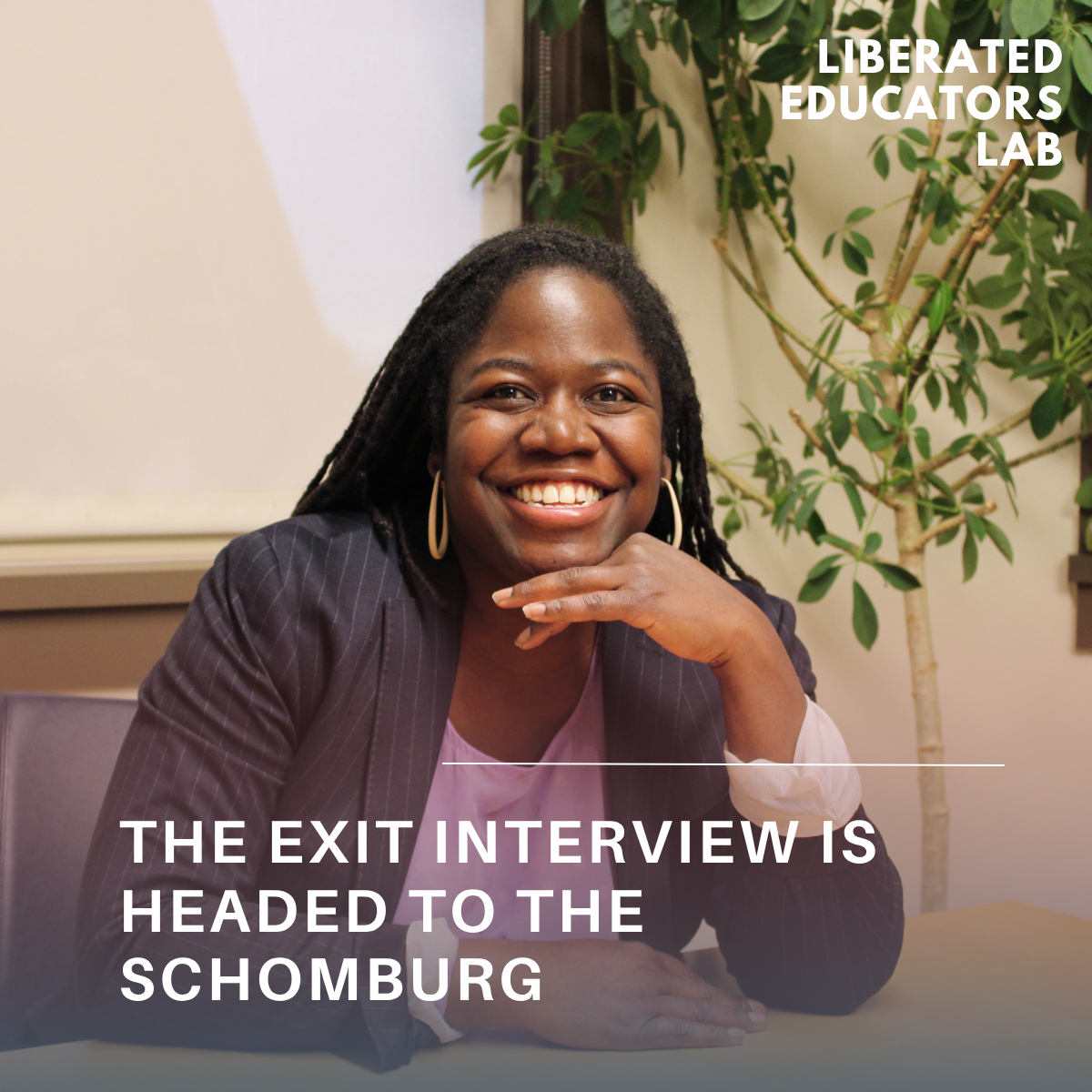
Saying No To Unconditional Service with Dr. Jessica Reed-Thomas

Her closing words? Joy chaser. And she means it.
Born in Anchorage, raised to become a lawyer, and fully resistant to the classroom, Jessica Reed-Thomas, Ed.D., fought off teaching for years. Then, a mentor, a university employee with good intuition and an air-conditioned education building at Temple University, changed everything.
What followed was a 12+ year career spanning classroom teacher, technology integration specialist, service-learning coordinator, agriculture curriculum lead, and, eventually, assistant principal overseeing 2,700 students and nearly 500 IEPs in the School District of Philadelphia.
But the real story is what it cost her.
Dr. Thomas opens up about surviving on leftover event food, falling asleep in her guacamole, being physically injured on the job multiple times, and staying in toxic workplaces the same way you stay in a bad relationship until the people she was serving told her to leave.
It was her students who said, " Go". It was her daughter who said, "Why do you keep going back?" And it was her own reflection on unconditional service as a false badge of honor that finally made it click.
Now she's channeling 20 years of hard-won wisdom into consulting on educator wellness, running a youth entrepreneurship program out of Temple University, and building a vending machine curriculum that teaches algebra and financial literacy. Her five-part retention framework policy, practice, people, power, and accountability, is a blueprint every district should be reading.

 RSS Feed
 Apple Podcasts
 Spotify
 Amazon Music
 iHeartRadio
 PlayerFM
 Deezer
 The Exit Interview Podcast A Podcast for Black Educators
Episode: Saying No To Unconditional Service with Dr. Jessica Reed-Thomas
Host: Dr. Asia Lyons Guest: Dr. Jessica Reed-Thomas — Educator, School Leader, Consultant & Entrepreneur
Episode Summary
In this powerful conversation, Dr. Asia sits down with Dr. Jessica Reed-Thomas, a Philadelphia-based educator and school leader originally from Anchorage, Alaska. Over the course of nearly two decades in education, Dr. Jessica served as a classroom teacher, curriculum writer, technology integration specialist, service learning coordinator, assistant principal, and school principal. She shares her journey from resisting education to answering the call, navigating toxic workplaces and burnout, leaving traditional education to prioritize herself and her family, and building something new on the other side.
About Dr. Jessica Reed-Thomas
- Born and raised in Anchorage, Alaska — her mother originally from Chicago's south side, her father born and raised in Alaska with Louisiana roots
- Came to Philadelphia for college at Temple University, where she has lived for nearly 20 years
- Home chef, coffee connoisseur, and proud collector of over 212 mugs — each one telling a story
- Mother of six children (including stepson and twins), wife, and community advocate
- Currently working as an education consultant focused on educator wellness and climate/culture audits, and co-owner of Five Tribe Vending alongside her husband
Key Topics Covered
How Dr. Jessica Got Into Education
- Spent years actively resisting a career in education despite teachers, mentors, and peers recognizing her natural gifts
- Pursued a business degree at Temple University, but kept gravitating toward education through community volunteering and research
- Credits Dr. Michael Smith, a Temple professor and qualitative researcher, as the pivotal mentor who brought her into education — eventually calling her at seven months pregnant to offer support finishing her certification
- Graduated with her Master of Education and certification in Business, Computers & Information Technology in 2012 — and gave birth to twins two weeks after earning her doctorate in 2014
- Describes education as a "telemarketer that kept calling" until she finally had to answer
First Years in the Classroom
- Taught kindergarten through 8th grade technology at a Philadelphia charter school — with no smart board, a chalkboard, a projector, and 30–35 students per class
- Labeled a "prep teacher" by colleagues — a label she rejected: "Never let labels dictate your value"
- Brought syllabi and supply lists to her technology classes, pushing for 21st-century digital literacy when others expected students to just play games
- Shares memorable and humanizing stories from the classroom — including an eighth-grader who asked where she could buy "act right"
Surviving and Seeing the Signs
- Witnessed colleagues leave mid-year due to toxic workplaces, student violence, and burnout — experiences she initially couldn't understand as a new educator
- Also found redemption in individual student connections — including a student who used graffiti art to co-create financial literacy videos for a grant-funded project
- Reflects that during her early years, she was surviving and making it look good, not thriving — underpaid, financially stretched, relying on leftover event food and free produce from the afterschool coordinator
Leadership Journey
- Started taking on teacher leadership roles: led the Healthy Eating Advocacy Team (HEAT), became a service learning coordinator and curriculum writer, then Technology Integration Specialist — all on top of teaching 725 students
- A former student coming back to say "there are other kids out there who need you" was the push she needed to pursue formal school leadership
- Became an Assistant Principal at a large comprehensive Philadelphia high school in 2020 (mid-pandemic), overseeing 1,900–2,700 students, a growing special education department (310 to 495 IEPs), 21 teacher case managers, 27 paraprofessionals, and 10–15 areas of responsibility
- Later served as Principal at a small private school in Philadelphia
Why She Left: Psychological Safety, Toxic Workplaces & Systems Failure
- Describes leaving both leadership positions through three lenses: psychological safety, toxic workplace, and systems failure
- Draws a direct parallel to surviving a previous abusive relationship — the honeymoon phase, ignoring warning signs, the cycle of apologizing for speaking up
- Was physically injured multiple times at work; her husband feared receiving a call that she would not make it home
- Her 13-year-old daughter's question — "Mommy, why do you keep going back if you keep getting hurt?" — was the final moment of clarity
- Chose to resign and "choose herself" — spending 8–9 months recovering before returning in a new capacity
Retention Strategies for Black Educators Dr. Jessica offers a framework with five key areas:
- Policy — Districts and unions must collaborate at the macro level. Policies that help one group and harm another must be audited and changed.
- Practice — Educators need autonomy to develop their practice without fear of reprimand or micromanagement. Schools must cultivate a culture where teachers can fail forward safely.
- People — "We have to recognize people's humanity." Educators are whole human beings with complex lives outside of school. Holistic adult education and support is not optional.
- Power — Leaders must take inventory of how they wield power and use it to level others up — including paraprofessionals, support staff, and teachers — not just to protect their own bottom line.
- Accountability — Owning mistakes, apologizing regardless of title, and refusing to pass the buck. Everyone in the system — from teacher to superintendent — must stop pointing fingers and operate as a collective.
"One of those superpowers can't be unconditional service and unlimited sacrifice."
What Dr. Jessica Is Doing Now
- Five Tribe Vending — A family vending machine business she and her husband started in 2023 to teach their children about generational wealth and financial literacy
- Entrepreneurship Curriculum — Developed a K–12 curriculum using vending machines as a real-world learning tool for algebra, market research, ELA, and financial literacy — currently piloting with Philadelphia schools
- Five Tribe Kids (nonprofit, launching soon) — A youth-focused nonprofit expanding on entrepreneurship education
- Annual Youth Entrepreneurship Summit — Hosted at Temple University each spring, connecting young entrepreneurs with local business mentors and a design challenge
- Educator Wellness Consulting — Offering climate and culture audits for schools, with actionable retention strategies for administrators and educator teams
What Wellness Looks Like Now
- Not feeling guilty for choosing herself
- Intentional rest — including a real weekly nap
- Smiling from the inside, not as a mask
- Living as a joy chaser: "Joy is my North star"
- Recently inspired by Tracy Lewis Giggetts' Black Joy
Shout-Outs
- Great-grandmother Silla Wilson — her first educator
- Dr. Michael Smith — Temple University professor and foundational mentor
- Dr. James Earl Davis — Temple University
- Dr. Noah Te — Former assistant superintendent
- Dr. Latrina Stewart — Philadelphia educator
- Dr. Xavier Brown — Philadelphia educator
- GLE Anderson — Teacher leader and owner of Link Destinies consulting group
- Surge Academy Institute Philadelphia — Cohort Four / Volume Four
Connect with Dr. Jessica Reed-Thomas
- LinkedIn: Dr. Jessica Reed-Thomas
- Instagram: @Dr.J.TheAdvocate
- Website: 5tribevending.com
- Email: drjtheadvocate@gmail.com
Connect with The Exit Interview Podcast
A podcast for Black educators — sharing stories of transition, resilience, and reimagination.
If this episode resonated with you, please share it with an educator in your life who needs to hear it.
First of all.... have you signed up for our newsletter, Black Educators, Be Well? Why wait?
Amidst all the conversations about recruiting Black educators, where are the discussions about retention? The Exit Interview podcast was created to elevate the stories of Black educators who have been pushed out of the classroom and central office while experiencing racism-related stress and racial battle fatigue.
The Exit Interview Podcast is for current and former Black educators. It is also for school districts, teachers' unions, families, and others interested in better understanding the challenges of retaining Black people in education.
Please enjoy the episode.
Peace out,
Dr. Asia Lyons
Dr. Jessica Thomas (0:00): We're gonna support teachers, it can't be it only happens at this school or with this leader or with this district. It has to be across the board. It has to be ingrained in policies, developed in systems and embedded and watered in mindsets and beliefs. And if we are not broadcasting that as a requirement to be in our district, if it's not woven into the fabric of how we manage schools, then we are gonna continue to lose educators of all types.
Doctor Asia (0:43): Welcome to The Exit Interview, a podcast for Black educators. This podcast is more than storytelling, it's archival justice. For too long the voices of Black educators who have left traditional spaces in education have been silenced, dismissed or left out of the record. Here we reclaim that narrative. Every interview is a living archive capturing the wisdom, resilience and truth of black educators who have shaped classrooms, communities and generations.
Doctor Asia (1:13): Together, we name the challenges racial battle fatigue, systemic inequities, the weight of caring too much, but we also honor the brilliance and joy that Black educators bring. The creativity, the innovation, the care, and the deep legacy of resilience. Each episode is both a testimony offering, an act of preservation for those who came before and a guide for those still walking this path today. By listening you are helping to ensure that these stories are not lost but held, celebrated and passed forward. So take a breath, settle in and join us as we honor the past, uplift the present and reimagine the future of education together.
Doctor Asia (1:57): All right, folks, welcome back to the Exit Interview, a podcast for black educators with me, your host, Doctor Asia. You know what folks? I have another interview from the East Coast. I've been saying this for a while that my East Coast people have been finding me and I've been finding them and they have some really incredible stories. And so I'm so excited for you to hear our eighty third guest on the exit interview.
Doctor Asia (2:21): Welcome to the show Doctor Jessica Thomas. How are you today?
Dr. Jessica Thomas (2:24): Hey, I am. I feel blessed. I'm doing well. Just appreciative opportunity to have a little conversation with you. Yeah, tell us a
Unknown Speaker (2:33): little bit about yourself.
Dr. Jessica Thomas (2:35): So fun fact is I'm from Anchorage, Alaska. I was born and raised there. My family was not military. My mom is originally from the South Side Of Chicago came up there in the 80s. And then my dad was born and raised there.
Dr. Jessica Thomas (2:52): His family originally from Louisiana, New Orleans Monroe area, but he was born and raised in Alaska. And so my parents, when they were married had four kids. And then my mom also was a foster parent. So a total of six of us. And so I'm from Alaska.
Dr. Jessica Thomas (3:12): And then I came to Philly, been here going on twenty years, twenty years strong. And so I always tell people, you know, I was born and raised in Anchorage, but really I was became my adult self in Philly. So that's a little bit about, I mean, some of my hobbies, I am a amateur, I don't want to say amateur, I'm a home chef. I'm going claim that because I'm just cooking it up and I have a whole set of cast iron skillets. I'm like everyone should.
Unknown Speaker (3:43): Amen. Listen, for real.
Dr. Jessica Thomas (3:45): And then I also am a coffee connoisseur. So people if you know, you know. And then last but not least, I guess another fun fact is I collect mugs. Every mug I have tells a story. So I have about two twelve mugs that have been either I bought from random places in my journey have been gifted by students and families and friends.
Dr. Jessica Thomas (4:09): So yeah, I'm a coffee mug mom.
Doctor Asia (4:13): You know what's interesting is I knew about Alaska, which I'm so glad you mentioned that on this episode. But then the other parts I had no idea. 200 mugs. I used to collect back in the day the Starbucks like where we are or whatever that.
Unknown Speaker (4:29): Oh yeah, I have a couple of those.
Doctor Asia (4:30): Yeah, yeah, so I have a few. I don't collect them anymore, but I have one that my favorite is from Mexico City because like what's the chance of going back and what's the chance of purchasing Starbucks anymore?
Dr. Jessica Thomas (4:43): Exactly. So I like I said, I tell people every mug tells a story and I know my kids are like, can we use this space for food? And I'm like, absolutely not. I have my kitchen remodeled for to have a home for my mugs, right? I mean, moms deserve to have just one thing for themselves and I chill.
Unknown Speaker (5:05): That's right, that's right. I love that. That's perfect. I got my books. You got your mugs.
Unknown Speaker (5:10): It is what it is. They'll be alright. Just move out, get your own stuff. Well, let's go ahead and get started. So tell us about your journey into education.
Doctor Asia (5:18): How did you know that education was for you? Being an educator was for you.
Dr. Jessica Thomas (5:23): So this might be a little controversial, but my journey to education was a little different, right? Because in all reality, I was fighting it. In high school, I had many educators say, oh, you're always doing stuff in the community, always being a great peer mentor. We know you're gonna be a teacher someday. Say absolutely not.
Dr. Jessica Thomas (5:43): I said, I see what y'all do every day. Y'all do too much, you give too much for very little. And I'm the oldest, my family needs me to either be a lawyer or some type of business professional because I don't have to take care of people, some part of my life. And I want to be able to travel and do all this stuff. And I can't do that being an educator.
Dr. Jessica Thomas (6:03): So I said, no. So of course they say, you know, you see what happened to Sarah in the Bible when she laughed at God and then God gave her a child. So, you know,
Unknown Speaker (6:12): they didn't pull the Bible out on you.
Dr. Jessica Thomas (6:14): Don't be careful what you laugh at. And so fast forward to college. When I got to college, I was a business student and I was always volunteering at local places around Temple University, the different elementary schools, high schools. And one day I found myself in the Education Building because they had the best air and quiet space to study. And I had this, one of the maintenance workers who ended up being my campus mom.
Dr. Jessica Thomas (6:45): She was like, baby, you look smart. I wanna introduce you to this guy who runs the Ronald McNair program. I don't know what they do, but I know that the kids do stuff. Right? So I was in the Education Building because they had the good air and quiet space.
Dr. Jessica Thomas (6:59): And one of the maintenance workers basically said to me, she was like, I'm gonna introduce you to this guy. Like he runs the Ronald McNair program, didn't know what that was. I get there, I find out it's part of like the trio program federally and they help with past bachelor success. So they're like, well, don't really work with business students, but if you're into undergraduate research and you want to get a graduate degree, we can still work with you. I'll make this exception.
Dr. Jessica Thomas (7:27): So I ended up getting into the program and one of the first guest speakers we heard was Doctor. Michael Smith, Temple professor, renowned author and educator. And he was talking about doing literacy projects and qualitative research in silly schools, particularly working with black male students around building their reading stamina, their love for writing and reading. And the way he talked about them was that they were real people, right? And it was like a change that I hadn't seen since I left Alaska in terms of how people were talking about youth in Philly.
Dr. Jessica Thomas (8:07): And so they said to us that, and he talked about qualitative research and I was like, oh, I like learning about people's stories. So I shoot my shot, reached out to him and I said, can you be my mentor? And he was like a business student? Like, what are you doing in this program? So he took a chance on me.
Dr. Jessica Thomas (8:26): Fast forward, we started doing undergraduate research and I paired up with him and a business professor in the Fox School of Business. And one of my first studies was looking at professional development in Philly Schools, which was a HR system. And that was my background, the business school and how it attends to the professional needs and impacts student outcomes. So that was like my first undergraduate study thinking I was a real scholar. And I did some like some presentations and conferences.
Dr. Jessica Thomas (9:01): And after that I really caught the bug, but still it was too late in the game for me to become an education major. And I just kept telling him, he said, listen, you need to come to the light, which is education. And I said, absolutely not. My parents sent me here to do a job, which was become a lawyer or some kind of business professional. So fast forward, I ended up graduating, took some detour, did some work in the small business sector, nonprofit started another grad program and some things happen.
Dr. Jessica Thomas (9:34): And I found myself in a situation where the school I was at was not the right fit. And he happened to call me and reach out to me and said, you need to get an authentic education experience. You can't worry about educators and you've never been in the classroom. He said, listen, you're like eight months pregnant or seven or eight months pregnant. I will be your independent study teacher while you start your master's program, come back to temple, you can do an independent study and then we'll work on seeing if we can get you emergency cert so that you can work because you have a family now.
Dr. Jessica Thomas (10:13): So by 2012, I have finished the Masters of Education program and has certification in business computers and information technology. I was working in a charter school as a technology literacy teacher. And by 2014, I graduated two weeks before I gave birth to my twin.
Doctor Asia (10:38): Hold on because I gotta back up a little bit because I I know where this this part of the story is going. I just want to say that you know you talked about your mentor and the importance of mentorship is, you know, is so vital. The fact that you in our conversation before you talked about how he was really pushing on you, you know, like you need to be in education you need, you know, right? And so for you to say no, I'm still going to get this this business degree and he's still checking in on you and he's still like, you know, I'm telling you, you need to go into education. It's fantastic.
Doctor Asia (11:11): So I have a question too. So you're you go back to Temple, correct? To go into education. What are the parents saying at this point? Because they said you just said they sent me for to do one thing.
Doctor Asia (11:23): And now I've done my stint. I have my nonprofit thing I was doing. I was, but then you were not there. So what was the conversation at that time with your parents?
Dr. Jessica Thomas (11:32): My parents were like, listen, they're proud that I am pursuing more education, but they're like, is the return on investment? I was like, listen, I did what y'all said. You know, we follow where obedient children. I did my bachelor's degree, but like just rock with me and know like I know that this is what I wanna do. And because I was able because like when I guess from our generation, you gotta come to your parents with a plan, right?
Dr. Jessica Thomas (12:00): You gotta tell them that everything's aligned. Like, listen, I got a job lined up. I'm not gonna be broke.
Unknown Speaker (12:05): You gotta tell Beth ahead of time.
Unknown Speaker (12:07): Right. And
Unknown Speaker (12:07): that's first
Dr. Jessica Thomas (12:08): all thing he does in a row. And so that's what I did and had all that in a row. And to your point about the mentorship, yes, he was pushing me. But one thing I remember him saying is that students here in Philly deserved for representation to have an educator that looks like him. He was a white male.
Dr. Jessica Thomas (12:29): However, he was a huge champion of diversity in the classroom, the power that educators have that have similar experiences to their students. But then when he couldn't necessarily service me in the way that I needed, like certain types of support, he connected me with, he added more mentors to my network like Doctor. J. Earl Davis and like he propped me up. And so that for me going back to how I got into education, it wasn't enough that he called me up and said, I'll be your independent study teacher.
Dr. Jessica Thomas (13:08): He was there to make sure that I finished my cert, had everything aligned that I was in a school that was serving and met my certification requirements. Then once I was in that school, we kept meeting regularly for check ins because eventually that school no longer was appropriate placement. So he's like, okay, now where are we looking for next? And so to me, that is the true definition of a mentor that is meant to travel with you for every season. And he has been with me for multiple seasons.
Dr. Jessica Thomas (13:44): And because of that, my trajectory with education, I always say to people, I was running parallel to education, just trying to say like, ah, education kept calling me like a telemarketer was this like, pick up, pick up. And I was just like, if you don't leave me alone, but eventually that one telemarketer calls you and you can hear that how sweet and innocent they are. And you like answer the survey. And that's how I feel about education. And I eventually had to answer, but then like Doctor.
Dr. Jessica Thomas (14:15): Martin Luther King says in his Birmingham letter, the situation was so compelling. I was called to act and how I acted was not only answering the call, but fielding the call and actually jumping full force into education as a full time change agent in 2012. And then from there, life was just propelling from being a classroom teacher, curriculum writer, service learning coordinator, technology integration specialist, like urban educator. At one point I was running agriculture curriculum at a charter school. Like if there was a role, I was jumping into it.
Dr. Jessica Thomas (14:59): Even if I only knew a little bit, I was jumping in because I wanted to educate and liberate our young people.
Unknown Speaker (15:04): Yeah, I love that. I love that so much. So you ran through quite a few jobs, but we're going back you up a little bit because that's what folks love to do. They love to run through and then like, thank you. The end.
Unknown Speaker (15:16): Let's back up to I was pregnant with my twins because that's what we were talking about. Go for it.
Unknown Speaker (15:23): So what would you like me to talk about?
Unknown Speaker (15:26): Well, you were saying that you were finishing up school like you had finished up school. You were a technology teacher, at a school, that's where we left off. So tell us about that experience because this would have been your first time in a classroom. Is that correct?
Dr. Jessica Thomas (15:40): Full time. So before I had done smaller things with like after school programs, nonprofit, you know, after school coordinator and things of that nature. But when I was in that charter school out on my emergency cert, I'm just gonna give you the landscape. Think of a technology teacher with no smart board. So chalkboard, projector.
Dr. Jessica Thomas (16:06): So I had a chalkboard, a projector, a computer that I connected to the projector. 30 computers, usually on average 35 students. I taught kindergarten through eighth grade technology. Third through eighth grade were in one building and then I would go to the little schoolhouse next door for the younger kids. And we would use iPad sometimes or computers if the technology cart was working or if the outlets that charge the cart were working, just trying to paint the picture and keep it, you know, keep it real.
Dr. Jessica Thomas (16:42): And that space, I remember some pivotal moments of like, I know I answered the call, but is it wrong to hang up? Because this situation, is this what everyone's going through in education or feeling? Because I'm gonna give you one example. I had told the students, I had some teachers that would call me like, oh, you're the new prep teacher. I said, what's that?
Dr. Jessica Thomas (17:11): They were like, oh, you know, we're a core subject. We're a core subject. And then when our kids, when we need our break, they go to you for a specialty. So you're a prep teacher. And I was like, I said, do you need a cert for that?
Dr. Jessica Thomas (17:26): Because my certification says business computers, information technology. And they were like, lady laughed at me. And I used to say to people later on when I was an instructional coach, never let labels dictate your value. And so I didn't know then, but as I got older in the game, I refused to let people just say, oh, you're a specialty or you're a prep teacher. No, I'm an educator.
Dr. Jessica Thomas (17:51): My debt and these degrees tell me that very much. And so going back to that particular school, I remember coming in, had a syllabus, even though we're talking about kindergarten through eighth grade, I had a syllabus for the middle school students. And people were like, what are you doing? Like, let them come in and play games. I said, no, these kids need to learn how to type digital literacy.
Dr. Jessica Thomas (18:16): They need to know how to search information that's reliable and trustworthy things that can lend and help them be real twenty first century learners. So that was a huge shock to the system. And I remember giving a supply list. They told me I could only ask for three things from the kids. So I said, back then I said, everyone needs to come with a copy book.
Dr. Jessica Thomas (18:36): And I would keep in the room, some pencils that would keep in the room, preferably mechanical and flash drive because just in case we needed to save stuff and I had to make more space on the computer. And I remember one day these eighth graders are giving me a hard time and I'm listening, I'm quick. My husband will tell you I'm quick with the words, my lexicon runs
Unknown Speaker (19:01): deep.
Dr. Jessica Thomas (19:01): And so I said to this girl, I said, you need to watch how you talk to me. You need to get some act right. And I said, better check yourself before you wreck yourself. And at this point, I didn't even know I was pregnant. I obviously that was the hormones or it just could have been my real feelings, but neither left people away.
Dr. Jessica Thomas (19:20): She got it. And when the class was over, she came back to me at lunch and I said, oh, this girl will try roll on me. And so I was by my desk and she was like, miss, I need to talk to you. And I said, what's going on? She said, well, you know, I didn't really like how you were talking to me earlier.
Dr. Jessica Thomas (19:39): And I also don't like how you keep trying to make us come out of pocket for stuff. And I said, what are you talking about? She said, you want pencils, you want notebooks. And she was like, and where am I supposed to get Actright? My mom can barely afford the flash drive.
Dr. Jessica Thomas (19:52): She was like, and you want me to buy Actright? She was like, miss, you're doing too much. Oh my God. I tried so hard not to laugh, but I said this is why I answered the call for moments like this. Because she wanted where she could buy act right.
Unknown Speaker (20:11): I did not see that story coming.
Unknown Speaker (20:14): Yes, I had to give you that curveball.
Doctor Asia (20:17): I appreciate that. You know what's the truth? And this is so interesting about middle schoolers. They try to be so cool. They try to and in situations like that happen, Where you.
Doctor Asia (20:27): It's like at the end of the day, they're still 13, they're 12, they're 14, like they're in that age range and things that we think are whatever, you know, like everybody should know this slang. They're just like, I don't even know what that is. Oh my gosh. I love that. Yeah.
Dr. Jessica Thomas (20:42): But I feel like that just gives you a sense of my first experience. I mean, those were the laughable moments of education. I also had some moments where during that year I had several colleagues that had became mentors of mine leave due to a toxic workplace. And I was just like, well, why would they leave the kids in the middle of the year being naive of what they had been up against, right? And what had been attacking them.
Dr. Jessica Thomas (21:07): I saw some students assault some teachers and climate workers to the point where one young man knocked the climate worker cold out on the cement, right? Was unconscious by even saw young people. Unfortunately, a young lady getting text messages during class and she said, Miss, this has nothing to do with you and pop the razor from underneath her tongue and went full force down the hallway to go after a young man. And I was just like, I don't know if this is meant for me. At the same time in that experience, I also remember having a young man who people have written off and said, he never comes to school.
Dr. Jessica Thomas (21:51): He does, he deals drugs and all this other stuff. I went to him and say, I see the work that you put forth. I saw the digital comic book that you made on my computer. That's the only assignment you did. However, tell me more about it.
Dr. Jessica Thomas (22:06): Like, what does this mean? And eventually I applied for my first grant as an educator to do a financial literacy unit. And he helped me film these mini videos about what they learned about financial literacy, but he was a graffiti artist, eighth grader, and he made all my banners for the backdrops for the videos. And that was those moments sustain me to let me know I'm going to keep going. And yeah, that's kind of like, you know, my first full time introduction.
Doctor Asia (22:38): Yeah, that's a lot. That's a lot. And you you've mentioned, you know, a minute ago you had lots of different work that you did in education. So tell us a little bit more about like you were in leadership too, right? And so tell us a little bit about senior leadership experience, how you decided to kind of come from the classroom space and move into that direction of being a leader and what that experience was like for you.
Dr. Jessica Thomas (23:04): Oh boy, I'll be honest with you. My leadership experience started in the classroom or at the classroom level. So once I left that first school, I went to another charter school. And when I got there, I was so excited. Just quick part.
Dr. Jessica Thomas (23:20): I was excited because I left the one school where like we got two packs of paper a day and or a month, excuse me, we rewind two packs of paper a month. And if you accidentally forgot to bring your paper down, if you had to borrow from the secretary, she would deduct it out of your next month allotment, right? Then I went to my new school where like once a month, a like FedEx size truck would pull up with paper, white paper, pink paper passed out. I didn't even know goldenrod existed. But in
Unknown Speaker (23:50): Oh, the the famous goldenrod. Shout out to goldenrod. Oh my God. That's taking me back. Listen.
Unknown Speaker (24:01): Okay, go ahead. I'm can do a whole Listen,
Unknown Speaker (24:04): you know you're a teacher without saying you're a teacher if you know about golden rod paper.
Unknown Speaker (24:09): Yes, I can see golden rock, see that blue, the green and the pink.
Dr. Jessica Thomas (24:14): Pastels. So, and I even remember going to the school and like, when you would go inside, I was like, oh my God, it's the same color as outside, it's still light, right? It's not like washed out, whatever. So I was just like overwhelmed and excited by, you know, the experience. And I got to that school and just, I think it's really, which is a blessing and a curse of my nature when I jump into an environment and I feel like it could be, it feels like home.
Dr. Jessica Thomas (24:49): I'm gonna give you not 110%. I'm gonna give you $2.20 and possibly more, right? Like it's not gonna be my 2¢. I'm gonna give you a whole like silver dollar worth. And so I eventually jumped in and I remember at like the third staff meeting, they were like, we're looking for people to lead clubs.
Dr. Jessica Thomas (25:07): And so I joined and started the Healthy Eating Advocacy Team at my school, AKA the heat. And we were a school that managed the school's garden and created lessons around nutrition. And I had a team of students, middle school, after school, we would do healthy recipes and practice them. And then if we liked them, we would put them in our cookbook, but then we would do demos during lunch or have teachers sign up for us to do a nutrition lesson and the students would do it during their lunch. And so I did that for like two or three years.
Dr. Jessica Thomas (25:45): We even got another grant. That was like my second grant that in my career to publish it and actually publish it, people could buy it and things of that nature. And so it was great because that was like my first taste of like teacher leadership. And I was like, oh, I would like more. And then of course when you want more and you say it to yourself, other people hear you thinking out loud.
Dr. Jessica Thomas (26:11): And so the after school coordinator, who's been a longtime friend of mine, had connected me. They were doing service learning. The school is really big on service learning, which was in Alaska. My school district had been a champion for that since like the late nineties, early two thousand. So I already was like, it was already ingrained in my educational fabric.
Dr. Jessica Thomas (26:34): And so I became a part of the service learning team was helping coordinate first, just the middle school program projects. And then I started to lead all the middle school. Then they got a grant and they wrote me in to become a curriculum writer. So then we developed a K to 12 curriculum for service learning. I was writing curriculum.
Dr. Jessica Thomas (26:58): I was running about two or three groups after school because then we were also going to conferences. And then I was managing for about two fifty middle schoolers service learning projects that were year long experiences. And I was running, helping co lead days of service as well. So I was doing that. Then the whole boom around one to one technology was a thing that started the paradigm shift there.
Dr. Jessica Thomas (27:27): Our charter school have funds to do that. And my principal came to me and was like, how would you like to have this role? It comes with a stipend, that's like the whole charter school thing, right? We'll give you a stipend for anything. And so I said, sure.
Dr. Jessica Thomas (27:44): So now I'm the healthy eating advocacy after school lead, I'm a service learning coordinator and curriculum writer. And now I am the tech, I just got another certification. So now I'm the technology integration specialist. So now I am training teachers on EdTech and running the technology infrastructure. Because we didn't have like, we have one IT specialist.
Dr. Jessica Thomas (28:12): So I was managing the laptop cards and all that and the iPads and everything. So I was doing that on top of teaching to kindergarten through eighth grade, so about seven twenty five students. So then I was like, oh.
Unknown Speaker (28:24): Wait, wait, can we can we pause for a second? This is a lot. This is a lot. That's a lot of work. And you and you have three babies at this point or two?
Dr. Jessica Thomas (28:34): At this point, I had my three children that I have birth in my My stepson had officially moved in with us. So now we were at four. We haven't gotten to my other two kids. That's later down the road. But so now we're four and I have about like five different roles at the school, but I'm wearing them like a cape.
Dr. Jessica Thomas (28:57): I'm enjoying it. I'm building relationships with students. I'm an advocate, I'm encouraging. I'm also, now I'm mentoring other teachers that are new to the school. And I'm really in my school leadership is seeing something special in me.
Dr. Jessica Thomas (29:16): I felt because they were bringing me to the table like, hey, Jess, there's an opportunity for us to get this grant and do this thing. And for you to be, give your voice in this way, could you join? And I jumped at the call at the opportunity because I was passionate, generally still am, I was passionate. And then what really sealed the deal for me were the students that were a part of it. They wanted me to be more plugged into other parts of the community.
Dr. Jessica Thomas (29:47): That's the best way. So like when something was advertised, I would have students come to my office. They were like, Ms. Thomas, you gonna be at that event? You going to that?
Dr. Jessica Thomas (29:57): What team are you gonna be in charge of? And I'm like, you guys know, come on, we'll buy you cheese. Listen kids, if kids, they knew my weakness was cheese fries, not cheese whiz, but like real melted cheese. They're like, Miss, you know, I got you, my mom gave you $5 I'm saying I took money from kids. They're like, put my cheese fries with you.
Dr. Jessica Thomas (30:17): I'm like, hey, I got a half and half. I'm like, oh, you got eliminate from the place at the corner. I'll see you after school.
Doctor Asia (30:25): Well, let me ask you a question, because I too can be bribe with cheese fries and a half and half. But like in those times and we'll get to like what it means for you to be well later in this present tense and this present moment. But how did you take care of yourself or did you take care of yourself? Like looking back on it now in those moments, what did that look like in the day to day while you were, of course, signing up, supporting the community? Did you take time to think about like self and community care or is it just like this for the kids, for the kids, for the kids?
Unknown Speaker (30:58): Well, well, well, now we
Dr. Jessica Thomas (30:59): get to the heart of the matter. So false sense of wellness. I was well in the sense that I felt professionally full, right? I was excited. The students when I first got there who said I had too high of standards and their parents were coming at parent teacher conferences with pitchforks, right?
Dr. Jessica Thomas (31:19): It had died down. And I was like, you know, I felt like a little mini celebrity. They were actually saying hi to me at the grocery store, right? That's when you know, you really on the come of when kids wanna recognize you out in public and introduce you to your parents. So, but on the flip side, I was not well in other parts of my life.
Dr. Jessica Thomas (31:38): I knew that with the master's and now two certifications, I was underpaid. And even with all the additional, positions, I was just doing a bandaid effect to my finances. It was too expensive for my husband to work full time with having three kids under five and pre K was only part time. So to be honest with you, I would, I was benefiting from, like if we had an event at the school and there was food leftover, my friend who was the after school coordinator, I will be helping her. And she was like, Jess, you wanna take this extra platter home?
Dr. Jessica Thomas (32:16): Boom. Got into my food budget. She used to get health free fresh fruits and vegetables. After everybody had picked it up, they couldn't keep it overnight. She was like, I got you.
Dr. Jessica Thomas (32:27): I'm putting the care package together for you. That was really helpful. Like supplementing my income by, you know, finding free things around the city that I could get into, was getting some assistance outside, but really I wasn't thriving, I was surviving and I made it look good. And I think the crazy thing is I had my students and after a while, my students and my parents were like, miss, I know I asked you to hold on one more year so my last son could come to your class, but you gotta go. There's something else out there.
Dr. Jessica Thomas (33:05): They're like, you're so good at what you do. Like there's other kids and that's literally what propelled me into school leadership. One day at my last school, I was there late as usual and a student of mine's, the security had let them in and she had already graduated and she was on her way, I guess from home or from work. And she has stopped by. I said, what are you doing?
Dr. Jessica Thomas (33:29): How they let you in the back? She said, I saw your car out there and I knew that you were still here. You're always here, miss Thomas. I was like, yeah, I'm preparing for this event or something I was doing. And she was like, you know, there's other kids out there that need you.
Dr. Jessica Thomas (33:43): Right? She was like, why are you sick? And I said, because I love you guys. And she was like, we love you too. But like, you know, there's other kids out there, right?
Dr. Jessica Thomas (33:53): And it was crazy because I had to hear from one of my the people I was serving to say that one, it was okay for me to leave because I had this guilt that if I left, what about everything I built? Would it sustain after me? And then there's also this fear of like, can I do it? But then between what she said and realizing there were certain things at the current school that I wanted to change, I was not allowed to change that I knew that I wanted a seat at the table. And I said, well, if they're not gonna give me a seat, I'm gonna take my chair and go find myself a seat somewhere else.
Dr. Jessica Thomas (34:32): And that's what I did. So in 2020, during the pandemic opportunity opened up for me to become a school leader in the school district of Philadelphia and I jumped at the opportunity and it was a game changer for me.
Doctor Asia (34:48): Before you tell us about that experience. It's so interesting that when you tell the story on the surface like, Oh my gosh, I could I could hear an educator thinking that's all great. I'm doing that too. I'm showing up. I'm and then right underneath here's this this conversation of self care, community care, family care, and your students rooting for you to leave in like a beautiful way, right?
Doctor Asia (35:13): To take care of yourself, to, you know, better financial opportunity, still be in education. But I think that's really important that we continue a conversation about. What it means to. Take care of ourselves and not necessarily. I say this often that you know we talk about teachers being heroes were heroes were heroes without capes and all these things.
Doctor Asia (35:40): And because of that trope, folks burn out so quickly, right? And so in the system wants us to keep believing that they'll keep giving us grants. So keep go to this thing and you're such a wonderful because they want to use us up and then when there's nothing left, they find someone else. Because like you said before, when I was younger, I didn't know XY and Z, and so I appreciate you sharing that story and like how you ended up transitioning to another opportunity.
Dr. Jessica Thomas (36:08): Yes, I no longer wear resilience as a cape or like my badge of honor is not unconditional service with unlimited sacrifice. Like those are no longer like my letter jackets or like, you know, or my cape, I'm not doing It's really not good for you but then eventually you could resent and we could talk about this later. You could begin to resent the work you were called to do. And there's pivotal, we'll talk about that later, I know, but there's been pivotal moments where I was like, you know what, I gots to go because I don't want to resent the work. I don't wanna fall in love with kind of like the movie Brown Sugar.
Unknown Speaker (36:47): I don't want to fall in love with hip hop. I want to follow with a question.
Unknown Speaker (36:53): Yeah, yeah. Tell us about your next day in leadership. What that transition looked like and what were you doing?
Dr. Jessica Thomas (37:00): Man, my my next my next move came at the right time. I feel like sometimes you're looking for that breakthrough and if you wait, you know, wait for it, pray for it, it will come. And I became a school leader at a comprehensive high school here in Philly. When I joined, it was in the pandemic, so we were virtual and there are about 1,900 students in the school. And I was in.
Dr. Jessica Thomas (37:27): I know you're gonna ask me a follow-up question, so I'm just gonna hit you with it. So when I started at that particular school, I was one of four assistant principals and then we had a principal. I was in charge of special education. There was about three ninety five, four ten kids with IEPs that I was in charge of. At the time 1,900, actually yeah, about eighteen, nineteen hundred.
Dr. Jessica Thomas (37:56): So, and then I was in charge of the art and music department and academy that was associated with it, technology infrastructure. So the whole Chromebook program, all of that. I was also, I had responsibilities with, I was assigned a counselor that was assigned to my academy. I was also in charge of supporting with enrollment and registration, co lead that with my principal. I was also in charge of
Unknown Speaker (38:32): Okay, wait, let's just Wait, wait, wait. And I was also in charge of Wait, I thought we had Okay.
Dr. Jessica Thomas (38:42): Yes, you know, that's what happens. Like, You like What hap I think in education, what happens is we are so excited to move out of one hot pot or, you know, skillet. When we get into a new skillet and it's like a cool warmness, right? Like when it's first getting warm, but you like, and it's like that cold water hits it, you kind of sizzle and you're like, oh, it's not really that hot. It was warm from the cool down.
Dr. Jessica Thomas (39:10): Like it was warm from like, it was underneath the water for a little, it's not really that warm. That's what happened, right? I was in my cast iron skillet and I didn't think it was on, but it was slowly heating up. And so, but when I got in there, I was so excited. Even virtually, I found myself building relationships with educators.
Dr. Jessica Thomas (39:29): It was still tough because everyone was going through things. And I found myself so fresh from being in a classroom that I felt like I connected with the teacher at a different level saying like, listen, don't forget, I literally was just in a classroom two months ago. Look, I understand, like feel comfortable, be your authentic self, which for me coming from a charter school into a public school for the first time, I saw from the gate, there was a lack of trust. And that was like a culture shock for me because I had such a trusting relationship with my former principal and my colleagues and any, you know, people that were parallel in position. I didn't understand, like, you don't know me from a can of paint.
Dr. Jessica Thomas (40:14): Like you are deflecting a lot of past trauma on me and I have no I have no context. But in that new school leader role, once we came out of the pandemic transitioning in person, of course, additional roles, I ended up around between 10 to 15 responsibilities that were under me, my responsibility outside of what my colleagues had to also do the other three assistant principals. But I went full force and I did a lot with, I believe in building authentic relationships with teachers and students. And so I realized at a certain point that in order for me to build relationships with my teachers, I had to figure out like, what's a common ground we had. So a lot of times for professional development during our PLC times, I would have get to know you surveys.
Dr. Jessica Thomas (41:12): I would just have everyone on a piece of paper. I said, write your birthday and your favorite color. Don't tell me the year, your birthday, your favorite color, a song that gets you going and your favorite food. And then randomly throughout the year, I might drop a birthday card to somebody, right? As long as I would try to do all the birthday cards for the month.
Dr. Jessica Thomas (41:35): I would randomly order Krispy Kreme donuts because I knew half of my PLC really enjoyed it. Or I would like encourage a potluck feast. I also knew I had a lot of coffee drinkers and mug users. So I would say, listen, if you do if the staff lounge, we got 300 staff and only one staff lounge. I said, if this lounge is too packed, my door is always open and my Keurig is always ready.
Dr. Jessica Thomas (42:01): Just come sit down. I have an extra desk. You can work out of my office. I'll leave if you need the space. I was always giving teachers my office.
Dr. Jessica Thomas (42:09): I don't care. I'm nothing high. And then I also asked some teachers that have eventually decided to open up to me about, they had children with special needs or they lost a loved one to cancer like I had while I was a school leader. And so just building those authentic relationships and not forcing it, like when you're ready. But I also didn't have a problem with being vulnerable with my PLC, my professional learning community.
Dr. Jessica Thomas (42:39): I'm sorry for the acronym, but my PLC and just saying like, hey you guys, you know what, today we were gonna talk about this topic, differentiation, but I had a real hard time with my son. You guys know he has autism and he had a rough night last night and I'm just not in the space. So I would like to hold space and pivot. Could we today, I would like to give you more small group planning time. I'm gonna be in the back if anybody wants to come and sit with me one on one and we can have small consultation, but I'm not in the capacity to stand in front of you and deliver something because my cup is not full.
Dr. Jessica Thomas (43:18): So I think started to open up the floodgates for people to feel more comfortable and then tell a friend. And I was just like, I'm not doing this for like kicks and giggles. That's my thing. This is generally how I operate like the same kind of whole child love and support I give to children. I believe adults are also worthy of the same type of education and support.
Dr. Jessica Thomas (43:42): So, I mean, that's the cliff notes version, I guess. You know, you let me know where else you want to go with it.
Unknown Speaker (43:51): Yeah, so was this I know that we talked about leadership. Is this the school the last school that you were in as a leader?
Dr. Jessica Thomas (43:58): No, no. So I was an assistant principal there for about five years And then I was a principal for a short while at a private school in Philly. And that was my last school that I was at. And so I went from the school that I was at from 2020 to twenty twenty four ish, I was servicing, when I started, I was servicing, there was 1,900 kids. When I left, there was 2,700 kids.
Dr. Jessica Thomas (44:28): And just to give you perspective, my special education department had increased too in the sense that we went from having three ten kids with IEPs. So when I left, we were at four ninety five kids that we were servicing across all disability types. I had 21 teacher case managers, 27 paraprofessionals that were all in a school psychologist that were all under my purview on top of my other responsibilities. So when I left that school and had an opportunity after taking some time off, because I did pivot, I tell people I didn't quit the district. I just chose me.
Dr. Jessica Thomas (45:06): I resigned and chose me. I chose me and I chose my family. And I took some time for myself almost about eight or nine months and then joined another school family in August 2025. And it was predominantly students with different types of needs, not all disabilities, but really 25 students. And I said, if I can handle 2,700, I know I can handle 25 students and five teachers, right?
Dr. Jessica Thomas (45:37): So after a series of interviews, I was selected and the universe aligned me to join another school family. And once again, I jumped in with both feet, but I had a different set of blinders, not blinders, a different set of glasses on really of like how I was more aware and cognizant of what was going on. Right. And made sure I was keeping a pulse of the community, but also keeping a pulse of myself to make sure like, hey, if your gut is not feeling right, let's let's pull the curtain on it if it has to be. But once again, you know, once you start to fall in love with your students, sometimes you don't pay attention and there definitely were signs on the wall.
Dr. Jessica Thomas (46:31): But nonetheless, when I got into that last school, those students grabbed my heart, even though there were some really rough days, you know, just like at my last school, I was physically hurt at the new place. I still kept showing up because most of the kids kept showing up and they started to see that I genuinely had their best interests. And these were the kids that have been on their third, fourth or fifth school. So I knew they needed a different type of love, right? And support.
Dr. Jessica Thomas (47:01): And so I was willing to put in the work and I was putting in the work until it was time for me to transition from that space.
Doctor Asia (47:09): I mean, so that'll be the next question that I ask is, since that was your last school, what was it? What were the situations or events that helped you decide it was time to leave education in that particular sense?
Dr. Jessica Thomas (47:23): Well, have you ever seen this movie? This is the best way I can explain it to you. Have you seen the movie Lemony Snickets, A Series of Unfortunate Events?
Unknown Speaker (47:31): A long time ago.
Dr. Jessica Thomas (47:33): Yes, there's like a new version with like Jim Carrey, I think or something. That is exactly how I feel my to how to answer why I like the events that contributed to me leaving traditional educational spaces. There was just like, just like the characters things kept coming. Right. And you're just like, why are these things happening to me?
Dr. Jessica Thomas (47:56): And I think, you know, I can chuckle now because I've been doing the work to heal and to grow from the experiences. But there's three words that come to mind on the why behind why I left both places and why I've taken the stand to put a pause, kind of close those chapters and pivot to other spaces is because the first word is psychological safety. The second word is toxic workplace. And the third word or term is systems failure. And so those are the contributing factors of why I pivoted and chose myself for the really, when I think about it, it was the first time in my life in both instances where I put my needs now above others.
Dr. Jessica Thomas (48:49): And when I say that, I mean, at the end of the day, of course, when you put certain needs first, there's gonna be a trickle down effect of how it positively impacts. Like my family benefited from it, my husband benefit, But generally, I had to choose to pour into myself because of those three things I just said basically were killing me. And it was in the first instance, I can compare that first event to an abusive relationship. And I can say that because I'm a survivor of domestic violence in a previous relationship. And when I had to go through my therapy to unpack my abusive relationship, one of the things they talked to you about are how did it start and were there any signs you picked up on?
Dr. Jessica Thomas (49:43): And for me, when I was at that school, I was so happy to get a chance at something new and it looked so sparkly and new and nice and the honeymoon feeling, I was in this honeymoon state of mind and was so blissful that I did not see the signs on the wall. Not the signs, none of my friends that were educators in the district, they couldn't tell me anything. They're like, girl, do you know that no one else has to do that? Why are you at school at 07:00? Why are you escorting kids home with the police?
Dr. Jessica Thomas (50:16): Why are you doing this on the weekend? Why are you falling asleep while I'm trying to talk to you for the third time this week? I was just like, no, I don't wanna seem like an ingrate. I tried so hard to get into this position. I'm finally here.
Dr. Jessica Thomas (50:30): I gotta see at the table. I'm gonna make it count. However, at the same time, I was slowly, slowly diminishing my capacity, right? I was physically drained. I was not present.
Dr. Jessica Thomas (50:46): My kids could be talking to me at dinner. And there will be times where I will fall asleep in my plate and my kid, my husband will put everyone to bed and then come and get me. And I will be sitting in like a bowl of guacamole taco Tuesday night, just knocked out, right? I'm so tired. And then when he wakes me up, I wait till he goes to sleep so I can get back on the computer and look at lesson plans, review IEPs and do I answer the 3,000 emails I didn't get the answer just so I can be half ready for the next day.
Dr. Jessica Thomas (51:18): And so what ended up happening was while the first three and a half years or so were really magical for me, eventually what ended up happening was we always had in my first, the first school that I left, we always had one AP that was all assistant principal always leaving. Now I always just said to myself, like, how could they just leave? Like this place is so great. There's so many opportunities, you know, and some of them would tell me why and say it was not a right fit, but I could hear that there was more to their story or that I could hear they had feelings or that they had experienced harm that I just couldn't believe really existed. Soon, almost everyone that left part of their narrative of the why became what was going on with me.
Dr. Jessica Thomas (52:07): And I soon found myself being a victim of peer harassment, staff harassment, and targeting leadership bullying, just a toxic workplace. Also, started to feel like I was becoming a tool in the system where I knew that there were inequities going on. And when I would speak up, it was like, are you on our side or are you on the teacher side? Or are you on this side? Like we rock for our own.
Dr. Jessica Thomas (52:34): We do this for our own. I'm like, well, isn't our own students? Like, that's who I'm rocking with. Right? So for that, I felt like then that's where that psychological safety comes in.
Dr. Jessica Thomas (52:46): I felt like, as I spoke up, I was being looked at as like, are you a traitor? Are you on our side? Like, where's your allegiance lie? And I've always been taught to lead with integrity. And I felt like there were moments where I was being asked to compromise my values and it didn't feel great.
Dr. Jessica Thomas (53:06): And when I would speak up, it seemed like I was like being treated. Are you being ungrateful for the opportunity to be here? You know how many people wanted your opportunity? And so then I'm in this like internal tug of war of like, oh my God, am I being ungrateful? Like, who am I being ungrateful to?
Dr. Jessica Thomas (53:23): Am I doing the right thing? So then I'm like, okay, so apologize for my speaking up. Now I'm gonna do more to show that I really do wanna be here. It was just taxing. And then sometimes, unfortunately in the system, the system breakdown was I felt like I also didn't have an authentic outlet that had power to bring about change in my situation.
Dr. Jessica Thomas (53:47): So I didn't feel like my union had my back. I didn't feel like there were systems outside of the union that a school leader still knew when the game could go to in confidence and seek help without retaliation or being blackballed or being treated as a traitor when in all reality, you were just looking for answers to sustain yourself and find a common ground. And so that was like the intensity of it. And the next role, I think it was more of, there was system failures because there were no systems and systems were being made up on the fly. And I didn't really know where I had walked into.
Dr. Jessica Thomas (54:30): And so you're told that you were selected because you have a unique set of skills and that's what someone was looking for. And then when you get in there, you realize like, oh no, you wanted my skill set on paper,
Doctor Asia (54:44): but you didn't want me to actually use my superpowers. Right? And that happens so much. You know, we people like, oh my gosh, you're so powerful. You're so awesome.
Doctor Asia (54:53): You're so amazing. You kind of give over here. We just we love your brilliance. And then as soon as you use that same brilliance in the workplace that you've moved over to, they just try to choke that out of you.
Dr. Jessica Thomas (55:05): Yes, yes. Like hyping you like you going to hype me up like Flavor Flav, but then like, take me down.
Unknown Speaker (55:10): Yeah, like, well, that's real.
Unknown Speaker (55:12): Absolutely.
Doctor Asia (55:14): Yeah, I think you know you've mentioned quite a few things. It's like abusive relationship and education. You know, you're physically being physically harmed, the psychological safety, all these pieces. And you aren't wouldn't be the first person or the last person, unfortunately, on the show to to share that and to know you had to leave education for reasons that I wish weren't the case, right? Yeah, that's really painful to hear.
Dr. Jessica Thomas (55:45): And I will say that like in both instances, kind of like when I chose to become a school leader from that student that stopped by, I also have to say that once again, a young person that really got to me that finally, it was a young person and my husband. My husband has said to me at my first school leadership position that he said, at that point in two years, I had been injured four times physically. And then one fifth time had to do not by a student. The fifth time was related to being chemically burned, allergic reaction to cleaning supplies at the school. And so my husband said, my fear is that if I get a phone call, it's not gonna be a phone call that like, Hey, Jess needs you to get picked up or something.
Dr. Jessica Thomas (56:33): It's gonna be like, can you identify her body or please get to the hospital as soon as possible. And to see that level of sadness of him thinking that he would lose his partner, it really hurt me. It hurt me when my dad came to visit me one time and I had just spent seven hours for a workman's comp claim because I had a concussion and other injuries on my body and I had no capacity. My dad drove six hours to hang out with me and our kids and I had no capacity to do anything because I couldn't even drive my car. My vision was so blurred.
Dr. Jessica Thomas (57:09): And with the last role, I remember just having some rough days back to back. And in the last instance where I got really hurt in the last position, my daughter has said to me, she said, mommy, why do you keep going back if you keep getting hurt? She was like, I'm checking on you. And for a 13 year old middle schooler, because middle schoolers, they in their own world, for a 13 year old middle schooler to come and say, I'm worried about you. And why do you keep going back?
Dr. Jessica Thomas (57:40): I said, hold up. I tell new teachers every day to model the way, right? I do, we do, you do. What am I modeling for my daughter? What am I doing?
Dr. Jessica Thomas (57:51): I'm watching her. I'm telling her do as I say not as I do because I keep going back to a place and I come back every day with a bandage my arm wrapped up tears that I'm trying to like dry quickly, whatever. Once again, I told myself after, you know, another abusive relationship that I wasn't gonna go back. So what am I doing right now? And who's to say that I can't still find joy in the profession?
Dr. Jessica Thomas (58:19): Just not here. It doesn't have here.
Unknown Speaker (58:22): Yeah, yeah, yeah. That's a lot. That's so much. And I'm so grateful for your family. We need our families to say, like, wait, what's going on?
Doctor Asia (58:32): Are people that's on the outside? Like you said, the student, other folks to say, I know what you think that you're doing and what you like, the change you think you're making. Let's show you from this perspective. I don't know how many people, know, in education who are trying to retain black educators who are trying to hire black educators. Think about the power of the family and community and the retention.
Doctor Asia (58:57): Like educators about how they're the power of them to sustain us in education or help us to think of a different way to support students and young people. And if we took that into consideration, amongst all the other things that you've talked about, I think that there will be much further down the road in our retention of black educators beyond funding. And you know, like pay raises is a lot more complex than that. What's up beautiful people? Real quick, I want to talk to you about something.
Unknown Speaker (59:36): If you're a Black educator or used to be a Black educator and you've ever felt like the job asked you to give everything and left you nothing, we got something for you. My good friend Stacy Taylor Brandon and I have created Podcasts and Pause, an unbooked club for black educators. Here's how it works. You listen to a curated episode of the interview on your own time, in the car, on a walk, while you're folding laundry, just like you're doing now. Then we come back together on Zoom for real conversation about what you heard, what it brought up, and what it means to be well as a Black educator in the classroom, outside the classroom, and beyond.
Unknown Speaker (1:00:14): This isn't a training, this isn't a to do list, it's a soft place to land. A space to reflect, to breathe, to laugh a little and remember you're not alone. So if you've been needing community that gets it, come pause with us. Check the show notes for more information. Follow me on Instagram and we'll see you there.
Doctor Asia (1:00:33): Alright, peace. Let's talk about some retention strategies. I mean, you have a heck of a story, but do you believe that there are strategies that schools, districts, unions that you mentioned, charter, public, private, whatever could do to retain black educators and not just recruit them?
Dr. Jessica Thomas (1:00:55): Yes. I think that first I must say that retention and recruitment have to be done simultaneously. So like, yes, you can go and recruit, but you already should have your retention plan in place. Like how can you bring someone like, it's almost like colleges. I hate to say this, right?
Dr. Jessica Thomas (1:01:15): We all know what it felt like to get our financial aid award letter, right? The first year was hefty. You're like, oh, I got all these grants, these awards. Then you come back sophomore year and tomorrow, wait, where did everything go? How they switched, the loans are heavier and the grants are, and that's how it feels like when you're an educator, when you get into the profession, people promise you the world when you get in to recruit you.
Dr. Jessica Thomas (1:01:39): And then when you get there, it's like, where is the sustainability plan? Where is So my suggestion for retaining black educators, but particularly black educators as well, is I have some different buckets. One is policy, practice, people, power and accountability. Those are all right. So it's policy, practice, people, power and accountability.
Dr. Jessica Thomas (1:02:19): All right, so with policy, what has to happen is that districts and unions have to come together for collaboration. If we don't see district and unions, whether that's the school, it has to be the school leadership, the union that supports school leaders, the unions that support teachers and the district. There has to be a united front, but there has to be a collaborative spirit at the macro level so that we can help dissolve and get rid of this fighting at the micro level because of all the conflict at the macro level with the organizations. It trickles down in school communities where it's like, oh, if you're in this union, like don't let that principal ask you that or don't talk too much to those teachers about what you're going through because then they'll use it against you later on if you don't turn in their evaluation on time. No, I the brain don't capacity to keep tabs on all of this infighting.
Dr. Jessica Thomas (1:03:22): Absolutely not. And the policies can't help one group and harm the other. So we really need to be on the same page. So districts getting together, sitting at the table with the union, with all types of unions that support schools and really doing a close audit and a deep dive into the policies that drive the systems that make schools operate and see whether or not like, okay, we just had this new policy around time management, right? And how we are going to go to electronic system with clocking in and clocking out.
Dr. Jessica Thomas (1:04:04): Who is this going to harm or hurt? Which population has the highest minutes or hours of being late or tardiness? Are we going to harm another group by exposing their shortcomings more and then villainizing them, right? And then now it's just like, well, now this system helps others and hurts the other group. So I think that's one.
Dr. Jessica Thomas (1:04:33): I think secondly is practice. We really need to support our educators in, I guess the best way to say it is developing their practice without reprimand and micromanaging. And, you know, I took a deep breath when I said that because I'm thinking like, in my mind, my school leader had, they were like, how could you say that? I'm just gonna say what it is, right? When I was in a charter school, and I don't know if it was just the nature of my principal at the time, but I have so much autonomy to try new things, all the curriculum, right?
Dr. Jessica Thomas (1:05:10): But I adapted for the kids. I didn't really recycle lesson plans. Like I might have recycled in terms of the format, but like I adapted to the learners in front of me. There were so many times as a school leader where I would have a meeting with the teacher and I said, hey, you know, I really like what you do with that. But why did you pull back?
Dr. Jessica Thomas (1:05:29): Why? Well, you came in for my evaluation and I knew that I'm the only one that's not at this part in the pacing guide. I said, so? Everyone was burning. Everyone was growing, right?
Dr. Jessica Thomas (1:05:42): There's like, there was this fear to like let loose and serve authentically and to liberate. I said, no, do that. I said next, I said, you know what, let's scrap this evaluation. I'm gonna come back next week, do what you wanted to do. And I said, if it falls flat, then let's talk about it, right?
Dr. Jessica Thomas (1:06:00): Because if you really are saying your heart and heart, you knew adapting the curriculum this way was going to get more bang for your buck. I'm with you, I'm rocking it. Well, what will let me handle that battle and trust and believe I was always taking the hits for my teachers because I knew what it felt like. I knew what it felt like to have autonomy and not feel like someone's breathing down your back right now. Of course, they had to reel in some people that was just going way too far left and they were just trying to recreate their own high school experience and just like, haste kids with 10 page papers just because they did it in like 1960.
Dr. Jessica Thomas (1:06:39): Absolutely not. We're not doing that. Right? We're not drills, we're not, no, there's ways that we can contextualize and still skill build and other things like that. And so I think that if we want to retain teachers valuing how we build time, space, and a culture for practice and for people to fail forward is important.
Dr. Jessica Thomas (1:07:08): And I think practice, you can say that, oh yeah, I have PLC and I do this, but no, what is the culture? What kind of instructional culture, adult culture are you curating where people honestly believe that you are creating a safe space for them to try these things without reprimand, without judgment, right? That has to be done with intentionality. So I think valuing practice and curating and cultivating a culture that values teachers really like learning. You're learning as an educator, you're still learning on the job, right?
Dr. Jessica Thomas (1:07:46): You're still learning like, yes, you got the cert, but you got the cert and then the world changes five years later or next year, right? And you keep have to learn. The next thing will be people. The best way I can say this part is, and you brought it up early is we have to everybody in education has to remember that educators, and when I say educators, that's the broad paraprofessionals, teachers, school leaders, the secretary, the school counselor, the attendant, the greeter at the front door, all educators, right? The social worker, the attendance coach, you have to recognize people's humanity.
Dr. Jessica Thomas (1:08:32): And that's one thing that I try to model for those that I supervise is that I see you, right? Like my humanity and your humanity is linked in some way because of this profession. And so when I say I see you, you have to engage what I said earlier about that holistic adult education support. Like if you're telling a teacher, you have to teach to the whole child and you have to understand that kids come in with trauma and kids come in, you know, not having eaten all stuff. Excuse me, there are teachers who have not eaten in a couple of days, right?
Dr. Jessica Thomas (1:09:12): You don't know if someone is living out of their car. You don't know if someone has family anymore and they lost them to COVID. You don't know if someone has just found out that they have cancer and they're no longer in remission. So how dare we forget about people's humanity and then say, oh, your lesson plans for the first time in two quarters wasn't on time. I'm going to have to give you this memo.
Dr. Jessica Thomas (1:09:40): Even though the person poured out their heart, I still have a job to do. Yes, we do have a job to do, but still.
Doctor Asia (1:09:47): You're right. When I talk to folks in community educators, they always say, if I'm healthy, then I can help the kids. And we we default to like in the students, the students, the students, because it's right to say we're doing this for the kids. It's right to say that we don't think about an education. I don't think often is good to take care of myself or self.
Doctor Asia (1:10:10): We are adults are also human beings. So we want everything for the kid and the teacher doesn't count. You're just a sacrifice. Make sure the kid is successful. And that happens so many times.
Doctor Asia (1:10:23): And you're absolutely right. Like you just said, some people don't have dinner at night, but you just mentioned in your previous talking about your first school that you were eating their fresh fruits and vegetables from the after school program. It's always for the kids, for the kids, for the kids. And the adults are not well, right? And the adults are needing food or rest or therapy or all of the above.
Doctor Asia (1:10:48): And I don't know how we got to a place in education that we glossed over that. Like you didn't get in your K-twelve experience. That's too bad. It's over for you, because now it's your turn to sacrifice whatever you have left. And that does not get us anywhere in education.
Doctor Asia (1:11:03): But more burnout, more racial battle fatigue, more compassion fatigue over and over and over again.
Dr. Jessica Thomas (1:11:09): No, you're so right on that. And I knew that I had to adjust my practice and not just be culturally responsive in how I teach youth, but be culturally responsive as a school leader. When I remember having a teacher, her appear of that teacher brought the teacher to me to my office and said, listen, just ask Doctor. Thomas. She's not my direct supervisor.
Dr. Jessica Thomas (1:11:35): No, she will listen to you. And the teacher was afraid to ask me if I could help her find a space for her telehealth because she needed a quiet space. Her car was too cold and she just wanted to be able to talk to her therapist during her prep and she had nowhere to go. And she was afraid to ask her direct supervisor on my team. And I said, well, is it during your prep?
Dr. Jessica Thomas (1:12:01): She said, yes. I say, I have a black cover for my thing. Here's the key to my office, stay in here and text me if you need more time, I will go to your class. And this is between me and you. That goes back to the humanity of it, but in that gets back to that whole adult education and support, right?
Dr. Jessica Thomas (1:12:20): Like we have to make a decision. If we're gonna support teachers, it can't be, it only happens at this school or with this leader or with this district. It has to be across the board. It has to be ingrained in policies, developed in systems and embedded and watered in mindsets and beliefs. And if we are not broadcasting that as a requirement to be in our district, if it's not woven into the fabric of how we manage schools, then we are gonna continue to lose educators of all types, right?
Dr. Jessica Thomas (1:12:58): And I think that's another part to it. And then the last two things, I think I said were power and accountability. And I can just briefly explain what those are. So for the power part is we, I really do believe that because there's so many power struggles in the bureaucracy of education, certain groups feel like they don't have a power to be change agent in the system. So I'll give you one example.
Dr. Jessica Thomas (1:13:31): I empowered my paraprofessionals that I manage. I empowered them to apply for after school clubs in the district to be leads for different things. I even co wrote a grant with a paraprofessional written into it so she could get more hours, right? Because I knew what she was up against outside of school, trying to save money for a car and some other things. And so to me, I didn't see her position.
Dr. Jessica Thomas (1:13:59): I saw her abilities and what talent she had that were being underserved. I also knew that I have paraprofessionals who had came from Albania that had the credentials in their other country. But here in United States, we were not giving them an opportunity to be an educator and they had a wealth of knowledge. So I'm looking for grow your own programs to yes, I might lose you as a paraprofessional, but I'm a level you up. Why would I keep you down Because I have the power to retain you when I know you're better serving in another part of the vineyard.
Dr. Jessica Thomas (1:14:33): So we all have to part of this retention strategy is being honest with one, what power do we wield and what power do we have and how do we wield it and making sure that we're not using it in a way that's only self serving to our bottom line. When we pour into others, trust and believe the universe and God will bring something to give you the increase or to level you out. Like, I honestly believe that. So I really do think that on the power tip, like there has to be making sure that we're taking inventory of how we manage our power and that you said something earlier that was really important remembering that teachers, yes, I do believe teachers have superpowers, but one of those superpowers can't be unconditional service and unlimited sacrifice. It can, because our educators have other communities that they serve their families, their friends, their churches, whatever it may be.
Dr. Jessica Thomas (1:15:44): And so we can't misuse our power where we diminish somebody where they have nothing to give to their other parts of themselves, right? Because our identities are not just made up of our profession. Our identities are complex and layered and we have other communities that we have to serve and be sustained for. You know, I'm saying this deep and I said the introspection and the internalizing of this is real because I've said this, I've lived it, but now like it is my battle cry. And that leads into my last point, which is accountability.
Dr. Jessica Thomas (1:16:25): Because what I'm saying to you and what I'm sharing with everybody is a step towards a different type of accountability in my professional journey. But I think if we are gonna retain particularly black teachers, black educators, there has to be built an accountability into the education system. This means that whether you're a school leader, a teacher, a superintendent, assistant superintendent, we need to own our mistakes and never be too big to apologize. I remember the first time I apologized to a student, I was like three years in to the education game. I was like, oh, the kid brought his paper up to me.
Dr. Jessica Thomas (1:17:10): He was like, Miss, I counted this. I got, you know, six out of 10 and not five out of 10. And I'm thinking to myself, like, you do know what the percentage is, right? But then I said to myself, he was like, but he was so disheartened. Right.
Dr. Jessica Thomas (1:17:25): Because he was just like, I said, oh, I'm gonna fix it right now. I said, I apologize. And then he came back. He said, apologize for what? I said, I misreaded your paper.
Dr. Jessica Thomas (1:17:35): He said, but you're the teacher. Why are you apologizing to me? Because I did you wrong. I said I made a mistake. And when I realized how much that, how he looked at me different, how he was astonished that an adult, a person of power and authority could apologize.
Dr. Jessica Thomas (1:17:52): I tried that same strategy one time where I apologize. I've apologized to a whole PLC. Say, hey, I sent out the wrong document. I apologize. I didn't proofread something.
Dr. Jessica Thomas (1:18:04): Hey, I apologize that I showed up at the wrong time or I missed an appointment. You were waiting for me. And they were like, Doctor. Thomas, you a whole doctor. You a whole principal.
Dr. Jessica Thomas (1:18:14): Why are you apologizing? Because I was wrong. I'm not going beg, but I'm not too big to apologize. And also, I see you. If I see you, I respect you, your time, your ability and what you bring to the table.
Dr. Jessica Thomas (1:18:31): So who am I to disregard your gifts and your time that you've given by not apologizing? So that's accountability, not letting your title determine that kind of gets back into the whole apology game and not being too big to identify a mistake. But I remember, I think I talked to you about this. I have can't really see it. But these are, I just finished up a workshop series for some teacher residents at Temple and I had them do a walk down memory lane gallery walk.
Dr. Jessica Thomas (1:19:11): And I asked them some questions about, you know, what do they need, right? What do they need to be sustained in schools? And they talked about their accountability of what they need to do better in. Then they stated what they need from the education system, what the education system could be more accountable. And there's so many things that was said.
Dr. Jessica Thomas (1:19:38): One of the parts of the gallery walk was the wall of fears. And they said, not having teaching autonomy, that I will be broke the majority of my life. Not sure about getting back and forth to school safety, not having as much money as I want to sustain myself, being micromanaged by admin and not mentored. One that really shook me up is on this one, the teachers talked about the relationships that they needed and how they wanted the system to be more accountable about, I still need a better relationship with my department, my subject or my department chair, a better relationship with specialist teachers like art, music and STEM. I need more help from a mentor that's not burnt out.
Dr. Jessica Thomas (1:20:44): Someone said, I need an angel investor to help me develop EdTech to be able to help with the new curriculum that keeps changing. Need someone else said I still need strong relationships with leadership, both teacher leaders and school leaders. And so that just tells me that everybody has to do better at being accountable and not pushing, passing the buck. And what I mean by that is with this whole narrative around teacher retention, right? What I hear a lot of is the educators are leaving because of school leaders and they need to be treated nice and everything.
Dr. Jessica Thomas (1:21:33): Okay, so now we're just pointing the finger at school leaders, they're still educators. And then in five years when the research comes down and says there's a mass exodus of school leaders, Then what are we gonna do? Point to the assistant soups and then assistant soups are gonna point to the distribution. Like, let's just stop passing the buck and get to the heart of the matter and really talk about it. And let's all be accountable to each other.
Dr. Jessica Thomas (1:22:01): Let's operate as a collective and not in this system that looks like a fluid system with, or excuse me, an ecosystem. Because we're not acting like an ecosystem, right? We're operating in all these little smaller isolated parts instead of coming back to be in a collective and saying, you know what? Our humanities are tied together, right? Or how we support our educators helps build them in their capacity to help students.
Dr. Jessica Thomas (1:22:33): How we support our school leaders and value their health and wellness. You know how many school leaders I know are fearful of taking a day off for how that might look and they might be considered weak. I know I did. And so those are my, that's my feedback. I think a lot what I talked about is about mindsets and paradigm shifts at macro or micro level.
Dr. Jessica Thomas (1:23:01): I could easily say, oh, you should make sure that you celebrate every staff member's birthday and you should, school should have teacher appreciation every month, not just in May. But once again, we make, it's like a kid, you make false promises, you start off high and do these things, but they're not sustainable. We have to stop these big gestures and start off with these small intentional strategies that we can start. Learn from pilot and build and scale up. Don't try to do big and then try to scale down and take all the bells and whistles and be like, well, you know, five years ago we had the money, but now we don't.
Dr. Jessica Thomas (1:23:44): So, you know, we gave you free box lunches here and now all we can do is give you bagels and cream cheese pockets. No, nobody.
Doctor Asia (1:23:51): Yeah, you're making a lot of great points. Thank you so much for really being so thorough about and thoughtful about your suggestions. I'm really hoping that folks who are thinking about being in leadership, folks who are educators at every capacity have could hear what you're saying and take that to heart. Because for so many folks. You know, it's like, I don't know if this is even possible.
Doctor Asia (1:24:16): I don't know if it could happen. But over and over again, people in the podcast have come and said it is possible if we want to do it or not. Right. That's where we at right now in education. So you have you have fantastic ideas.
Doctor Asia (1:24:33): I can see how your mind worked as a as an admin already because you had that set up. But I'm going to transition it to a different question because you're not in a traditional education space currently. So tell me and tell their audience what are you doing now?
Dr. Jessica Thomas (1:24:49): So I got a lot of things in the fire. Like you said, some things just don't leave you. And so why was educate, in education, my husband and I started a small business called Five Child Vending. We really just wanted to teach our kids about building generational wealth and financial literacy. So we started advanced vending machine after watching a lot of TikToks.
Dr. Jessica Thomas (1:25:13): And we did that in 2023 and we've been just doing it part time, but now we're really trying to think about how we scale up and we've expanded our focus to be inclusive of curriculum development. So now leveraging the vending machine as a learning tool. So one gap I saw in the schools was, okay, you have all these kids with all these entrepreneurial ventures. I had a kid that used to sell shirts. Another girl who used to sell empanadas at her locker.
Dr. Jessica Thomas (1:25:49): I said, why aren't we leveraging this in the classroom to teach algebra, right? Or to teach how to do market research to make sure that you're tapping into the right audience, know, or how are you developing your script, to do a pitch to a new consumer and use your ELA skills. And so I've developed a curriculum that does just that, where we can use the vending machine, with a class, a series of classes, and the teacher can leverage the vending machine and the different tasks that helps to run a vending machine to actually teach certain concepts in the classroom and then bring some money into the school for discretionary funds. And so I'm in the process of working with a couple of schools to pilot that for next year. I'm still looking for candidates.
Dr. Jessica Thomas (1:26:43): For those reasons, I'm going to be starting in the next couple of months, establishing a nonprofit called Five Tribe Kids, some variation of that word, my kids get the vote. So the verdict is not sealed on that. And what we have coming up for our business is we're in our second annual year of a youth entrepreneurship summit, where I pilot some of the curriculum. And so we're hosting that at Temple University in April, where we bring local entrepreneurs to come in, talk to kids, bring the mentorship right to their front door. And then the students get to engage in entrepreneurship design challenge in the afternoon and win some great prizes and connect it to post secondary resources if they want to pursue entrepreneurship as a career pathway.
Dr. Jessica Thomas (1:27:37): And of course, like I said, outside of that, I'm still out here consulting, looking for opportunities to support schools in addressing teacher, I'm gonna say educators, I could include school leaders and teachers, educator wellness, because I do believe strongly that if we don't address the climate, the adult climate and culture in a school, we will not be able to sustain the overall school culture, whether that's instructional culture, student culture, the adult culture has to be on lock. It has to be sound. And so I am always looking for a school that is willing to start the conversation for me to come in, do a climate and culture audit and analysis and give them feedback on real strategies to support them and their staff and rebuild and retain. That's what I'm doing.
Unknown Speaker (1:28:39): Of course, in the theme of you, it's a lot, but. I can see, I can see this is just under me is giving Leo vibes, I would say. So I guess I got.
Unknown Speaker (1:28:49): I'm a Sagittarius,
Doctor Asia (1:28:51): you know? Okay, yes, that's also very fitting for Sagittarius. Know it about.
Unknown Speaker (1:28:56): Yes, yes.
Unknown Speaker (1:28:57): To be clear.
Unknown Speaker (1:28:58): Yes, exactly.
Doctor Asia (1:29:00): Yes. Stay in the streets. Okay, so I'll ask you two more questions. The first one is, is there a black educator or are there black educators that you would like to shout out?
Dr. Jessica Thomas (1:29:12): Of course, I have to start first closest to home, which is of course my parents are educators in their own right. But I also want not but but I also want to include my great grandmother, her name is Drusilla Wilson. She was my first educator. She modeled the way of how to give service to others, to other communities. And she educated me on what does it mean to be a good human being and to operate with integrity.
Dr. Jessica Thomas (1:29:43): And then outside of her to do list, I also wanna shout out some really great mentors, Doctor. James Earl Davis at Temple University, my former assistant superintendent, Doctor. Noah Tennant, and a couple of my colleagues, Doctor. Latrina Stewart in Philly, Doctor. Xavier Brown, Anderson, the Jim Lee Anderson in Philly.
Dr. Jessica Thomas (1:30:10): She's a teacher leader, has wear so many hats and she is the proud owner of Link Destiny's, a consulting group. And then my I'm part of the surge of family. That's a national organization. So I'm part of the Surge Academy Institute here in Philadelphia, Cohort four, and all of those people, those are my surgelings, my siblings. And so there's 16 of us and we're called our cohort is called volume four.
Dr. Jessica Thomas (1:30:43): And so I definitely can't shout all 16 of them, but they, if you know, you know, they are my family through and through. And so those are just some of the names I would like to just shout out and give love to.
Doctor Asia (1:30:58): Thank you. Thank you. So my last question you talked about just now that you do work for educator wellness in schools. And so and I asked you earlier about how are you taking care of yourself as a new educator? And you said not well.
Doctor Asia (1:31:16): So thinking about your career from the beginning to now and all the things that you've learned and all things that you're incorporating into your Wellness practice for you, what does it mean to be well?
Dr. Jessica Thomas (1:31:29): For me, the best way I can explain it is one not feeling guilty for choosing me. Being excited when my body is happy with me because I'm choosing it, I'm taking care of it, right? So, I'm having good days with my health. I'm not having any physical flare ups or anything like that. And I can, I feel like my body is thanking me and saying like, we appreciate you for looking out for us?
Dr. Jessica Thomas (1:32:00): Thanks for pouring in the right things today. Having opportunities for rest. I'm not gonna lie to you, since I've pivoted to a different part of the vineyard when it comes to education, I might take a nap a week. And I know for other people that might be listening, they're like a week? Yes.
Dr. Jessica Thomas (1:32:20): Like an intentional nap, not a nap where like you fall asleep while people are talking to you and then you call it a nap and it's not, it's called dozing off. I'm talking about real. And you have that like church head bounce. No, no, I'm talking about a real, you have a real nap. And so, and then how I know I'm well is that I'm in a season of chasing joy.
Dr. Jessica Thomas (1:32:45): I know there's so much literature on there and I just got done listening to the ebook, Black Joy by Tracy Lewis Gidget. And I can feel joy shut up in my bones. And so I told you I'm a joy chaser. Like, listen, you and I know I have joy because I'm not smiling anymore to mask. I'm smiling because I'm smiling from the inside.
Dr. Jessica Thomas (1:33:16): And I, so that's how I know that I'm well, That the things that I'm engaging in now allow me to smile from the inside because I'm tapping into real joy.
Unknown Speaker (1:33:28): Joy chaser, I Yes, love sure. I love that. I love that.
Dr. Jessica Thomas (1:33:35): Listen, I even have right tattooed right here. Joy is my North Star.
Unknown Speaker (1:33:40): Yeah, I love that. Well, folks, this is the end of our interview. Doctor. Thomas got to go off and do something else, who knows what? Yeah, take it.
Doctor Asia (1:33:55): Yeah, go take that nap. Thank you so much for coming on the show. Thank you so much for sharing your story, your dedication to students, the young people and outside of us traditional school space. We really appreciate it. And for those of us who are out in community and want to get in touch with you who are interested in your vending curriculum, how could they reach you?
Dr. Jessica Thomas (1:34:15): Sure, can reach me through LinkedIn, LinkedIn. They can also reach me on Instagram, Doctor. J, the advocate, or they also can visit my website for our small business of tribebending.com. The five is the number and they can email me DoctorJtheAdvocategmail dot com. So any of those ways you can look for me if you're a Philly, if you see me out drinking a cup of coffee in a mug, you know, stop by.
Unknown Speaker (1:34:49): I'm not gonna say pull out because you know, in Philly we gotta keep our head on a swivel, but I'm just saying walk cautiously next to me and say, hey, are you doctor?
Doctor Asia (1:34:57): Love that. I love that. All right, good people. Y'all take care of yourself. We're going to continue to take care of ourselves and we'll see you in the next episode.
Doctor Asia (1:35:04): All right, peace. Thank you for joining us for today's episode of The Exit Interview, a podcast for Black educators. Every story shared here is a reminder that our wellness matters and that thriving in education is possible when we create spaces of care and belonging. If today's conversation spoke to you, we'd love to keep in touch. You can sign up for our newsletter at xinterviewpodcast.com or connect with me on LinkedIn to stay up to date on upcoming workshops, consulting opportunities, and ways we're transforming stories into solutions through Lions Educational Consulting.
Doctor Asia (1:35:43): And before you close out, take a deep breath. Remember that caring for yourself isn't extra, it's essential. Whether you're an educator seeking rest or a school leader reimagining support, you're part of this growing community of care.
STEM Education/Educational Consultant/Entrepreneur
Dr. Jessica Thomas is a Philadelphia-based educator, leadership consultant, and social entrepreneur who has proudly called the city home for over 20 years. A first-generation college graduate from Anchorage, Alaska, she relocated to Philadelphia after earning prestigious scholarships from the Bill & Melinda Gates Foundation and the Horatio Alger Association, among many others. These opportunities supported her pursuit of multiple degrees and teaching certifications from Temple University, culminating in an Executive Doctorate in Educational Leadership.
Grounded in equity, culturally responsive practice, and whole-child development, Dr. Thomas has dedicated her career to championing underserved communities through career-connected learning, workforce readiness, and community-centered scholarship. Her work bridges education and industry by designing learning experiences that honor cultural identity, connect students with diverse professionals, and align academic pathways with real-world opportunity. She also trains pre-service educators and school leaders nationwide, supporting inclusive leadership, psychologically safe workplaces, and values-aligned decision-making.
Beyond education, Dr. Thomas intentionally pivoted from traditional school-based roles to becoming an educator of business, leadership, and workplace readiness within the broader community. Drawing on her deep expertise in pedagogy, organizational leadership, and systems design, she now equips professionals, entrepreneurs, and emerging leaders with practical tools to navigate the realities… Read More