What Black Women Tell Me Off Mic
What Black Women Tell Me Off Mic
The Overlooked Role Some Black Men Play In Pushing Black Women Out of Education
After years of listening to Black women educators across the country, I noticed a truth we cannot keep ignoring.
After years of recording The Exit Interview: A Podcast for Black Educators, I realized I was hearing the same story again and again.
Maybe twenty or thirty episodes in, a pattern began to emerge. In pre-interviews, Black women would tell me about harm they had experienced in education spaces under the leadership of Black men. They named principals, assistant principals, deans, supervisors, nonprofit leaders, and district figures. They spoke clearly about what happened, how power was used, and how deeply it affected them.
Then the microphone would turn on.
And something would shift.
The Black male principal became “leadership.” The supervisor became “my boss.” The man at the center of the story became genderless.
The pain remained. But part of the truth disappeared.
At first, I wasn’t surprised.
I’m a Black woman who has worked inside education systems. I taught for twelve years. I’ve worked in higher education. I understand how institutions organize power and how certain narratives are protected. I understand how much urgency, funding, and celebration can surround efforts to bring more Black men into education.
So it didn’t shock me that some women were willing to name harm privately, but hesitated to name it publicly.
What struck me was how often it happened.
And it wasn’t only happening on the podcast.
In workshops, trainings, and conversations across the country, I began naming misogynoir in education spaces out loud. Often, once I said it first, Black women would respond the same way.
Me too.
That happened to me, too.
I’ve seen that too.
Sometimes people need to know they are not alone before they can speak.
Why the Story Gets Edited
By now, some people may ask: why would Black women tell these stories privately, then soften them publicly?
Because many understand that telling the full truth can have consequences.
Some fear losing contracts, consulting opportunities, or future access. Some fear being excluded from professional circles. Some fear being labeled difficult, divisive, or disloyal. Some fear damaging the career of the very man who harmed them. Some fear that if they tell the truth, they will be accused of turning against Black men or harming the larger community.
That is part of what makes this silence so layered.
Black women are often expected to absorb harm and protect the person causing it.
I’ve seen what this can look like. It rarely shows up first in formal complaints or public statements. It often shows up in texts and calls between Black women who are trying to keep one another safe.
Don’t go work for him.
Watch out for that school.
I need to tell you what happened to me there.
These whisper networks do not form because nothing happened. They form because speaking plainly feels risky.
Part of that risk is connected to a larger narrative many of us know well: the urgency of bringing more Black men into education.
Across the country, there are university-based initiatives, fellowships, and pipeline programs focused on recruiting Black male educators. These efforts often receive praise, funding, visibility, and social media attention. Black men in classrooms are still framed as rare and urgently needed.
I understand why those efforts exist. Representation matters. Black children deserve to see themselves reflected in educators.
But when rarity becomes reverence, accountability can become harder.
When the public story is that Black men in education must be protected at all costs, then conversations about Black male leaders harming Black women can be treated as inconvenient, divisive, or untimely.
The harm gets minimized because the pipeline has already been prioritized.
The Retention Lie No One Wants to Discuss
When people talk about Black educator retention, they often don’t actually talk about Black educator retention.
More often, Black educators are folded into the broader conversation about teachers leaving the profession. The language becomes familiar: low pay, burnout, long hours, lack of support, staffing shortages.
All of those issues matter.
But they are incomplete.
When we use blanket explanations for everyone, we flatten the experiences of Black educators. And when we flatten the experiences of Black educators, we especially erase Black women.
Black women do not move through education, or through this country, the same way everyone else does. Our experiences exist at the intersection of race and gender, a reality Kimberlé Crenshaw helped the world better understand.
So when Black women talk about staying or leaving education, the conversation cannot stop at low pay or generic burnout.
Because many Black women are navigating multiple pressures at once.
We may be dealing with hostility from white colleagues. We may be viewed as intimidating when we are competent. We may be asked to lead, then punished for leading. We may be burdened with invisible labor. We may be expected to mentor everyone while receiving little support ourselves.
And some are also navigating misogynoir from Black men in positions of authority.
That is not the same story as “teachers are burned out.”
If the diagnosis is shallow, the solutions will be too.
Diversity Alone Does Not Equal Safety
There is also a common assumption that if a school is majority Black or majority people of color, then the workplace must automatically be healthier.
That assumption is false.
Shared racial identity does not automatically create shared liberation.
People can look alike and still carry very different politics, values, wounds, and relationships to power. There can be anti-Blackness. There can be colorism. There can be rigid gender roles. There can be ego. There can be competition. There can be misogynoir.
Sometimes, diversity without accountability can make harm harder to name because everyone assumes it shouldn't be happening there.
We cannot keep confusing representation with justice.
Why This Is Hard to Say Publicly
This conversation creates a different kind of tension than conversations about racism from white leadership.
Many people know how to discuss white supremacy when it sits in a white body. Institutions know how to host DEI trainings, release statements, or perform concern.
This is different.
This asks us to talk about power in a gendered body. It asks us to hold two truths at once: Black men can experience racial oppression, and Black women can experience harm from Black men in positions of authority.
That complexity makes people uncomfortable.
When Black women publicly critique harm from Black men, many carry real fear.
Fear of being attacked.
Fear of being called anti-Black men.
Fear of being accused of tearing down the community.
Fear that people will piece together names, schools, and districts and retaliate.
I’ve felt some of that pressure myself while writing this.
I was raised under many of the same invisible rules that other Black women were raised under. Rules about protecting community image. Rules about what stays inside. Rules about not saying certain things publicly, even when they are true.
But silence is not solidarity.
Naming misogynoir is not attacking Black men.
Accountability is not betrayal.
Truth-telling is not disloyalty.
What Needs to Change
If we are serious about retention, then we must become serious about accountability.
Real accountability begins with acknowledgment.
Black male leaders must be willing to examine where harm has happened under their leadership. The harm they caused directly. Harm they benefited from. Harm they witnessed and chose not to interrupt.
That kind of reckoning requires humility.
It requires reflection.
It may require therapy.
It requires a willingness to look at patterns instead of pretending every story is isolated.
And after acknowledgment must come change.
Leadership is stewardship of power.
That means creating workplaces where Black women can speak honestly without punishment. It means sharing opportunities. It means recognizing labor accurately. It means apologizing when harm occurs. It means making repair possible.
Right now, Black women educators need psychological safety. They need fair compensation. They need rest. They need healing spaces. They need leadership pathways that do not require self-erasure.
Most importantly, they need workplaces that they do not have to recover from.
Districts, universities, nonprofits, and funders also need to look more honestly at what they celebrate.
If an initiative produces more Black male principals, deans, superintendents, or teachers, are we also asking the people under their leadership about their experience?
Are we conducting meaningful exit interviews?
Are we listening to supervisees and colleagues?
Or are we congratulating ourselves because the numbers look good on paper?
Representation without accountability can become branding.
If We Truly Want Retention
If we truly want to retain Black educators, then we must acknowledge that Black women often have a different experience in education than Black men do.
And we must listen seriously to Black women who have already left.
Retention strategies cannot be built only from the voices of those who remained. They cannot rest on assumptions about burnout or pay alone. They cannot be designed through guesswork when thousands of women hold direct knowledge of why they walked away.
This conversation is more nuanced than the public narrative allows.
And we are more brilliant than the solutions we have accepted.
For Black women reading this, I want you to know something clearly:
I heard you.
Even if this piece arrives later than it should have, I heard you.
I appreciate you. I love you. And I want you to stay in education as long as you desire, not until harm forces you out.
We are stronger when truth-telling is part of education.
We are wiser when retention efforts can stand ten toes down in honesty.
And we will only move forward when silence is no longer mistaken for solidarity.

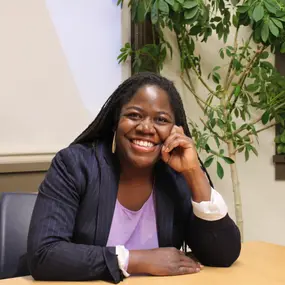
CEO, Lyons Educational Consulting | Host & Producer, The Exit Interview: A Podcast for Black Educators
Dr. Asia Lyons is the founder and lead designer at Lyons Educational Consulting (LEC) LLC. In partnership with communities, organizations, and schools, Lyons Educational Consulting supports co-creating truly inclusive environments that assist Black educators toward self-actualization through wellness spaces.
Dr. Lyons brings a wealth of practical and academic knowledge to her role. She has served as a K-12 educator in the Denver Metro Area and an adjunct professor at the esteemed University of Colorado - Denver School of Education and Human Development. Additionally, she has worked as a school partner specialist, collaborating with schools and non-profits across the Denver Metro Area to provide communities with resources aimed at closing the access gap for Black children and children of Color.
Dr. Lyons' research is a testament to her unwavering commitment to addressing critical issues. Her doctoral studies in Leadership for Educational Equity, with a concentration in Urban and Diverse Communities, delve into the profound impact of racism-related stress and racial battle fatigue on Black educators and their families. As a reciprocal gesture to Black educators, she co-founded and co-facilitates the Black Educator Wellness Cohort, conducting free monthly wellness sessions in the Denver Metro Area as well as other support services for Black educators nationwide. Dr. Lyons has shared her insights at prestigious platforms such as SXSW EDU, Harvard Graduate School of Education, The State of Black Learning, and the National Board of Certified Counselors Symposi… Read More

Being Committed without Being Consumed


