When Silence Is Violence with Kamye Hugley
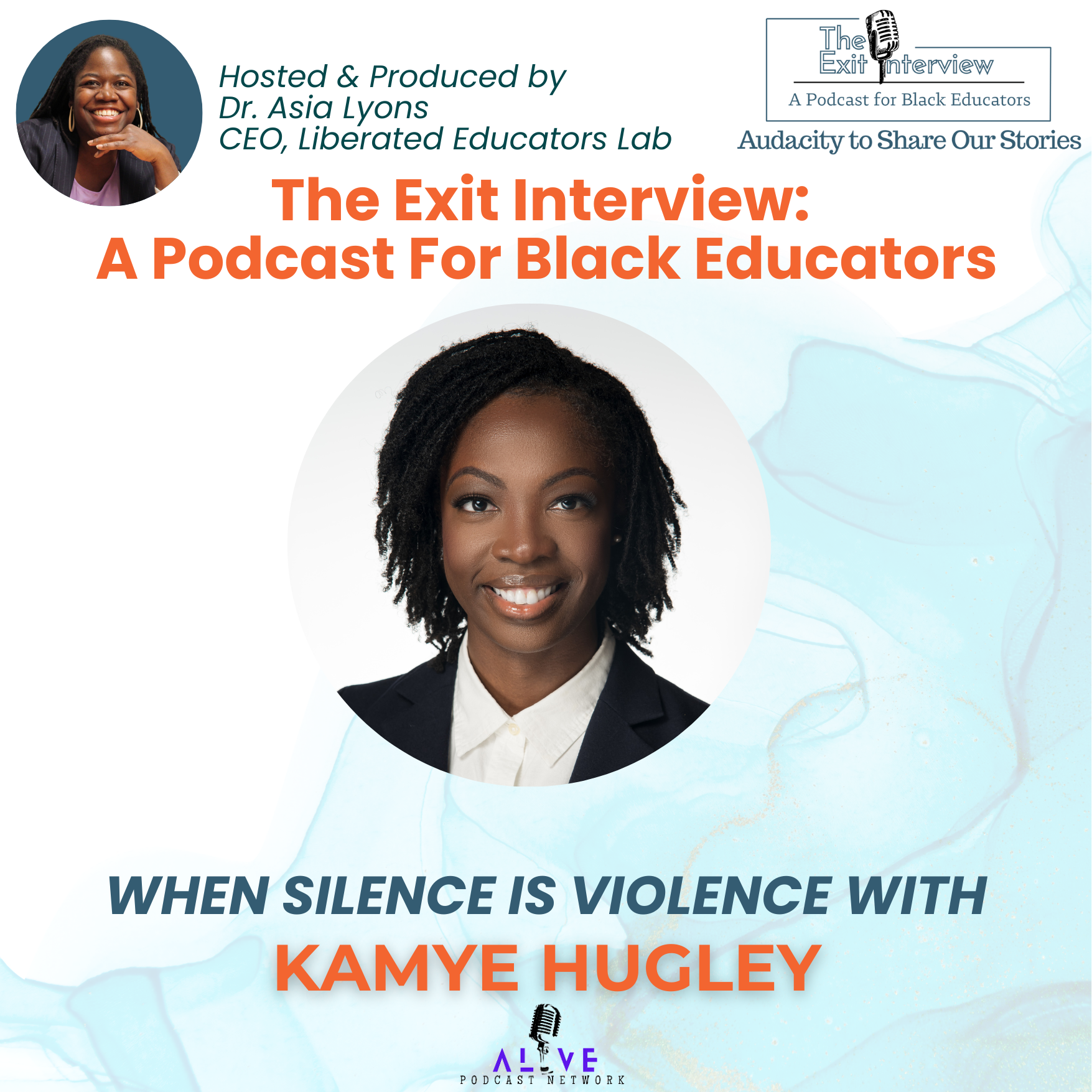
In this episode, I sit down with educator and bibliophile Kamye Hugley to explore what happens when Black women in education refuse to stay quiet in the face of harm.
Kamye traces her journey from her grandmother's urging to be a teacher, to a Teach For America placement that threw her from third grade to Head Start mid-year, to a Head Start classroom tucked in a portable with coyotes underneath and systems that treated early childhood like babysitting instead of brain-building.
She shares the heartbreak of referring students for support only to be ignored, the letter she wrote to a district leader that quietly shifted hiring practices, and her time teaching high school intensive reading, where one administrator's careless comment about test scores pushed seniors out of school entirely.
Together, Kamye and I discuss how these moments accumulate as racial battle fatigue and weathering and why, for Kamye, remaining silent feels like violence against herself. This episode invites listeners to consider: What does it mean to protect your wellness and still tell the truth about the systems harming you and your students?







Show Notes: "When Silence Is Violence with Kamye Hugley"
Host: Dr. Asia Lyons
Guest: Kamye Hugley
Episode Overview
In this powerful episode, Dr. Asia Lyons sits down with Kamye Hugley, an educator whose journey spans early childhood classrooms, high school intensive reading, and advocacy in the nonprofit sector. Kamye shares her candid story of navigating the education system as a Black woman, the challenges and joys of teaching, and the importance of speaking out against systemic harm.
Key Topics & Highlights
1. Kamye’s Background and Love for Books
- Kamye describes herself as a "self-proclaimed bibliophile," with books as the centerpiece of her home and life.
- She shares her South Florida roots and the influence of her grandmother in shaping her educational path.
2. The Path to Education
- Kamye initially planned to pursue journalism but was encouraged by her grandmother to consider teaching.
- Her journey included a pivotal Teach for America flyer encounter, leading her to apply and eventually teach in Prince George’s County, Maryland.
3. Teach for America Experience
- Kamye details the rigorous TFA institute, the challenges of lesson planning, and the emotional toll of being placed in unfamiliar teaching environments.
- She recounts being reassigned mid-year and adapting to teaching Head Start (three-year-olds) with little preparation, highlighting the importance of support from colleagues and paraprofessionals.
4. Systemic Inequities in Early Childhood Education
- Kamye discusses the lack of respect and support for early childhood educators, the underestimation of their professional expertise, and the systemic barriers faced by children of color.
- She shares her frustration with the referral process for students needing additional support and the consequences of delayed interventions.
5. Transition to High School and Heartbreak
- After feeling undervalued in early childhood, Kamye moved to high school intensive reading, where she witnessed firsthand the long-term impact of early educational inequities.
- She describes the heartbreak of seeing students struggle with reading, the pressure of standardized testing, and the insensitivity of some administrators.
6. Advocacy and Speaking Out
- Kamye wrote a letter to her district about the lack of diversity among support staff and the need for systemic change, which led to tangible improvements.
- She emphasizes that "remaining silent feels like an act of violence against myself," advocating for self-advocacy and systemic accountability.
7. Wellness and Self-Care
- Kamye reflects on the importance of wellness, inspired by the book "Weathering: The Extraordinary Stress of Ordinary Life in an Unjust Society" by Dr. Arline Geronimus.
- She defines wellness as curating a life that doesn’t require escape and prioritizing rest and self-care over consumerist coping mechanisms.
Notable Quotes
- "Remaining silent feels like an act of violence against myself."
- "Play is work. There’s so much happening in early childhood that supports cognitive and social-emotional development."
- "My wellness is my priority. Curate a life you don’t need to escape from."
Shout-Outs
- Ms. Eva Horn: Kamye’s co-teacher and mentor, exemplifying warmth and high expectations.
- Ashley Ray: The friend who drove Kamye to her TFA interview, believing in her success.
- Aunt Phyllis, Anthony (husband), and Kamye’s grandmother: Family members who provided support and encouragement throughout her journey.
Resources Mentioned
- Book: "Weathering: The Extraordinary Stress of Ordinary Life in an Unjust Society" by Dr. Arline Geronimus
- Teach for America: Insights into the application and training process
Call to Action
- For educators and administrators: Recognize and address the harm perpetuated within schools, especially towards Black educators and students.
- For families: Advocate for your children in early childhood settings and ensure their needs are addressed promptly.
- For listeners: Prioritize your wellness and support those who speak out for justice in education.
Connect with the Show:
If you enjoyed this episode, please share it with fellow educators and advocates. Take care of yourselves and each other, and remember: speaking up can create real change.
First of all.... have you signed up for our newsletter, Black Educators, Be Well? Why wait?
Amidst all the conversations about recruiting Black educators, where are the discussions about retention? The Exit Interview podcast was created to elevate the stories of Black educators who have been pushed out of the classroom and central office while experiencing racism-related stress and racial battle fatigue.
The Exit Interview Podcast is for current and former Black educators. It is also for school districts, teachers' unions, families, and others interested in better understanding the challenges of retaining Black people in education.
Please enjoy the episode.
Peace out,
Dr. Asia Lyons
When Silence Is Violence with Kamye Hugley
[00:00:00]
Dr. Asia Lyons: Alright folks, welcome back to the exit interview, a podcast for black educators with me, your host, Dr. Asia. It is a beautiful October day today, and my next guest, Kamye, we've been talking about the fact that she's wearing sleeveless shirts. And I'm wearing a full on sweatshirt here in Denver while she's in South Florida.
Um, but this is not about me and it's not about the weather. Welcome to the show, Kamye. How are you today?
Kamye Hugley: I am well. Thank you so much Dr. Asia for having me. And you are correct. It is a, um, warm 84 degrees here in South Florida. He the short sleeve, so thank you for acknowledging the difference in the weather patterns.
Dr. Asia Lyons: Yeah. I told her I wasn't jealous because I had come down there with my husband, um, and they have flying roaches and I'm
Kamye Hugley: like, no, [00:01:00] we don't like them either. So we we agree with that. Yeah.
Dr. Asia Lyons: People call 'em water bugs. I'm like, bro, no. Detroit says roaches. Okay. We
Kamye Hugley: call him flying roaches too. At least I do call 'em flying roaches.
Yeah,
Dr. Asia Lyons: I don't know. People try to make 'em like juju up. I don't know how that's possible, but again, we're not here for roaches. We are here to tell your story. So tell us a little about, a little bit about yourself. Um, tell us what you want the audience to know about you.
Kamye Hugley: I am a self-proclaimed biblio file.
I love books like, so last year my husband and I purchased a home, our very first home, and one of the things that I wanted was for my home to be decorated in books. And so it yeah, is decorated books. Like if you visit my home and you go in my living room, even our bedroom, there are, the books are centerpieces, they're on different tables, they're on, um, different shelves.
Um, [00:02:00] I've even had to tuck some away and swap some out, um, because they're just so many. And so books are like a huge centerpiece in my, my life and my day to day. Um, and it always has been since I was a kid. Like books are a huge focal point for me.
Dr. Asia Lyons: Yeah, I love that. So if you could estimate how many books do you think you own?
Kamye Hugley: If I had, I don't know, well, before we moved, my husband's like, you gotta get rid of something. But I, no, I think I've replaced, I, I probably replaced all the 12 that I got rid of,
Dr. Asia Lyons: not 12
Kamye Hugley: probably. And to me, this isn't a lot. I don't think this is a lot because there are a lot more that I wanna buy. Probably maybe a hundred, but that's not a lot.
Oh, that's
Dr. Asia Lyons: nothing. That's not a
Kamye Hugley: lot. No, no. Especially like this room that I'm in my office. Like I have grand plans for this room and all the books and the books that I want to get. So,
Dr. Asia Lyons: yeah, no. You know, and I heard somewhere a long time ago that [00:03:00] official library is 3000 books.
Kamye Hugley: See? You should have told me that.
Now I have a goal. I have a goal.
Dr. Asia Lyons: Yeah. I'm working on that same goal. I'm the person who wants the little ladder that goes from one end to the other, where you can just like drag it across the track. I'm with you on the, the library folks who've been in my office or who know me. No, I have. I upwards of a thousand in this, in this little office right now.
So I'm working on it. I'm with you. I'm in solidarity, you know what I mean? I am in solidarity.
Kamye Hugley: So now, okay. So you've given me a goal. I appreciate that.
Dr. Asia Lyons: Yeah, of course. Yeah. And I'm a children's book collector too, so if you know anything about that for the art, for the illustrations. Yeah. Yeah, I love that.
Yeah, I love that you are, um, a hundred percent a book nerd. So, well, anything else you wanna share before we jump in?
Kamye Hugley: You mentioned I'm in South Florida, born and raised in Fort Lauderdale. Um, lived outside of Fort Lauderdale once in my life, and we'll probably talk more about [00:04:00] that. Um, but definitely a South Florida girl through and through.
Dr. Asia Lyons: Right on. All right, well, let's go ahead and get started. Start off, how did you know that education was for you? Tell us your story, your journey.
Kamye Hugley: I did not know education was for me, so I. I'm the oldest of three. I have two younger sisters, and we were raised by our maternal grandmother. And when I was getting ready to go off to college, my grandmother just sat me down and said, I think you should be a teacher.
I don't know where it, I don't know where it came from. She was like, you should be a teacher. You'd be good at it. You'd always have a job. You should, you should major in education. And up until that point, I always thought I was going to go into journalism. Like I did the morning announcements in elementary school.
Oh yeah. Um, I used to try to mimic the, the, the announcer voices on tv, the journalist voice on tv. So I'm like, I'm gonna be a journalist. I don't know where my grandma got that from, about me being a teacher. And so [00:05:00] I started college and I declare myself an education major. So I take my first and only education course, intro to Education my freshman year.
And one of the things that we had to do to get the credit for the course was volunteer at some organization that had children. So I served as a volunteer at an elementary schools after afterschool program, helping kids with their homework, um, helping them with different activities in the aftercare program.
So I did that my first semester in college, and at the end of the program, the, the director, she had to do, um, an evaluation of my performance in the program and working with the students. And I will never forget, she put the evaluation. Cammie is a really good worker. However, she's very awkward with the kids and Oh man, straight
Dr. Asia Lyons: to the point.
Straight to the point. I
Kamye Hugley: mean, she, she didn't lie. I didn't, I didn't know how to talk to them. And, and it was primarily. [00:06:00] Like, I think like third through fifth graders that I worked with. And I found that they were very chatty and they wanted to talk, and I, I just could never figure out like what to say. I just, I was just very awkward.
So when I saw the evaluation, I was like, well, I mean, she didn't lie. Um, so and so with that, I was like, you know what, this is, this is evidence validation that this is not for me. Like, I, I don't wanna do this. So I was like, you know what? I should go back to, I should consider journalism, but I had a roommate who's a journalism major, and she and I were talking, and she mentioned that one fact error on an assignment and you failed the assignment.
And I was like, it's journalism. Like why? Is it in one,
Dr. Asia Lyons: in one of the classes that you are Yeah, in one of the classes. Oh, okay.
Kamye Hugley: I was like, Ew, I don't like that. Like just one fact error. But it's journalism. You can't mm-hmm. Make those
Dr. Asia Lyons: mistakes. Well, not you can.
Kamye Hugley: That's whole. That's a whole different story.
Go ahead. Um, so I was like, well, I don't [00:07:00] wanna do that, so I wanna do that. So I said, you know what? I'm great at English. I'm going to be an English major. And so my undergraduate degree is in English with a minor communication studies. And people will ask, what are you gonna do with that degree? I don't know.
But whatever I do, I'm gonna be okay. So now
Dr. Asia Lyons: let's just pause for a second. 'cause I wanna, first of all, I wanna know what grandma said 'cause grandma didn't say change majors. And then also this is called the exit interview, a podcast for black educators. So it sounds like somebody may, somebody had to make a turn.
But let's talk about grandma first. What, what was the reaction when she found out that you changed your mind?
Kamye Hugley: I didn't. I didn't tell her outright. I just. I don't EI don't even know how it came, came up in conversation. I had to have it at the end of each semester. I would send her, um, my grades. Like I would send her a copy of my transcript because they were free at one point.
Dr. Asia Lyons: Sure, sure. Yeah, sure. And
Kamye Hugley: I had to see on there what my major was. So we've never [00:08:00] talked about it.
Dr. Asia Lyons: Oh, that's one way. Okay. Well, I mean, and the truth is, will grandma know what she like, which classes to be looking for anyway? No.
Kamye Hugley: Probably my grandma was, she was, she was pretty sharp.
Dr. Asia Lyons: Oh. So we, we, we took a risk with grandma.
We took a risk. I took
Kamye Hugley: a risk, but I was like, it'll be fine. Like, what? She was probably looking at the grade, the grade more than the class way, like, she can't do nothing. So I was like, I feel safe. Yeah. So, yeah, I just, I just changed it and didn't say it outright to her at all.
Dr. Asia Lyons: Okay. So you, you finished up school.
Kamye Hugley: So
Dr. Asia Lyons: how did we get into education though?
Kamye Hugley: All right, so senior year is two. My senior year was 2008, 2009. You know. An economic downturn. Mm-hmm. Every time I turned on the news, the class of the, the job outlook for the class of 2009 is bleak. That is what I remember verbatim hearing quite often. And so me, I'm like, I gotta have a plan A, plan B, plan C, because [00:09:00] unfortunately, the summer, right after my junior of college, my grandmother wound up passing away.
Mm. Colon cancer. Very s mm. Um, so I was like, well, and my grandmother told me, um, my junior, sometime my junior year when I was visiting, and during one of the breaks, she said, you know, you're about to graduate soon and you don't have to jump out there immediately. You can always come home. And so me being, you know, 21, I ain't, I ain't coming home.
Well, I didn't say that to her. Of course not. Um, but in my mind I'm like, no, I'm grown. I'm not coming home. Like I, I'm gonna leave. Um, and makes and be on my own. Once, um, I graduate. Um, but she wound up passing away, um, a less, a little less than a year before I graduated. So it's my senior year, I'm back in school and I'm like, I definitely have to have a plan because my grandmother's not here for me to rely on.
Mm-hmm. And there's no home really for me to go to. [00:10:00] And so I got an internship at a local company, I think it was like a, an energy gas company. I got an internship working in the training department. Absolutely love, love that internship. Um, and I also, I was all over the place in college, as you can clearly hear.
I was like, you know what? And I love the internship. I love being a part of the training department. I was like, you know what? I'm gonna get my master's in human resources and organizational development. And so I also applied, um, for that program, the HY program, human Resources and Organizational Development at University of Georgia.
And I got into the program. Um, and one day I was walking around campus and I just saw these fires. They were all over the ground. They were on trees, they were in bushes. It looked like someone had like a thousand of them and just dropped them
Dr. Asia Lyons: and just walked off and just
Kamye Hugley: walked off. And the flyer said, apply to Teach for America.
And I was like, what does [00:11:00] this Teach for America? I felt like the flyers were following me because
Dr. Asia Lyons: that's part of the, that's part of what the Teach for America does, makes a flyer follow you.
Kamye Hugley: So I was like, what is I had, I never heard of Teach for America. I'm like, what does this Teach for America? Okay.
But I, I kept seeing the flyers en route to my, my dorm. And yes, I lived on campus all four years. And so I'm, I made a mental note of the website. I was like, okay, my curiosity is peaked. So once I got to my dorm and I got settled in, I read that website, every page of that website. Mm. And I was like, huh, this is intriguing.
And then for some, I thought about my grandma, my grandma's like, you would be a good teacher. And I also thought about all the teachers that I had in my past that played a huge impact in my life to this very day. And I was like, you know what? I'm just, I'm gonna apply. But I, I sat on applying for a while.
I think at the time there were a number of dates you could apply. I think I applied like the second to last [00:12:00] deadline. Mm-hmm. Because I was like, ah, I'm not really sure this is what I want to do. So I, I did the application and. In the midst of doing the application, um, the HR director at my internship approached me and said that I had a lot of fans in the company and the HR analyst she'd been promoted, which I was aware of, and I'm like, yes, I'm so happy for her.
And so he's like, her job is available and if you like the job, the job is yours. And I was like, oh, okay. Okay.
Dr. Asia Lyons: Yeah.
Kamye Hugley: And um, I thought about it and my boyfriend now husband was like, you should, you should take that job. And I'm like, I went to University of Florida. I didn't wanna live in Gainesville after undergrad.
I was like, I've had enough of being in Gainesville.
Dr. Asia Lyons: Okay.
Kamye Hugley: And so I was like, but I did think about it for some time. And so I'm going through simultaneously the application process with Teach for America. Did the application and then I make [00:13:00] it to the next round where I had a, a phone interview and then I made it to the final round, which was an in-person group interview.
And so this is close to graduation. You're talking to friends about, you know, what are you gonna do after undergrad? And so I told folks, Hey, I got into University of Georgia to get my master's. My internship offered me a role. Oh. And I have a, an interview with Teach for America coming up a final interview.
And when I said that, people were like, oh my goodness. Oh, that is so great. TTFA is so competitive. And I'm like, is it because I, I had never heard of it. And then one friend in particular started telling me about all the other mutual friends that we had who applied and I did not know they applied and they were not accepted.
And so I started to like, oh, okay. If they didn't accept that person. And then another friend was like, yeah, this person, they designed their entire academic career around [00:14:00] applying and getting to Teach for America.
Dr. Asia Lyons: Oh, wow. And
Kamye Hugley: I'm like, well, I just heard about these people like two months ago
Dr. Asia Lyons: on a flyer on the ground,
Kamye Hugley: flyer on the ground in the bush.
Um, I was like, well, I'm as well take one of these other two options.
Dr. Asia Lyons: Yeah.
Kamye Hugley: Um, but I was, I was like, there's no chance I'm gonna get in because I don't think I wanted it that bad as those, as those other folks. And so I, the day of the, the final interview comes, my car didn't work anymore and so a really good friend of mine.
Um, she told me, she told me that she would take me to the interview and I was so, so, so nervous. And she was like, you're gonna be fine. You're, you're gonna get this job. You're gonna get this job. Mm-hmm. And she kept saying it, and I'm like, well, what makes you so confident? And she tells me that every time she takes someone to an interview, they always get the job.
So ho ho. Oh,
is it herself? Not necessarily [00:15:00] me.
Dr. Asia Lyons: We gotta put your friend's name out in space. What's your friend's name?
Kamye Hugley: Ashley? I don't know. I don't know if she changed her. Her, her, she got married. I don't know if she changed her last name, but Ashley Ray.
Dr. Asia Lyons: Ashley, shout up. Thank you Ashley Ray for giving folks rise to their success.
We appreciate you.
Kamye Hugley: Ashley was like, oh yeah. Every time I, um, I drop someone to an interview, they always get the job and she was so serious. And I was like, all right. Thank you. And the interview, it was. It took a lot out of me. It was all day, it was like a seven, eight hour day. Oh wow. I think there were, there were 11 of us.
Um, we did group activities. We did one-on-one, um, conversations with the interviewers and I remember at the end of that day I was spent, uh, we, we had to do a, a, a mock lesson plan. I remember I did my lesson plan on teaching adjectives to, was it second or third graders using song titles? So I used like [00:16:00] single ladies and, 'cause I think single ladies had just dropped single Ladies and Bob Marley's, three Little Birds.
And so I had fun preparing for that. And at the, Ashley picked me up and she was like, you gonna get this job? Ashley
Dr. Asia Lyons: said, we, we gonna get this job 'cause I'm might keep driving you back and forth. You gotta get some money to go car fixed.
Kamye Hugley: And I remember talking to. My oldest aunt, my, my late Aunt Phyllis, uh, about a week later.
And I, she knew I'd interviewed and she was just so confident and I was talking to her, I'm like, I don't think I'm going to get it. Um, and she just completely ignored what I said. Mm-hmm. And she's like, because I, when you do the initial application, you rank the regions where you want to go. And I remember I wanted to go to the DC region.
I don't even think I'd ever been to DC at that point, but for whatever reason, I wanted to go to Washington, DC uh, and I ranked Miami last. 'cause I was like, that's just the close though. [00:17:00] Um, and I applied so late, I'm like, I'm not, they're not gonna sell me in. I'm not gonna get my top pick in region because I applied so late.
And I'm talking to my aunt. I'm telling her all of this. Her response to me was, well, when you get up to DC, make sure you buy your winter wear there because the winter wear here in Florida is not gonna do what it needs to do to keep you warm up
Dr. Asia Lyons: there. Okay, auntie. Okay. I see.
Kamye Hugley: No, nobody's listening to me like, no, the guy, I just was like, this is not happening.
And maybe a week or two after that I got that email. It was in the evening, about 5:00 PM on the dot. Congratulations. Welcome to the 2009 core of Teach for America. And they told me my region, I got my region, but in parentheses it said Prince George's County, Maryland. I was like, well wait a minute, but I didn't know the DMV region with all that for
Dr. Asia Lyons: sure.
Kamye Hugley: Um, but I was like, oh, I got my pick in region. Okay. And so I remember I called my aunt immediately, [00:18:00] told her the news. She said, girl, I told you so when you get up there, get your boots,
Dr. Asia Lyons: get your winter coat
Kamye Hugley: your coat from up there. Do not buy it down here because the winter wear here is not going to sustain you for that winter.
Dr. Asia Lyons: Yeah.
Kamye Hugley: And so that's how I got my started in education through Teach for America and not knowing what it was.
Dr. Asia Lyons: It's so, it's so interesting. We've had on this show so many people from TFA share their story, but I don't know how many people have told the whole like the detail. And this is the journalism major, I can tell.
And I appreciate it too, because I think that people in the audience who have heard of Teach for America but don't know the ins and outs, or went in as a core member in a different year or whatever, may not have the same experience. It's always good. To hear the back end of people's stories about what it took to get in, how they found out about Teach for America.
I [00:19:00] feel like a lot of people got a recruitment flyer, kind of similar to what you said, but I've never heard of anyone talk about that interview day and the amount of rigor. And I know that, you know, for some folks it could be, um, there's like a lot of tension with Teach for America for lots of different reasons.
Mm-hmm. But, but I think in the, at the end of the day, the people that I have interviewed on this show felt like they wanted to be in Teach for America to teach and not like, well, you know, this is the last thing and I'm just ended up here and like, whatever, whatever. But that people have had interest. I see.
A face
Kamye Hugley: or, or it's a stepping stone to do.
Dr. Asia Lyons: I was gonna say that a stepping stone, what I've heard, and I've heard just recently. People talk about after three years and I'll be able to go on and do X, Y, and Z mm-hmm. And never think about the longevity of teaching. Um, so I appreciate you sharing all the details of that and making sure that people know that if they give someone a ride to a, to a [00:20:00] interview, they'll get a job.
Thank you, Ashley. So, yeah, so tell us about Prince George's County. Tell us about teaching. We wanna know.
Kamye Hugley: Whew. Okay. See, I don't, where do I, where do I start? Do I start with institute? I think I blocked out a lot of institute. That's fine. It was, that was the hardest six weeks of my life. The, the, the lesson planning I had, I had never done lesson plans before.
And so the, the level of detail and the lesson plans that were expected of us, I was like, I hope I don't have to do this when I'm actually in the classroom, because it didn't feel sustainable to me. Mm-hmm. And I was like, I, this is a lot. Dr. Asia, there were so many times during this. So institute, for those who don't know, I don't know if it's still called Institute.
I did the core in 2009. Um, institute is, at least when I did it, six weeks of, I call it teacher bootcamp. You're learning how to be a teacher. So during that time when I did institute, you spend [00:21:00] your six, six weeks in a particular part of the country. My institute, even though I was going to be assigned to teaching in Prince George's County, Maryland, my institute was in Philly, was in Philadelphia.
So I stayed on the campus of Temple University for six weeks. And so I also taught summer school in um, uh, it was a group of four of us and we taught, um, in a pre-K classroom teaching summer school. Um, and so you are learning how to lesson plan, you're learning. Um, about child development, your learning about diversity, equity, and inclusion.
That was a ride. Um, and just making all these connections with other core members. And I remember like week two people started, people would leave for the weekend and not come back.
Dr. Asia Lyons: Oh, no.
Kamye Hugley: Yeah. Like people would leave on the weekend, you'd be like, come Monday, like, why so and so? Oh, they're not coming back.
And there were a couple times, I was almost one of those people. Yeah. Because I'm like, this [00:22:00] is a lot. I felt exhausted. I felt like, I felt like I couldn't do it. Mm-hmm. Um, because of, I felt it was so, so, so rigorous. And I'm like, if this is what teaching is, like I'm, I'm not cut out for this.
Dr. Asia Lyons: Mm-hmm.
Kamye Hugley: Um, however, I would talk to my, my Aunt Phyllis throughout the summer and tell her I wanna quit.
And she would be like, stay up there. You'll figure it out, you'll be fine. Okay. How do youIs, I'm just like, I'm not okay. I'm tired and I dunno what I'm, I dunno what I'm doing. And she was like, all right, well, you'll be, you'll be fine. You'll figure it out. And I, I, I stuck it out and I did. And so at the end of those six weeks, you are assigned to a school.
However, at the end of my six weeks, I still had not been placed in a classroom. Like 60% of us had not been assigned to a school. I'm like, of course, I'm part of that 60%. [00:23:00] So I was finally placed in a school, like the week before school started, I was, so, I was assigned to teach third grade at, what's it was, I think it was Tacoma Park, Maryland as a time assigned to teach third grade.
So it was a public elementary school, pre-K through sixth grade. And it was, no one in the school had more than like 16 students. I had 12 students. However,
Dr. Asia Lyons: hold on, hold on.
Kamye Hugley: I had two,
Dr. Asia Lyons: hold on. I had 12. I thought, well, my first year of teaching I had 19 students. I had 15 boys and four girls, and I thought that was the best class ever.
I was like, oh, 19. Everybody's like, oh my gosh, 19. That's a dream. And it was, to be fair, I love that class to hear. You had 12. 12,
Kamye Hugley: but wait, there's more.
Dr. Asia Lyons: Of course, there's a reason you had 12.
Kamye Hugley: They run outta classrooms. Oh no. So [00:24:00] I had to share a classroom with, I shared a classroom with a fourth grade teacher, so I had 12 students and she had 14 fourth graders.
And so what admin the administration told us was that because they were out of classrooms, the two of us had to share a classroom and she was an experienced teacher. I think by this time. She's been teaching, if not a decade, almost a decade. Just shy. A decade. Sure. And so, you know, sometimes teachers, it can be a little, a little territorial.
So I could tell, like she, she was very professional, but I could tell she was just like not very pleased with this
Dr. Asia Lyons: arrangement.
Kamye Hugley: So what they did was I was assigned students who were, according to them, um, on grade, on or above grade level. And she had fourth grade students who were working below grade level.
And so they thought with some of the content we could co-teach.
Dr. Asia Lyons: Hmm.
Kamye Hugley: But however, when we [00:25:00] finally got the curriculum, it was like the only thing we could really teach together was like English language arts. The science curriculum's different than that curriculum is different. So her being such a veteran, such an expert, she was able, 'cause I'm like, I don't know what I'm, I don't know what's going on.
She was able to help us both figure out the logistics of the classroom so that we will be able to teach certain content areas separately, but be able to come together to teach other content areas together.
Dr. Asia Lyons: Yeah. Yeah. That's, that's, and I'm just, I'm just imagining all the things happening. And I also, something that's sticking out in my mind is that fourth graders, the, whoever made the decision that the fourth graders should be getting third grade content.
Uh, that's interesting because that then that begs the question of then when do students and all subjects get a chance to see the content? Of their grade level. Right. [00:26:00] So like, like the idea makes sense, but in theory. But when you think about it, if they're behind in fifth, fourth grade, you never show them fourth grade math.
Then how will they get to, like, how do they know what they need to be gi like leaning towards or moving forward on like, it'll always seem like they'll be behind because they've never even been exposed to the grade level in which they're supposed to be in. And that's a whole different Yeah,
Kamye Hugley: yeah, yeah.
But my, my co-teacher, she and she would ask those questions and I could tell, administration was like, oh, it'll be, y'all will work it out. It'll be fine. Um, but that's not where the story ends. And so we're rocking and rolling for the first three months of the school year. And on a teacher planning day, I get a phone call on my cell phone.
It was, um, a district employee, I think it was someone from hr from the district, prince George's County Public Schools. And long story short, I was being reassigned [00:27:00] to a new school because the, they found out that the student teacher ratio at my current school, it was too small. And they were like, there are too many teachers in the building, and so we're gonna reassign you to another school.
Dr. Asia Lyons: Wow.
Kamye Hugley: And it was like, as soon as I hung up my phone, like the, the principal and assistant principal, they come running to our room. Yeah. They were like, did someone call you? We're like, yeah. They're like, don't answer. I'm like, well, they already called. They were like, why did you answer? I'm like, I'm not from here.
I don't know. I don't know the area code. Yeah. And so I was really shocked, um, to be transferring, um, during the school year. So it was, it was like October. It was this time of the year, it was October. And they. I called them back because I want to know, well, when is it, when am I expected to transition to the new school?
They were like, Monday. And I'm like, today's a teacher planning, so the kids are gonna come to school and not see [00:28:00]
Dr. Asia Lyons: me. Oh man.
Kamye Hugley: And so I pushed back on that. I said, I would appreciate if I could transition Wednesday. Let me break the news to them on Monday. Let me get one more day to spend with them on Tuesday, and then I'll report Wednesday.
I said, can that, and they, they did grant that,
Dr. Asia Lyons: so, oh man. That's a, that's awful. I think, and I, now that you're talking about it, I remember us having this conversation in our like pre-meeting where we were chatting about this. Yeah. That's awful. That's so, so awful. Yeah. Um, ugh, that's heavy. So. Okay. You transferred, where did you go?
What did you do? I went
Kamye Hugley: to another elementary school. What el
Dr. Asia Lyons: I can't remember. So many
Kamye Hugley: school. Spring Elementary School. I can't remember the city, but it was, it wasn't far from where I was. And so I went from teaching third grade to Head Start. So I went from between [00:29:00] eight and nine year olds to three year olds.
So I reported to my school and I met, they told, I was told I need to meet with the Head Start director. I'm like, what is, I didn't know what Head Start was. So I met with the Head Start director, uh, Laura Barbie Matthews. And I went into her office and she welcomed me. She was very warm. And I said, how, how, how old are the kids?
She said, they're three. She's like, they're good. There are four Head Start classrooms. You're the fourth classroom. Um, the other three teachers, they have four year olds and your students are three, three year olds. And I was like, are they potty trained?
Dr. Asia Lyons: Yeah.
Kamye Hugley: Are they body trained? Trained? And she said, yes.
Well, they're supposed to be. And I just started bawling. I just started, I just started creeping in her office. Wait, what's this wording?
Dr. Asia Lyons: I was
Kamye Hugley: creeping.
Dr. Asia Lyons: Oh, yes, yes.
Kamye Hugley: [00:30:00] And she said, honey, just be grateful you have a job. 'cause my, my, my son just graduated. He doesn't have a job. Let me walk you to your classroom.
Dr. Asia Lyons: And we are in the middle of, at this point, like you said, this is still, everything's crashing, the housing market trash. So we're still in this part of America. That's a good, oh man, good point.
Kamye Hugley: So she walked me to my classroom. I, I, I got myself together and she walked me to like my classroom. And, um, she left me there.
And when she left, I started crying again because I can't even describe to you what the classroom, so. I was told, it used to be a chapel. It was a, and when you, you walk down these three little steps and it was like one big room and in the middle of a room was like a piece of wall. And I literally mean a piece of wall because it didn't go all the way across.
And so they took that piece of wall to make it a divider to make two classrooms. Oh wow. So it's like a classroom [00:31:00] over here, A classroom over there. My classroom was here, so the room was, it was long and narrow. So it was one teacher here, me here, the bathroom was on her side, so my kids needed to go to. Oh,
Dr. Asia Lyons: wow.
Kamye Hugley: Well, my kids needed to go to the bathroom. They had to walk. It was just walk over there in her classroom. Um, and I just, and then I had brand new furniture, which I was grateful for. Um, but it was all stacked up in the middle of the room. Wrapped up and bubble wrapped and boxed up. And I'm just, just, I must have looked the site because I'm just standing there crying because I'm like, I don't, I don't know how to work with this age group.
Even though during my summer institute, I worked with four year olds. Mm-hmm. Um, but I worked with three other people, um, and I didn't know how to decorate. I didn't know how to like, put my room together. And so thankfully the, the paraprofessional from the next room, she saw me, she was like, girl, don't worry about it.
I got you. And she put my room together. [00:32:00]
Dr. Asia Lyons: Aw, you know what I'm loving. I'm, and this is a thing that comes across so many times is like, there's always someone who's like, I got you. I can support you. Hey, let me get this thing for you. Like you said, the fourth grade teacher or this paraprofessional. And for like so many of us, myself included, if there weren't people who were like.
This is what you do this and this is how you put the bulletin board. I don't know where I would be. And that's the thing that I really love about education in general, is this desire to help people when needed. Now that's in general, right? That's not always the case, but there's typically, especially for like newer teachers, people who've been in in the field for a while, they can see like, I don't know what I'm doing.
And they wanna make sure that you are successful because in the end of the day, the kids need you to be successful.
Kamye Hugley: Yes. I had so many people that helped me. Um, she was, yeah, she just, she was like, I got it. Don't, don't worry about it. I got it. Um, she put my room together [00:33:00] and the very next day I had to meet families.
And I worked at a school where the home language of probably more than, I think more than 90% of the students was Spanish. And so I went from having 12 students to, I mean, at 15, the home language of 13 students with Spanish. I had one student whose home language was French, and I had one native speaker of English.
Dr. Asia Lyons: And you speak
Kamye Hugley: English? I'm a monolingual speaker.
Dr. Asia Lyons: We're laughing, but, but during that time, I would've had instant hair loss. Like I would not have been able to. Oh.
Kamye Hugley: And I had a, I had a coach from Teach From America, and I also had a coach from the district. Yeah. Um, re re co I'm just named re Coy White. Oh. She was my, my coach when I taught third grade. And she would visit me and she would just check in on [00:34:00] me.
And she's like, honey, how you, how you doing? I was just, just, I just spent a lot of time crying. At first year. I was just crying, just cry, cry, cry. And I was like. I am like, I'm doing such a bad job. I said, all they do is cry. All the kids do is cry. They just, they just, they cry. And I said, they're always touching me.
And when I think about it now, I'm like, she must have been, I don't know how concerned she was. I would been concerned, but I, I did not understand early childhood development.
Dr. Asia Lyons: Sure. And,
Kamye Hugley: um, she was,
Dr. Asia Lyons: it,
Kamye Hugley: it,
Dr. Asia Lyons: it is definitely its own field that should be respected.
Kamye Hugley: I did not understand. And she was like, the fact that they come up to you and they're talking to you even if you don't understand, and she, that means they like you.
And she was like, just get down on their eye level. She was, I was like, what do you, I said, what do you mean? I'm short, I'm five two. And she, she's like, well to them you're, you're bigger than them. Like, she was so patient. She's breaking [00:35:00] it down.
Dr. Asia Lyons: Yeah.
Kamye Hugley: She's like, you're bigger than them even though you're a short adult.
She said, but just kneel if you can, like kneel down, get on their eye level. And she said, just comfort them. And I said, I can touch them. She was like, yes. Like you can pat them on the shoulder, pat them on the, to come. But I, it did not dawn on me to do these things. I just saw a bunch of toddlers crying and she's like, it's normal for them to cry this time of the year.
Because I learned most of them had never been in a school setting. Most of them had come home. Sure, of course, of course. Um, straight to school. So for a lot of them, this was shock. We all was just shocked. We were just all shocked
Dr. Asia Lyons: as a, as a group. As a group.
Kamye Hugley: Like I didn't know what to do. They didn't know what to do.
Um, but with her, her patience and her guidance, I'm like. Okay. I, I, I can do this. And it turned out to be an incredible year, probably my [00:36:00] favorite year of teaching those years of teaching. And then what I loved, because they were so young, half of them, boop, with me the second year.
Dr. Asia Lyons: Mm-hmm. And so
Kamye Hugley: I got them again for, um, a second year.
And so we, it was, we had a, I had a lot of fun with them. I learned a lot about myself, and I became very passionate about supporting the language development of multilingual learners, multilingual learners. Excuse me.
Dr. Asia Lyons: Yeah. So how long were you in that particular role at that school? So, I, I,
Kamye Hugley: I stayed in that role till the end of my two year commitment till 2011 to 2011.
And then I had the option of staying. My principal told me, she was like, listen, if you wanna stay, you got a job. Like you're, yeah. Like you, you are, she's like, you're a great teacher. You can, you can, you're more than welcome to stay. And, um, I did not, after my two years of Teach for America, I relocated back to South Florida.
I came back home. I came back home full love. I came back home from [00:37:00] my, my now my boyfriend, now husband. Um, he graduated like a, a semester after I did and moved back to South Florida. And after the two year commitment, um, I made the decision to move back down. And I told myself, I'm not going back into the classroom.
I'm done with the classroom. I'm not going back. I'm not doing that. So I applied for every job under the sun, uh, so I wouldn't be back in the classroom. And so I worked at a local, um, employment agency for after six months of living off my savings. I worked for like a local employment agency for eight, for eight months.
That was temporary. And then at the end of that, I'm like, okay, no one's calling me. So let me. Let me go substitute teach. So I started as a, again, as a substitute teacher at a charter school that was right across the street from where I lived. Like I, I walked there. So I remember I did an application. I got a call back a couple days later.
Sure. I met with, I think it [00:38:00] was the school's administrative assistant. Met with her, um, she looked at my application. She was like, you have great experience. And she looked at my address. She said, this is really close. And I said, yeah, I live right across the street. I walked here and she said. You'll be hearing from me.
She called me every day, every day if I wanted to work. I had a job every single day. Like Sure. And teachers really liked me. I got offered a full-time sub position, went because a teacher went on parental leave. I turned it down so I, no, I was offered, um, one of the assistant principals offered me a role as a math teacher.
I'm like, you don't wanna do that, because she was like, you work really great with, like, they had me across all the grade levels because Sure. K through eight charter school. She was like, yeah, like, I need a math teacher. You think you could get certified in math? No. Thanks. I'm like, no.
Dr. Asia Lyons: As if that's a small feat too.
Right? Totally. That takes time.
Kamye Hugley: I'm like, no, no, no, no, no, no, no. And you don't wanna do that. [00:39:00]
Dr. Asia Lyons: Yeah. Um,
Kamye Hugley: and so I was like, no. And I, I just, I kept pushing teaching. I'm like, no, I wanna go do something else. And my, my, my then boyfriend was like. Just, you just need to go ahead and get back in the classroom. Like that's where you're supposed to be.
Like that's where you're supposed. Mm-hmm. And so I'm like, okay, the subbing is not, I'm not doing it enough to, to, to really pay my bills. And so I said, you know what? Let me apply to, lemme apply to, to be a teacher for, with Broward County Public Schools here in South Florida. Put in the application, boom. I get a call like two days later, I get a call like two days later.
I go in for the interview, interview for a Head Start role. They hired me on the spot.
Dr. Asia Lyons: Well, of course they did.
Kamye Hugley: Well, of course they on the spot. And I'm like, all right, I see. I see, I see, I see. And so then I had to talk to the school secretary and she's like, Hey, it can take up to six weeks for you to be [00:40:00] hired because of background and fingerprints.
And then she's looking at her system. She is like, wait a minute. She said, have you been. Substitute teaching. Have you been subbing? I'm like, oh yeah. I just recently like stopped subbing. She is like, oh, well you have a very current background check and fingerprints. You can start tomorrow.
Dr. Asia Lyons: Why is it that everybody, the theme we, the theme of your interview is you can start tomorrow.
I feel like everything yours is like two days from now, you're gonna be at a new school to the, and and to be clear, that is not common. No, that is not common. And to have to switch schools and teach, uh, three year olds over the weekend, like start your career with high being hired a week before school start, like all of these like quick turnaround.
That is very challenging. Especially, and at this point in your story, you're three, maybe four [00:41:00] years in. Mm-hmm. That is not easy to do for anyone. And so for you to just keep saying like, sure, yes, sure. You are giving me anxiety, listening to your story, because I would've freaked out. I
Kamye Hugley: don't Oh, that's a good point.
I don't think I was freaked out. I was just like, well, okay. I guess it's, it is meant to be like, that was me.
Dr. Asia Lyons: Well, at this point, yeah, you, I'm sure you probably were used to it. It's like, okay,
Kamye Hugley: fine. It's meant to be. So I was like, well, okay, I'm not gonna start tomorrow. Can I start, let me start Monday. She's like, yeah, you can start Monday.
You're free to start whenever you want. And so then I tell my, my husband's name's Anthony. He was like, I've been telling you since you moved back here that you just need to go back to the classroom because that is, that is where you, that's where your gifts are. And I did not, I did not wanna be my gift.
I was like, I wanna do something else. Yeah. But it wasn't happening that way.
Dr. Asia Lyons: Yeah. So I
Kamye Hugley: went back to teaching Head Start, but instead of teaching three year olds, I taught four and five year olds. [00:42:00] Um, I, I enjoyed it, but this is, I really started to see, um, inequities. And I think oftentimes in early childhood, we think of it's like this, this really magical place for little children, and it's just fun and their, their curiosity is running rampant and that is all very true.
But there's also this undercurrent of, um, inequities that are, that occur. So I remember I was at the school just like one month shy of three years, and I remember I was, one year I had three students that I recommended to go through the referral process because after having, uh, with Head Start, I don't know if it's the same, now you have to, for each child during the school year, you have to have two parent conferences and two home visits.
And so in working with these children after, you know. Two or three months, I'm [00:43:00] starting to notice, I'm like, Hmm, I, I have some concerns. So I would talk to the parents and oftentimes the parents would, before I would bring it up, they'd be like, Hey, I have some concerns about the speech or about, you know, I don't think they're picking up stuff really quickly.
So oftentimes they had, they would bring the concern up before I needed to. And so I was like, okay. And so I had three students one year that, um, I put through the referral process and there was, I think my second or second year at this school in south Florida, um, my paraprofessional was, had a background in, um, exceptional student education in special education.
Um, she was like, yeah, she, she decides to be a paraprofessional, um, because she wanted a break from her role as a special ed educator. Um, and so she brought in a lot of expertise and she would be like,
Dr. Asia Lyons: Hmm,
Kamye Hugley: hugely, I think. There's some cognitive issues with this particular child. [00:44:00] Um, and then she would pretty much confirm my thinking and so my families would bring it up to me.
So one year in working with her, I had three students that I was, I had various concerns about, um, cognitive concerns, language concerns. And I remember prior to sitting before the referral team, I compiled all my documentation, my student work samples, um, my, my, my notes with families on, on the conversations that we had and gotten clears from the families that yes, it's okay to, for them to, for me to go through the referral process so they can get this started to see what supports the child would need.
I remember, I, I had all, I mean, I had all this ation, all kind of folders, and I get to that meeting and I was told. You know, you're, thank you for being so thorough and providing the documentation. We can definitely see why you have decided to bring these kids, you know, for referral, but [00:45:00] because they're so young, we're just gonna see how they do and see with how they do in kindergarten.
Dr. Asia Lyons: And
Kamye Hugley: I was like, okay. And I remember talking to my paraprofessional who, who was this former special education educator, and she was like, she just shook her head was like, no, no. Like we need the support now. And so following year there was one kindergarten teacher who I had a really good rapport with and she, I think she gotten one of my students who I've sent through referral process.
And when I tell you the first month of school she came to my portable, she was like, girl,
Dr. Asia Lyons: yeah,
Kamye Hugley: I have this student that you had last year. What's up? Like, what is going on? She's like. The alphabet knowledge is, she's like, the alphabet knowledge isn't there. I almost felt like she was accusing me.
Dr. Asia Lyons: Sure, of course.
Of
Kamye Hugley: teaching. Of course. Um, and I smiled to her, I said, when you have a chance, when you go, go to the front office and look through their file, um, because I, I put all [00:46:00] that documentation in there after being told to throw it away, but something told like, nah, put it in there. And the next day she came to me and she said, you mean to tell me you put, you went through the referral process and they did nothing about it.
Dr. Asia Lyons: Mm-hmm.
Kamye Hugley: I said, yep. And she just said, oh my goodness. Um, yeah. And then interestingly enough, once I left that school, um, one, my oldest nephew, who's now 17, I can't believe it, he, um, he had, he wa was a classmate of one of my students that I had when I taught Head Start. Um, they were in the same. Second grade class.
And I was like, oh, he's such a nice kid. Like be friends with him. And then the following year when my nephew was in third grade, I asked like, you know, you know, how's, how's this student? Uh, he was like, oh, he's in miss so-and-so's class. And I'm like, in my mind was she teaches second grade. I was like, oh, [00:47:00] doesn't she teach second grade?
He was like, oh yeah, he stayed back.
Dr. Asia Lyons: Mm. Like I,
Kamye Hugley: I, I, I, I had a feeling this would happen, um, because for some reason people don't take early childhood seriously. And so that, that, that was very frustrating. So that was one of the, the factors of me making the transition from. Head start to high school.
Dr. Asia Lyons: Okay.
Before we get into that conversation, Lord Jesus,
Kamye Hugley: I, I just be making all kind of moves and shit.
Dr. Asia Lyons: Yeah. Wow. Woo. Oh, uh, I wanna say that some time ago we had Brittany Carey on our show and she was an early childhood educator, still is, to be fair. And she talked about the inequities in early childhood and what she saw when she was in the schools, how they treated early childhood educators, how they treated children of color, the pay, [00:48:00] just so many things.
And she's telling this story in California and you're telling the story in Florida. And so that I want the audience to hear. Like keep an eye on your children in those zero to three, zero to six classrooms do not make assumptions that they're only there to color and it's not a really a big deal and like we're just playing or it's just daycare.
They, there are lots of skills that your child is supposed to be learning and if you feel that your child, something's going on with your child, you need to say something immediately. Because legally, if you ask the school to start the IEP process or help you get your child tested, they have X amount of days that they could 60 or 90 to do that.
To start that process legally at the federal level, at least. On October 15th, 2025. So you need to, if you have some [00:49:00] inkling that something's not correct and the teacher has not said something and you feel like, oh, my child should be doing this, or my other child could, don't just blow it off. At least find out, get your child tested, and you then you can say, okay, nothing came up.
Or they're just right in the range they're supposed to be in Also. Back to early childhood educators, folks who are in K five. I don't know if, and you said this, you said that you came back to my mobile. Right. So many preschool classrooms are attached to a school, but not attached to a school. Oh. They're in the, they're immobile in the back of the school, in the basement of the school.
And so they're treated as such. They don't get involved. They don't get called in for fundraisers or they don't get called in for special guests at the school. It's just like they don't exist. And so I wanna say for those listening who have any kind of administrative power to say, Hey, let's [00:50:00] invite preschool to this guest speaker.
Let's make sure that the preschool educators, the EC educators, are involved in these transitions and these conversations even at fourth, fifth, because they have these kids year after year. That is so important. And I don't know how many people are taking early childhood seriously. Um, and it's really a shame.
So I just wanted to say that and I wanted to say folks who are listening, if you have not heard Brittany Carey's episode, uh, Michelle four, I believe. Go back and listen because Cammie is saying the same thing that Brittany said who was saying the same thing that Jackie Cradle said when she's in early childhood.
Early childhood is an educator position. They're not babysitters and they should be treated as such. I just wanna say that before you transition to high school,
Kamye Hugley: and I appreciate you saying that because. I, I was in a very unique position where I taught Head Start, but my, the programs I always taught in were always attached to [00:51:00] a public elementary school.
Yeah. I wasn't necessarily at a standalone center, so I made the three As the teachers, as a, as the, our K through five, K through six parts. But I oftentimes wasn't treated as the professional that I was. That's
Dr. Asia Lyons: right.
Kamye Hugley: Y'all got a master's degree in reading, like, like, I'm not just back here. We're not back here just babysitting children.
There's a lot of, we're doing a lot of things that are supporting children's cognitive development and there's social emotional learning.
Dr. Asia Lyons: Yeah.
Kamye Hugley: We, there, there's, there's play is work.
Dr. Asia Lyons: Yeah. That's exactly right. Brit, uh, Brittany also say Dr. Brittany. Not yet. Brittany said the same thing. Right. I remember my daughter came home from her fourth, 4-year-old class, so she had taken, she was in preschool twice, and we were like putting the coat on and then she finally was able to put the coat on and she got a little badge badge that said coat college.
And then she got the zipper and then she [00:52:00] got a little badge that said zipper university, like she the zipper, the put the shoes and it seems very small, but it's not. It's the, it's the gross motor skills. The
Kamye Hugley: fine motor skills, the fine
Dr. Asia Lyons: motor skills, the gross motor skills, the communication, the play, the all of that counts.
The talking. Right. Being able to talk to your classmates and, and we have to pause and think about that.
Kamye Hugley: Those are, I think sometimes as adults, we're so far removed from, how did I learn those skills? Mm-hmm. They're, they're skills that have to be explicitly taught and then we wonder why kids become teenagers and we're like, well, they don't know how to communicate.
Well, we really haven't, we have to cultivate those skills somewhere.
Dr. Asia Lyons: Yes.
Kamye Hugley: And in early childhood that that is optimum time to cultivate those skills. Yes. You know, use, use your words like they have to be taught how to use their words and what words to use like that, that oral language development is as crucial when, when that early time of learning.
Mm-hmm. Um, [00:53:00] yeah. And so because of the, the disrespect that I felt, um, you mentioned we would be in the, like I was always in a very interesting classroom set up and was in a portable at this school in South Florida, and I remember one of a custodian came by, he was like, yeah, miss Hugo, y'all be careful back there because it's, it's, it's some coyotes living underneath your portable.
And I was like,
Dr. Asia Lyons: wow.
Kamye Hugley: Excuse me. Excuse, excuse me. Like I, I, I have 19 four year olds. Who might think that's the puppy.
Dr. Asia Lyons: Yeah. Who they did
Kamye Hugley: one day and I was like, go inside. Um, so check on us,
Dr. Asia Lyons: check on them, check on them, please.
Kamye Hugley: And so, yeah, the, I, I felt, I didn't feel like I was respected as the professional that I was.
And I remember talking to an older cousin of mine who I think she's brilliant. Um, she's always taught secondary, [00:54:00] secondary math. And I was talking to her and one day she was like, have you considered teaching older students? She said, think about teaching older students. So in my, I don't know why didn't think, you know, fourth grade, you know, still in elementary.
Mm-hmm. So I just started pulling feelers out there and I applied for an intensive reading position in Palm Beach County at the high school level. Again, I got an interview soon after.
Dr. Asia Lyons: Of course you did. I got an interview
Kamye Hugley: soon. I mean, was it two weeks, three weeks? I got an interview and so I was like, I'm gonna humor them.
'cause clearly they haven't read my resume. I have never taught anybody over the age five. So I'm like, I'm gonna go to the interview and get some good interview practice ready for them to tell me thank you. But no thank you.
Dr. Asia Lyons: Yeah,
Kamye Hugley: they hired me on the spot. They hired me on the spot to teach intensive reading at the high school level.
And I was very confused and I, I said in the interview, I said, [00:55:00] um, are you sure?
Dr. Asia Lyons: Is that right? May, maybe you should stop applying for jobs that you don't want. I'm just gonna put that out there because you getting jobs.
Kamye Hugley: I was so shocked. Shocked. And I said, you know, and they, they chuckled. Um, and the, it was a room full of administrators and.
I said, you know, based on my resume, I'm sure it's evident that, ha I have not taught anybody over five to be clear, five
Dr. Asia Lyons: to be clear, let's just be real clear. Yes. And one
Kamye Hugley: administrator said, she said, and that's why we like that. We like you because, because of your background and literacy, you know how to break down literacy.
Dr. Asia Lyons: And I
Kamye Hugley: said, oh, okay,
Dr. Asia Lyons: because you do have a master's degree in reading. I had a master reading,
Kamye Hugley: reading K through 12 and I was, I was certified in pre-K, primary education and reading K through 12 at the time. And so they hired me and I, I went and I thought about it. I'm like, [00:56:00]
Dr. Asia Lyons: I wanna know what Anthony said.
He,
Kamye Hugley: he was just like, that's what you wanna do. Very supportive. That's what you wanna do.
Dr. Asia Lyons: So we love Anthony folks.
Kamye Hugley: He's very supportive. I, I could tell Anthony right now, you know, I wanna be an astronaut and he'd be like. Oh, okay. Let's figure out how to budget for it.
Dr. Asia Lyons: Yeah. Oh, he said budget for it. He got a spreadsheet.
Yay. Yeah, yeah, yeah, yeah.
Kamye Hugley: Dollars and cents. And so I thought about it and I was like, let, let's do it. Let, let's, let's, let's, let's do it. Let's, let's go teach high school at the end, at, at let's teach intensive reading at the high school level. Yeah. So I made the jump from teaching, um, four year olds to teaching, uh, 14 through 19 year olds.
So I taught intensive reading for every grade except 10th grade, ninth, 11th, 12th grade. But let me back up a little bit. So I just, I left teaching Head Start, and I loved Head Start, and I remember, um, my last, in my [00:57:00] classroom, I was in there and I, I cried because I, I love early childhood, still, still do.
And I left because as I stated, the, the lack of, um, support that I felt in the lack of respect in my role. And so I was very frustrated and I'd applied to be a coach for the district for Broad County public schools. They had like coaches, head Start coaches, and so I remember Dr. Asia, the requirements, there weren't many, and I exceeded every requirement.
Mm-hmm. You only needed to have two years of teaching experience. By this time I had almost, almost four, uh, bachelor's degree. I had a master's degree. Um, head start. You, uh, you have to go through this observation where it's called the class class observation. Um, I would score sixes and sevens. A hydrogen score is a seven.
So I'm like, yes. Like I, I, I have the skills to be able to support other folks who are Head Start educators and I, I, my, my, my [00:58:00] Head start coach would come and she'd visit for 10 minutes, be like, you're doing great. I, she, she said, I wish I could bottle you up and sprinkle you on my other teachers. Mm-hmm.
That's what she said to me. And so I was like, you know what? I'm gonna apply to be this cultural. I, I applied a total of seven times, but by this time, I'd applied, I think twice. And I'm like, okay, well there's, there's no room for me to grow here. And then I also didn't feel really respected at my school.
And then I had that conversation with my cousin. I was like, yeah, I'm gonna just bow out. But I was just, I was so frustrated because I noticed with the coaches, there was not one coach that was a, a person of color,
Dr. Asia Lyons: of course.
Kamye Hugley: And at the time, I looked up the data, uh, I, if I'm not mistaken, like 83% of students identified as as black.
And I'm like, okay, this is interesting. However, I did notice the, I forget the, the name of the role, but it was almost [00:59:00] like a. Not a social worker role, but similar to a social worker role for Head Start, a lot of those folks are people of color. 'cause you need those folks to engage with families who
Dr. Asia Lyons: speak like a family liaison or something like that, like a family liaison.
Kamye Hugley: Um, you need those folks to be able to engage with families who speak Spanish or Haitian Creole. So a lot of those folks are people of color, but the folks that are coaching the educators, none of them were. Mm-hmm. And so that heightened my frustration. Mm-hmm. You know, back to my, my, my, my English degree, wanting to be a journalist.
Journalist, I, I channel my, um, energy into writing. So I was like, I'm gonna, I'm gonna write a letter. I'm gonna write a letter. So I typed, I typed a letter that I was gonna send to the head, to the, then Head Start director. I don't know why I didn't just email the letter, but I typed this letter about why I left.
I put my email address on it and my, my phone number and I, um. [01:00:00] Printed it, put it on the envelope, addressed it, put a stamp on, and I mailed it. I don't know why I didn't just email it, but I mailed it.
Dr. Asia Lyons: Mm-hmm. And I felt
Kamye Hugley: so much better. Mm-hmm. And I had no expectation that I would get a call, email, anything.
But lo and behold, I'm driving back from my new job as a high school intensive reading teacher, and I get a phone call and I notice, I'm like, oh, I see the area code. I'm like, that's, that's the one where our county public schools, I wonder if it's the director. And it was. So I picked up, she's like, hi, I is, is this cam?
And I'm like, yes. And she told me who she was and she said, you know, I really appreciate you for taking the time to write and send me this letter. Um, and I'm so glad that you put your phone number because I really want to talk to you and about, you know, what you wrote in your letter. And she said, you know, I've, you are one of our best Head Start teachers.
I will always hear great things about you from folks with visit your room. So it was such a disappointment to. That you left. And [01:01:00] she went from paragraph to paragraph and told her about my frustration with the disrespect and how unsupported I felt. And she was very empathetic to that and was just like,
Dr. Asia Lyons: that's
Kamye Hugley: something that we need to address.
But then we got to the paragraph where I started putting the data about, you know, the number of black children and children of color of the program versus the support staff. I felt her goal on the defense and she said, you know, I don't hire based on race. I hire based on, here
Dr. Asia Lyons: we go,
Kamye Hugley: I hire based on qualifications.
And I said, so can you, I said, so are you telling me that there are no qualified applicants of color
Dr. Asia Lyons: period
Kamye Hugley: who apply for these roles? Because I've applied for the role at this point, I've applied four times and I exceed every qualification. So if I'm one of your best, why not put one of your best in a, in a position to be able to support other educators to to, to do really well in their role?
Silence. And then [01:02:00] we just kept on talking about the rest of my letter. Um, and that was that. But a couple weeks later, I get a call from one of my colleagues from Head Start and she was like, girl, our department, we had a meeting today. And the director came in and said, one of our best teachers quit, and these are the reasons why and there are gonna be some changes.
And she said, girl, she started hiring a couple more people. I said, um, so yeah. And she was like, I know it was you who wrote the letter. I was like, what? Get I never confirmed nor denied. Sure. And I said, well, why would you assume it was me? And she said, you're the only one brave enough to do that.
Dr. Asia Lyons: Hmm.
Kamye Hugley: And I wound up applying for the role again, the, the, the coach role again and, um. I was offered the role, but I, I [01:03:00] declined it because I'm like, it, it shouldn't have taken this many, I don't, I, it might have been my ego.
Dr. Asia Lyons: Yeah, sure. But then I was
Kamye Hugley: like, is this indicative of how the department is run? Why did it take so many times for me to apply seven times?
Dr. Asia Lyons: Yeah. I don't, what
Kamye Hugley: made me continue to apply, I will never know. Um, but it was comforting for me to know that that letter made some type of impact. Yeah. Where more people were starting to be hired in certain roles.
Dr. Asia Lyons: Um, I, you know what? I think, like you said, you wrote the letter with like, I'm gonna get this off my chest.
I'm gonna say what I need to say. And of course, when people talk about race, it's like always at most qualified or we don't see race and blah, blah, blah. Um, but. I'm so glad you did that because there's always this What if, like, what if I never said anything? You know, what if I didn't send a letter, I just put the letter somewhere else or threw it [01:04:00] away.
Yeah. Um, and you got to hear from your colleague on the back end, the results of your letter, where a lot of people don't get a chance to see any change or hear about any change happening, um, after they've done something like that. And, and so for some folks listening may be like, well, that's not really brave.
Like, like what's the, she just wrote a letter. And some folks they're gonna say like, yeah, that does take a lot of bravery because there's so much fear and education about burning bridges. Like if we advocate for ourselves, if we speak up against injustice, then, then we, we gonna get retaliated against and they're gonna burn a bridge and some bridges deserve to be burned.
And I don't know how many of us really sit and, and think about that, like. If you speaking truth and standing up for yourself and your colleagues causes people to not wanna hire you or causes you not to get a promotion, maybe it's time for you to go. And I don't know if we [01:05:00] wanna admit things like that in education, because a lot of us are so comfortable teaching in the same grade or the same district and don't wanna move around and don't wanna take a chance.
So I just wanted to say that I appreciate you doing that because you know, obviously that was years ago and you may have changed even if it was temporarily the trajectory of a lot of educators. Um, time and education, specifically black folks.
Kamye Hugley: Thank you. I I never thought about it that way. I think for me, remaining silent feels like an act of violence against myself.
Dr. Asia Lyons: Yeah.
Kamye Hugley: And so when, when I'm, when I'm not being true to myself, I feel harmed. And so I, I don't wanna walk around feeling as if. I am harming myself because in harming myself, I am allowing the status quo to continue as is. And, and, and that's, that's by design. And that's not [01:06:00] something that I feel good about.
Like I, I, I know, I know some people are like, just, just let it go, but I can't. It's just something even I'm like, I can't let it go because these systems inflict real harm. And I think sometimes in education, sometimes folks who work outside of education forget the work that we do. It impacts real people.
It impacts people's children. Absolutely. And there's something that I do not play around about. I take that very seriously.
Dr. Asia Lyons: Mm-hmm. So
Kamye Hugley: I'm at the high school now.
Dr. Asia Lyons: You're at the high school, you're teaching. How long were you there? How was it for you?
Kamye Hugley: I was there all of nine months.
Dr. Asia Lyons: Mm.
Kamye Hugley: One of the most, probably the most heartbreaking role that I've ever had.
You know, we talk [01:07:00] about the statistic of if students aren't reading on grade level by third grade, the gap only widens. I lived that every day teaching intensive reading. So I taught intensive reading with four, ninth, 11th, and 12th graders. So in the state of Florida, there's this test called the FSA Florida Standards Assessment.
In my day, it was called the fcap, Florida Comprehensive Assessment Test. But now it's FSA, um, there's a reading component on it. And when you're in 10th grade, you have to pass the reading component. You have to get a level three. I forget. I think the score is like a 300, but you have to score a level three.
The lowest level is one, highest level is five. You have to score a level three to graduate from high school. So no matter if you met all of your other graduation requirements, if you do not get that level three on the reading component of that test, you will not graduate. So starting in 10th grade, you take it, if you pass it in 10th grade, great.
You've met that, that requirement, you don't have to take it anymore. So I worked with the [01:08:00] ninth graders who I think they take the test in eighth grade. Um, and if your score was like below level three, then in ninth grade you're in intensive reading to help prepare you to take the test in 10th grade. If you are in my class as a junior or senior, that means you had not passed that test yet after taking it, more than likely, more than once.
And so the goal was for me to get you to pass that test. So essentially I wasn't teaching reading, I was teaching test, test prep strategies.
Dr. Asia Lyons: Mm-hmm.
Kamye Hugley: However, you can also get what's called a concordant score on either the SAT or the a CT. I think on the a CT, they needed to get like a score of, I can't remember if it was like a 17 on the reading component.
And so I, there was no curriculum. It was give them a passage test.
Dr. Asia Lyons: Mm.
Kamye Hugley: And it was heartbreaking because we were prac, we would practice these a CT passages. It is, you have 35 minutes to read four passages and answer 40 [01:09:00] questions. So that, that's all strategy, right? Mm-hmm. And so like I would help them register for it.
They would take it, they'd come back the following week. How'd it go miss? I only answered 10 questions. I'm like, but we, that, that, it was, it was a pressure cooker for so many of them. Sure. Uh, for my juniors and seniors and there. Their, their confidence in reading was solo and it didn't help that their administrator, I used to, when I first got there, I would hear how they would talk to her in the hallway.
And I used to be clutching my invisible pearls. 'cause I'm like, oh, they would cuss this lady out.
Dr. Asia Lyons: Mm.
Kamye Hugley: I mean, like, you call her the B word. All kinds of things. And I was like, oh my God. Like I remember I asked the one, they're like, why do y'all talk to her like that? Mm-hmm. And they'd be like, we can't stand her.
She just got here and she da da da. They would, they would go off on her. And one day I [01:10:00] experienced, I, I saw exactly why, lemme not, I hope I don't cry. Um, it was towards the end of the school year, so it's about March, March, April. This was the last time they could take that, take the FSA for the year. And so they'd already, they'd taken it.
Weeks had gone by, they were waiting for the scores. My juniors and seniors were waiting for those scores because that was it for them. Waiting, waiting, waiting for the scores. And so I think it was my last period of the day and this administrator, she comes in and it is probably like the last 15 minutes of the class.
And the kids are like, miss, like do you have the scores? To have the scores come in? And at this, I did not know that the scores had come in. And this administrator, she says, yeah, the scores came in and they were terrible. And she walked out
and you could hear a pin drop in my class. My class of [01:11:00] seniors who are normally high, it's Friday and she did this on a Friday afternoon. It's Friday. They have plans for the weekend. Those last 15 minutes, they were silent. Mm. And I remember I turned around, she said I was stunned. There's very few times in my life where I was stunned and couldn't speak.
I was stunned because the way she, it was so cruel. And I remember I just turned around and I looked at my board
and I about turned and I faced them and I said, I'm so sorry. And I, I didn't know what I expected from them, but they said, um, once one boy said, no, miss, don't be sorry. We know you did everything you could to help us. And um,
the bell rang [01:12:00] and they shuffled out in silence and. I packed up my stuff and I just got in my car and I, I cried all the way home. I cried those whole, that whole 45 minutes home. And I get home and Anthony's, he's like, what's wrong? And I told him, and I, I just kept saying, I failed. I failed. And he's like, no, you can't undo all that they didn't get in the last 12, 13 years.
Um, that didn't help me feel better, but I knew it was true. And I never looked at that administrator the same. Mm. I avoided her. I, I couldn't even, I could not speak to her. And then I noticed my attendance of my juniors and seniors plummeted. I would have a, anywhere from, I had about three or four periods of juniors and seniors.[01:13:00]
Anywhere from 22 to 26 students. Eight would show up.
Dr. Asia Lyons: Mm-hmm.
Kamye Hugley: No more than 10 would show up. And that made me panic. So the ones who were there, I'd be like, I'd start asking, Hey, where're so and so, where's so and so? Where's so and so Miss? She said she dropped out, miss she, he said he's just gonna work at, um, dunking Donuts, miss.
She got a job at Burger King. And a lot of my kids, they were 18. So they can, and I would, I would call home for some of them because they're 18. They would put their number as the emergency contact and I will all go back, please come back. It's not over yet. Come back. We can take the a CT, we can take the SAT.
And some of them would, some of them didn't. And I remember the principal came and I, I never told the principal what this administrator did. I never did. I don't know why. And I remember my principal, she was, you know, was doing her round. She came in during one [01:14:00] of my, I. Periods where I had seniors and it was like seven in there.
And this was a class that had like 20 students. And she said, where's everybody? And I looked at her and I said, they, they stopped coming and we just kind of looked at each other because she knew what that meant. Mm-hmm.
Dr. Asia Lyons: She
Kamye Hugley: was just, she just, and it was at that moment, I said, I can't do this. I couldn't do it anymore.
And so I made the decision to, um, move away from traditional classroom teaching into the nonprofit sector. And so my goal was to find another role over the summer, but that did not happen. I wound up finding a role in September when the, like, three weeks after school had started. Yeah. But that, that was.
It was heartbreaking and I was just [01:15:00] so, I was so disgusted at that behavior
Dr. Asia Lyons: mm-hmm.
Kamye Hugley: Of that administrator, the, the insensitive way that she gave them that news about their test scores that they were waiting for.
Dr. Asia Lyons: Yeah. Thank you for sharing that story. Something that I'm thinking about and sitting with when we tell our stories.
It's not that the students disappear, right. Those students are adults right now. Mm-hmm. And like you said, I don't know how many people really understand the gravity of their actions when they do harm to children. Right. Just because they leave the school that we're in, or the classroom that we're in or whatever, doesn't mean that they don't go to work somewhere or start their own family or whatever.
And [01:16:00] that story's just so for so many reasons. So heartbreaking. And it was true. Yeah. What Anthony said about you, it's hard to undo it. 12 years. 13 years. You talked about with preschoolers. Mm-hmm. Because that action in that preschool classroom you talked about of like, we'll just see next year is the same, that's the same child, hypothetically, as you saw as a 12th grader.
Kamye Hugley: Mm-hmm. One of them even told me, he said, miss, I've been a struggling reader since kindergarten. Nothing's helped me.
Dr. Asia Lyons: Yeah. Yeah. And it's not nothing. It's no one That's the part. Yeah,
Kamye Hugley: that's the part.
Dr. Asia Lyons: It's no one. And so this is the, I think this is the thing that's really hard. About being a, for me to being a black educator specifically is looking at black children and children of color and understanding the urgency of education [01:17:00] and aren't, we are not able to loop up to every grade and hold every student from preschool to 12.
Right. And we, and I wish that more people had an urgency for the work. And I'm so sorry to hear that. That's, that's one of the reasons that made you think like this is not, at least in that school at that time, that this is can't be it.
Kamye Hugley: Yeah. And it wasn't, it wasn't the kids. Yeah, of course
Dr. Asia Lyons: not. Of course not.
Kamye Hugley: You know, they're, they're kids and it's so interesting, like people tried to scare me and you know, about going to high school, but when I got there, I'm like. They're like, the four year olds are taught just in bigger bodies. Like I remember, yeah. Coming from pre-K worlds, you know, teaching pre-K for so long, I, I would decorate my room and put up posters and I remember for, um, for the month of February, on of [01:18:00] Valentine's Day, I bought this big.
Annoyingly Big Heart from Dollar Tree. Well, it's not even Dollar Tree anymore anyway, from Dollar Tree. And I like hung it up in the middle of my room. And at first I'm like, oh, they're gonna, they're gonna laugh at me putting this in here. But no, one of my girls was like, miss Hughley, when you finished, can I have it?
I wanna put it in my room.
Dr. Asia Lyons: Oh yeah. Oh
Kamye Hugley: yeah. They're still cute. It was a month. Um, I put it on the desk where she sat, and so when she walked in, she saw it and she was like, thank you. So it was like, like little things like that that where I was like, oh, they're gonna make fun of me. Or they're, they're not gonna, they're gonna be like, this is so childish.
They did it. Or there were days with those that I knew who liked to celebrate their birthdays, they'd, I'd be like. Happy, happy birthday. And they'd be like, oh, you know, my birthday. I'm like, yeah, yeah, I take attendance. It's right there. And so, and then they would be like, well, miss, when is my birthday? They would quiz me.
Of course, of course. Please [01:19:00] ringer. But they were, they, they just, they had so much joy and light, but when it came to read, they would shut down.
Dr. Asia Lyons: Mm-hmm. I mean,
Kamye Hugley: miss, miss hug, my throat hurt. I can't read, my leg hurts, have to do what we're supposed to be doing. Um, it, it was hard for them because it had been hard for them for so long.
Dr. Asia Lyons: So yeah.
Kamye Hugley: After that encounter with that, that particular administrator, I said, oh, no, like this, I, I emotionally could not handle that, that disappointment in their faces. And I'm like, I can't, I, I could not see myself doing that every year.
Dr. Asia Lyons: Yeah. That's, I can't, I can't imagine. And just knowing that the disappointment.
Yeah. So thinking about your, I mean, you had a very, very interesting journey in education and I think you, you know, you talked about just now being in the nonprofit [01:20:00] sector, and we'll talk about a little bit later what you're doing now. But thinking about across all of the ways that you were able to show up for students, all of the ways that folks were able to show up for you, and then those who didn't show up for you, what do you think that schools and districts and unions can do to retain black educators?
Kamye Hugley: Whew.
I think to retain black educators, I think first there has to be an acknowledgement of the harm that schools perpetuate. And not just on the students, but on the educators themselves. Especially black educators. I think there is a disconnect between what we want teachers to experience and what the actual experience is, especially amongst black educators.
I'm just curious to know how many folks have had similar experiences as me, where they've seen, [01:21:00] not only have they themselves experienced harm and disrespect, but they've also seen children who look like them experience the same thing. I think first there needs to be an acknowledgement that schools sometimes are a site of harm, not just for students, but for educators themselves.
Dr. Asia Lyons: Mm-hmm.
Kamye Hugley: I think there first, there, before we can even do any kind of work, there needs to be an acknowledgement that that occurs. 'cause I don't, I don't know if people recognize that or sometimes you're so steeped in, in the system that you don't recognize the harm that either is, has been inflicted upon you or that you are inflicting.
Dr. Asia Lyons: Mm-hmm. Yeah. Something that I think when people hear that, I want to be clear. The acknowledgement of harm, I think that folks go to like, oh, and that causes burnout. But when you talk about race specifically, we need to acknowledge that it [01:22:00] causes race, racial battle, fatigue, like this. Yeah. Burnout is a thing that happens.
Sure. Lack of funding. Um, not enough co-teachers. Lots of different things can cause burnout, but black educators specifically also experience on top of burnout, the racial battle fatigue, fatigue from fighting racism. Mm-hmm. Fighting against the racism. They experience themselves, like you just said, and their students and their colleagues.
Right. And. Then the question is like, if they acknowledge that harm, then what are they gonna do about it? And I'm all for what you're saying. Right? Right. And we can't even get to the place of acknowledgement.
Kamye Hugley: We can't even get to the like, and then there's this, you know, this conversation of black women in particular, oh, you know, she, you're either too quiet or you're too loud, or, you know, why your face looks [01:23:00] like that.
Or, you know, she has, you know, a resting B face and you mentioned racial battle fatigue. My, my RBF is a result of my RBF. My resting B face is a result of racial battle fatigue.
Dr. Asia Lyons: Yeah.
Kamye Hugley: And that's how it, it's, it's showing up in my body language. So, no, I don't have an attitude. I'm, I'm tense, I'm anxious, I am disappointed.
I am, I'm fearful. Not just for myself, but for how this system can't impact children who look like me.
Dr. Asia Lyons: Absolutely.
Kamye Hugley: And it is, it's a lot. It's, it is a lot to shoulder that I think that doesn't receive enough acknowledgement or awareness.
Dr. Asia Lyons: Yeah. And sometimes
Kamye Hugley: we're not even aware of it until we step away from that situation or that particular system.
Dr. Asia Lyons: I feel like that's most times so many people come on the show and share their exit story. They're 2, 3, 4, 5, 10 years away from the education space and have had a [01:24:00] chance to heal from the harm they experienced and then, and process and reflect and get therapy if needed. And then they're like, oh wow. Like this was way more intense or way more harmful than I think I realized in the situation.
Um, yeah. So let me ask you another question and. Just thinking about Auntie Phyllis. I wrote people's names out. Ashley, Loren Anthony, our favorite person. Right. And our Don't hear
Kamye Hugley: that. Don't worry.
Dr. Asia Lyons: Our older cousins and, um, and of course grandma, all the people you've mentioned on the podcast, are there black educators that you would like to shout out, um, as a part of your journey as a child yourself, as a student yourself, or you've worked with, or do you, that you currently know that are maybe still in education in some capacity?
Kamye Hugley: Oh, there's so many. Okay. I'm gonna [01:25:00] shout out. I, I mentioned her, but I did mention her name. I'm gonna shout out Ms. Horn. Eva Horn. Eva was my, she was my co-teacher when she was the fourth grade teacher in the, when I was a third grade teacher in that room. And I. I'm so grateful that I had the opportunity for those three months too.
I, I felt like I was like an apprentice or shadowing her in that room because at this point she'd been teaching eight, nine or 10 years, and I just saw the way she, not only was she warm, but she had high expectations.
Dr. Asia Lyons: Mm-hmm.
Kamye Hugley: She, she pushed and challenged not just her fourth grade students, but my third grade students as well.
Um, and she did it in a way that it felt very empowering for the students and for me to see, and she wasn't just that way with our students. I saw her be that way. With other students. I remember there was a [01:26:00] day when a student from another classroom came in and had a note for her from a teacher. And he came in, he was loud, he was like, Ms.
Horn. And she like, she didn't embarrass him. She just gently like, kind of like motioned like this. And she told her class, you know, our class to, you know, continue with their work. And she went up to him and she said, you know, when you walk into a classroom, she modeled for him how to walk into a classroom.
Yeah. And she didn't do it in a way that embarrassed him. She's like, when you walk into a classroom, you don't know what's going on. So you, you walk in quietly, you scan the room for the teacher, you come up to the teacher, you quietly tell the teacher why you're there. And so she, and she was like, so I want you to try that.
So she had him walk back out and try it again?
Dr. Asia Lyons: Yeah.
Kamye Hugley: And it, and she did it in a way that, it wasn't embarrassing, but it was, she used it as a moment to teach him something. And so, and she and I we're still, I haven't spoken to her in a while. This is a reminder I need to call her, but Eva, I call her Eva, Ms.
Horn, Eva Horn. Um, just a [01:27:00] powerful educator. And when I was reassigned instead of reassigning my third graders through the other third grade teachers she had, it was expected for her to teach both grade levels.
Dr. Asia Lyons: Oh, wow.
Kamye Hugley: So she was the only person in that school that had 26 students.
Dr. Asia Lyons: Oh, wow.
Kamye Hugley: No one came close to that amount of students.
And the her kids did incredibly well. They did the highest in the school on the state test, both grade levels. Um, just a phenomenal educator. Um, she, she came to my wedding all the way from Rhode Island. So, um, she is someone that I am so grateful to know and have, um, I'm grateful to have had the opportunity to have worked so closely with her.
Dr. Asia Lyons: Hmm. Hmm. Thank you. I love that. Um, and of course they scored high on the test and of course,
Kamye Hugley: but yeah, she, she has so many obstacles that year, but she [01:28:00] did what she needed to do for those kids.
Dr. Asia Lyons: Yeah. Yeah. Thank you. Um, so tell us, I think I'm gonna leave with this last question. Um, you've been through a lot as an educator and you said you're, like I said, you mentioned being the nonprofit sector through all of this.
What has that taught you about wellness for you on this side of all of these experiences? What does it mean for you to be well.
Kamye Hugley: So I told you I, I like books. I love books. You
Dr. Asia Lyons: did.
Kamye Hugley: I'm currently reading this book and I have right here, it's called Weathering the Extraordinary Stress of Ordinary Life in an Unjust Society by Dr.
Arlene ROMs.
Dr. Asia Lyons: Hold, hold it up. I just got it from, from my friend. Stacy, hold it up. Good for people.
Kamye Hugley: Oh, weathering. I Library. So port your local libraries. I got the library. And the whole [01:29:00] premise of the book is that the, the society that we live in, um, it, it causes weathering, which is the phenomenon of having a negative impact on our biological systems and processes that cause causes us, particularly black people, people of color, uh, to endure illnesses at a much younger age and passed away earlier.
Um, and I read this line last night that Dr. Geronimus said, and the line mentioned. High effort coping to survive day to day.
Dr. Asia Lyons: Mm-hmm.
Kamye Hugley: And so for me, wellness means not having to engage in high effort coping to survive day to day. Wellness, to me, means curating a life that I don't need an escape from.
Dr. Asia Lyons: Say it again.
Kamye Hugley: I, I shouldn't have to engage in, um, capitalist [01:30:00] practices to feel a sense of relief from my life. I shouldn't have to buy myself something or, you know, I like to buy myself things, but I shouldn't have to rely on those strategies of vacationing and, and moving away from my day-to-day life to feel whole.
Dr. Asia Lyons: Mm-hmm.
Kamye Hugley: My wellness is my priority. So, um. Eating, going to the restroom when I want to. Being able to prioritize rest is my top priority when it comes to wellness and not having to do that, um, from a capitalist standpoint of buying this and shopping here, or, um, engaging in certain practices that where I'm spending and spending and spending.
So I sent, I feel a sense of relief from day-to-day pressures.[01:31:00]
Dr. Asia Lyons: All right, folks, we are gonna leave on that note. Kamye Hughley, thank you so much for coming and speaking to us and sharing your exit interview. Um, folks, take care of yourselves, take care of each other, be kind, get some rest, and we'll talk to you later. All right, peace.
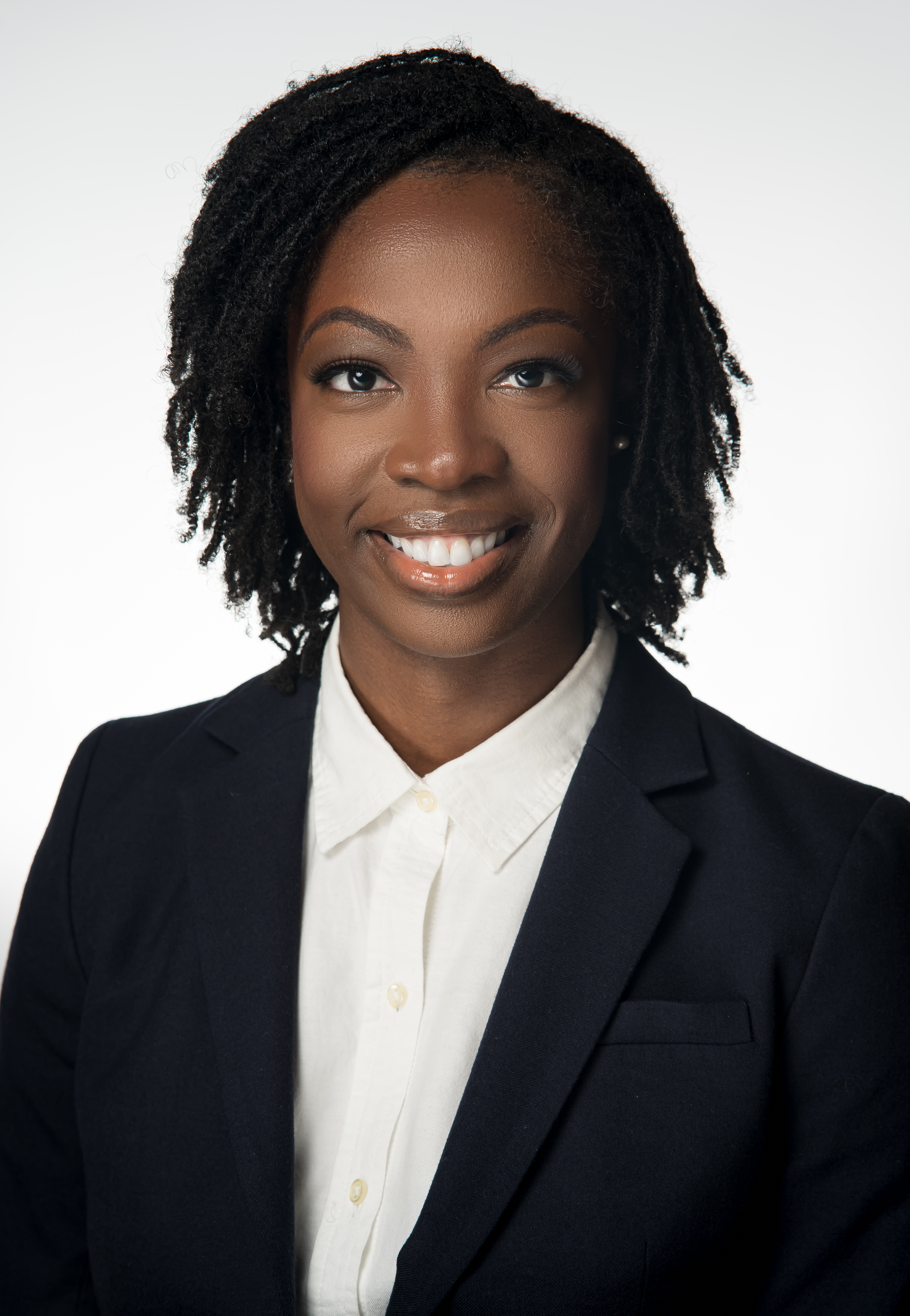
Learning Strategist
Kamye Hugley is a nonprofit education leader and former classroom educator who began her career with Teach For America (D.C. Region 2009). She brings extensive expertise in literacy, coaching, and professional learning, designing dynamic experiences that help teams perform better, retain what they’ve learned, and build lasting capacity. Passionate about literacy, Kamye believes books can cultivate students' curiosity and positive identity development.