5280 Freedom School with Branta Lockett
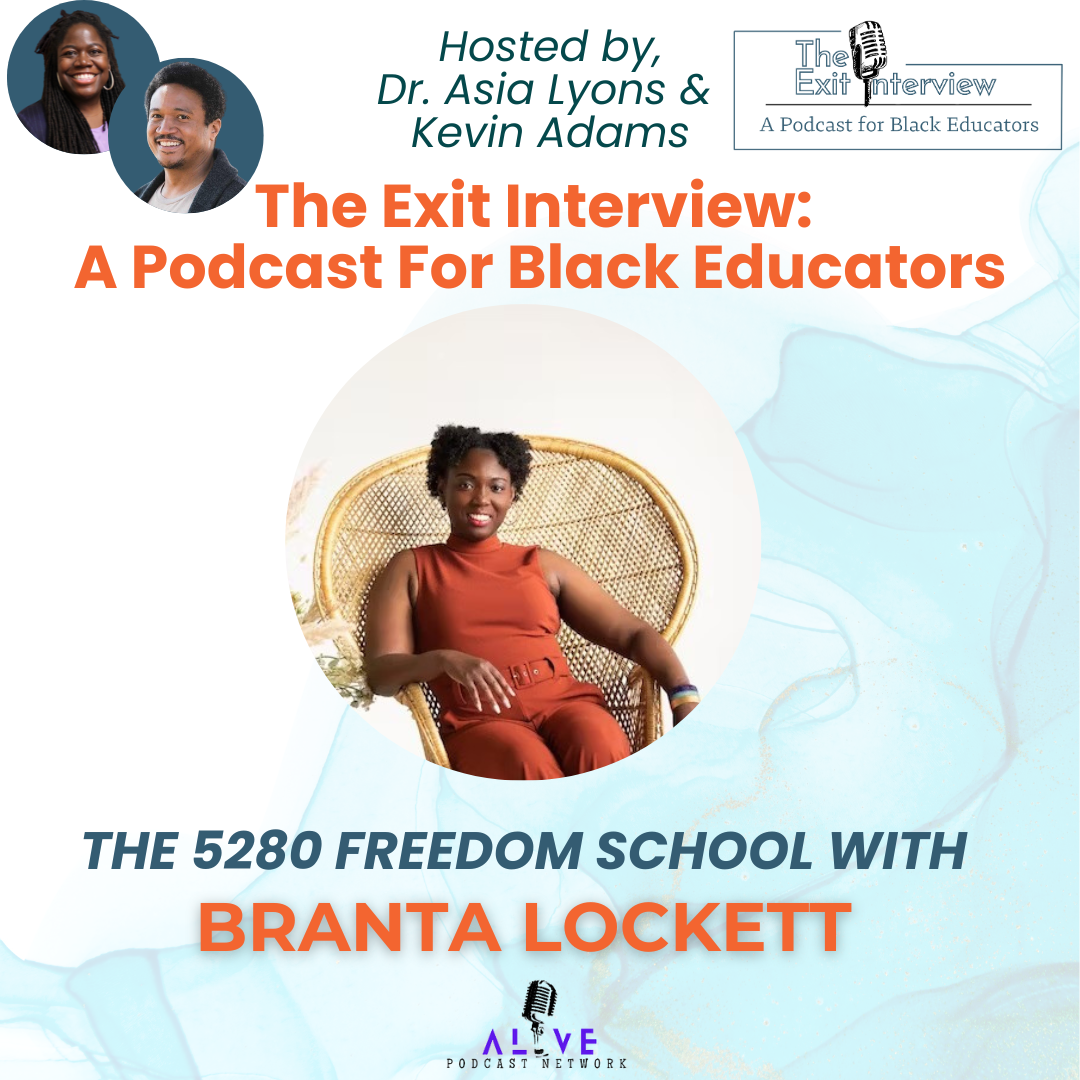
Branta Lockett moved through her educational odyssey at the highest levels. W.E.B. DuBois would have absolutely drafted her for his Talented Tenth All Star Team. Highly Gifted and Talented, International Baccalaureate, Brown University, she brought her sterling credentials to Denver, hoping to be the difference for all students, especially Black students.
Her first two years as a Denver teacher were, simply put, “great.” But by year three, things began to unravel. She witnessed disproportionate disciplinary actions taken against Black boys. Still new to the work, she became a voice of advocacy for students and community. Her evaluation scores took a jarring dip. She changed roles, and found no support in any of them. Between COVID-19 and anti-Black dynamics within the union, she took the leap.
The 5280 Freedom School, inspired by the Civil Rights era’s Mississippi Freedom Schools, launched first as a summer program. After having their charter initially rejected, they are poised to open their doors in “Harlem of the West,” the Five Points neighborhood.
This story is at once a cautionary tale and a call to action. Learn more at www.5280freedomschool.com; follow them on socials @5280freedomschool.


Memorable Quotes From Our Guest
"I will start by saying that my mom is a teacher, she's a music teacher, and she's been a teacher my whole life. And she, very early on, she was like, you're not gonna be a teacher. So we'll start with that."
"Yeah, I'll tell you what they did to me. So they had that no excuses model and I was the only Black teacher on my campus at that time. And I was seeing the impact of their behavior management system and the impact it was having on students of color particularly, my Black students. And so I was like, I'm not doing all these things.I'm not giving kids checks. I'm not like making them sit in star. I'm not gonna, oh, your shoe's untied till you have a check. You have these mini-checks now."
"So it was tough. And a lot of, again, like it wasn't the students, it was the adults who made it hard. Yep. And, I just got tired of having to just advocate so much. Like it was like more than normal, more than usual. I felt like people weren't listening to me, they weren't listening to families."
"In this space, you're being loved just for who you are. And another thing that I love about our school is we are gonna offer universal, gifted and talented. Students, all of these babies are brilliant, and it's in the schools where their brilliance is just squashed, right?Yeah. So we're gonna, we're gonna uplift their brilliance and help them explore their brilliance in different ways and utilize GT strategies in our practices, but also having a talent block for them to actually experience GT learning, right?"
"Dr. Asia Lyons: What's bringing you joy these days? Branta Lockett: I think definitely working on this school with community and just Like having a hopeful future, right? Being hopeful about the future, that there is gonna be a place where kids are loved and treated as humans. And yeah, I'm excited about that. That brings me so much joy."
Resources Mentioned In This Episode
Culturally Responsive Teaching and the Brain by Zaretta Hammond - The achievement gap remains a stubborn problem for educators of culturally and linguistically diverse students. With the introduction of the rigorous Common Core State Standards, diverse classrooms need a proven framework for optimizing student engagement and facilitating deeper learning.
Cultivating Genius: An Equity Framework for Culturally and Historically Responsive Literacy - In Cultivating Genius, Dr. Gholdy E. Muhammad presents a four-layered equity framework—one that is grounded in history and restores excellence in literacy education. This framework, which she names, Historically Responsive Literacy, was derived from the study of literacy development within 19th-century Black literacy societies. The framework is essential and universal for all students, especially youth of color, who traditionally have been marginalized in learning standards, school policies, and classroom practices.
Black Lives Matter 5280 - This chapter is part of a national movement, aligned in Black love, power, and liberation in order to embody the declaration that Black Lives Matter– regardless of gender identity, gender expression, sexual identity, immigration location or status,gang affiliation, profession, ability,economic status, and religious beliefs or disbelief.
5280 Freedom School -5280 Freedom School is where Black people are loved, valued, safe, and free to be themselves in a place where students become leaders for social change.
Other Episodes You May Enjoy
On to Bigger and Better with Crystal Gillis
Different District Same Story with Dr. Jeanette Patterson
You Can Stand On My Shoulders with Dr. Darlene Sampson
First of all.... have you signed up for our newsletter, Black Educators, Be Well? Why wait?
Amidst all the conversations about recruiting Black educators, where are the discussions about retention? The Exit Interview podcast was created to elevate the stories of Black educators who have been pushed out of the classroom and central office while experiencing racism-related stress and racial battle fatigue.
The Exit Interview Podcast is for current and former Black educators. It is also for school districts, teachers' unions, families, and others interested in better understanding the challenges of retaining Black people in education.
Please enjoy the episode.
Peace out,
Dr. Asia Lyons
Kevin Adams: Hello folks. How is everybody doing? Welcome to another episode of Your favorite podcast. The Exit Interview.
Dr. Asia Lyons: That's right. That's right. Their favorite. Everybody knows
Kevin Adams: How are you doing today, Dr. Lyons?
Dr. Asia Lyons: I can't complain. Got a little cold here. I brought back from Mexico City. I was partying too hard.
But I'm feeling good. No complaints whatsoever on this beautiful Sunday evening in October.
Kevin Adams: Yes. Yes. We are glad to have everybody here with us tonight. We are blessed with a very special guest that I think we've, behind the scenes, Asia, Gerardo, and I have been really looking forward to sitting down with we are fortunate enough this evening to bring you an Exit Interview with none other than the legendary Branta Lockett.
Branta Lockett: Thank you. Legendary.
Kevin Adams: That’s right legendary. Yes. Doing big stuff. Yes, for sure.
Dr. Asia Lyons: You famous out in these streets. We've been trying to track you down for a little bit, so we're glad that you got a chance to come on and tell your story. For our audience. I know quite a few folks may recognize Branta's name from BLM 5280 and her work there, and maybe some other folks in Denver Public Schools might recognize her from there and all other places within community.
So yeah, we're just gonna go ahead and dive in. First question, Branta our favorite. Tell us about your journey into education. How did you know you wanted to be an educator?
Branta Lockett: Okay, yeah. This is a complicated question. I will start by saying that my mom is a teacher, she's a music teacher, and she's been a teacher my whole life.
And she, very early on, she was like, you're not gonna be a teacher. So we'll start with that.
Kevin Adams: I [00:02:00] tell my daughter the same thing. My kids, I tell both of them, don't be a teacher. Yeah. Whatever you do.
Branta Lockett: Don't be a teacher. Yeah. Don't be a teacher now. She's like I told you but yeah, I think when I was in high school I went to high school in Miami, Florida and I was in the IB program there and it was a majority Black high school.
However, the IB program was not majority Black, and I experienced a lot of anti-Black racism. But it wasn't from White people, it was from people who identified as Latinx. So yes, there are differences in education opportunities and how people, the resources that people are told about.
And it was a lot of it, like my best friend and I, another Black woman navigating it. Like luckily we had the help of our parents who are highly educated to help us through that process and to get into colleges and whatnot. But it, I really noticed the differences way back in school. Fast forward, I graduated from Vanderbilt University and I didn't know what I was gonna do.
I ended up getting a [00:03:00] major in African-American studies and minored in European history. And from there I was back home in Miami. 22 and be like, okay, so what's next? And my mom's you're going to grad school. Went to grad school, still not knowing what I wanted to do. So I studied cross-disciplinary studies as a professor of mine told me from Vanderbilt, that's a complicated degree.
Dr. Asia Lyons: What does that mean for our audience?
Branta Lockett: It's interdisciplinary studies, but they say cross-disciplinary. Cause I think there's. I guess they wanna be different, but a lot, like we talked about, like conflict resolution, I learned a lot about like higher ed management and education. And yeah, it was all over the place.
However, my practicum took me to this nonprofit in Miami. And they had a lot, they provided wraparound services, was ran by three Black women. And I helped them with their program that helped with young students who had been [00:04:00] incarcerated or arrested for like minor offenses. And so a part of their probation was to complete these, like workshops with their parents.
And so I gathered from like these youth that again, I was seeing the differences in resources that were available to them. And at the same time I was working at a Jewish school, a private Jewish school in Miami. So It was like in my face. And then on top of it I was working as a tutor in a title one school, and so Wow.
Yeah, contradictions. Yep. Yeah. I'm seeing all of these things and I'm like obviously skin color was the biggest difference, right? Like how are they different from each other? But then money and then understanding how money can impact how your education looks in your life path.
So at the end of that program, after talking to that professor who was like, you have this complicated degree from the school with this complicated name, she was like, you should look into schools of education. I was like, all right, let me look. And I end up going to Brown and studying Urban Education Policy.
And that was an amazing [00:05:00] program. But there I was like, okay, if I'm gonna get into policy, I need to get in the classroom, right? So I don't wanna be like making decisions without understanding how school works. And that brought me to Denver, where I, my first teaching job was at a charter school in Denver.
And, It was horrific.
Dr. Asia Lyons: Horrific?
Branta Lockett: Horrific. By October of my first year teaching, I knew that I didn't wanna teach anymore. But I stuck it out. I stuck it out a bit longer. But yeah that's how I got into teaching. It wasn't like something that I dreamed of as a little girl at all, wasn't something that I was encouraged to do.
It was just something that, just the steps just kept making sense that I eventually ended up in the classroom.
Kevin Adams: Talk about that experience. Because I think right now, in terms of educational policy, like why, what was your experience and charter versus public, right?
Because I think this is important cuz some people think public schools have all the answers and charter [00:06:00] schools have all the answers. Or, but I think there's a complexity between it all. So tell us about that experience that you had at that charter school that made you realize by October, yo, this is not.
Branta Lockett: Yeah, I'll tell you what they did to me. So they had that no excuses model and I was the only Black teacher on my campus at that time. And I was seeing the impact of their behavior management system and the impact it was having on students of color particularly, my Black students. And so I was like, I'm not doing all these things.
I'm not giving kids checks. I'm not like making them sit in star. I'm not gonna, oh, your shoe's untied till you have a check. You have these mini-checks now.
Kevin Adams: Hold on, will you? Hold on. And what, tell the people what Star is because I think cuz like when we talk about like controlling Black bodies explains what Star is.
Branta Lockett: Yes. Sit up straight. You have to cross your hands on your desk, pay attention and yeah. And they also told the kids how to [00:07:00] walk in the hallways. They used to walk on lines in the hallways of the school. And I remember going home, winter break, watching lockup. I used to love watching them.
And I saw these kids walking on the line and I was like, oh my. This is just like this. This school model is based on what they're doing in jails and I was teaching kindergarten, so like just, I was just like, I am not doing this to these babies. I was like, I went to school. I didn't have to sit this way.
I didn't have to be told when to speak and not to speak, how to walk in the hands, the hallway with my hands by my side. And I turned out just fine. They were like, oh, really? Here's a growth plan. You have three weeks to get on board or we will let you go.
Dr. Asia Lyons: Okay, so we wanna know what happened.
Branta Lockett: I, it was my, like my first real job, I kept my mouth shut. And I did what they told me to do. It's, still not as to the fidelity that they wanted me to, but [00:08:00] I was like, okay, let me just, let me do this so I can keep a job. I was new to Denver, my first apartment, all these things.
So I was like, I, yeah, I couldn't afford to be let go or so I thought at that time. Cause Branta now would never.
Dr. Asia Lyons: And you know what's so interesting about that? There's so many pieces to what you just said, right? Being able to afford to leave. This is my first job, like navigating that.
We've had this conversation so many times Kevin, about like how people negotiate that conversation. And it's a first year. Yeah, for sure. Even at the 30th year. We a lot of times hear people saying I've gotta think about other things like taking care of older parents or I got a kid who needs special things hospital care or whatever.
And all these things are the ways that systems are able to silence us. And I, but I love that you said, but the Branta of today, like hell no.
Branta Lockett: I was like, yeah, they I wish going back I was like, yeah, I should have just kept doing what I was doing. Let them fire me, collect the unemployment checks and find the next job.
Kevin Adams: Move on to the next, onto the next one. Yeah. So Branta, I'm curious cuz I know there's a lot of Black educators in Denver. Who have the same story, who moved from someplace else to Denver. Can you talk about how you ended up in Denver as a Black educator?
Branta Lockett: It was super random. I came here during spring break when I was at Brown and to visit some friends, and I was like, oh, this is nice. The weather was nice. It was clean. I was comparing it to Rhode Island. Yeah, not to Miami, but yes, this is nice. So when I applied for jobs, I applied. A job in Florida, a job in Nashville, and a job in Denver.
And I got all three offers and I chose Denver. I was like, let me do something different. And so that's how I ended up here.
Kevin Adams: I know you're part of a charter, did they have any sort of like incentives for you as a Black educator willing to relo.
Branta Lockett: No, but I will say the charter did pay for my moving expenses and they gave me a signing bonus. And again, first real job, I was like, Ooh, this is nice money. It wasn't, yeah. But yeah it seemed like a great idea. And I was like, oh, they're gonna, they value me here. This is nice.
Kevin Adams: Yeah, no, I asked because, I'm part of the Denver Classroom Teachers Association and like one of the things that like we constantly think about is BIPOC educator member of the union. Is how we’re gonna get into a question related to this, is how do we attract and retain Black teachers?
But one of the, like big solutions that the district has is, we go to other places, we go to Atlanta, we go to Miami, we go to New Orleans, and we try to get these Black educators to move to Denver. And so like I always am curious about the experience of Black [00:11:00] educators who move from.
Places like that, cities with much larger Black populations and what their experiences is and how that plays out in their experience as educators in Denver.
Branta Lockett: Oh yeah. I wasn't expecting the schools to be filled with so many White adults. Yeah, it's not like that in Miami at all. Like in Miami, I have Black principals, I have Black teachers, and I have other folks of color.
I mean teaching like the AP classes. IB classes, from elementary through high school. I was exposed to leaders of color. Teachers of color. So when I came to Denver, I was like, oh, this is what we've been reading about. Yes. This is what they're talking about. Because it was definitely like, I got, I was like, where are the Black teachers?
Oh, I'm the only one in this building.
Dr. Asia Lyons: Yes. So you didn't obviously stay in that position and you've been like, you've bopped around and had many different positions. So tell us more about that piece of it too.
Branta Lockett: Yeah. [00:12:00] So then after that I went to Ashley Elementary. They actually reached out to me on LinkedIn and it was two blocks frp, where I, from where I lived, and I didn't have a car at the time.
So I was like, when they offered me the job, I was like, yeah. So then that got me into DPS for real. Even though it was innovation school. The first two years, I loved it there the first few years I taught third grade. And I love the students. I love the community. Like again, I like walked to school, which means that I saw my students a lot.
And yeah, that was, it was good. However, my third year there, One, I went to teach fifth grade cause I was like, oh, I teach the third graders that I had before. I'm gonna teaching again of fifth grade. Which I think would've been okay. Had the leadership at the school been stronger but that we had a new principal and a new assistant principal and it was a hot mess.
Like when I tell you that I was like struggling. I felt like a first year teacher. Cause I had so many students who just had [00:13:00] so many different needs and I would reach out to administration who I thought, was there to support, would have answers, would have solutions, and they'd be like, yeah, we don't know what to tell you about that.
Or crazy stuff happening in my classroom mostly from Black boys. And their thing was, look, we don't want to over discipline them. We don't want to. And so they end up being like, no discipline, right? And then having those low expectations of 'em and being like, no, this is not okay.
Can we do more? We need to do more. And so it was a lot of me like making connections with families. But it was a tough year and that was actually 2019. 2020. And when I tell you that I yes, the pandemic devastating, but I was grateful to not have to go back to that classroom in March, 2020.
And it was like, to the point, I talked to my therapist about, it was like October and every week I had a day [00:14:00] planned where I wasn't gonna be at school. Whether it was like union days, district days personal days, sick days. Like I was like, I wasn't spending a full week in that school because it was just, we just had no support and it was hard.
Dr. Asia Lyons: Yeah, and you are not the only one. This is a theme we heard from folks who taught during the pandemic. They were so grateful to be at home for lots of different reasons. Sometimes it was because administration was on their back. Sometimes it was because of like lots of different things, but it was just being able to be in the safety of their homes.
That was just like so healing for people. And it's interesting that you say that this idea of not having to be at school, I remember I was walking home or walking from class one day with one of my good friends and Cristal, Dr. Cristal Cisneros, shout out to her. When we were in our doc program, and I remember her saying okay, MLK is coming up and then after that we have this, so I'll have [00:15:00] a day off, and then I'll have a Monday.
And I said, this is after I had left teaching. I said, we, you can't live your life like that. You can't live your life from vacation day and vacation day. Cuz it's a lot of days between those vacation days and weekends. And she no longer is in the classroom, is doing something that she really, truly loves.
Shout out to her. But that's the thing that little, if I could just make it a Tuesday and Thursday's a half day and you, how can we, our life is not full of half days like that.
Branta Lockett: No. And it shows like I was miserable at my job. Yeah. So how can I, I can't be that effective of a teacher if I'm like miserable showing up.
So it was tough. And a lot of, again, like it wasn't the students, it was the adults who made it hard. Yep. And, I just got tired of having to just advocate so much. Like it was like more than normal, more than usual. I felt like people weren't listening to me, they weren't listening to families.[00:16:00]
I was like, did you ask the family? What did the mom say? Oh, the mom said that she recommends this. But y'all gonna do the opposite. Yep. Yeah. So it was tough. A lot of times it was like, okay, just go in your room, close your door, do what you do, whatever you need to do to get through the day. Yep.
That kids are learning. But yeah, and talking about, yeah. Admin on your back, I was like, getting like evaluations, like low scores, like never had scores low like this before. And I'll just be like, what is going on? So I was also grateful that DPS was like, you don't have to we didn't have to keep those scores that year.
Yep.
Kevin Adams: Yeah. You were in one of the pilot schools but it doesn't add to it. It's not the type of thing that you're like, I am, I'm doing what's right for these kids. And, working for DPS I could say that, there's this philosophy that students are first and a core value.
And that at times is [00:17:00] challenged or contradicted by practices of how we evaluate teachers. And I think as we have experienced is particularly harmful to educators of color by Black educators in particular.
Branta Lockett: Yes, I agree.
Dr. Asia Lyons: Yeah. All right, so I guess the next question, you're not in that classroom anymore.
You're not in that school anymore. The next is what was that thing? That straw, what was that decision that you said, okay, it's time to do something else. How did you come about that decision?
Branta Lockett: Yeah, it was when I was counting down, so the next day I had off, I was like, I can't continue to do this. And so I knew pretty early by January of that year that I wasn't returning to that school, I thought maybe I would teach at another school and actually did get hired at another school. And I was with them during summer 2020 as a team lead and Kindergarten intervention teacher, but I [00:18:00] actually ended up accepting another job in central office prior to that school year starting.
But yeah I was just that lack of support and I was just like I was like, I don't like the leadership at this school. We are clashing and this is not gonna end well for me if I stay there so I left.
Dr. Asia Lyons: Was the central office better?
It was at first. Yeah, it was like the, I was, I really, I had a really cool position.
I don't, I can't remember the official name. Oh. Leadership Pipeline development. And my, my biggest role was I facilitated the aspiring teacher leader of color cohort. And so I got to meet with teachers all through the district who wanted to get into senior team lead positions. D{S, senior team lead positions are the least diverse of all leadership positions at schools.
Kevin Adams: Yeah. Yeah. Oh, I didn’t know that and it doesn't surprise me, but I did not know that. Cuz principals are the one who hired for those roles, right?
Branta Lockett: Yep. Yep. We tend to hire people who look like them. And so I love that work and I love, like on the [00:19:00] backend figuring out ways that we can dismantle that system that is allowing the principals to hire White women in those roles.
Because. Like so many, we have so many talented teachers who I think would stay longer if they had the opportunity to be in the classroom part of the time and to coach part of the time. But this wasn't offered to a lot of our teachers of color. So I loved that work. And it was virtual most of the first, my whole first year I was doing that from home.
But it was the second year of that job. What ended up happening? First I got an another offer to do what I'm currently doing now. But I knew it was time to go because what I saw DPS sent out this survey to central office staff about do we wanna continue with this flexible work schedule so we can work from home some days, work in office some days.
And like majority of staff was like, yeah, we wanna continue with this flex schedule. And so the executive leadership was like, yeah, so we're gonna return to office five days a week. Sent the [00:20:00] survey results out to us showing that we asked for the other thing. And I was like, Ooh, ooh.
Time to go.
Dr. Asia Lyons: Yeah. That would do it. And yeah, There's so much there with the survey piece. Let's hear what you think. Let's go. And it's, and you saying, this makes me think about all the times that I've heard as a parent say, Hey, here's a survey about your kids' school, or we're doing this and for my daughter was an a APS for a while.
We're changing the logo. Vote on this, vote on that. And to think that there's a possibility that folks just did what they wanted to do anyway. Yep. Like how many folks just know that I'm like, I'm not voting. They're gonna do what they wanna do. And then here it is that you're sitting here. And like you said they were, they had enough gumption, I'll say, to show you the results and still do what they wanted.
Branta Lockett: Yes. Yeah. And I will say there was, a new leader in DPS at the time. And that wasn't in line with a lot of [00:21:00] decisions that were happening from that leader. So I wasn't shocked. And I, as we see like things in DPS, especially central office are still in flux. And as I talked to a former colleague recently.
She said, yeah, there's the Black Exodus right. She was like, there are a lot of Black central employees that were let go from their positions. Eliminated.
Dr. Asia Lyons: Pause for a second. Say that word again.
Branta Lockett: Blaxodus, like Black exodus.
Dr. Asia Lyons: Kevin, have anything to say about that?
Kevin Adams: I don't know if you coined this or if we get to, you get to trademark it, but I have I have witnessed. I seen it as we say. I seen it.
Dr. Asia Lyons: Yeah. I remember when I was in CCSD, we had, I guess now I would call it back, where we, there were tons of doctors [00:22:00] in central, we didn't call it central office, but central office who, Dr. Cobb and lots of other folks who were up there, Dr. Kennedy and everyone left together. Like within one year, all of them left. And I think there's only a few folks left, like maybe Mike Giles. I know he's still there. There's a couple more people, but so many folks left and they were just over it. So I love that, Black Exodus.
Kevin Adams: There we go. All right. That might be the title of the episode.
Dr. Asia Lyons: Yes, please. I guess our next question and after this question, we'll go on a break, but our next question is, what do you think that schools, districts, principals, central office can do to keep Black folks in all the positions of education?
Coming back to schools, what do you, if there is a solution that [00:23:00] you think exists, what do you think that solution is?
Branta Lockett: Asia, you'll probably appreciate this. I just submitted a paper about this yesterday for my grad school program. It's one of the classes I'm taking is called Human Capital, Dtrategic Human Capital, and I did a lot of thinking and research around it recently. I think one of the first things. Having networks of BIPOC teachers. So like you cannot have just one in your building and think that one is gonna keep coming back. Like I know personally for me, that was such a struggle when I was the only one.
Yeah. And that school actually want to, they wanted me to come back. That charter school, they were like, they were shocked. And I was like, no, I'm leaving. And they're like, oh, we're gonna hire another Black teacher.
Kevin Adams: Wow. They knew. Yeah, I left. Oh no, we promise.
Branta Lockett: Yeah. And then I left and they had hired the other Black teacher who I'm friends with. So she was like, Branta[00:24:00] said they did the same thing to you. You left me. No, I'm here. I'm the only Black teacher. So not having one or two. Like you need a genuine number of teachers with similar identities and especially that share the identities of the students. So I think that's one.
Layered on top of that, that also includes leadership, right? Like people need to see themselves in leadership positions and know that their leaders are supporting them. I think around making sure that staff feel heard and valued, like I was just, and respect their professionalism. Cuz I was just like, for me, I was young, but I was like, listen, I got these degrees from these different That's right.
Schools like I. Experiences. I'm not stupid, I'm not any of these things, but like y'all are treating me like, I don't know what I'm talking about. Like that I can't make decisions for myself, for my classrooms, for my students. So that's something that I think that's like a mind shift that has to happen.
Schooling in districts obviously [00:25:00] compensate teachers, right? Yes. Pay them. Pay them what they're worth. As far as the union side, I can talk about this now. I'm not in the union, right? But like I experienced a lot of anti-Black racism. When I was a member of DCTA. Right? Or I was like, I had friends who experienced it and me just being like, what?
Yep, we're paying money for this. So unions have to get it together too. Just like really supporting teachers of color and particularly, In this case, from my experience around Black teachers, I was a part of the Black Educators Caucus.
Kevin Adams: Shout out. That's how we know I, in all transparency, that's how me and Branta know each other. It's the Black Educators Caucus.
Branta Lockett: Yeah. And that was hard work, right? Like we were like fighting the union Yep. To the district, right? It was too many battles happening at once and it's all we wanna do is educate the children and I think definitely [00:26:00] Unions can step up how they're supporting their staff.
I think having really clear hiring practices, right? So like this whole backdoor hiring, I'm gonna hire my friend. We need to be very transparent on how we hire for certain positions, for all positions so that people can know the pathways and what they need to do in order to prepare themselves for positions that they wanna go into later.
Kevin Adams: I love that. From our experiences I think the union part of it. I can just relate to this as someone who's still there.
.
Dr. Asia Lyons: Thank you for that. And that's a good list. I really appreciate this part about the union too, because I know that a lot of times when we ask that question, people really focus in on the school maybe, or like the admin side of it, and not necessarily talk to union specifically.
And a whole different show for a whole different time. Listen, you and I can do another episode just on that, right? But we won't go there today. Alright, so we're gonna go to break and we come back. We're gonna ask our favorite two questions.
Stick around folks when we right back.
BREAK
Dr. Asia Lyons: All right, we're back. We're back folks with our final two questions. These are my favorite cause, Kevin's in the school space and we know that even though I'm trying to get him out of the school space, he's in the school space.
Kevin Adams: Black Moses of the Black Moses of Education, Dr. Asia Lyons, ladies and gentlemen.
So, these are my questions. Tell us you've no longer in that traditional educator space, traditional teaching space. What are you doing now? Tell us all the things.
Branta Lockett: One, I'm back in school and I'm actually in the same program that Asia recently graduated from.
Kevin Adams: Shout out to all my heroes are going through that program. I feel like I'm being led in a path in life.
Branta Lockett: I was like, maybe people will stop saying no to Dr. Lockett. I don't know.
Kevin Adams: That's right.
Branta Lockett: So I'm enjoying being a student again.
And at the same time, I also made the wild decision to also to open the school. Yeah, I’m the executive leader of 5280 Freedom School. We recently had our charter approved, and so we're opening in fall 2023 to Kindergarten, first-grade students yeah, we're gonna start enrollment on January 13th, and then the first round of enrollment will end on February 14th.
So we are like, if you are interested, reach out, come to our events and definitely enroll your student because the spots are gonna fill up fast. And actually one of our pre-opening conditions that we [00:30:00] have to fill all 52 spots during the first round of school choice.
Kevin Adams: All right. Kindergartners, first graders. Yeah. And tell us, tell the people about 5280 Freedom School, the mission and vision, those important parts.
Branta Lockett: Yeah. And I'll start with a little history cause yes. History. Freedom School actually started back with, Asia was still a member of BM 5280, and we were all in the education squad.
And one meeting we were like, let's just do the summer camp this summer. We did that. It was summer 2018. I call it like the one room school.
Dr. Asia Lyons: Yes facts. It was hot as hell.
Branta Lockett: We was doing it. We didn't have wifi. We didn't have outdoor play space. We were newbies in that.
But yes. The next summer we got it together. Asia supported us that next summer too. And we've grown every summer. We've doubled in enrollment. This past summer, we had a waitlist for kids who wanted to join the program. And then, [00:31:00] yeah, from that, that summer camp families are like, we need more opportunities like this.
And students were like, I would love a school that was like this, right? Like a school with Black teachers and a that loved me. And the kids didn't say that, but I always think about we had teachers who held the kids accountable, right? And had high expectations of the kids, but it was delivered in a very loving way.
So it was really well received by the children. Yeah, it's amazing to me to see. The interactions that our students have with our teachers, right? In such a short amount of time. Like these relationships that are built are genuine, right? And authentic. And there's no like playbook on how to do this, right?
This is just something where you have to have the passion for it and you have to believe in Black kids and Yeah. And show up that way, right? And so that's, our school is all about center Black values, principles, and knowledge. And we're open to, so anyone can join us. But it's centered around the Black experience and really [00:32:00] just like affirming our students for who they are and letting them know that yes, you can show up how you wanna show up and you will be loved.
In this space, you're being loved just for who you are. And another thing that I love about our school is we are gonna offer universal, gifted and talented. Students, all of these babies are brilliant, and it's in the schools where their brilliance is just squashed, right?
Yeah. So we're gonna, we're gonna uplift their brilliance and help them explore their brilliance in different ways and utilize GT strategies in our practices, but also having a talent block for them to actually experience GT learning, right? Super excited about that.
Kevin Adams: I love that.
I love that idea. I've I started my career at Morrie Middle School and somehow ended up teaching in the gifted and talented program at Morrie. And was open to a whole new [00:33:00] world of like educational processes. That was my first year, hadn't really studied it but the biggest realization was that Black and brown kids were completely underrepresented.
And the idea also the other contradiction or kind of contrast that it had was what our traditional kids were going through. I love this idea of giving chance, the chance to explore their curiosities, because that's what happens at private schools.
This is like the root of every great story of individuals like the people, whatever it is, the field that they're in. They have the opportunity and ability to access expertise and practice these skills at a young age. And so I love the idea of your kids getting universal gifted and talented. That's big. Yeah, universal GT education for all. Because like I believe we're all gifted in some way. [00:34:00] We all got the gift. Because sometimes we never even realize it or never give the opportunity to show it. Or even like when we do show up, we don't realize it because of how it's used.
Branta Lockett: Yeah. I think, yeah, having that space to explore, take risk, fail, learn from the failures, not be punished for the failures.
And this goes back to like my growing up in Miami. So I was in GT in elementary through high school and the students in the GT program looked like me, right? Yeah, it was, again, it was like coming to Colorado. I was like, what is going on? It was like, so through my personal experience, I was like no.
I know that there are brilliant Black people out there, right? It's like we're not. Just like one out of 30. No, like we had, I think it was about like 20 of us that were in our GT program. When I was in elementary school and then middle school, like we actually had they would track the students and so like our cohort was a whole GT cohort.
All 30 Black kids.
Kevin Adams: When they identified GT kids at Morrie they used to say when they get identified they would say we don't want to go in there. We don't wanna be with all those White kids. That, they're weird. They are not like us.
Branta Lockett: And it shouldn't be that way.
Kevin Adams: And in fact like the longer they, as they grew, they realized, oh, I actually might be like, I might be into the same conversations that they're having that's who I am. But I think it's beautiful, but the kids have to see themselves.
Like it, it's a group of us. We all like this. We all have bright kids. And we can all challenge each other to grow. Yeah. And push each other's think.
Branta Lockett: Yes. So yeah, super excited. Our program is also culturally responsive and sustaining and based on the work of Culturally Responsive Teaching and the Brain by Zaretta Hammond.
Yes. As cultivating genius by Gholdy [00:36:00] Muhammad. Just really we're developing a program that will center the most marginalized students. And we know that when the most marginalized students get their needs met, everyone gets their needs met. So yeah, if you're interested. Again, we'll, we're opening fall 23 and we'll be located on Wilton Street.
Kevin Adams: all right. Yeah. We're gonna be in, The points.
Branta Lockett: Historic, yes. Historic, yes. In a historic building. Is where we're starting out. So it's exciting. We're, I'm excited for this work. I enjoy doing this work every day, even in late evening. I'm not having that feeling like I did my last year teaching where I was like down the,
Dr. Asia Lyons: That's awesome.
Okay. This is so good. So good. And I will say, oh, I do have a question. So you talked about your summer program, the Freedom School summer camp. When you all are preparing to start the school in the fall, this summer [00:37:00] 2023, will you have camp too or you will you be holding off because of the school.
Branta Lockett: I think we would have an angry mob of children if we didn't have summer camps. So we'll definitely still have summer camp families. Don't worry. We'll offer summer camps still.
Dr. Asia Lyons: Yes. Okay, perfect. And so our last question. Our favorite question? Best question.
What's bringing you joy these days?
Branta Lockett: I think definitely working on this school with community and just Like having a hopeful future, right? Being hopeful about the future, that there is gonna be a place where kids are loved and treated as humans. And yeah, I'm excited about that. That brings me so much joy.
I also have a golden doodle puppy and too, but oh my gosh. He is just the cutest little thing and [00:38:00] yeah, he brings me so much joy too.
Dr. Asia Lyons: I love that.
Kevin Adams: I love that. We love the pets on this podcast.
Branta Lockett: He was like one of my gifts to myself when I moved, I had purchased a home and I was like going through a crazy breakup and I was like, I'm gonna get myself a golden doodle.
Dr. Asia Lyons: What’s it’s name?
Branta Lockett: Jay Winter. He has two names. Jay Winter.
Kevin Adams: Love it.
Dr. Asia Lyons: Shout Jay. Winter. Yes.
Kevin Adams: Yes. Sounds like a new up-and-coming r and b star kids will be talking about him. You heard Jay Winter. Yeah.
Dr. Asia Lyons: So true.
Oh man. Any final remarks, Kevin, before you wrap it up for the evening?
Kevin Adams: Thank you so much for being here with us. It's I think this is one of my favorite Exit Interviews because I think ultimately the inspiration of what you're doing with the [00:39:00] 5280 school, with the camp, but moving to the school, I think is I think the ultimate goal.
Is how can we build systems for us, by us to meet the needs of our kids. And I'm just so impressed and proud to have worked and collaborated with you and I look to support you and can't wait till you got secondary positions open at the school.
Branta Lockett: We'll get you at the classroom though, will you?
Kevin Adams: Yeah. We'll see. We'll see. See, that's a whole new world. Oh man. Shoot. Shoot. Might not wanna leave. Might have to pull me out there. Yeah.
Dr. Asia Lyons: That's right. All right it's been another great episode. We appreciate you all listening. Again, [00:40:00] support the 5280 Freedom School, enroll your students, tell your friends and family. We'd love to have you and Branta. Last question, can they email you? How do they find out how to enroll?
What's the process?
Branta Lockett: Yeah, so if they visit our website, 5280 freedom school.com, if they fill out the intention role form, it's non-binding. But that gets you on our email list. If you want to just email us separately we're, you can email us at BLM 5280 freedom school gmail.com. And then we're also on social media, Twitter, Facebook, Instagram at 5280 Freedom.
Dr. Asia Lyons: All right. All right. You heard it from her. I hope that you all have the opportunity to get down there and enroll. Get on the website. Spend another great episode of The Freedom or The Freedom School. Look at me the ex. Yeah, it is a Freedom School. Actually. The Exit Interview. We will talk to you all at the end later on.
See you later. Bye.[00:41:00]

Executive Director, BLM 5280 Freedom School
I am a meticulous self-starter committed to advancing educational equity in public schools. Working with parents, students, teachers, schools, districts, communities, and policy makers, I enjoy finding creative solutions to complex problems and am able to communicate information simply and concisely. I enjoy working in diverse and collaborative teams in fast-paced environments and helping others achieve their expressed outcomes. I am experienced in using qualitative and quantitative data and am able to synthesize a narrative that people can understand, relate to, and be inspired by, helping them act to effectively meet their goals.


