The Tax We Pay with Kelly Mitchell


Kelly Mitchell's journey through education is a crash course in recognizing when systems are working exactly as designed...not for us. From stumbling into teaching via Craigslist after the 2009 recession, to middle school math teacher, to high school dean managing 350 students, to state workforce development, Kelly kept asking, "Who can fix this?" only to realize the system kept saying, "Not us."
Kelly's revelation: education's recruitment problem isn't about signing bonuses, it's asking Black people to return to systems that actively harmed them their entire childhood. The retention problem? Leaders who laugh off racism when test scores are good, colleagues who outsource racial incidents to the "Black representative," and the invisible tax of carrying everyone else's learning curve.
Now running Inclusive Design Group and pursuing her PhD, Kelly's done the full bingo card: classroom, admin, state, nonprofit. Her conclusion? The answer was never in climbing higher within broken systems; it's in collective power, teaching local Black histories, and helping our people understand the systems of oppression to reclaim what's ours.
First of all.... have you signed up for our newsletter, Black Educators, Be Well? Why wait?
Amidst all the conversations about recruiting Black educators, where are the discussions about retention? The Exit Interview podcast was created to elevate the stories of Black educators who have been pushed out of the classroom and central office while experiencing racism-related stress and racial battle fatigue.
The Exit Interview Podcast is for current and former Black educators. It is also for school districts, teachers' unions, families, and others interested in better understanding the challenges of retaining Black people in education.
Please enjoy the episode.
Peace out,
Dr. Asia Lyons
The Tax We Pay with Kelly Mitchell
[00:00:00]
dr--asia-lyons--she-her-_1_03-15-2026_101158: All right folks. Welcome back to the exit interview, a podcast for black educators with me, your host, Dr. Asia, back in the studio. It's March. I don't know when you're gonna be listening to this, but it's March. It's snowing here. Um, and it's been super dry in Colorado, so, so happy that we're getting some moisture.
Um, and I was just talking to our next guest about the weather because she's also in Colorado, but upping the sticks, as I say, in the boonies. And so, uh, we're taking it easy. We're staying warm today, but we're not talking about weather. We're talking about Kelly Mitchell. Kelly, welcome to, uh, the Alexander interview.
How are you today?
kelly-mitchell--she-her-_1_03-15-2026_101158: Oh, thank you. This is super exciting. It was a long time in the making, so I'm super excited to be here. Um, feeling good? Feeling good. Ready to chat it up.
dr--asia-lyons--she-her-_1_03-15-2026_101158: Yeah,
kelly-mitchell--she-her-_1_03-15-2026_101158: you doing?
dr--asia-lyons--she-her-_1_03-15-2026_101158: I'm good. And when she says it's a long time coming, do folks, stalking is the word she wants to say. [00:01:00] I have been on her helmet for about like two years now. Like, Hey. Don't you wanna come over here and do this interview? Right. So it's such a treat to have you pop up in my calendar. I'm like, it's happening.
Uh, but yeah, I'm doing really good. I can't complain. Uh, tell the audience a little bit about yourself.
kelly-mitchell--she-her-_1_03-15-2026_101158: Yeah, so Kelly Mitchell, uh, she, her pronouns. man, I'm born and raised in Denver. I also taught in Denver. my college experiences, um, are in Colorado except for recent in Northwestern. So I am a hometown person. I have a little one who is gonna be 10 in two months, so I'm emotionally unwell about that.
So
dr--asia-lyons--she-her-_1_03-15-2026_101158: That's real.
kelly-mitchell--she-her-_1_03-15-2026_101158: currently, so emotionally unwell. Um, I live in Erie, Colorado now. So when she says the sticks. We're up here.
dr--asia-lyons--she-her-_1_03-15-2026_101158: Shout out.
kelly-mitchell--she-her-_1_03-15-2026_101158: We're [00:02:00] up here. Um, yeah. And just trying to live best life in the midst of today's America.
dr--asia-lyons--she-her-_1_03-15-2026_101158: Yeah.
kelly-mitchell--she-her-_1_03-15-2026_101158: yesterday's America and the day
dr--asia-lyons--she-her-_1_03-15-2026_101158: We fight for our lives out here, folks. We are fighting for our lives. You know, it's a lot of like, we are doing this to other countries and I'm like, we black women are minding our business. Okay, we are this. Don't say we did anything. Okay. We warned y'all is what we did. Okay. We warned y'all. Um, well, let's go ahead and get into it.
Tell us about your education journey. How did you know that education was for you?
kelly-mitchell--she-her-_1_03-15-2026_101158: I think I actually came to it quite a bit later than a lot of people did. I mean, there's like generational
dr--asia-lyons--she-her-_1_03-15-2026_101158: I.
kelly-mitchell--she-her-_1_03-15-2026_101158: and things, and no, wasn't that, um, my bachelor's degree is actually in statistics, so for me it was like. I was definitely gonna do something else. I was gonna be in an office doing math and numbers and [00:03:00] all these things.
Right. Um, I came outta college, uh, go Rams. I'm a CSU Ram. Um, I came outta college in 2009, so Right. Recession
dr--asia-lyons--she-her-_1_03-15-2026_101158: Mm-hmm.
kelly-mitchell--she-her-_1_03-15-2026_101158: and couldn't get a job for anything in statistics. Right. I didn't have five to 10 years of experience. I didn't have 20 years of experience. So I ended up actually working at uc Health. Um, I had two jobs.
I was working at uc Health and then also at Sylvan Learning Center. 'cause I had a math degree so I could do some tutoring. Right. Um, and I ended up as like a program manager in the audiology department. Um. I worked with some amazing audiologists and one of them was a pediatric audiologist she said, you know, I'm about to turn this, um, little one's cochlear implant on.
Do you wanna come like watch and see what that is and see how it goes? And so for like those who don't know, um, a cochlear implant if you are deaf can help you hear like, not super [00:04:00] clearly, but it helps you hear way more than you would've before. And so there was a little one who I think was like one or two, and she was like, yeah, it'll be the first time that this little one has heard their mom's voice.
dr--asia-lyons--she-her-_1_03-15-2026_101158: Oh wow.
kelly-mitchell--she-her-_1_03-15-2026_101158: I was like, oh yeah, let me go, right? Like I gotta, let me jump in this. And so we went in and she like does the thing. She turns it on and I watched, she said, mom say something. Mom said something. And the little one's face just like lit up. It like, to this day makes me emotional. It was like decades ago now. And in that moment I was like. I need to be doing something else too. Like, I need to be making an impact. I need to be, to be working with people. I need to, I need to do something. I can't go back to ideology school, so what can I do? I was on Craigslist, y'all. I was on Craigslist.
dr--asia-lyons--she-her-_1_03-15-2026_101158: we dating ourselves folks.
kelly-mitchell--she-her-_1_03-15-2026_101158: I am, I will all day, every day. Um, I'm proud of my, HES,
dr--asia-lyons--she-her-_1_03-15-2026_101158: Amen.
kelly-mitchell--she-her-_1_03-15-2026_101158: I was on Craigslist just like, man, what other kind [00:05:00] of jobs maybe can I do? And it was actually, uh, the Denver Teacher Residency popped up, which is a master's program. So I could find my, I found my master's program on Craigslist,
dr--asia-lyons--she-her-_1_03-15-2026_101158: Right. Craigslist sells
kelly-mitchell--she-her-_1_03-15-2026_101158: Craigs
dr--asia-lyons--she-her-_1_03-15-2026_101158: people Okay.
kelly-mitchell--she-her-_1_03-15-2026_101158: Anything, anything. Um, shout out Craigslist and, uh. It was a fully paid for master's program through University of Denver. And if, like you're from here, like that's a legit university,
dr--asia-lyons--she-her-_1_03-15-2026_101158: Mm-hmm. Mm-hmm.
kelly-mitchell--she-her-_1_03-15-2026_101158: fully free. It was a year long residency program where I was gonna be in a school with a master teacher, um, doing our thing, right?
And at the end I was gonna have a job in DPS. It was gonna be great. So I was like, oh, I guess that's it. Then I guess this is what we're doing.
dr--asia-lyons--she-her-_1_03-15-2026_101158: Yeah.
kelly-mitchell--she-her-_1_03-15-2026_101158: and so yeah, that was really like the journey into it. I also remember, 'cause remember I don't come from like generational teachers. I, uh, called my mom and I was like, mom,
dr--asia-lyons--she-her-_1_03-15-2026_101158: I was just [00:06:00] about to ask you what the family was thinking about all this shifting.
kelly-mitchell--she-her-_1_03-15-2026_101158: I was like, mom, I'm, I'm going back to school. I'm gonna, I'm gonna go be a teacher. And she was like, you're gonna do what? And like, I'm gonna go be a teacher. She was like, you have a degree in statistics. Like what?
dr--asia-lyons--she-her-_1_03-15-2026_101158: Yeah.
kelly-mitchell--she-her-_1_03-15-2026_101158: would you make this change? And also thinking about her generation and era of like busing and watching black teachers just be demoralized and all of these things.
She was like, why would you put yourself in this situation when you got yourself like this seemingly high powered degree? And that was such an interesting conversation that at that moment, I'm 23 and I'm mad, like, how dare you, like tell me I can't do what I'm about to do. But now I'm like, man, yeah, yeah, yeah.
Right. Like
dr--asia-lyons--she-her-_1_03-15-2026_101158: Yeah. Yeah,
kelly-mitchell--she-her-_1_03-15-2026_101158: there was some harm. I exposed myself too in
dr--asia-lyons--she-her-_1_03-15-2026_101158: yeah,
kelly-mitchell--she-her-_1_03-15-2026_101158: The, it was hard. I was, you know, teachers are underpaid, teachers are all these things. And she was just trying to be like, are you, you're sure? Right.
dr--asia-lyons--she-her-_1_03-15-2026_101158: [00:07:00] yeah.
kelly-mitchell--she-her-_1_03-15-2026_101158: Um, so that was, yeah, that was a real interesting conversation, but an interesting path into the world.
dr--asia-lyons--she-her-_1_03-15-2026_101158: I know I, I've said this so many times on the podcast. I know folks may be sick of hearing it, but. You know, when we talk about education and trying to recruit into education, especially I'm talking to my folks in human resources or whoever does retention work or recruitment work specifically in schools and districts.
We forget about families who've experienced harm in education, watched busing happen, watch integration or whatever that was happened, experience harm, hear about it from their own family, who were teachers, who were principals, things like that. And so. And we think that we're going to be able to recruit black educators with a signing bonus.
We forget that moms are out there really trying to make sure that their children are not harmed in education as teachers, as paras, as deans or whatever. And so, I'm glad that you mentioned that because that is such an important [00:08:00] conversation to have is there are folks who are making sure that their, their family as well, and they don't wanna see us harmed because they understand what the education system has done to us generationally.
Um, but you went into education anyway and um, and yes, this is the exit interview, so we know how I end it. But tell us, tell us about your time in education. Tell us about what you taught. All the things people want, the details.
kelly-mitchell--she-her-_1_03-15-2026_101158: Yeah. So I went into my program and said like, I'm gonna be a high school math teacher. I'm gonna be, gonna be in the AP world. I'm gonna be doing these things. I got this statistics degree, like, let's, let's do this. And then I got placed for my residency in a middle school and I was like. Oh Lord,
dr--asia-lyons--she-her-_1_03-15-2026_101158: What grade? I gotta ask what grade.
kelly-mitchell--she-her-_1_03-15-2026_101158: I, I've done all three grades at
dr--asia-lyons--she-her-_1_03-15-2026_101158: Okay.
kelly-mitchell--she-her-_1_03-15-2026_101158: was placed in sixth grade.
dr--asia-lyons--she-her-_1_03-15-2026_101158: Okay. Oh, my favorite grade though.
kelly-mitchell--she-her-_1_03-15-2026_101158: my gosh. Listen. Yes. And for me, [00:09:00] there was like also going into the residency, it was like secondary education or elementary school. And I was like, y'all, I'm not meant for elementary
dr--asia-lyons--she-her-_1_03-15-2026_101158: Mm-hmm.
kelly-mitchell--she-her-_1_03-15-2026_101158: this about myself. Like I don't wanna teach all the subjects like it was teachers, I think we each have like those grade band levels that we were meant
dr--asia-lyons--she-her-_1_03-15-2026_101158: Mm-hmm.
kelly-mitchell--she-her-_1_03-15-2026_101158: think.
Right? Like there are some who are meant for elementary. Like my kids kindergarten teacher, I was like, you, yes, this is what you were meant for. This is beautiful and brilliant what you're doing. thought I was meant for high school, but man, that year in middle school, I was like, this is a good time. Like
dr--asia-lyons--she-her-_1_03-15-2026_101158: Yeah, it is.
kelly-mitchell--she-her-_1_03-15-2026_101158: a fun time. And so I ended up staying in middle school. Um. My first year teaching was in seventh grade. And yo, that is not the weak spirit because seventh
dr--asia-lyons--she-her-_1_03-15-2026_101158: No.
kelly-mitchell--she-her-_1_03-15-2026_101158: seventh graders are going through it all, right? Like you think developmentally, hormonally, all the things,
dr--asia-lyons--she-her-_1_03-15-2026_101158: Mm-hmm.
kelly-mitchell--she-her-_1_03-15-2026_101158: in a real [00:10:00] hard spot, right? Sixth graders, they still can, they still like adults, they're still okay with adults. Eighth graders are like, I'm ready to get up out of
dr--asia-lyons--she-her-_1_03-15-2026_101158: Mm-hmm.
kelly-mitchell--she-her-_1_03-15-2026_101158: it's so interesting how three, the three grades even are so different, but I, I loved middle school. Um, and I tell people often it's 'cause like nobody peaked in middle school.
Like not a single person peaked in middle school
dr--asia-lyons--she-her-_1_03-15-2026_101158: If you did, I feel bad for you like that. Was it 11th?
kelly-mitchell--she-her-_1_03-15-2026_101158: Oh man. And so we were all going through it,
dr--asia-lyons--she-her-_1_03-15-2026_101158: Yeah.
kelly-mitchell--she-her-_1_03-15-2026_101158: in middle school was the biggest feeling we were ever gonna have. The end of the world, you know, all these things. Watching it from the outside was actually quite enjoyable.
dr--asia-lyons--she-her-_1_03-15-2026_101158: Mm-hmm. It's not you this time, it's not you.
kelly-mitchell--she-her-_1_03-15-2026_101158: I was watching it, but I was, so, I was still a math teacher, but I think even more than that, I was a life coach,
dr--asia-lyons--she-her-_1_03-15-2026_101158: Mm-hmm.
kelly-mitchell--she-her-_1_03-15-2026_101158: to help kids understand like what it means to grow up and how to navigate first periods and how to do
dr--asia-lyons--she-her-_1_03-15-2026_101158: Mm-hmm.
kelly-mitchell--she-her-_1_03-15-2026_101158: things. And [00:11:00] that was, that was a lot of fun. I mean, it was really, really hard, but I really enjoyed being in the middle school space. So I taught for a while. Um, I've always been in Title one schools.
Um. High population of color percentages. 'cause that's where I've, I wanted to serve and where I was meant to serve. I then into other part-time roles when I had my own little one. So I was in charge of our school's, uh, teacher residency program. I helped build our math intervention program.
dr--asia-lyons--she-her-_1_03-15-2026_101158: this is all in the same school that you started it? Oh, the same network, but not the same school. Okay.
kelly-mitchell--she-her-_1_03-15-2026_101158: I was in the school and then we opened a second one. And so I was part of both of 'em.
dr--asia-lyons--she-her-_1_03-15-2026_101158: Okay. And how was that?
kelly-mitchell--she-her-_1_03-15-2026_101158: uh, scaling schools is hard,
dr--asia-lyons--she-her-_1_03-15-2026_101158: Hmm.
kelly-mitchell--she-her-_1_03-15-2026_101158: so much of the magic of a school is in the people. And yes, the model is very, very important, but we have to be willing to [00:12:00] shape the model based on who is in the building, whether it's the students, whether it's the staff.
And so I think that trying to straight up replicate is always gonna be. Hard. You really need to be able to have flexibility to say like, the magic is in these other spaces that we need to figure out what the magic is in this building
dr--asia-lyons--she-her-_1_03-15-2026_101158: Mm-hmm.
kelly-mitchell--she-her-_1_03-15-2026_101158: from there. so that's, that's, it's a tough thing and it takes a lot of intentionality. Um, it's san just saying, we have a really good thing here. Let's do it again. Um, it does really take some intentionality.
dr--asia-lyons--she-her-_1_03-15-2026_101158: Mm-hmm.
kelly-mitchell--she-her-_1_03-15-2026_101158: So, so that's my, my thought there. Um, then I went into a dean role in a high school. Um, 'cause I felt like it was time to try that out. y'all, that dean life is, it's hard. It is really hard.
You see the hardest of the hard all day every day. And staying well during that is, [00:13:00] difficult. It is difficult. So yeah, the journey went across multiple roles and grade bands. Um, but I'm glad for.
dr--asia-lyons--she-her-_1_03-15-2026_101158: Yeah, I, I wanna talk about this, the dean role. Well, first I'd love for you to talk to us about the transition, like how you knew it was trying to move from one school, like the middle school, and then over to the high school. Like what was the thing? It was like, okay, it feels like it's time. And then tell us more about your experience as a dean.
Why that particular position? You know, how you made that, um, that jump.
kelly-mitchell--she-her-_1_03-15-2026_101158: Yeah. So if we like think back to why I went into education, it wasn't necessarily like the math aspect for me, it was the people aspect. And so I went through a lot in K 12 from like a home perspective. but on paper I looked really good, right? I had the straight A's, I had [00:14:00] all the things. So nobody was really like looking at me
dr--asia-lyons--she-her-_1_03-15-2026_101158: Mm-hmm.
kelly-mitchell--she-her-_1_03-15-2026_101158: like, how they, how is she doing?
dr--asia-lyons--she-her-_1_03-15-2026_101158: Mm-hmm.
kelly-mitchell--she-her-_1_03-15-2026_101158: You
dr--asia-lyons--she-her-_1_03-15-2026_101158: Mm-hmm.
kelly-mitchell--she-her-_1_03-15-2026_101158: Um, I think because nobody sort of clocked how I was doing. Um, I was alone a lot and just not doing well in general.
dr--asia-lyons--she-her-_1_03-15-2026_101158: Mm-hmm.
kelly-mitchell--she-her-_1_03-15-2026_101158: so for me, when I went into teaching, it was like, it was to help it so other kids wouldn't have the same experience. Like I wanted kids to always feel like they had somebody to go to and somebody to be with and somebody who was looking out for 'em. And so as a dean, that's why I went into the dean life is because I had seen so many students like fall in between those cracks and like those were the students. I really, it was time for me to really, um, intentionally focus on. so I was a dean, but for two grades, which is a lot of students that you're trying to
dr--asia-lyons--she-her-_1_03-15-2026_101158: Mm-hmm.
kelly-mitchell--she-her-_1_03-15-2026_101158: are okay.
Right?
dr--asia-lyons--she-her-_1_03-15-2026_101158: About how many did you have at in, in your school that you were in charge [00:15:00] of?
kelly-mitchell--she-her-_1_03-15-2026_101158: I wanna say, so for us, we were a smaller high school, so it was about 700 students total.
dr--asia-lyons--she-her-_1_03-15-2026_101158: Okay.
kelly-mitchell--she-her-_1_03-15-2026_101158: I had 350 students
dr--asia-lyons--she-her-_1_03-15-2026_101158: Okay.
kelly-mitchell--she-her-_1_03-15-2026_101158: out for. Um, and yeah, like when you're also looking at the hardest of the hard situations, there's a lot of students who are encountering those on a daily
dr--asia-lyons--she-her-_1_03-15-2026_101158: Mm-hmm. Mm-hmm.
kelly-mitchell--she-her-_1_03-15-2026_101158: so for that role, it was, it was a lot, it was a lot to manage. It was a lot to try and hold even emotionally on my own, um, when I had a 2-year-old at home. so for a lot of it, it was. I'm internalizing a lot of the emotions that I'm trying to hold for a lot of students. I'm seeing what the heart of the heart is at this young, young age, and then I'm going home and trying to raise a kid.
dr--asia-lyons--she-her-_1_03-15-2026_101158: Mm-hmm.
kelly-mitchell--she-her-_1_03-15-2026_101158: And so for me, I just, I couldn't do both. I couldn't do both. Um, I was put in some really hard [00:16:00] situations, um, as an administrator that didn't feel safe. And so at one point it was actually our school social worker who I worked very closely with, and she was like, Kelly, your kid has one mom, and like, your duty is to make sure that that one mom can, mom, we will be fine if you move on.
Like we will. It'll suck 'cause you're great, but your kid has one mom. And as someone who grew up, like without really having that mom presence, that shook me to where I was like, yeah. And right now I'm not okay I'm not okay enough to be. to her, so it's time to go.
dr--asia-lyons--she-her-_1_03-15-2026_101158: Yeah.
kelly-mitchell--she-her-_1_03-15-2026_101158: So that was, I mean, that was that experience at the very end.
There were definitely a few experiences too that sometimes before we say, okay, it's time to call it, we move buildings
dr--asia-lyons--she-her-_1_03-15-2026_101158: Yeah.
kelly-mitchell--she-her-_1_03-15-2026_101158: Like we say, okay, maybe if I'm just under a different, what feels like a regime [00:17:00] sometimes if I'm just under a different setup, maybe I can do this. And so from my like first space of being, it wasn't one thing that told me it's time to go.
And I, I would imagine most of us don't say, there was like one thing, it was a series of things that were just like, you don't feel the way about me, that I feel about this
dr--asia-lyons--she-her-_1_03-15-2026_101158: Mm. Can you give us an idea of what you're talking about?
kelly-mitchell--she-her-_1_03-15-2026_101158: Yeah, so, um, like one experience for me, and this was all through my twenties too, so I should also say I did not have as strong of a sense of self even racially then than I do now. And so the things that I would stand up for now and like the way I would stand up for myself now is very different what I knew how to do in my twenties. Um, I was internalizing racism very differently then. I was feeling like I was the problem versus the system being the problem. [00:18:00] so I remember one situation specifically, I was sitting in one of my school leaders' offices, and another teacher had said to me, uh, you know, like my mixed kids actually do really well on our standardized tests 'cause I'm mixed and it's like, it was pretty known, even when they're not mixed with white.
And I was like, wait. What, and there were so many complex emotions and at 20 something I'm like, I don't know. I know I don't feel good about this. I don't know why I don't feel good about
dr--asia-lyons--she-her-_1_03-15-2026_101158: Yeah.
kelly-mitchell--she-her-_1_03-15-2026_101158: So I went to my leader's office and like said like, this is what happened. I don't know how to respond, I don't feel good. Um, male leader laughed and she said like, well he does really great on the test scores though. And like that was the end of the conversation. And I was like, oh, that's the response. Like,
dr--asia-lyons--she-her-_1_03-15-2026_101158: [00:19:00] Mm-hmm.
kelly-mitchell--she-her-_1_03-15-2026_101158: to move on. 'cause the test scores are good. Um, and then I had another situation where, uh, there somebody was leaving and this like facilitator role was open and like logically I was next in line.
And I was told from aside, you know, there was a meeting about it and they said that you were too emotional. And I know it was directed like directly at that moment. I did have enough awareness at that point to be like, I got angry black woman
dr--asia-lyons--she-her-_1_03-15-2026_101158: Yeah.
kelly-mitchell--she-her-_1_03-15-2026_101158: black people in the building.
You angry black woman meet In this moment when I'm watching all sorts of other people have emotions and that's fine, but I'm not allowed to just stand up for myself. And so that for me was the moment where it was like, I'm not safe here. It's time to move on. I'm not loved the way that I love what we're doing here and it's, it's time to go.
dr--asia-lyons--she-her-_1_03-15-2026_101158: Yeah. Thank you for sharing that. [00:20:00] Um, and obviously we'll just keep talking about your other experiences, but this, you know, a lot of us start teaching in our twenties and are still figuring ourselves out, like you said, and the expectation, uh, is like, certainly this person who's a leader will know how to guide me through a particular situation and like what a letdown it is to know that that's the response.
Right. It's like, oh yeah, what? Of course that makes sense, or what, or no re or nothing at all. Or silence. And then that retaliation, um, is doubling the harm, tripling, quadrupling the harm that you experienced? Yeah.
kelly-mitchell--she-her-_1_03-15-2026_101158: Yeah. And I think in our twenties too, especially in a place, Colorado is not known as like black mecca, right? Like we're
dr--asia-lyons--she-her-_1_03-15-2026_101158: Not at all. Not at all?
kelly-mitchell--she-her-_1_03-15-2026_101158: it's not like the Atlantas, it's not the [00:21:00] dcs where there's a lot of
dr--asia-lyons--she-her-_1_03-15-2026_101158: Yeah.
kelly-mitchell--she-her-_1_03-15-2026_101158: So we're like sort of scattered, right? We're very scattered and know, intentionally.
So that's a different conversation.
dr--asia-lyons--she-her-_1_03-15-2026_101158: Mm-hmm.
kelly-mitchell--she-her-_1_03-15-2026_101158: so we grow up in these systems too. 'cause remember I was in the same system I was raised by, um. And those systems are harmful from jump towards black students, black kids, they have us internalizing all sorts of oppression. And so in our twenties, as we're trying to figure out how to, how to feel about ourselves, we're returning back to systems that have harmed us from jump.
And so of course, I'm not like solid in the way that I feel about my identity if this is what I've been trying to navigate and honestly counteract my whole life.
dr--asia-lyons--she-her-_1_03-15-2026_101158: Yeah. Yeah, that's really an interesting point. Um, yeah, if you, if that's experience that you've always had, and if you're generationally been [00:22:00] here in Denver right, then that's another layer on top of that. Um, and that's tough. That's super tough. The audience, some of the audience knows that I'm from Detroit and coming here and teaching here and not seeing what I saw in Detroit, which is black teachers, and then white teachers and brown teachers who were down for the cause.
You don't teach in, in, in my DPS just because you just love kids. You have to like love kids for real and love the neighborhoods and communities, at least when I was growing up in the eighties and nineties and yeah. So it's, it's, it's a uphill, it's a tough uphill climb, um, to live here and then wanna come back and teach here.
Which again, I mean, your mom seeing, you know, like you said, reflecting on all those pieces. Uh, so then you, this was your time in the middle school
kelly-mitchell--she-her-_1_03-15-2026_101158: Yes.
dr--asia-lyons--she-her-_1_03-15-2026_101158: you went on to the high school, so yeah. So tell us about some of your experiences at the high school as the dean.
kelly-mitchell--she-her-_1_03-15-2026_101158: Um, [00:23:00] like I said, it really was like every day you're dealing with some of the hardest situations of the hard, and our schools are so under resourced, so under resourced that we also, I mean, in working with a social worker, she's one to 700 as well. Like
dr--asia-lyons--she-her-_1_03-15-2026_101158: Oh, wow.
kelly-mitchell--she-her-_1_03-15-2026_101158: And so when you're dealing with so many things that have require immediate attention, right?
We're trying to make sure students are safe, that they are, they have somewhere to go at night. All of these things. It is hard.
dr--asia-lyons--she-her-_1_03-15-2026_101158: Mm-hmm.
kelly-mitchell--she-her-_1_03-15-2026_101158: hard and it drains. but again, too, it is some of, some of the best relationships that you'll develop are in, like they were in my dean's office, right? Where like I'm checking on you morning, you're checking on me.
When we leave at the
dr--asia-lyons--she-her-_1_03-15-2026_101158: Mm-hmm.
kelly-mitchell--she-her-_1_03-15-2026_101158: like, think. I mean, at least nobody that I know that has left education left it because of the students. Um, [00:24:00] we left it because of the systems, 'cause of the infrastructures, because of the institutions. Um, so even as a dean, I mean, I loved working with the students I worked with.
It was just too much for one person and too much for two people. Um, and I was working too at a, at a school. I figured in my middle school to high school transition, I needed to go somewhere that was intentionally trying to, um, be culturally competent, like intentionally as far as like the way the school was designed every, the way, the structures.
I wanted to go to one where, um, there were also like more black students, more black people around. Um, because I thought, well maybe if there's more of us, I can figure this out in a different way.
dr--asia-lyons--she-her-_1_03-15-2026_101158: Mm.
kelly-mitchell--she-her-_1_03-15-2026_101158: whether it's like a mentoring aspect or whatever it is. Um. And I think what places don't realize is you can't just put a whole bunch of students from different [00:25:00] races in a building and think it's gonna be all great.
dr--asia-lyons--she-her-_1_03-15-2026_101158: Say that.
kelly-mitchell--she-her-_1_03-15-2026_101158: do
dr--asia-lyons--she-her-_1_03-15-2026_101158: Say that. Yes.
kelly-mitchell--she-her-_1_03-15-2026_101158: work. You have to do intentional work to make sure that, again, you're countering dominant messages that they're hearing in society, in the world, like I was there in the first Trump presidency. And so the messages they're getting from the rest of society says, who's superior, who is lower in that caste system. so without us doing intentional work around it. W we saw some very racially difficult situations that people were not equipped to deal with because the system said, just put 'em all in a building,
dr--asia-lyons--she-her-_1_03-15-2026_101158: Mm-hmm. Mm-hmm.
kelly-mitchell--she-her-_1_03-15-2026_101158: what actual integration looks like. You have to do actual work. So that made for a lot of really challenging situations too.
dr--asia-lyons--she-her-_1_03-15-2026_101158: Yeah, I remember, um, my first year here, I [00:26:00] was, first time I heard, uh, a brown person, a child, a student. I was walking to somewhere and he, a brown student used the N word and I was just like, floored. Because again, in Detroit, somebody getting a beat down, I'm sorry, that's not happening. And for his fellow, you know, classmates to just, it was just like business as usual.
And that happening over and over again, right. I've had Asian students the same experience, and so I'm experiencing shock and harm. I don't know. And I'm still trying to process, is this normal here? What? And so you think about, like you said, you thinking put 'em all into the same building, throw, sprinkle in a few educators of color and it's gonna be all good.
That is false. That is false. And it's, it's the the laziest thing that you can do in education when it comes to supporting our children of color when it comes to having conversation. There's no conversation [00:27:00] when it comes to cultural competence. It's just like, surely they'll just figure it out amongst themselves.
Um, and I just don't know how we get to that point in education that we believe that has to be true.
kelly-mitchell--she-her-_1_03-15-2026_101158: Well, and I think even too, it's the way even those situations are handled then,
dr--asia-lyons--she-her-_1_03-15-2026_101158: Yes, exactly.
kelly-mitchell--she-her-_1_03-15-2026_101158: n words flying everywhere. Why am I the only one who's doing the sharp head turn? Like, no, thank you. And let's talk about the origin of that word
dr--asia-lyons--she-her-_1_03-15-2026_101158: Yeah.
kelly-mitchell--she-her-_1_03-15-2026_101158: not be using it.
dr--asia-lyons--she-her-_1_03-15-2026_101158: Yeah.
kelly-mitchell--she-her-_1_03-15-2026_101158: Because then, then too, it was white teachers coming to me to say like, Hey, I heard this student say the N word. Can you go talk to 'em? Can you,
dr--asia-lyons--she-her-_1_03-15-2026_101158: Yeah.
kelly-mitchell--she-her-_1_03-15-2026_101158: Why you see a problem with it too? Right? So speak on the problem. Don't just come straight to me and say like this on you black representative.
dr--asia-lyons--she-her-_1_03-15-2026_101158: Yeah, the invisible labor is not on the, your, your teacher eval, uh, helped support teacher with u [00:28:00] the usage of n word in hallway. You know, meeting, passing, like that's all the labor, all that extra work on top of, like you said, 350 students, one social worker raising a 2-year-old, figuring out your own stuff.
It's just not there. The more the stacking and stacking of the labor.
kelly-mitchell--she-her-_1_03-15-2026_101158: Yes. I like seeing it and talking about it as a tax and like you are taxing the ones who are already taxed
dr--asia-lyons--she-her-_1_03-15-2026_101158: Yeah.
kelly-mitchell--she-her-_1_03-15-2026_101158: different areas of life. But you're putting that extra tax on me to say, black representative, this is on you to fix all of this.
dr--asia-lyons--she-her-_1_03-15-2026_101158: Yeah.
kelly-mitchell--she-her-_1_03-15-2026_101158: saying, actually, I got a little more to give in this space.
Let me, let me support. 'cause you know it's wrong. Like that's the part that would get me all the time. You know, it's wrong enough that you're coming to me about it.
dr--asia-lyons--she-her-_1_03-15-2026_101158: Mm-hmm.
kelly-mitchell--she-her-_1_03-15-2026_101158: what point do you internalize and say, so I need to do something about it
dr--asia-lyons--she-her-_1_03-15-2026_101158: Mm-hmm.
kelly-mitchell--she-her-_1_03-15-2026_101158: I know it's wrong.
dr--asia-lyons--she-her-_1_03-15-2026_101158: Yeah, I think we can go down a [00:29:00] wormhole or a rabbit hole or whatever about this, but these are the same folks who will go to a No King's Day parade and with a sign, because that's so, that's like, you know, far away from the actual problem. Like, if you feel so, so good about that and you wanna get in your car, drive downtown, park your car, make your sign, but you can't handle this in your school.
That would support people, the shift in the thinking of a child's mind. But you wanna go out in the street and walk around for three hours, like, please, the problem is here too. Yes, in, it's in DC but it's also right here in your school where you work and you've chosen to do nothing. So why? Why even go to the parade?
That's all for, for photo ops, that's all for feel good. That's not real.
kelly-mitchell--she-her-_1_03-15-2026_101158: Yeah. And going to the parade with like a coffee cup right? Like that shows me like the mentality that you got your thermos or whatever, and walking down the street. I'm like, that's not resistance.
dr--asia-lyons--she-her-_1_03-15-2026_101158: No, it's aesthetics. [00:30:00] Right? It's like, let me with my little, yeah, exactly. And especially, Ugh, Colorado. Oh, Denver. Aurora too. I'm calling Aurora out too. It is that the same city? Um, yeah. So I wanted to talk a little bit more about that. After the social worker, she talked to you and said like, it's time. Was that something where you, like immediately, you put in your two weeks, did you ride the school year out?
What were the conversations you had with your husband about this? Uh, I'd love to know what you were going, what was going through your mind once you realized, yeah, she's right.
kelly-mitchell--she-her-_1_03-15-2026_101158: Yeah. it was, it was twofold. Here I was put into a situation, like what led to this was I was put into a situation that I didn't feel safe. there was actual like risk of harm, um, and was put in that a situation with no support, sort of like left out to dry. And so I already had gone home that day and been like, can't do this anymore. I can't, I have a 2-year-old that is my priority. That has [00:31:00] always been my priority as a parent. And so I think it was actually even the next day that I went to the social worker and I was like, I just. I feel horrible. I don't think I can do this though. And that's when she said that. And for me, I'm, I'm always gonna try and write out the school
dr--asia-lyons--she-her-_1_03-15-2026_101158: Mm-hmm. Mm-hmm.
kelly-mitchell--she-her-_1_03-15-2026_101158: know what happens when we don't.
Right. Like, I know how so many things can fall to the wayside when we don't. So I did finish my school year.
dr--asia-lyons--she-her-_1_03-15-2026_101158: And what month was this when you had this realization?
kelly-mitchell--she-her-_1_03-15-2026_101158: whoa. It's a fever dream now because I'm like, I don't actually know.
dr--asia-lyons--she-her-_1_03-15-2026_101158: Oh wow, that's real. That's real.
kelly-mitchell--she-her-_1_03-15-2026_101158: I think it was a little bit of trauma in that too, where there's a trauma response that says, okay, we can't anymore
dr--asia-lyons--she-her-_1_03-15-2026_101158: Yeah. That's so real.
kelly-mitchell--she-her-_1_03-15-2026_101158: ' cause it was scary. It was really, really scary. Um, I wanna say it was mid school year,
dr--asia-lyons--she-her-_1_03-15-2026_101158: Sure.
kelly-mitchell--she-her-_1_03-15-2026_101158: let me ride this out. but figure out what's next while I'm riding it out. Uh, 'cause also I'm like not in one of those situations where we can just not work while I figure out my
dr--asia-lyons--she-her-_1_03-15-2026_101158: [00:32:00] Mm-hmm.
kelly-mitchell--she-her-_1_03-15-2026_101158: Um, so yeah, I do, I do know I finished the school year and then the next.
dr--asia-lyons--she-her-_1_03-15-2026_101158: Yeah. Yeah. Thank you for that. And so when to the next, you were still in education, did you do something else? Tell us about that next place.
kelly-mitchell--she-her-_1_03-15-2026_101158: Yeah. So even since then, I've been in the education and the education world. Um, as a dean I saw a lot of students who the struggle with the now was they couldn't see the later. Um, like they couldn't see what comes after this that I need to care about. Because so much of what's happening in high school all day, I don't actually care about,
dr--asia-lyons--she-her-_1_03-15-2026_101158: Mm-hmm.
kelly-mitchell--she-her-_1_03-15-2026_101158: Algebra two is real hard to connect to you're trying to figure out where your next meal is coming from. so for a lot of 'em, in a school that was very much like college. We're doing college, and for some of them students they were like, cool story, but that's, that doesn't feel right right [00:33:00] now. And. I had heard a counselor at one point also say, the way that I'm working with students is I just tell 'em, take whatever loans you have to take to go to college. And I was like, wait, no, no. Um, for so many of us, myself included, that loan hit is going to disadvantage us for the rest of our lives. And so, no, that needs to not be, this cannot be the story. Um, and so I actually went and worked for the state, um, because to me it was a systemic issue as well, what was happening to students after they left high school. And so I wanted to work in a space where we were more intentional about not just saying it's credential attainment, but what are all the other things that have to be around a student in order for them to ever think about that credential. It's all of those social determinants of health, and there has to be a connection to the real world for them.
dr--asia-lyons--she-her-_1_03-15-2026_101158: Yeah.
kelly-mitchell--she-her-_1_03-15-2026_101158: Like so many of us need to know. [00:34:00] What's happening after this
dr--asia-lyons--she-her-_1_03-15-2026_101158: Yeah.
kelly-mitchell--she-her-_1_03-15-2026_101158: get me financially, okay, it's gonna take care of my family. And those were just not the conversations we were having. And so I went to the state specifically, again, with an eye on honestly black and brown students because those were the ones I was working with who weren't graduating, who, like all the different things. Um, and saw that the system, well system is what I learned at the state level
dr--asia-lyons--she-her-_1_03-15-2026_101158: Yeah,
kelly-mitchell--she-her-_1_03-15-2026_101158: the system's been systeming for a very long time and is not quite ready to not do that.
dr--asia-lyons--she-her-_1_03-15-2026_101158: I have so many questions about that, and before I ask my questions, I just think about Najma Ahmad, who she also, she's been on the podcast and she also kind of went to the, the, the state level. And, and she, I remember her saying like, I could see what the problem is, and if we just did this thing, we could just solve this issue in education.
And it was like [00:35:00] no one was interested. And actually solving the problem. Um, and so as I, I do not know this part of your story, and I'm not making any predictions, but I remember her saying that and just thinking like, oh, that's just so heavy. So your time at the state, you're looking around, you're excited.
This is it. You, you, you can, you're gonna help the kids. You're gonna figure out this after high school Workforce kind of helped them to see what the future could be for them, but you didn't stay there. What did you realize in your time that helped you decide like, yeah, it's not working, like I'm working, but the system is also working and we're not working in the same direction?
kelly-mitchell--she-her-_1_03-15-2026_101158: Um, I think we have to think about how these systems were historically developed, like what they were even stood up to do and be. And it wasn't to support people like me and it wasn't to support black kids and brown kids, right? So. The system is working, [00:36:00] how it's supposed to work, like how it was built to work, how it wants to work. that was a really hard realization, even internally seeing like, oh, there's a lot of spaces in these systems that don't feel like this is a problem.
dr--asia-lyons--she-her-_1_03-15-2026_101158: Mm
kelly-mitchell--she-her-_1_03-15-2026_101158: and I think one of my years there was 2020, and so
dr--asia-lyons--she-her-_1_03-15-2026_101158: Sure.
kelly-mitchell--she-her-_1_03-15-2026_101158: through, you know, George Floyd's murder. And that's, you know, I hate to say it, but for me, even that was a racial awareness that woke me up that was like, wait, still doing this,
dr--asia-lyons--she-her-_1_03-15-2026_101158: Yeah.
kelly-mitchell--she-her-_1_03-15-2026_101158: this.
And then in state agencies, I wanted there to be outraged. I wanted there to be like, man, we got you. We are, things are going to be, we are going to fix things. We're gonna burn things down, rebuild things. And it was very much like, that sucks that that happened, but.
dr--asia-lyons--she-her-_1_03-15-2026_101158: Mm.
kelly-mitchell--she-her-_1_03-15-2026_101158: We gotta keep moving. And, that was really hard [00:37:00] for me to be like and developing historical consciousness and racial consciousness and being told like, this isn't the place for that. And if this isn't the place for that a safe system, then what is the place? And so I developed, you know, a different kind of anger. It was a different kind of anger that I hadn't experienced yet, um, towards systems themselves. Um, and I was, I worked on a Colorado's talent equity agenda where we were looking at gaps across, um, different racial demographics in the state when it came to workforce. And those numbers are not pretty, those numbers are not pretty. And I am a black woman who was just looking at, as I was analyzing data, we were on the bottom of every chart or the top of every chart, and it was never good. Never good. And every time I would say, what are we gonna do? Like what are we doing?
It would be like, well, we don't have enough data to know, or [00:38:00] we can't actually make any systems do anything. Like we're here more as like this grant manager and overseer. And I was like, then who? Right then
dr--asia-lyons--she-her-_1_03-15-2026_101158: Yeah.
kelly-mitchell--she-her-_1_03-15-2026_101158: if we are not the ones that can actually affect this, then who? And so that's when I moved into the next, when I said, well maybe nonprofits at similar story. Right?
dr--asia-lyons--she-her-_1_03-15-2026_101158: I love that you're hitting all the, you're hitting everything on the Bingo card. Yeah.
kelly-mitchell--she-her-_1_03-15-2026_101158: I have because I, it is really just been like, so where, 'cause this system in this institution, this space keeps telling me we are not the ones to change those numbers. And I have spent so much of my career then being like, who,
dr--asia-lyons--she-her-_1_03-15-2026_101158: Yeah.
kelly-mitchell--she-her-_1_03-15-2026_101158: um, and where I've actually landed, and I know this is a later question, but it works right now. I went then back after doing all these things and then hearing still not this system. I said then apparently I don't know what I need to know to do the damage to the system I'm trying to do.
dr--asia-lyons--she-her-_1_03-15-2026_101158: Yeah.
kelly-mitchell--she-her-_1_03-15-2026_101158: said,
dr--asia-lyons--she-her-_1_03-15-2026_101158: love [00:39:00] that though. Do the damage to the system that I need to do. Oh, I love that. Thank you.
kelly-mitchell--she-her-_1_03-15-2026_101158: I didn't, I didn't know. And so I said, well, where do I find out? Still this internalized piece. Then said, you need more education.
dr--asia-lyons--she-her-_1_03-15-2026_101158: Mm-hmm.
kelly-mitchell--she-her-_1_03-15-2026_101158: And so I'm now let's get a PhD. Then that's,
dr--asia-lyons--she-her-_1_03-15-2026_101158: Because, yeah, why not?
kelly-mitchell--she-her-_1_03-15-2026_101158: because that's the logical thing. Not realizing again, at the moment, that's another system. That's another system, and so where I've actually landed through reading and being in community and being with people. I, I knew what the, the thing was all along and it's with the people themselves, right? And it's like, it's not me understanding systems of social determinants to break those down and build them up.
It's we understanding systems of racism
dr--asia-lyons--she-her-_1_03-15-2026_101158: Mm-hmm.
kelly-mitchell--she-her-_1_03-15-2026_101158: the way that we have been systemically oppressed, the way that it is [00:40:00] being internalized in our youth and collectively that power back say there has got to be a different way and we're gonna make sure we're working towards that way.
dr--asia-lyons--she-her-_1_03-15-2026_101158: That, that I know that there's folks who are in systems still. Who are try, are on the path that you're on and may realize this on their own or think, oh, it's different here in, in Atlanta. Oh, it's not the same here in California. Well, I live in Baltimore, but if you should have just moved to here and here and here, and as a person who's interviewed so many people all over the country, please understand, excuse me.
Please understand folks, that what Kelly is saying is happening everywhere. All black staff, black and brown staff, students, private school students, public school, charter school, [00:41:00] middle high, elementary, charter. And it's not just a, like all that individual has to do with blah. Systems are very savvy and we do have to figure out.
How to educate our people. I always say this, Harriet Tubman was not knocking on plantation doors on the, the big house door. Like, I just wanna talk to y'all about equity for my people. No. She was like, I'm gonna be here in two full moons. You here we out, you not here, you getting left. There was no, like, Harriet Tubman was like, let me show you this Ted Talk.
Let's do a a, a white fragility like book club. No. Since then, if you turn around, I'm gonna shoot you. Get that baby quiet. We outta here. And she's like, how many of us have to take the Harriet Tubman approach to this work? Which means for a lot of us get like whatever that is in our stomach that still believes.[00:42:00]
We have to like ride that out. And that's so, so hard because everything we've been taught says this could change. We're the generation, we're the blah, blah. And I don't, I don't know if that's true. And, and every interview is convinced me it's not true.
kelly-mitchell--she-her-_1_03-15-2026_101158: Yeah. Well, and I think what it's, what we've been taught too is that it is individual.
dr--asia-lyons--she-her-_1_03-15-2026_101158: Mm-hmm.
kelly-mitchell--she-her-_1_03-15-2026_101158: has to be individual. And so even when I said earlier, like we've been split up, yeah, that was intentional,
dr--asia-lyons--she-her-_1_03-15-2026_101158: Yeah.
kelly-mitchell--she-her-_1_03-15-2026_101158: we are far less powerful individually than
dr--asia-lyons--she-her-_1_03-15-2026_101158: Yeah.
kelly-mitchell--she-her-_1_03-15-2026_101158: But we have, I mean we have our people, we wanna grow up and be Oprah.
We wanna grow up and be LeBron. We wanna grow up and be the one that made it right, the
dr--asia-lyons--she-her-_1_03-15-2026_101158: Yeah.
kelly-mitchell--she-her-_1_03-15-2026_101158: that, that stereotype, that mold. And so I was actually working last semester in a high school doing some like from a Black Perspective's work. And that students were, they were upset at one point and they were like, Ms.
Wise, is this the first time we're [00:43:00] hearing things like this? We done made it all the way through high school, and one of them was like, you know, they last week talked about Rosa Parks. Rosa Parks tired. That's why she sat there on the bus. He was like, no. Rosa Parks was a movement of all sorts of collective people.
dr--asia-lyons--she-her-_1_03-15-2026_101158: Mm-hmm.
kelly-mitchell--she-her-_1_03-15-2026_101158: This
dr--asia-lyons--she-her-_1_03-15-2026_101158: Mm-hmm.
kelly-mitchell--she-her-_1_03-15-2026_101158: Why are we not hearing it that way? And part of me is like, you know why?
dr--asia-lyons--she-her-_1_03-15-2026_101158: Yeah. Yeah. So in the same conversation, I'm going to ask my questions a little backwards. Because we're already talking about it. What are you doing now? Tell us about, you said you've, you've hit everything on the Bingo card, you've done the nonprofit, the everything else. So what are you up to now?
kelly-mitchell--she-her-_1_03-15-2026_101158: Trying my best
dr--asia-lyons--she-her-_1_03-15-2026_101158: And in Jesus name, glory to [00:44:00] him.
kelly-mitchell--she-her-_1_03-15-2026_101158: trying to survive. Um, I mean, I laugh, that is one piece. I'm trying to survive this,
dr--asia-lyons--she-her-_1_03-15-2026_101158: Mm-hmm.
kelly-mitchell--she-her-_1_03-15-2026_101158: one of my favorite books, is Resistance. Trisha Hersey, right? Where she talks about, like, for a lot of us, our job right now is to be, well,
dr--asia-lyons--she-her-_1_03-15-2026_101158: Yeah.
kelly-mitchell--she-her-_1_03-15-2026_101158: our resistance, one of the best pieces of resistance we can provide is that we are good through this.
We are okay because the system is gonna do everything in its power to disenfranchise us and make sure we're not okay. And so one of 'em is, I'm trying very hard to just okay.
dr--asia-lyons--she-her-_1_03-15-2026_101158: Yeah.
kelly-mitchell--she-her-_1_03-15-2026_101158: Um, another piece like, in my life's work is I do now I run a consulting work and, uh, the um. Reason behind that was, okay, now I've been in, I've been within so many of these systems, I now need to work between them [00:45:00] there are a lot of us still within these systems who are doing the work.
How do we connect those people to who have the power within the systems to start changing it as a whole ecosystem? And so I work now across state agencies. I work across schools, I work across nonprofits, community orgs, people, um, really doing this like community and equity centered work towards career pathways and workforce development. Um, because still, I mean, we are still all working in racial capitalism. Which requires us to think about how to dismantle and rebuild, but we also still need to survive.
dr--asia-lyons--she-her-_1_03-15-2026_101158: Yeah,
kelly-mitchell--she-her-_1_03-15-2026_101158: still thinking through how do we get our people, how do we get into jobs where they're economically mobile, in Colorado where our cost of living is astronomical.
dr--asia-lyons--she-her-_1_03-15-2026_101158: it is.
kelly-mitchell--she-her-_1_03-15-2026_101158: so I really look at it from both [00:46:00] spaces now and in this like working across spaces to try and do the work. I also am finishing up this PhD one day. I know I got a lot of people who are pulling me across this finish line. Um, and my research there is very much what I said here earlier in that. I think about, and I'm in learning sciences, so how do people learn is what I look at.
But specifically in black communities where we learn our local histories, and the key is local too, from a black lens through oral histories, through policy analysis, through artifact review. How does that change actions towards liberation and how does it change our freedom dreams themselves? Because yes, it would be really cool to have Oprah's money, I don't know that that's helping all of us as a collective break
dr--asia-lyons--she-her-_1_03-15-2026_101158: Mm-hmm.
kelly-mitchell--she-her-_1_03-15-2026_101158: the racial capitalist system anyway.
dr--asia-lyons--she-her-_1_03-15-2026_101158: Mm-hmm.
kelly-mitchell--she-her-_1_03-15-2026_101158: And the way that you break through it is you have to understand it.
dr--asia-lyons--she-her-_1_03-15-2026_101158: Mm-hmm.
kelly-mitchell--she-her-_1_03-15-2026_101158: there's a lot of places, or we're not [00:47:00] learning that, right? We're learning the opposite. We're learning the dominant narrative. We're learning meritocracy, um, versus understanding that there is something for us to fight for and reclaim that our people have been fighting for.
For us specifically, I study, um. Five points, which used to be the Harlem of the West. And we got kids growing up right now in that area who have no idea,
dr--asia-lyons--she-her-_1_03-15-2026_101158: Yeah,
kelly-mitchell--she-her-_1_03-15-2026_101158: what that area was or that there's something even to reclaim
dr--asia-lyons--she-her-_1_03-15-2026_101158: yeah,
kelly-mitchell--she-her-_1_03-15-2026_101158: um, have pride over
dr--asia-lyons--she-her-_1_03-15-2026_101158: yeah. It's beautiful. And what's the name of your consulting firm?
kelly-mitchell--she-her-_1_03-15-2026_101158: inclusive design group.
dr--asia-lyons--she-her-_1_03-15-2026_101158: Yeah, I wanna make sure this, I wanna make sure that people know that if they wanna reach out. Um, so now nonprofit consulting firm schools, middle schools, high schools, state, what do you believe that schools, districts, unions can do? To retain black educators, not just recruit, but retain black educators.
kelly-mitchell--she-her-_1_03-15-2026_101158: Yes. [00:48:00] Uh, can I pause and move my
dr--asia-lyons--she-her-_1_03-15-2026_101158: Yeah, yeah, yeah, yeah, yeah. Go ahead.
kelly-mitchell--she-her-_1_03-15-2026_101158: I'm like,
dr--asia-lyons--she-her-_1_03-15-2026_101158: You're glowing.
kelly-mitchell--she-her-_1_03-15-2026_101158: Oh my gosh. Finna not make it. Let's see. Yes, here we go.
dr--asia-lyons--she-her-_1_03-15-2026_101158: Okay.
kelly-mitchell--she-her-_1_03-15-2026_101158: I'm better.
dr--asia-lyons--she-her-_1_03-15-2026_101158: All right, editor. So we're gonna ask that question again. All right. So, so you've been in the nonprofits space, that state space. You run a consulting firm, you've middle school, high school. You've done almost everything. And so, or observe, observe, admitted spaces, workforce development. From your perspective, what do you think that schools, districts, unions out even include states can do to retain black educators, not just recruit, but retain black educators?
kelly-mitchell--she-her-_1_03-15-2026_101158: Mm-hmm. Mm-hmm. And we've had this conversation before and you really pushed my thinking on this. So I think for a lot of the time I [00:49:00] was thinking about a recruitment standpoint. 'cause for me too, I think about this, this early space, and I talked a little bit about it earlier, but we can't expect people to come back to a system. That has actively harmed disproportionately them their entire childhood, right? Like disproportionately disciplined, disproportionately identifying as special needs, disproportionately everything. Why would I wanna come back to that system when I had to fight so hard to get out of it in the first place?
dr--asia-lyons--she-her-_1_03-15-2026_101158: Mm-hmm.
kelly-mitchell--she-her-_1_03-15-2026_101158: And so that's one thing I try and think about too, is like, how are we giving students even an experience that makes them want to come back,
dr--asia-lyons--she-her-_1_03-15-2026_101158: Mm-hmm.
kelly-mitchell--she-her-_1_03-15-2026_101158: and not just fighting for their lives to graduate. so that's one piece I think of then you were pushing my thinking on it and I was like, what would've retained me? Right? I, I am part of the population, so what, what would've kept me? I think for many teachers it's a lot of the [00:50:00] same basics as far as the workload was not sustainable, the pay. not good for what we were trying to do. The work-life balance doesn't exist, right? So there's that infrastructure piece. But I would've loved to have been around leaders, other teachers who understood it, who understood what I was having to go through in a different way. like the moments that pushed me out have easily also kept me in they were handled in a certain fashion, right? Like we're talking about mixed students and that leader had my back, oh, okay, you value me here. Like I wanna be seen, I wanna be valued, I wanna be heard. Same way students do, right?
Same way any of us do.
dr--asia-lyons--she-her-_1_03-15-2026_101158: Mm-hmm.
kelly-mitchell--she-her-_1_03-15-2026_101158: And so I think there were just, yeah, like I said, there were ways that those situations could have been handled differently and kept me, [00:51:00] by. Having some sort of cultural awareness, some sort of awareness of what is the history of black teachers in the US in the state? What is this tax we're having them pay? What does even the data say? I was in such a data-driven school that you would think that data on teachers would've been looked at,
dr--asia-lyons--she-her-_1_03-15-2026_101158: Yeah.
kelly-mitchell--she-her-_1_03-15-2026_101158: and it just wasn't,
dr--asia-lyons--she-her-_1_03-15-2026_101158: Yeah.
kelly-mitchell--she-her-_1_03-15-2026_101158: Um, so I think being seen would've been really helpful in retaining me. also think about, um, like mentorship always feels a little bit iffy to me, to be honest. Um, because of the state agencies I worked with, they said, you know, we're gonna start a mentoring program for, um, state employees. Um, and this was in 2020. And at that point I was like. do what? To tell me how to navigate a system [00:52:00] that you all just need to rebuild anyway. Like why are you putting that extra peace on us? Like,
dr--asia-lyons--she-her-_1_03-15-2026_101158: Yeah,
kelly-mitchell--she-her-_1_03-15-2026_101158: was really said, like to understand the things that maybe aren't said what
dr--asia-lyons--she-her-_1_03-15-2026_101158: the, the Master's tools will never dismantle the Master's house,
kelly-mitchell--she-her-_1_03-15-2026_101158: ever in life. Ever in life. I need some new tools. I'm working on it. But, um, the thing
dr--asia-lyons--she-her-_1_03-15-2026_101158: that.
kelly-mitchell--she-her-_1_03-15-2026_101158: is, the thing is I do think you cannot be alone and in isolation as a black teacher, it is just, it's not, it's again, not sustainable. And at one point I, um, at one of my schools, like I said, was overseeing our teacher residency program there. And I had, um, another black female teacher candidate come through. And I look back on this in so many ways now, but for me it was like, okay, there's another one, right? There's another
dr--asia-lyons--she-her-_1_03-15-2026_101158: Mm-hmm.
kelly-mitchell--she-her-_1_03-15-2026_101158: But because of my internalized oppression, I said, I need to help [00:53:00] her be better than anybody else in this building. I gotta hold her to this high standard because I know what she's gonna go through. I look back at that. Now again, I would've handled that so different. It's not about her being better than everybody else. It's about the system looking at itself and saying, why are we holding her to a
dr--asia-lyons--she-her-_1_03-15-2026_101158: Yeah. Say that.
kelly-mitchell--she-her-_1_03-15-2026_101158: now I would push back in different ways to make sure that she has that cocoon around her. She has that safe space, and that in my seniority, I'm able to push back differently. But again, in my twenties, still having this system internalizing me, I didn't have that awareness. I was recreating and perpetuating the stereotype of the superwoman all while trying to help her survive. So I think that it also takes, it does take mentorship. But intentional mentorship, don't just put people together because we're both [00:54:00] black. Like what are we doing to make sure that, it's to truly help each other and we're not just perpetuating the same thing that's killing us.
dr--asia-lyons--she-her-_1_03-15-2026_101158: Yeah. Dang. Kelly, you said a lot, you said so much, and I hear, I do hear so many people saying like, I, I was given a mentor, a mentee, and I making sure that they show they do over and a button over and the top more than they need to do and to prove themselves. And I got to a place where you can see that that person who's talking has their own things to work out.
And I just, there's no no sense in me going back and forth with that person, but I just think, ugh, like when you, similar to you, when you look back on that situation, I wonder if you're gonna realize like, oh no, like, you know, that was just not the right direction. Or if they even realized it at all. [00:55:00] That's the thing too, is like sometimes we just retire or whatever we do, and don't have a chance to reflect or choose not to reflect on Yes.
The good times and some of the harm that we may have caused to our students, to others, uh, um, colleagues or whatever. So thank you for sharing that. Um, in the conversation of black educators, uh, that you've worked with, that have taught you who you have taught, are there black educators that you would like to shout out on the show?
kelly-mitchell--she-her-_1_03-15-2026_101158: Yeah. So I actually, I just had this conversation with my family, because me and my husband graduated from the same high school. Now we're raising this little one, and I was like, Chris, how many black educators did you have? Because I was going through it and I was like, okay. My third grade teacher, my piano teacher in middle school. I didn't have a black teacher in high
dr--asia-lyons--she-her-_1_03-15-2026_101158: Mm.
kelly-mitchell--she-her-_1_03-15-2026_101158: at all. then he was like my principal in [00:56:00] middle school. And I was like, okay, but teacher, like grew up in a highly diverse area with no black teachers, right? No
dr--asia-lyons--she-her-_1_03-15-2026_101158: Yeah,
kelly-mitchell--she-her-_1_03-15-2026_101158: But there is definitely, I have to shout out, uh, Mr. John Buckner, uh, there's a lot of things named after Mr.
John
dr--asia-lyons--she-her-_1_03-15-2026_101158: sure.
kelly-mitchell--she-her-_1_03-15-2026_101158: in this city,
dr--asia-lyons--she-her-_1_03-15-2026_101158: Yeah.
kelly-mitchell--she-her-_1_03-15-2026_101158: So I graduated from Overland High School. Go trailblazers. There's not many of us left. We're not like the East Angels in the Manuel Thunderbolts, if you know, you know, they're everywhere. Um, but Mr. Buckner was my principal, in high school my entire high school time. I went through a lot of things at home during high school, as many people too. I was. I had a hard time. I had a really, really hard time. We had, um, a lot of trauma. We had a lot, lot of loss at that time. And I have to back up slightly. I get long-winded. I'm sorry. Here. I get
dr--asia-lyons--she-her-_1_03-15-2026_101158: Oh, you're [00:57:00] good.
kelly-mitchell--she-her-_1_03-15-2026_101158: but in middle school, my grandparents had a huge hand in raising me.
And middle school, I was watching this episode of College Jeopardy with my grandpa and College Jeopardy. The dude from Northwestern won. And me and my grandpa had this like, shared moment of like, then I guess I gotta go Northwestern, right? Like, this man won. I need to be like him. so everything I did in high school was to go to Northwestern, um, because I couldn't afford that.
Like that's, I got a single parent. I can't afford Northwestern. So my mom said, you wanna go there? You better find that money.
dr--asia-lyons--she-her-_1_03-15-2026_101158: Yeah.
kelly-mitchell--she-her-_1_03-15-2026_101158: And to find that money, I needed the straight A's. I needed the job. I needed the extracurriculars. Like I needed all the things on paper. I needed to be near flawless. And so I worked my butt off to do that. lost my grandpa my sophomore year of high school and I, I lost the plot, to be honest. My whole family lost the plot.
dr--asia-lyons--she-her-_1_03-15-2026_101158: Hmm.
kelly-mitchell--she-her-_1_03-15-2026_101158: I was still getting my straight A's. All these [00:58:00] things. Senior year comes around. I had put in some applications to some places, but like I said, I had lost the plot. Mr. Buckner comes up to me. He had this thing where he would like grab our elbows to get our attention, and he came up to me, he grabbed my elbow. He said, Kelly, how's the applications, those applications going? I was like, I didn't even know he knew, like I had never really talked to him before. And I was like, yeah, they're in, it's fine. like, that Northwestern one. And I was like, what?
dr--asia-lyons--she-her-_1_03-15-2026_101158: Mm.
kelly-mitchell--she-her-_1_03-15-2026_101158: I'm sorry, what? And I was like, you know what? I think that, think I just can't, like I was, I was unwell. I was very, very unwell. And I was like, I just don't think I can. He took me straight to that counseling office and he goes, Ms.
Kennedy, who was not my counselor, but she was like the lead of the counselors.
dr--asia-lyons--she-her-_1_03-15-2026_101158: Anybody? Anybody? Yes.
kelly-mitchell--she-her-_1_03-15-2026_101158: who is here right now. And he was like, Kelly needs to get her application in Northwestern. I need you to help her do it.
dr--asia-lyons--she-her-_1_03-15-2026_101158: Yeah,
kelly-mitchell--she-her-_1_03-15-2026_101158: And I was like, what? It was due in two days. [00:59:00] Dr. Lyons, it was doing two days. I hadn't started it, I hadn't looked at it. She sat with me for, I wanna say two days and made sure that application got done. Like we had to write letters from scratch, we had to get letters,
dr--asia-lyons--she-her-_1_03-15-2026_101158: sure.
kelly-mitchell--she-her-_1_03-15-2026_101158: do all the things. And I was like, okay. Okay. I remember, I remember getting this letter, uh, whenever you get your college acceptance letters. I was, I was going to Illinois at that point, and I was going to U of I.
They gave me some money. I was going to U of I, I got that letter with my mom in the kitchen and it was in full acceptance letter, Northwestern on a full ride. And I was like, oh my God. Like did it. Like grandpa, we did it. We
dr--asia-lyons--she-her-_1_03-15-2026_101158: Yeah,
kelly-mitchell--she-her-_1_03-15-2026_101158: got me emotional over here like. All that, all that trauma, all that work.
And we did it. And my mom cried and I cried. And in the fall I was at Northwestern. I, I even [01:00:00] remember, my grandpa's always with me. You know, it's been decades now. My grandpa's always with me. We used to, when I was little, you know, those trees that had the little, we called them helicopter seeds.
dr--asia-lyons--she-her-_1_03-15-2026_101158: yeah, yeah, yeah.
kelly-mitchell--she-her-_1_03-15-2026_101158: drop ' em and they
dr--asia-lyons--she-her-_1_03-15-2026_101158: Yeah.
kelly-mitchell--she-her-_1_03-15-2026_101158: would play with those all the time. And I was having a hard time in Northwestern. That's a whole nother conversation about college. and I was just walking through campus and all of a sudden these little helicopters came down. And I was like, grandpa, you here,
dr--asia-lyons--she-her-_1_03-15-2026_101158: Yeah.
kelly-mitchell--she-her-_1_03-15-2026_101158: you here? got like even a tattoo now of him. And so, yeah, Mr. Buckner, I don't know where I'd be without Mr. Buckner. And so every time, like I see that he's got another thing named after him. He passed away. He passed away a bit ago. Um, every time I see another thing named after him, I'm just like, yeah, yeah, you, you did that thing.
And thank you so much.
dr--asia-lyons--she-her-_1_03-15-2026_101158: Wow. That's an incredible story. Thank you for sharing that. Thank you so [01:01:00] much. Um,
kelly-mitchell--she-her-_1_03-15-2026_101158: the space to do it.
dr--asia-lyons--she-her-_1_03-15-2026_101158: of course, of course. Um, so our last question, you know, you've talked about. It was challenging in high school and the realization that you need to take better care of yourself when you were a dean. And, um, so the last question is, what, for you, what does it mean to be Well,
kelly-mitchell--she-her-_1_03-15-2026_101158: There's another one I just asked my daughter. I was like, what does it mean? Hey? It's like, what are we, what are we doing?
dr--asia-lyons--she-her-_1_03-15-2026_101158: yeah,
kelly-mitchell--she-her-_1_03-15-2026_101158: Her answer was gorgeous. And I was like, Hey, we doing something? We doing something. I didn't want her to be like, Gucci bags, you know? Like I wanted her
dr--asia-lyons--she-her-_1_03-15-2026_101158: right,
kelly-mitchell--she-her-_1_03-15-2026_101158: like
dr--asia-lyons--she-her-_1_03-15-2026_101158: of course. Matching flip flops. Yes.
kelly-mitchell--she-her-_1_03-15-2026_101158: right. I'm trying to be whole, like being well means being whole and being whole for me is like, [01:02:00] it is, it's greater than the bank account.
It's greater than the accolades, the awards, the degrees. It's like, am I waking up excited for something, right? Like, it is, it's gonna be dark, it's gonna be dark. It's dark right now, right? Like it's dark right now. But what am I doing to help myself keep the light and focus and up here in Erie, Colorado as a black woman? For me, it's been like real intentional community building. Like, let's do women of color coworking.
dr--asia-lyons--she-her-_1_03-15-2026_101158: Mm-hmm.
kelly-mitchell--she-her-_1_03-15-2026_101158: um, some oral histories. Let's do all these things I don't wanna feel alone. I don't wanna be alone. so I'm, I'm reading my Tricia Hersey, I'm reading my Octavia Butler, I'm, I'm reading all the people, elders, the currents who are on the same journey of trying to be well too, because it's not just [01:03:00] the money and the accolades.
There's gotta be something bigger for us all than climbing this ladder that they've put us on. so I do things that try that. I just try and feel good. I read, I travel, I did outside. I touch grass, you know, but I don't, man, I think going through it right now. I'm still in a place of trying to figure that out for myself, like trying to figure out where the road is actually leading me. so I don't have a solid answer for that yet. one day to have a solid answer, but right now I'm just trying to be happy. I'm trying to be a good person. I'm trying to survive. I'm trying to raise a good person. Good lord, that's hard.
dr--asia-lyons--she-her-_1_03-15-2026_101158: Yeah.
kelly-mitchell--she-her-_1_03-15-2026_101158: I'm just trying my best.
dr--asia-lyons--she-her-_1_03-15-2026_101158: Yeah.
kelly-mitchell--she-her-_1_03-15-2026_101158: what does it mean for you to be with, this is the question. What does it mean for you to be with though[01:04:00]
dr--asia-lyons--she-her-_1_03-15-2026_101158: Oh, it's to be at peace. It's, it's to be at peace wherever I am. To be in the present, right. To, um, to have hope. I think that's really big for me is like my wellness definitely depends on hope for, for the future. And to know that it can be better, it will be better. Um, it means to be well to to see my black girl, my own daughter, laugh and be well and, and just have her friend, group of black and brown girls who love her and that she loves, uh, to be loved by my husband to, that's what it means to be well, is to wake up in my body and to be sure of myself where I know.
And also in my twenties and uh, in my thirties honestly, there was times where I'm like, was just in, in shreds and could not figure things out and had let the system turn me every which way [01:05:00] and, and having to turn myself loose. And so that's what it means to be well, is to just kind of maintain my peace and always come back to it and to constantly tell myself.
What's true right now? What's good right now when everything else can seem like it's on fire.
kelly-mitchell--she-her-_1_03-15-2026_101158: Ugh. I love that. that. And you're not the first person. I've heard this like sense of peace from too,
dr--asia-lyons--she-her-_1_03-15-2026_101158: yeah,
kelly-mitchell--she-her-_1_03-15-2026_101158: people trying to find this sense of peace when everything is seemingly falling apart.
dr--asia-lyons--she-her-_1_03-15-2026_101158: yeah.
kelly-mitchell--she-her-_1_03-15-2026_101158: love what people say that like for black people, it was never really put together. Like it's
dr--asia-lyons--she-her-_1_03-15-2026_101158: No.
kelly-mitchell--she-her-_1_03-15-2026_101158: falling apart.
dr--asia-lyons--she-her-_1_03-15-2026_101158: Yeah.
kelly-mitchell--she-her-_1_03-15-2026_101158: And so part of the struggle is despite that and despite all the pieces against us, how are we still okay?
dr--asia-lyons--she-her-_1_03-15-2026_101158: Yeah. How are we reaching for liberation individually and collectively every day? And I think that's, that's huge for me. That's what's this podcast? All these things are helping me to be [01:06:00] well, so yeah. That's it.
kelly-mitchell--she-her-_1_03-15-2026_101158: Even our hair conversations.
dr--asia-lyons--she-her-_1_03-15-2026_101158: Yeah, exactly. Exactly. The shampoo swaps and the videos. And the tutorials. Yeah. Just trying to make sure that our daughter's hair is not dry and crusty out here. Yeah.
kelly-mitchell--she-her-_1_03-15-2026_101158: too, right? Like I had relaxers from age six,
dr--asia-lyons--she-her-_1_03-15-2026_101158: Say that.
kelly-mitchell--she-her-_1_03-15-2026_101158: the generational because they had their own trauma too, right? Like trying to figure
dr--asia-lyons--she-her-_1_03-15-2026_101158: Yes,
kelly-mitchell--she-her-_1_03-15-2026_101158: how do we, how do we love ourselves in a
dr--asia-lyons--she-her-_1_03-15-2026_101158: yes.
kelly-mitchell--she-her-_1_03-15-2026_101158: set up to hate us?
dr--asia-lyons--she-her-_1_03-15-2026_101158: Ooh, yeah. That's exactly right. That's exactly right. Yeah. All right, Kelly, so this is the end of our conversation, folks. I've been chasing Kelly for a long time, and I'm so glad that she slowed down long enough to hang out with me for a little bit. And I hope that you all, yeah, I hope that you all are blessed by her story.
Um, take care of [01:07:00] yourselves, take care of each other, and we'll see you on the next episode. All right, peace.
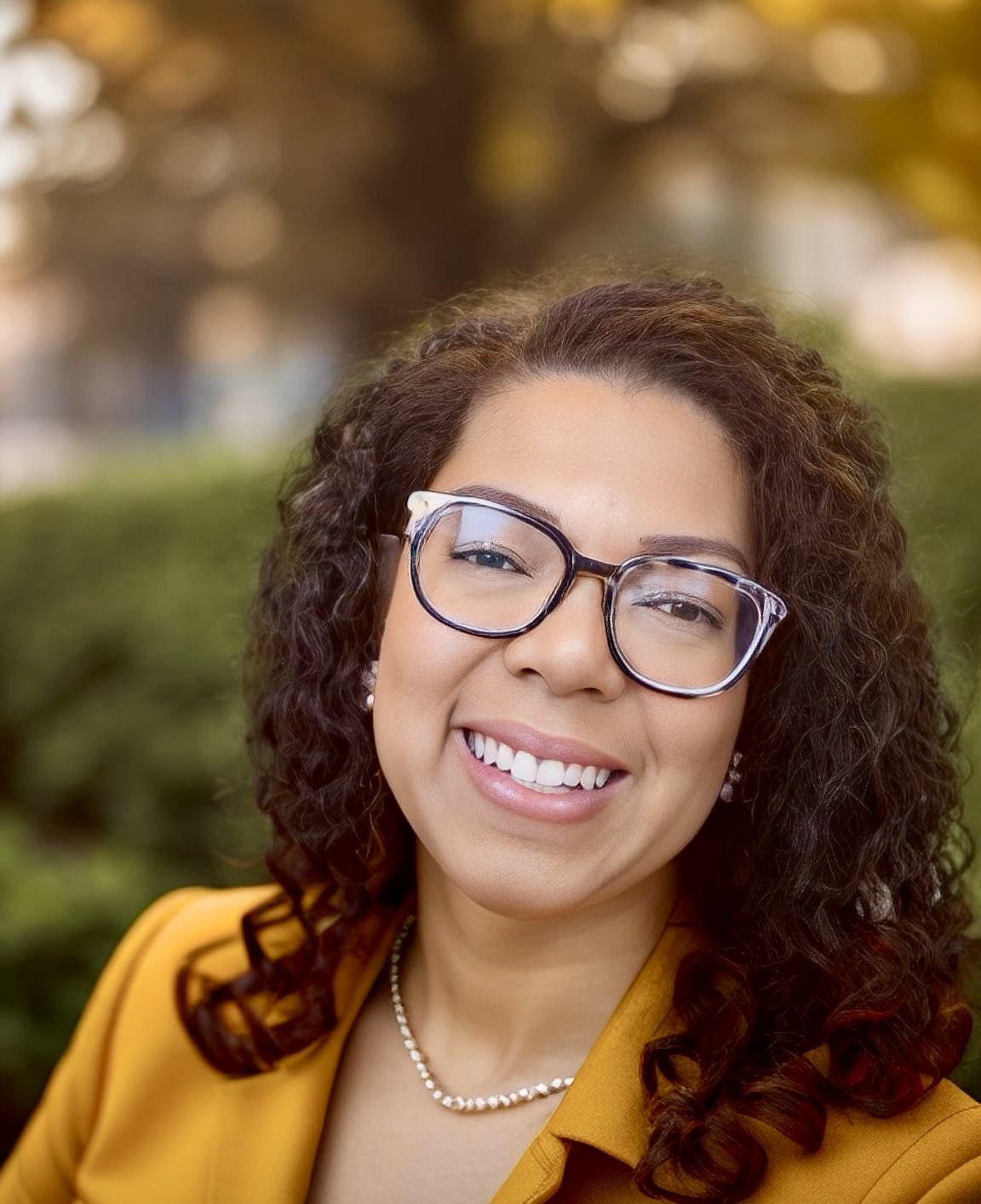
Founder/Principal Consultant
Kelly Mitchell is the Founder and Principal Consultant of Inclusive Design Group, a Colorado-based consulting firm that helps schools, nonprofits, and foundations design more equitable systems that expand access and opportunity. With a background spanning education, state government, and the nonprofit sector, Kelly brings both strategic vision and practical experience to her work. In her time in schools, Kelly was a middle school math teacher, math intervention coordinator, site coordinator for a teacher preparation program, and Dean of Students. She is known for her ability to bring diverse partners together, uncover common goals, and design collaborative solutions that move communities from ideas to action.
Her leadership combines data-informed insight, skilled facilitation, and a deep commitment to equity as a design principle.
Prior to founding Inclusive Design Group, Kelly served as Colorado’s Postsecondary and Workforce Readiness Coordinator and as Pathways Director for a non-profit organization where she led cross-sector initiatives connecting education, workforce, and community development. Kelly holds a Bachelor of Science in Statistics from Colorado State University and a Master of Arts in Curriculum and Instruction from the University of Denver, and she is pursuing a Ph.D. in Education at the University of Colorado Boulder with a focus on Learning Sciences and Human Development.