Advocating for Black Families with Ronda Haynes-Belen
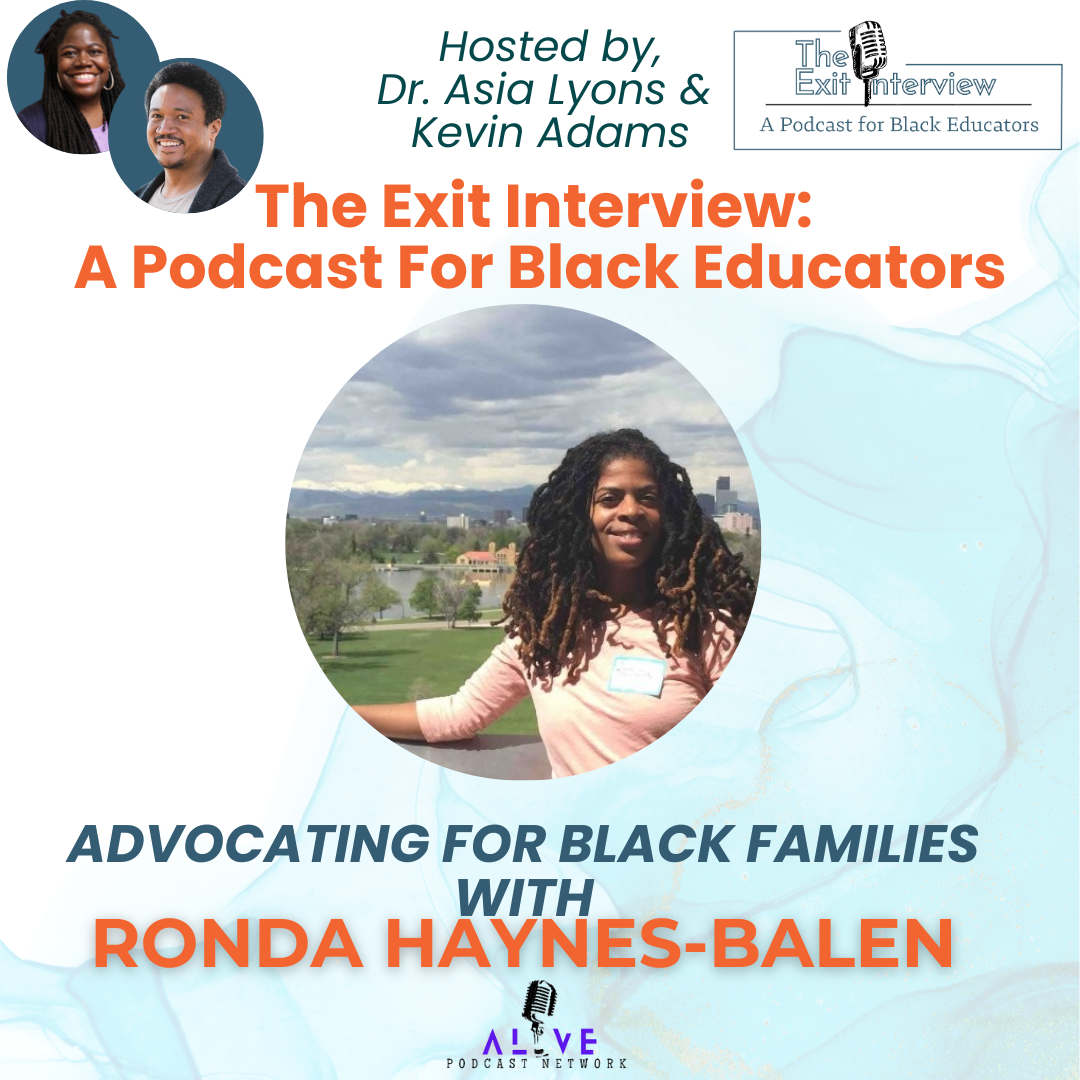
In this episode of The Exit Interview, Dr. Asia Lyons interviews Ronda Haynes-Belen, a former community engagement specialist. Ronda shares her experiences working in Denver Public Schools (DPS), discussing the anti-Blackness and oppressive structures she encountered. After yearning for a work environment that validates and caters to the unique needs of Black families, Ronda decides to exit from her position. Ronda underscores the importance of refusing to 'muscle through' oppressive situations at work and prioritizing personal health and well-being. The discussion also explores how such unfair work environments can impact personal life and how critical self-advocacy is in these circumstances. The episode concludes with Ronda emphasizing the need for healing, self-care, and pursuing joy post-exit.







Show Notes: Supporting Black Families with Ronda Haynes-Belen
Episode Summary:
In this powerful episode of The Exit Interview, Dr. Asia Lyons sits down with Ronda Haynes-Belen, a former Community Engagement Specialist with Denver Public Schools. Ronda shares her journey from being an active parent and advocate to working within the school system, and ultimately, her decision to leave due to persistent anti-Blackness and systemic challenges.
Key Topics Discussed:
- Ronda’s path from parent advocate to community engagement specialist in Denver Public Schools.
- The importance of family and community engagement, and the disparities in support for Black families versus other demographics.
- Firsthand experiences of anti-Blackness in the workplace, including microaggressions, tone policing, and lack of advancement opportunities.
- The emotional toll of racial battle fatigue and the importance of self-care, healing, and community for Black educators.
- The role of ego and the pressure to “stick it out” in toxic environments.
- Advice for school districts and institutions: “Stop oppressing us.” Ronda emphasizes the need for workplaces to focus on professionalism and respect, rather than policing personal expression or demanding emotional labor from Black staff.
Memorable Quotes:
- “If you are silent about your pain, they will kill you and say that you enjoyed it.” – Ronda, quoting Zora Neale Hurston
- “My kids need me. They need a mother who is happy, who is not stressed out. That’s what they need.”
- “Stop trying to police our facial expressions. Stop trying to police our tone. Stop trying to police our bodies. Stop it.”
What’s Bringing Ronda Joy:
- After leaving her position, Ronda is focusing on healing, joy, and community—practicing yoga, hiking, attending retreats, and spending time with other Black women.
Resources & Shoutouts:
- The Black Educator Wellness Cohort, co-led by Dr. Asia Lyons and Dr. Ellie Cahill, supporting Black educators’ wellness.
- Listeners interested in sharing their stories or joining the podcast are encouraged to reach out via exitinterviewpodcast.com.
Call to Action: If you enjoyed this episode, please support The Exit Interview by sharing it with others, posting on social media, and leaving a rating and review. If you’re a former Black educator with a story to tell, get in touch!
First of all.... have you signed up for our newsletter, Black Educators, Be Well? Why wait?
Amidst all the conversations about recruiting Black educators, where are the discussions about retention? The Exit Interview podcast was created to elevate the stories of Black educators who have been pushed out of the classroom and central office while experiencing racism-related stress and racial battle fatigue.
The Exit Interview Podcast is for current and former Black educators. It is also for school districts, teachers' unions, families, and others interested in better understanding the challenges of retaining Black people in education.
Please enjoy the episode.
Peace out,
Dr. Asia Lyons
Supporting Black Families with Ronda Haynes-Belen
Ronda Haynes-Belen: [00:00:00] I'm not going to stick it out. Black women, we have this thing where we feel like, Oh, you're not going to run me out of here. Not y'all run me up.
Dr. Asia Lyons: Yes. Oh my gosh. Yeah.
Ronda Haynes-Belen: Run me out. I'm good. Run me out because I have children to raise. And so I'm not going to allow you to stress me like, no. No.
Yeah. I love that. Because for me, my job was the fun part of my day. You know what I mean? I got to go to work and I enjoyed that. I'm not going to go from enjoying something to being totally miserable and just surviving that. No amount of money, which by the way, remember I was making the least amount, is worth that.
It's not worth that? Yeah. Oh, no thank you.
Dr. Asia Lyons: I love that, that you talk about go ahead and run me out. Because there are people, Black women in particular, that we talk to in the podcast, I talk to out in the community, like. If the kids and what if, and then
Ronda Haynes-Belen: I, people try to guilt me, people talk, oh no, we need you to stay, you know who [00:01:00] needs me?
My kids need me, they need a mother who is old, that's what they need a mother who is happy, who is not stressed out. That's what they need.
Dr. Asia Lyons: Amidst all of the conversation about recruiting Black educators, were other discussions about retention. The Exit Interview podcast was created to elevate the stories of Black teachers, professors, counselors, social workers, and administrators who have been pushed out of the traditional education space.
My cohost, Kevin Adams, and me, Dr. Asia Lyons, are on a mission with our guests to inform school districts, teachers unions, families, students, educators, and others interested in understanding the challenges of retaining Black people in education. Welcome to The Exit Interview, a podcast for Black educators.
All right, welcome back everyone to another episode of The Exit Interview, a podcast for educators. It's me, Dr. Asia Lyons. And I have a special guest today. And I always say that every time we have a guest, but. This is one of my [00:02:00] favorites, so I'm going to have her introduce herself and then we're going to get into our questions.
And for all those who are listening out there who have supported our podcast by sharing with others, just like really quickly, I want to say thank you, but Rhonda, go ahead and introduce yourself.
Ronda Haynes-Belen: Hi, my name is Rhonda Haynes Belen, and I'm happy to be here. I'm excited. Yeah. I'm nervous, but I'm excited.
Dr. Asia Lyons: So Rhonda and I met when she was a cohort member for the Black Educator Wellness Cohort that myself and Dr.
Ellie Cahill put on last school year. She applied to be a part of the cohort, and she got in. We're super excited about it. There were six folks in our program, and First day off, Rhonda, she's this is my, I want to do this. I'm talking, she's sharing a little bit about herself and she was like I'm not really a crier and I tease her about this.[00:03:00]
And then she's she got a little emotional at the beginning and it's just been like much love ever since from Rhonda. She'll probably tell you a little bit about her story, about being from the East coast and being from New York. Like how that really played a great part in being in the cohort and bringing her flavor into the space and her realness in the space really made it what it was, but we'll start off with this very first question.
Rhonda was not in a classroom space, a traditional classroom space, but I'm going to have her talk about what she did in education. We'll start with that. So Rhonda, tell us about your education journey. What helped you decide to go into the position you went into? And tell us about that position, exactly what it
Ronda Haynes-Belen: was.
Sure. So I worked for Denver Public Schools. I was a community engagement specialist. It was formerly called the Family and Community Engagement Centers, and now they're called Community Hubs. So I was in the Far Northeast Community Hub. What made [00:04:00] me go into education, honestly, is I have four children. I was that active parent in my kids schools.
Yeah, and so I would show up at a PTA meeting. I would show up at any meeting. Like, when my kids were younger, with the former superintendent, they had the superintendent parent forms. And so I would go to those and I would talk about what I was happy with my kids schools and what I was unhappy with, right?
And so I was very vocal in those forums. And so I just started meeting people that worked in DPS and just trying to learn what they did. Also, there was a fantastic director. Her name is Teresa Becker, and I would see her at meetings and she would talk to me about what. The family community engagement department did, and it was phenomenal.
So I would take their trainings. I learned about as much as I could write on how to advocate for my children within Denver public schools, [00:05:00] because I was from the East coast and the way that you navigate education in. where I'm from in New York City is totally different than the way that you advocate in Denver, in DPS.
And so I wanted to learn as much as I could, right? And so I would help my children, but I was also interested in helping other people on how to navigate, right? Because as a Black mother, I felt like other Black mothers in particular were not savvy on how to navigate that. And so their children were missing out on resources and I didn't want that to continue.
And so whatever I could do to navigate, was to help families navigate that, I would go. So if that meant going to a meeting, all of my kids would go, right? My kids would be the whole child care, they would be in child care, doing homework or whatever. My kids are various ages, but they would come with me to those meetings.
And so it was just a great experience within DPS learning how to navigate that system because it is a system. And as much as it's going to help you and your kids, right? And [00:06:00] so the great thing about. family and community engagement department. At that time, they were all about teaching families how to navigate and how to advocate for their kids, right?
So the advocacy that I learned most of it, I went from my mother watching my mother advocate, but also I learned it through DPS. And so when I got the opportunity to be a part of the family community engagement department, because it's interesting, I'm gonna go back. Sure. So I'm a stay at home mother.
I'm going to these meetings. And so they're like, Hey, you should work for DPS. We love the way that you advocate. We love your outspokenness. Why don't you come work for us? And I was just like, no, I'm just a mother. I don't know what I'm doing. Like, how can I work for the family and community engagement department?
So then when I got the opportunity to do that, I did, I worked in volunteer services and then I got the opportunity to work. So I worked part time for volunteer services and then I got the opportunity to work in the family and community engagement. Center as [00:07:00] a Community Engagement Specialist. And so it was nice because I was basically getting paid to do things that I had already done, like finding resources for families.
That was the big thing. And then just helping families navigate the system that is Denver Public Schools, right? And so how do you do that? So it was an amazing opportunity.
Dr. Asia Lyons: Yeah, I love that. And it's interesting that you said that the reason why they decided that they wanted you to be in the space is because you spoke up, right?
And when we hear that, it's all good. Sometimes that may be forecasting your story a little bit, but when people say, yeah, oh yeah, we love that you speak up, come join our team. It's always good on the outside, right? But when there's in a space and that same advocacy is happening in a space for a lot of us, it's not a good thing anymore, right?
Now it's a nuisance or it's whatever. So that's really interesting.
Ronda Haynes-Belen: You're so negative, right? Because I know as a parent and also as someone that worked in DPS that we can do better, [00:08:00] especially in family and community engagement, we can do better in who we are choosing to assist. And that was a big thing for me.
Is that who are we choosing? to help within those systems. And very seldom is it Black families, I'm just gonna say. Yeah. And so that, as a Black mother, as a parent of Black students within DPS, that was alarming.
Dr. Asia Lyons: Yeah. Do you have the capacity to talk a little bit more about that? What's some things that you noticed over your time
Ronda Haynes-Belen: there?
So in the Family and Community Engagement Department, now it's community hubs, right? And at the time, there were two community hubs, one in far northeast Denver in Montbello, where I worked, and then there was another one in southwest Denver. And so a lot of the programming that we had, it did not target all of the DPS demographic, right?
And so it mostly. helped our Latino families, right? And so when you're working there and you're looking at that and you're seeing the disparity, because I know that there's a lot of non [00:09:00] Spanish speaking families that need assistance. And so they're not getting the assistance, right? Because Where's all of our resources and attention going?
It's going to a specific demographic. And so it's like our families felt that, right? You can feel that when you walk into a space and no one looks like you, right? And you don't feel welcome. You're not made to feel welcome. That's basically it. And so I felt like my job was to change that, right? To change the way that looked because.
As a black woman no, my community needs this help too, as much as any other community. And so how am I going to advocate for them? And so that's what I did in the capacity that I was able to.
Dr. Asia Lyons: Yeah, I love that. And I appreciate that. And unfortunately, this is the exit interview, which means you are not there to advocate for those families, at least not in the workspace.
You're not there anymore. So then that leads us to our next question. You were doing the work, you're advocating for Black families, you're seeing what's going on, you're showing up how you were showing up before you started [00:10:00] working there, but now it's in a broader sense and supporting more families. What was the thing or the things or the situations that made you step back and say, even though we know that this is important to being supporting families in the hub, it's important and advocating, it's important, it's time for me to go.
How did you make that decision?
Ronda Haynes-Belen: There was a lot. There was a lot that had happened over the years, right? Within that department, the Family and Community Engagement Department, I had experienced a lot of anti Blackness. And so there's a lot. And interestingly enough, it was from my Latino coworkers. And so from being like, my hair was pelo malo, you know what I'm saying?
How is that allowed in a workspace? And that's what that means for our audience. It means that my hair is bad, right? You have bad hair, right? Because my hair is not straight. It was like, Oh, you have an attitude, right? You don't smile enough. It was never about my work performance. It [00:11:00] was about other things outside of that sphere, right?
Because I feel as an employee, I choose who I want to socialize with. Yeah. And I get to do that. If I don't want to socialize with you, I don't have to. Is the work getting done? Am I doing the work right? But it was always like, Oh such and such person. said hello to you and you weren't friendly enough to them.
Or like one time we had a retreat and everyone was supposed to bring a baby photo of themselves. I don't have baby photos. And the ones that I do have, I don't want to share that with you. I get to choose what I want to share with you as my coworker. You're not my friend, you're a coworker. And so I get to choose what I share.
And so it was very like, Oh she's not sharing, she's not sharing that part of herself. I don't have to. And there were a lot of straws, right? One, I had another coworker, this was during COVID. I had a friend, she was also a black woman. [00:12:00] She did not feel safe with her manager. And so she sent an email to all these leaders, these black leaders within Denver public schools.
And so myself and another person who was no longer, who was also walked out of DPS. We said, I'm sorry that you're going through this. How can I support you? I stand with you, right? Because they have us taking all of these trainings, like anti bias trainings, right? So if you see one of your coworkers struggling, you should speak up and support them.
So then I do that girl, I wound up in HR. They talk about, I was racist against her manager, a Latina woman. How do you think that made her feel? That you said those things. And it's just what do you mean? How did I make her feel? How I'm supporting my coworker who was saying that she's struggling with her.
So that doesn't change the way that I feel about. Her manager, right? I don't have a problem with her manager, but I'm centering my coworker. Like she doesn't feel safe. And oh no, [00:13:00] you did that on DPS property. You sent that email from your DPS email and are you kidding
Dr. Asia Lyons: me right now? But you all received training that says to advocate.
So I guess they meant
Ronda Haynes-Belen: advocate. Oh girl, but I guess you can only advocate for certain demographics of people. So I had to write this long email. They wanted me to write this letter about how I made her feel. It was ridiculous. It was ridiculous. Then the whole thing about, Oh, you're not friendly. I don't have to be friendly.
You're not my friend. You're my coworker. And all these things, like it was just so random. Also, I'm just going to say when I worked there, we got our numbers, right? We got stuff done. We changed the way that the family and community engagement center ran, right? We were able to do a lot of great things within that face center.
And I was found out that I was being paid the least amount, right? And so I'm doing most of the work. Girl, they're paying me the least. Okay. From people that just got hired, I was getting paid less. And so it was just [00:14:00] like, what is happening? And then they were like, oh you could never be a manager because you don't speak Spanish.
Oh, you can't be a manager because we just don't feel that you're ready. Oh, you don't have the education. It was just like all of these things. So I'm like, okay, so y'all think that I'm going to be a community engagement specialist forever, but somebody who just started, they can become a manager because they speak Spanish.
Do you not understand that DPS is more than just Spanish speakers, right? There's other demographics of people within DPS that also need representation, right? Yeah, but no. And so if you're talking about you're hiring people who you feel comfortable with. No. So you only feel comfortable with Spanish speaking people, but then the whole department, you only feel comfortable with people that speak Spanish, or white women, right? Or white men. It was just. Very ridiculous. It started to become very clear. And so this whole no,
Dr. Asia Lyons: I'm hearing over and over again anti Blackness. [00:15:00] And
Ronda Haynes-Belen: yes, and I made it clear. I made it known. And no, that didn't go anywhere. But as soon as you say, Oh I'm advocating for my coworker, who's also a Black woman, who feels this way.
who feels discriminated from her Latina manager oh that was discrimination against the Latina manager. But let's ignore how the other Black woman felt. It was just very odd and very nah, I'm not doing that.
Dr. Asia Lyons: Yeah. And to know, like you said from the beginning, so it wasn't just the, it's the students that are having this experience of anti Blackness, it sounds it's also happening to the families in DPS as well. They're experiencing not getting the resources that they deserve, pay the same amount of taxes, do the same amount of things for their children, and not, still not getting the resources they deserve. And now it's happening in the workplace, right?
Yeah. It's like anti Blackness running rampant within, And no one's
Ronda Haynes-Belen: acknowledging it, right? Nobody wants to talk about that.
Dr. Asia Lyons: Yeah. And so I know that [00:16:00] when we were in the cohort, you had mentioned I think this is going to be like the end of the year. I'm going to, I think I'm going to be done working in DPS.
But you seem to come a little bit faster. So tell me what was like, okay, I'm not going to wait any longer. I'm making a decision to leave sooner than later. How did that come about?
Ronda Haynes-Belen: So I had a manager. She and I were friendly, right? We were friends. And I considered her a friend. And so our relationship, because what happened was, She and I, when we first started at the FACE Center, she and I had the same position.
She was a Latino woman. We had the same position. And so when we were working in this position, we always said, okay if one of us had the power, how would we change the FACE Centers? And so when she became the manager, it was great because we were able to implement, right? She was the manager. She was able to implement those things that needed to be done that we had talked about.
And so it was fine. We were getting work done. I love my job. There [00:17:00] was also a lot of flexibility, which I really appreciate it as a single parent now, right? Because now I'm a single parent and I have children that I need to get to and from school and doctor's appointments and things. I'm doing this on my own.
And so it was nice, right? To have that flexibility. And also to have the trust that I could do my job, like I felt like she trusted me to do the work that I was doing it and I was doing it because I love my job. So she and I, we were friends. We had a relationship outside of the work. And so we would have conversations about things that we saw people within the business, within DPS or whatever.
And so one day, Okay. She disclosed that, like some things that I had told her, she disclosed to her manager and I did not, we were not friends, right? We were not friendly. We did not get along. And so within a meeting where they were supposed to be Talking to me about my facial expressions, right?
She brought up the things that I said. Yeah. Oh, yeah we had a whole meeting about my facial expressions because I have wrestling bitch face and so I [00:18:00] guess As a Black woman, you're not allowed to have that, and oh no, Asia, don't make that face. Fix your
Dr. Asia Lyons: face. Oh, fix my face. Smiling. Always smiling.
Be nice. Be nice.
Ronda Haynes-Belen: It was tone policing. It was like policing my facial expressions, my body movements. It was... Yeah. oppressive. And so we're having this meeting and she brings up some things that I had talked to my manager about. So I confronted my manager. And I basically said, I told you that in confidence.
And so you go back and tell her, I don't trust you. And so from now on, it's going to be a very professional relationship. It's strictly within DPS. It's not outside of DPS. We're strictly professional. And so she didn't like that. And so now all of a sudden, what she did is that she weaponized her Latina ness, to say, Oh I feel like your tone.
Like all of these things that other people have said about me, all of a sudden she had a problem with it too.
Dr. Asia Lyons: But they [00:19:00] weren't a problem when you all were working together side by side. They weren't a problem until that day. Yeah.
Ronda Haynes-Belen: Exactly. I'm not going to struggle through this, from the things that I learned through the cohort.
I don't have to struggle through this. I know that I'm not crazy. I know that I'm not the only one experiencing this. And so I'm going to leave. And so that's what I did. One day I just said, I'm not coming back. I'm not, I can't do this. I'm not coming back. And I didn't, I wasn't feeling well anyway, that had happened in December, right before winter break.
And so when I came back in January, the relationship was very different. Sure. And they accused me of bringing everyone, Oh, Rhonda, you're bringing the whole office down. No one feels comfortable. You're making everyone uncomfortable, right? Because now that I'm not talking, right? I'm keeping to myself. I'm doing my work.
I'm keeping my head down. Now, all of a sudden, I'm responsible for the whole dynamic of the office. Yeah. Ooh, 110 pounds, 5'4 right? Black woman. [00:20:00] With the least amount of power, I'm responsible for all these people and the way that they feel.
Dr. Asia Lyons: The thing that I think about when you talk about this is mobbing, right?
And this idea of people jumping on and ganging up on people. And I'm also hearing, we talk about racial battle fatigue in the cohort. We talked about racial battle fatigue on our podcast a lot. And a lot of times when people are experiencing racial battle fatigue within a space. They go into being silent, just getting their work done, right?
Because the dynamics have changed, right? One of our guests talked about mourning and disenfranchisement, where people, the relationships that used to be are no longer. And so that's a death in a way, right? And so you're dealing with that. You're contending with seeing this person in the space. And doing your work and then people start to just jump on and jump on a lot of folks.
There's nothing to toughen through. That's not even thing that we should be even be talking about. And the mobbing can really drive [00:21:00] people to just not be well in all the ways. And the
Ronda Haynes-Belen: things that I saw this before. And so I was like, you don't need to deal with this, like I didn't.
And so I left. I'm not going to stick it out. Black women, we have this thing where we feel like, oh, you're not going to run me out of here. Nah child, run me out.
Dr. Asia Lyons: Yes. Oh my gosh.
Ronda Haynes-Belen: Yeah. Listen, run me out. I'm good. Run me out because I have children to raise. And so I'm not going to allow you to stress me.
No. No. Yeah. I love that. Because for me, my job was the fun part of my day. You know what I mean? I got to go to work and I enjoyed that. I'm not going to go from enjoying something to being totally miserable and just surviving that. No amount of money, which, by the way, remember I was making the least amount, is worth that.
It's not worth that. Yeah. No, thank you. I
Dr. Asia Lyons: love that, that you're talking about go ahead and run [00:22:00] me out. Because there are people, Black women in particular, that we talk to in the podcast, I talk to out in the community the kids, and what if,
Ronda Haynes-Belen: and then I And people try to guilt me. People try Yes.
Oh no, we talk about that. You know who needs me? My kids. My kids need me. They need a mother who is old. That's what they need. They need a mother who was happy, who was not stressed out. That's what they need. Yeah. I love
Dr. Asia Lyons: that. I love this full circle of starting with the kid, your own children and advocating in those spaces.
And advocating again for your children at the end of that career. Saying no, I deserve to be and hope for yourself too first. Obviously. So yeah, that totally makes sense. We can justify okay I only have three more years until I can get my para or I only have this more mini this, or if I'm just going to do the, and again, the kids, your children, your spouse, your roommate, the dog, whoever.
They're experiencing that spillover of racial battle fatigue. They're experiencing you [00:23:00] snapping at them and being mean and just not being your whole self. It's not just that it stays with us. It spills over into our households. And I don't know, and our friendships and our religious spaces. Yeah. And I don't think that people.
They don't think about it. They feel like maybe people want to support us or they want to hear the stories and share and listen to them complain and things like that, but they don't think about that person that they're complaining to is experiencing their own racial trauma sometimes
Ronda Haynes-Belen: or whatever. I didn't want to do that.
You get tired of repeating the same thing over and over again.
Dr. Asia Lyons: You do. Some people
Ronda Haynes-Belen: love it. Yeah. No, I didn't want to do that. I didn't want to do that to my friends, to my family. So I packed up. Here's the thing, when you have an office space, right? And you decorate that, it's very personalized.
It's very personalized. So I remember listening to Tabitha Brown talk about how, when she was leaving her job, she said, since y'all feel like anybody can fill this [00:24:00] spot, let anybody fill this spot. So I had taken down all my photos, my little personalized, whatever, my little knick knacks and no. My little tchotchkes, packed it up.
No, anybody could sit in this space. Let's make it clear on what it is. Anybody can sit in this space. And so y'all can have it. Yeah, I love that. But also, let me tell you this. I love Zora Neale Hurston, right? What did she say? If you are silent about your pain, they will kill you and say that you enjoyed it.
No. You're not gonna kill me and then say that I enjoyed that. No, ma'am. And so that is my motto. That's what I live by. If you are silent about your pain, they will kill you and say that you enjoyed it. No. I love that. I love her. I feel like she's looking out for me.
Dr. Asia Lyons: Yeah. I love that quote. It's so true.
They'll say that you enjoyed it and they replace you.
Ronda Haynes-Belen: Yeah. And you know what? Once you take ego out of it, right? Like I said, I could have stayed for my ego and just [00:25:00] been like, Oh, I'm going to muscle through it. Why? I saw my grandmother do that. My mother do that. I've seen so many black women doing that within DPS, right?
Oh, I only have a year left. Oh, I'll just, or how many ever years, Oh, I need it so I can go to the next level, whatever. And no shade to them, right? That's you. Everybody has to do what's best for them. This was what was best for me was me leaving. Yeah. And I'm happier
Dr. Asia Lyons: for it. I want to talk about the ego a little bit because you make a really good point.
I think I've talked about this a lot in community that people, they get something out of folks saying, Oh, I'm a teacher. I'm a this and that. Oh, you do this, you do that. And they get super excited and they get to flex that muscle. Like the thing that they've done 20 years teaching third grade or 15 years doing this and this.
And the ego is just. Continuously stroked because people get to say they've done these things or they work for this district that they've done all [00:26:00] this whatever at the sacrifice of all the other things, right? And I don't think that people want to admit that the ego is a real thing. So yeah, the ego is huge.
And I remember it when I was teaching, people, Oh, you work in Cherry Creek? Oh, you do? Oh, wow. That's awesome. Oh, sixth grade. I could never do. And it's I knew that was a big deal. People used to love wearing their badge to go, right? And it's a thing. And the ego will kill you. The ego will kill you.
I don't think a lot of people want to sit and admit that they have something, some kind of gain from that. But I'm glad you mentioned the ego.
Ronda Haynes-Belen: No, I didn't have that with my job. Yeah. I did community engagement. I love community engagement. I think that it's important, especially in the education system, that you educate parents from the beginning till the end.
You educate parents on how to go through these different stages because a lot of times parenting is a community thing, but it's also very [00:27:00] isolating, right? And so you see your child. Behaving a certain way and you thinking Oh my God, it's just my child, but in community, you recognize that's typical childhood behavior.
So you're like, okay, on to the next thing, and also with my job, like people come to us when they're facing homelessness, when they're facing having their electricity turned off. They come to us when they need to apply for benefits. They come to us. They're trying to get their citizenship.
This is what we did, right? So they're trying to learn English. They're trying to learn Spanish. They're trying to do all these things. They're trying to get their GED. And so anything I can do to help them navigate through that, I loved it. And so my goal was to get as many families. in our system going through our family and community engagement center as possible.
Yeah. That was my goal.
Dr. Asia Lyons: My question is, now that you've left, thinking back on it, and I asked you this question before we started taping, what do you think that school districts, institutions, [00:28:00] unions, any kind of space that educators work in, what do you think they can do to keep Black educators in their spaces?
Ronda Haynes-Belen: Stop oppressing us. Say it again. That's it. Stop oppressing us. Here's the thing. My goal is to work. I want to work, to earn money, to pay my bills. I don't have to be your friend, right? And so I don't have to tell you about what's happening in my personal life. That's not your business. If I choose to disclose that to you because you're my friend.
Or I feel that I'm going to tell you like, Oh, I went ziplining this weekend. Or, Oh, I was riding my bike this weekend. Then I tell you that. But if I don't want to tell you that, I shouldn't be made to feel that I have to disclose things to you. Stop oppressing us. Stop trying to police our facial expressions.
Stop trying to police our tone. Stop trying to police our bodies. Stop it. You don't get to do that. No workspace should [00:29:00] try to do that. Am I being professional within the confines of what being a professional is? Sure. For that particular position, okay. If the problem is my work, then talk about my work.
But if the problem is you don't like the way I'm sitting in this meeting and you don't like my facial expression, stop looking at me. Look at something else. Look at somebody else. Ask me, Hey, Rhonda, is there anything going on? And when I say no, I'm fine. Then believe it, right? Stop asking me the same questions.
Girl, this is my face. I'm serious. You want me to change it? I can't change my face. This is
Dr. Asia Lyons: my face. Yeah, I love that. I have a good friend, Daysa, Dr. Daysa Daniel, who we're writing a piece on niceness. And it's the default characteristic of white America. And really, niceness is really white violence.
Because if you're not playing the game of niceness, then they attack.
Ronda Haynes-Belen: New Yorkers, we are not nice, but we are [00:30:00] kind. Right? And that's the difference, right? Me being nice to you is very surface level. But me helping you is very different. I think that there's a difference. What is nice? Nice is very subjective.
And so who gets to define what nice is? Because you're nice. White women. Oh, okay. Yeah. And listen, non Black women and those in power get to decide what is nice. Because if you asked me, I was nice enough.
Dr. Asia Lyons: I love that you said that nice is a surface level and the reality is that's a lot of folks prefer it to be anyway.
Just at the surface. Yeah, but,
Ronda Haynes-Belen: listen I don't need to tell you my business. I don't need to tell you any how was your weekend? I made it through. I'm here. It's Monday. In Jesus name. Amen. You're
Dr. Asia Lyons: exactly right. And I'm sure there's a lot of folks who are listening to this who know exactly what you're talking about.
That niceness, that really surface level, especially this folks who, and I think RV Ann Harper talked [00:31:00] about this on her episode, coming back to school from the summer vacation and all the chipper nonstop talking. Right about the this and the that and the this and the that and then still going to back to the classrooms and doing harm to black children.
Oh wow, yeah. Oh the niceness, the da, how was your vacation, da, baby pictures and all this, and it's and we're gonna still go. And we're going to... We're
Ronda Haynes-Belen: still not going to help. Listen, we're still not going to give Black families the resources that they need. Period. We're still not going to do that, right?
We're still not going to engage with those families. We are still going to make Black families feel like they don't belong here, or that when they ask for the resources, Oh, but you're asking in such a harsh way. You're so direct. Why do you have to be so direct? Because this is what I need, right? Yeah.
This is what my child needs to make it through. And what? Yeah. So you don't like my tone and so you're not going to help me. Oh, got it. Okay. Okay. Yeah.
Dr. Asia Lyons: And the person who's speaking, the person in power, whatever that is, gets to decide what tone is appropriate. [00:32:00] Yeah. Okay. It
Ronda Haynes-Belen: is. And the
Dr. Asia Lyons: audacity.
That part, the audacity. But we, in this society, at least here in, I'm going to keep it to mountain states because you're already talking about how people in New York are different, right? And maybe not 100 percent different, but it's different in this area. And what we're talking about in Colorado specifically for this particular idea of niceness.
Yeah, you're not wrong. Obviously, you know that, right? It's,
Ronda Haynes-Belen: it's damaging. I'm sorry you're going through that, but I'm not going to offer you any assistance. I'm sorry that's happening to you. But I said it in a nice way. And move along.
Dr. Asia Lyons: Yeah, I just had a conversation with someone at a conference last week and they were saying, I have a friend, of course their friend's Black, right?
I have a friend and when something happens at work and I go to check on her and she's crying and she starts yelling at me. But I'm like, don't be yelling at me. I'm trying to help. And I said to her, but you're not going to confront the person who did the harm. Because you want to be [00:33:00] nice. You don't want to push up against that person.
You want to come over and help your friend and let them see it's not me, it's them. But you don't want to put your job on the line and stand between you, between that person, your friend who's Black, with whoever that person who caused harm to those people. And now that's back to that niceness.
Ronda Haynes-Belen: But also when you are the target, right?
When they tell you... No, what you did was not acceptable and here are the reasons why then all of a sudden you weaponize those same, that same language and those same behaviors that the other people do. So yeah. Yeah.
Dr. Asia Lyons: No, ma'am. You're not wrong. Yeah. You're no longer in DPS, my favorite question, one of my favorite questions what are you doing now?
What are
Ronda Haynes-Belen: you up to? What I am up to is I'm putting my nervous system back together. That's what I took time to do. That took some time to put my nervous system back together because it was a level of grief. So to grieve that relationship, those relationships, but yeah, so I'm living in joy. That's what I'm doing.[00:34:00]
I'm doing yoga. I'm doing sound bowls. I'm going on hikes, I'm walking, I'm riding my bike, I'm going ziplining, right? I'm swimming. Yeah. That's what I'm doing. I'm doing things that bring me joy. Yeah.
Dr. Asia Lyons: I love that. We don't talk enough on this podcast about that part. Like folks answer that part of the question and what's bringing you joy these days.
But I think a lot of folks answer the question of I'm working here, right? I'm doing this. And we don't talk about this space that we really deserve to take to heal, right? Because people are like, I gotta jump back in it or the next job will be different. And so I'll just like, as if there's no
Ronda Haynes-Belen: need for me, what I needed to do.
Asia is that I needed to fortify my system, right? And so that if I'm in a space again, with those same kind of behaviors, that I'm able to [00:35:00] do behaviors that are going to assist me to move through that. You understand what I'm saying? So the yoga is fortifying me to do that, right? Me going hiking is fortifying me to do that.
All of these things are fortifying me so that I'm able to move into my next. Phase of whatever my professional life is as a whole person. And so when somebody says something that it does not trigger me to have those same hackles up, you understand, that's what I wanted. I wanted that time to heal my nervous system so that when I'm in that space again, and I start to have those same feelings when my shoulders start to rise, I can take a deep breath and bring it back down.
So that's what I'm doing and I'm enjoying it and I'm doing it unapologetically.
Dr. Asia Lyons: Yeah, you answered my question, but I want to ask anyway, do you feel like there's a need like when you tell people and they're like, Oh, what are you up to? Where are you working? What do you feel like this need to justify?
Ronda Haynes-Belen: I do.
I do. Because everybody's well, yeah. Oh, yeah. [00:36:00] Especially in the beginning, because it was I felt like I needed to stay busy, right? So I was like, Oh, I need to go volunteer somewhere else. I need to go start doing this. What I needed was to rest. I needed to rest. I needed to take that time to see what Rhonda needed.
I love that. And so that's what I'm doing. I'm doing a lot of retreats. I'm enjoying it. Rhonda's
Dr. Asia Lyons: the queen of retreats. I'm gonna say that. Rhonda knows where all the retreats are. She knows where all the resting places, the retreats. This is the plug, y'all. This is the plug. Oh,
Ronda Haynes-Belen: I do. I love it. I love being in a community with other Black women.
Yeah. And I'm not going to apologize for that. I love being in a community with other Black women. Because the healing power that we have... in that community is so amazing. And so I love it.
Dr. Asia Lyons: Yeah, that's fantastic. All right. You started already, but what's bringing you joy these days?
Ronda Haynes-Belen: Besides just being a mom, like a lot of things, I learned how to ride a bike. Look at me at my big age, going [00:37:00] dancing, just doing things that bring me joy. That's what I want to do. I want to be a model for my children. To say that you don't have to suffer through stuff. And I talk to them about that all the time and just advocating for yourself.
Like my job is to show them how to advocate for themselves and so that they can do it. Like one of my kids, he had a issue with his job and he was like, oh, I want to do this and this. And I was like, slow down. You don't have to do that. He was like. Mom, you taught me how to advocate. And so now that I'm advocating for myself, you're telling me not to do it.
So our kids are watching and so what are they gonna see? And so I hope that they are watching me take care of myself and centering myself so that they can always know that they have the space to do that as well. No matter what it is, right? You have the right to center yourself and whatever that means.
And I just really appreciate you and Dr. Ellie like holding that space because I think that had I not gone through that cohort, I would have been one of those women that are like, Oh, I'm just going to power through [00:38:00] it. And so that gave me the space to say, I don't need to do that. I don't have to power through it.
Girl, just go, just leave, back up your stuff. and go. You can leave. Then it doesn't have to be like a battle. And your story is your story. You have the right to your to share with anyone. I love that. So thank you. Thank you for that. Oh
Dr. Asia Lyons: yeah. The Black Educator, for those who are listening, the Black Educator Wellness Cohort.
is a space that Dr. Ellie Cahill of Resilient Futures and myself put together to support Black educators and who are still in spaces teaching or doing all the things, family liaisons, school psychologists, things like that, who want to learn tools for supporting their wellness, right? Because we just feel like it's reciprocity.
We both have left. the education space, but we want to give back to Black educators because we see what's happening with Black educators. We talk to them, we work with them, and we want to make sure that people as best we can are given tools and [00:39:00] feel like they're seen in community and they're valued. So I'm so glad that you joined the cohort.
I know,
Ronda Haynes-Belen: me too, because I was like, I'm just a community engagement specialist. Can I join
Dr. Asia Lyons: you? I'm like, sure, come on. Yeah, and it was so great. We had a good time and I fully plan to do something middle of like winter breakish to bring the band back together. I'm in. Oh, all right, y'all. So this is another fantastic episode of the Exit Interview, a podcast for Black educators.
Out there. Thank you so much, everyone. Thank you, Rhonda, for coming on. And we will talk. Yeah, of course. And we'll talk to you all later. Bye.
Ronda Haynes-Belen: Thanks
Dr. Asia Lyons: for listening. If you enjoyed this episode of The Exit Interview, a podcast for Black educators, please help support the podcast by sharing it with others, posting on social media, and leaving a rating and review. And as always, we're looking for former Black educators to interview. If that's you, send us a message on our website, [00:40:00] exitinterviewpodcast.
com.