Coming Back Different with Jacci Cradle
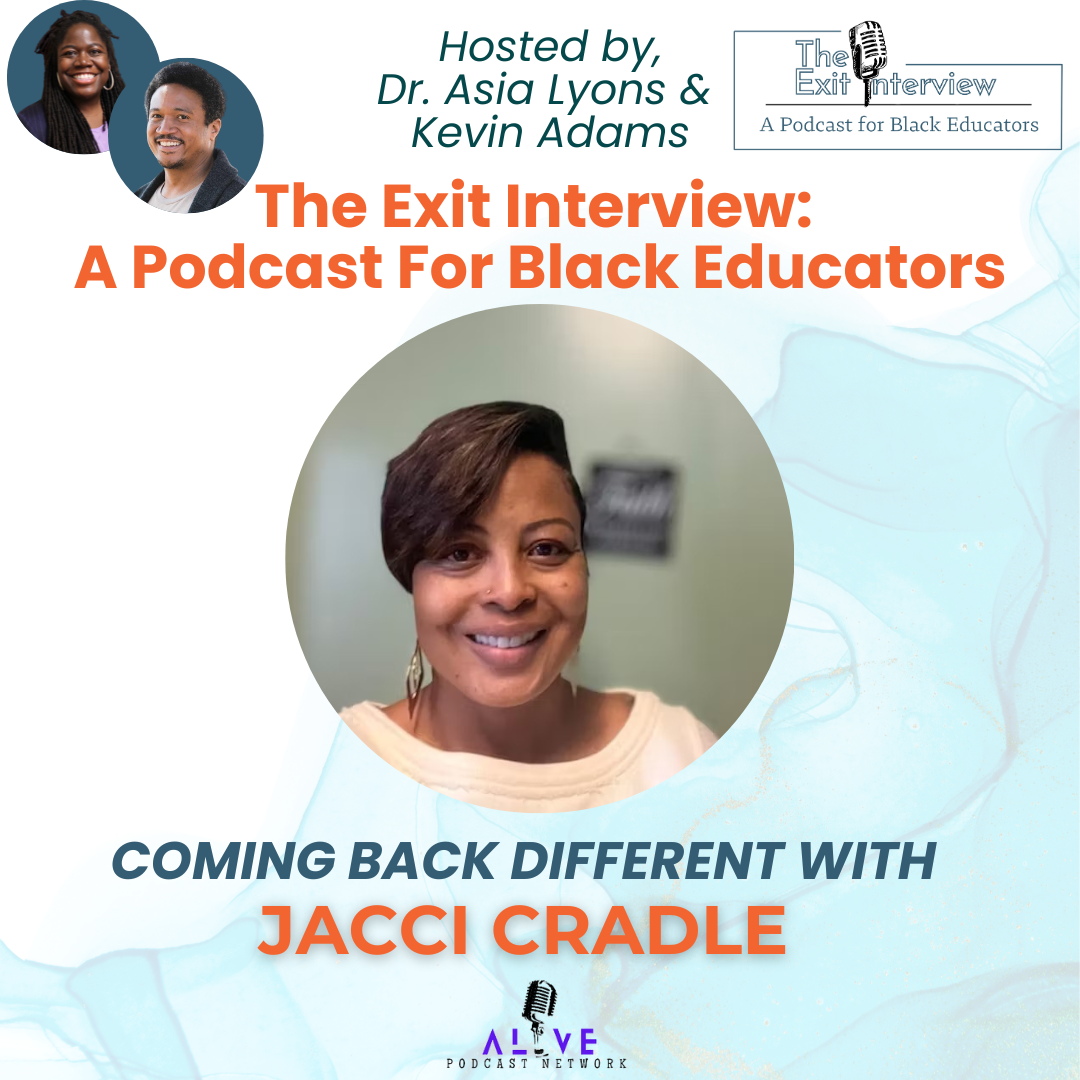
Jacci tells us her story of coming full circle. With her love for whom we in education consider as “littles,” she tells her journey as a childcare center owner who, with a heart for doing more for her community, begins her work as a Diversity Equity and Inclusion Director in a Denver Metro Area organization. Listen in as Jacci describes her story and advice for Black folks in the early learning space.


Memorable Quotes
“So as I'm in [00:03:00] this meeting, the first uncomfortable moment was the silence. And I was like, I’m not sure about this place because yeah, I would've already had said something, right? Let's not overlook this. So towards the end of the meeting I said, you know what? Your silence is offensive to me, period. I can't hold it. Your silence is offensive.”
“Dr. Asia Lyons: I know that we have lots of folks in our audience who are white educators, and I'm sure that they may be reflecting at this time about when they've been silent. And that's good. It's good that they sit and [00:07:00] think those moments when you knew you could have said something. You could have stepped up, you could have just held space for folks, because sometimes it's just I don't know what to say, but I just wanna hold space. Yes. And just say, I'm here. Whatever you need, I'm here. I don't wanna try to push my agenda on you or whatever, but I'm here in any way that you need me.
Jacci Cradle: But it goes back to that feeling of Black people are unapproachable. It goes back to that, right? I am not unapproachable, but I am hurting, right? Yep. I am hurting.”
“Jacci Cradle: Yep. Exactly. Exactly. So again, I was fighting another uphill battle and so I was at my wits end and then I got notification that one of the educators that I had worked with had like suddenly passed. And at that point [00:23:00] I was like, two weeks notice we're done. Because I can't change your dynamics in your organization, but I could change mine. I can't be the change agent in your company because you're, it's too much. It's too heavy. It's too daunting and you're, you have people that are, I hate to say at the bottom, but you have your frontline workers that can't even go to the bathroom. “
“It made me rethink everything that I that I was about what I was standing for [00:24:00] and what way could I make an impact? Not with the least resistance, but how could I make a change that was long lasting but still serve children? And that was to go back to my own. And continued to just build that gig. Now, I never got rid of the diversity, equity, and inclusion bug because honestly, in that moment I knew that was my life's purpose. I knew that was what I wanted to do, but I was like, if I've opened up a, my own business if my husband and I have been in this business for over 17 years, why you just, why can't I just do this on my own?"
"We don't want, we don't want, I feel like we didn't want our children to know their value or their worth. Because that would be too dangerous, right? How dare you know that you were worth more than what you came in here at? So that's why I say we leave this [00:32:00] field because potentially we don't see ourselves and we don't see a way to see ourselves."
"There's a lot of things giving me joy. The work that I'm doing is, just giving me joy, like seeing these children and their innocence."
Resources From This Episode
Why Supporting Black Childcare Centers Benefits Everyone - Investing in both child care and Black-owned businesses will benefit us all. The Treasury’s report outlined several “spillover effects” for families who have access to high-quality care. Children who attended a high-quality early learning center were more likely to stay in school and grow up to be healthy, and they were less likely to need public assistance as adults. The effects were magnified for children from low-income families.
Creating Diversity, Equity and Inclusion in Early Childhood Education - Early childhood is the ideal time to begin emphasizing the importance of diversity, equity and inclusion. Helping young students recognize the differences in genders, cultural backgrounds or physical abilities will help them become more considerate citizens and address injustice and discrimination as they grow.
What Is Tokenism and Why Does It Matters in the Workplace -There are three components to preventing tokenism: diversity, equity, and inclusion. Diversity means having students or staff from a variety of backgrounds, including ethnicity, race, gender, socioeconomic class, sexual orientation, and nationality. Equity ensures that everyone has equal access to resources (e.g., salaries, networking, and mentors).
Other Episodes You'll Enjoy
Back to School with Dr. Asia and Kev
It's Not About Football with Coach Tony Lindsay Sr.
You Might Win Somes with Michael Diaz-Rivera
First of all.... have you signed up for our newsletter, Black Educators, Be Well? Why wait?
Amidst all the conversations about recruiting Black educators, where are the discussions about retention? The Exit Interview podcast was created to elevate the stories of Black educators who have been pushed out of the classroom and central office while experiencing racism-related stress and racial battle fatigue.
The Exit Interview Podcast is for current and former Black educators. It is also for school districts, teachers' unions, families, and others interested in better understanding the challenges of retaining Black people in education.
Please enjoy the episode.
Peace out,
Dr. Asia Lyons
Dr. Asia Lyons: Alright, good evening everyone. How’s it going, Kevin?
Kevin Adams: I’m alright. I’m alright. How about you?
Dr. Asia Lyons: No complaints because we have another incredible guest. Welcome to The Exit Interview, Jacci.
Jacci Cradle: Thank you. Thank you for having me. This is exciting. I’ve never been on a podcast before.
Kevin Adams: We’re glad to have you on the show. So let’s get started!
Jacci Cradle: Sounds good.
Dr. Asia Lyons: What made you decide to go into education? Give us some background.
Jacci Cradle: [00:00:00] Sure. So my husband and I opened up a learning facility in 2003 in Montbello. What we did is we purchased a house and converted the entire house into a early childcare center. And quite honestly, I think that was the, probably the most groundbreaking thing. I had never seen it done. We had never seen it done.
But at the time we actually were working with then-Councilman Michael Hancock to get all of the codes and the variances and all these things done. And, it was a really great process, but we really both knew this was necessary. This is something that we need in the community.
So fast forward, we had this early learning facility stayed completely at capacity and couldn't get kids in. Couldn't get kids out, we couldn't even get rid of kids. So we said we gotta do it again. So we bought another house and did the same thing. And we had like school-aged children in one, younger children in another [00:01:00] Took kids to and from school, like we did some groundbreaking things.
We purchased a limousine, drove kids to school in limousine.
Dr. Asia Lyons: Oh wow.
Tell me about it. That was so cool. Parents were like, oh, we wanna ride, we want our kids to go in the limo. It was just really giving that experience and that giving kids something to just really look forward to.
Like you are worth it. Years later we purchased a facility and transferred all the children into this facility, which held all of the kids. But as we've been doing this, keep in mind it's 2003. I'm coming into 2017, 2018, and. I'm a director and I'm helping in classrooms, but there was just this piece of me that didn't feel like I was growing.
I felt like I was just teaching and leading, but not necessarily even growing in this field. So I decided to take a position at another organization as a professional development coach. I felt okay, I can help other centers and other sites and talk about quality, but I could also have my cup filled as well.
Then Covid hit, and then George, the George Floyd murder happened and the Breonna Taylor happened. And it was just this big whirlwind of things that, just evolved and continued to happen. And as I'm at this organization I'm sitting in this big conference about these things that are happening, right?
Yeah. And nobody said anything about the murder of George Floyd not a word. We're in this meeting, we're having this conversation, and inside I'm like, is anybody gonna say anything about this? Are we gonna stand in any kind of solidarity? Are we gonna, because this is a murder of a Black man.
And this is affecting people of color, not just Black people. This is affecting people of color because not only had been a televised murder, right. This is one of many that had already happened to other people of color, right? So as I'm in [00:03:00] this meeting, the first uncomfortable moment was the silence.
And I was like, I’m not sure about this place because yeah, I would've already had said something, right? Let's not overlook this. So towards the end of the meeting I said, you know what? Your silence is offensive to me, period. I can't hold it. Your silence is offensive.
No, you need to say something like, you need to stand for something. A couple months later they had posted this position for a director of Diversity, Equity and Inclusion. At the urging of the CEO, she's Hey, I really think you should apply for it, blah, blah, blah, blah.
And I was like, I didn't even know this existed. Okay. So I applied for the position and I became the director of Diversity, equity, and inclusion.
Dr. Asia Lyons: Hold on one second. Jackie, I wanna point something out. I wanna back up a little bit to this idea. [00:04:00] I was just processing it.
This idea of silence. Kevin and I have interviewed so many people who've talked about the silence of other employees. Yep. The silence of coworkers, folks who just, they'll tell you, I didn't know what to say, or I felt bad, or whatever, and it's all over the country.
Same situation, right? Where people, and maybe this is not the story you're telling specifically, but for some folks it's that they are experiencing pushout at school. And those who know it's happening, don't say anything. They become shut out, right? And so to people feel like, almost like they have leprosy, right?
Jacci Cradle: Don't talk to her.
Dr. Asia Lyons: Don't look at her. You don't wanna be associated with her or him or whatever or them. And it’s really that silence, like you said, it's like deafening. Cause you want to, so many people wanna look at folks and scream I know that you see me, I know that, you know what's going on.
So I find it interesting. [00:05:00] I just wanna ask, I know you're talking at this point in your story about the DEI position, but when you said that this, you in this conference, how did people react?
Jacci Cradle: Oh the jaws. The mouths were open, right? No. And here's, I guess here's the worst thing is nobody even addressed that, right?
It was like business as usual. It was just business as usual. There was no comment about it. I said, this is offensive. This is offensive. Oh, we're sorry it's offensive. Like we all witnessed the same thing. It's not, it's not like I had access to something that no one else did.
But more importantly, I think when you mentioned that it's about people not knowing what to say or not wanting. She's sensitive right now. Damn, we're all pretty sensitive right now and Yeah. And I think that when you look at it in the context of working with children and more importantly, children of color.
Trust me they're aware of it too. Yep. Not wanting to talk with families about it is, to me, that's more offensive. Let's talk about it because I can guarantee you If the shoe was on the other foot, oh, we'd be talking about it for days. Yeah. We'll continue to talk about it. What can we do?
What should we do? There'd be all kinds of damn fundraisers and vigils and rallies and let's do this. Look at the insurrection. Yeah, we had nothing else to do, but talk about that. Yep.
Dr. Asia Lyons: Yeah, that's exactly right. Yeah, the motivation and we shouldn't sweep it under the carpet or they're too young and things like that.
It's just the same thing over and over again. And I know that we have lots of folks in our audience who are white educators, and I'm sure that they may be reflecting at this time about when they've been silent. And that's good. It's good that they sit and [00:07:00] think those moments when you knew you could have said something.
You could have stepped up, you could have just held space for folks, because sometimes it's just I don't know what to say, but I just wanna hold space. Yes. And just say, I'm here. Whatever you need, I'm here. I don't wanna try to push my agenda on you or whatever, but I'm here in any way that you need me.
Jacci Cradle: But it goes back to that feeling of Black people are unapproachable. It goes back to that, right? I am not unapproachable, but I am hurting, right? Yep. I am hurting. I share oftentimes just to give you a snippet I share oftentimes when I became a director and I had to address the whole entire organization, I made it very clear when I heard George Floyd call out to his mother, I thought of my own children of color.
I thought of my own Black child. That was what gut-punched me so much. And not just that it's just it's [00:08:00] just a cycle, right? And if we keep continuing to repeat the cycle of silence then the actions still happen. But they never come to light. We never fully understand or process it from either end of the magnitude of what's happened.
We never do. Or I hold my space of it. I hold my space with other affinity groups of Black people and white people hold theirs, but we never come to the middle and discuss this is what, this is harsh, this is hard stuff. Nor do we ever have an understanding of what it feels like to even be in that.
Dr. Asia Lyons: Yeah. One thing I, and Kevin you might have to experience, and you may not, but I just remember you talking about being in different separate spaces and I think about affinity groups and I can see why folks wanna separate, because when we end up not being in affinity groups, sometimes the work can be very extractive.
Where Black folks are spending all their time teaching, [00:09:00] explaining, and all the explaining, and we're just drained from all the, not it, it doesn't have to be tears, it's just the focus is not on what we need. Kevin?
Kevin Adams: Yo, no, I agree with you, and I've had that experience and I can understand Jackie, the silence at times because I remember coming back to work after George Floyd and again, I think being further out down the road, that, stuff that people said back then doesn't apply anymore. It's just gone away, and I think it's, the difference is saying for some of us this work is real and close to our hearts. And for others, it's just something that they're exposed to and they can, experience briefly, but don't have to live with.
Jacci Cradle: It reminds me of a situation that occurred for me when I was in, in my role. Just to be clear, I've since resigned from that role.
Dr. Asia Lyons: Yes, we'll talk about that later.
Jacci Cradle: Yes. But I remember when the Buffalo shooting happened, right? And I got this message from the interim CEO and she said. Hey, I wanna hold some times for folks to just come in and, give them space to talk about this.
And I thought, that's really noble. And then my second thought I didn't go with, cuz I was thinking, now what if I get into a room with white folks that want to talk about this and I'm deeply triggered by this. Yep. Where, how am I going to feel? And I'll tell you by that first meeting, it was that one white person.
And she was like, oh, I feel so horrible, blah, blah, blah, blah. And inside I'm like, this is not right. This, I can't be in this space. Cuz you need to process that with her. Yeah. Yep. And not with me. Yep. And I kept, against my good, my, my good mind. I should have just got off the call, but something said, let me share with you.
She's like, I'm [00:11:00] Jewish, blah, blah, blah, blah. And I said, you don't have to wear, you're Jewish. You could go anywhere you're white. So by all accounts, if you line us up, you don't have to tell anybody that you're Jewish. You may be very proud of that. And I'd never discredit that or discount that, but I can't say I'm not Black.
Yeah. There is nothing that someone would believe about me not being Black. I understand how this may feel because you're Jewish and hey, synagogues have been attacked as well. And I, my heart goes out to those folks as well. In this situation it's a lot different because I wear my color everywhere I go.
I can't take it off and I can't put it on. I can't decide when I wanna be in that space and when I don't. It is something that is with me all the time, so I do think that affinity groups can be beneficial, but I do now, in hindsight, I'm like, I could never, I can't be in a space and be expected to hold that space while you process it.
Because I've done that. And it's draining. Emotionally draining. [00:12:00] Yeah.
Dr. Asia Lyons: Yeah. Yeah. So, you decided to take this position or you were urged to, and then go ahead, and what else happened after that?
Jacci Cradle: So I'm in this position still, honestly, not really knowing a lot about it, right?
I'm, I know about diversity, equity, and inclusion, but I was pretty new to this and started just digging, researching, and figuring out like how does that look in this space? At the time our CEO was, this is what she did. She was a white woman that, this was the work she was doing prior to working in the organization.
And I will say I learned a lot from her in terms of how to do the work, right? But I can't walk in her shoes and she couldn't walk in my shoes. But then it became more of a micromanage. Like you could do DEI and it could look like it's coming from you, but it's gotta be my thoughts. It's gotta be my ideas.
It's gotta be my vision, right? So anything that I brought to the table was more of no. We're gonna do it this way. And it was like,[00:13:00] am I really the, am I really the director or am I just, or am I just the puppet or am I just the face of it, right? Am I gonna say the puppet?
Never gonna say the puppet, but am I just the face of this work? Is it that you feel like these, that folks can feel like these decisions are coming from a Black woman and she's got your back, or what have you? Or is this just a, is this a, just a filter through? So as I really continued to do that work, it became very, Exhausting because I was, I felt like I was fighting to do what's right, but I was also very clear that I, you can't use my experience to speak for the entire organization because I can only come from, I can only come from my own identity.
I can't speak for the Latinx folks. I can't speak for the Asian population. I can't speak for LGBTQI+ community. I can't do that. That's not my identity. And [00:14:00] so I was more like, don't use my, don't use my scope or my ideas. Let's go outward. We need to be out there talking and hearing and things like that.
So that's one of the things that I did. But again, it was like this push, it was this uphill push. What was the straw that broke the camel's back? I'll tell you, the George Floyd murder verdict had come out and I don't know where you were, but I could tell you where I was at.
I was on a call and they said the verdict. So I'm on this call with, I don't even know who, I was like, we're not talking right now. Everybody turn off your cameras cuz we're waiting for this verdict to come out. The verdict came out and I was like, yes, right? And I'm like, back on the phone, people are crying and blah, blah, blah, blah.
So my thought was immediately we are addressing this. Granted, like this is, it's just as, it's just as important to [00:15:00] address what happened as it is to address the end result and I had crafted this email that I felt like timing was everything. I really felt like we need to be communicating our being transparent, right?
And we also need to address this with our community. And had this email that I was getting ready to send out and then came the whole, the push, the filter the uphill battle. How does this sound? And at that point I wasn't, I didn't care how it sounded, but I wanted folks to know that this might sound monumental, but there's still a lot of work to do.
This is definitely, yes. Is this a great win for people of color? Yeah, but we still got Freddie Gray. We still got Breonna Taylor. We still have all of these other instances. So why we take a deep, Let's keep going. So that was at about, I'm gonna say, we're just gonna say it was about five o'clock.
[00:16:00] Six o'clock came, no response. Seven o'clock came, no response. Eight o'clock came, no response. At that point I went rogue and I just sent the email, right? Forget it. I'm not, I can't be, I can't wait, and I don't want you to have to craft your message because it's not coming from me. This is coming from.
Dr. Asia Lyons: Yeah.
Can we pause for a second? Sure. Shout out for going rogue.
Kevin Adams: Let's go rogue more often. We need that sticker.
Dr. Asia Lyons: Yes, shoutout to Rogue. That will be the day of this particular podcast episode. Shout out for going rogue. Yeah. I, it's been so many instances where I was waiting for someone specifically in my situation, white women. To say what I can and cannot do in regards to race and protecting my own personal, my own body, my own lived experience. Where it's just I cannot, I can't wait. We're going rogue. It's right. Shoutout for you for going rogue. I know that the audience will probably be like, Asia, shut up. I wanna hear what happened, but I just wanted to pause to say that.
Jacci Cradle: Yes. And it was one of those things, I think you get to the point you don't even care what the outcome is. Like at that point. I'm not saying I don't value the job, but I didn't need it. I have my own business still. But I was just not in the, it just was not the space that I needed.
I did, I needed to remain in, I needed people to know that there is just, there's, let me come from under this veil of what you want to see and or what she wanted to see.
Dr. Asia Lyons: Can I just say one more thing? It's interesting that you, and you're thinking about this as you were ready to push the send button on this email that you automatically want to, I'm, I could probably lose my job.
Jacci Cradle: Oh, I knew I could, matter of fact I was for certain of that, and I, said whatever.
Kevin Adams: Whenever we do anything, that's like the feeling, I feel like we come [00:18:00] at it. Absolutely. It's if, oh, if I say this might be it today. Like but I gotta say it, it has to happen.
Jacci Cradle: I can't return your silence. I just won't do it. I'm not gonna return your silence.
Kevin Adams: If the way I'd imagine why you'd hire a DEI person is that you'd want your voice at that moment. It, is where we need your voice. We need an understanding of how we need to think about this and how it impacts the work that we're, we do.
Because, I, like you said, when we have these feelings as Black educators, we're saying that, Something impactful has happened.
Kevin Adams: And it needs to be addressed with our students because if it's having an impact on us, we know it darn sure is having an impact on them.
Dr. Asia Lyons: And their parents.
Jacci Cradle: You're absolutely right their parents too. Yep. Yep. And their families. But it can't be your voice. It can't be my voice and your thoughts. [00:19:00] It just, it can't because you're coming from a different space. I'm coming from a space of. How I felt when it happened, but I can't give, I just, I could no longer be the face and somebody else be the voice or the thoughts.
I'm sorry. I could no longer be the voice and someone else be the thoughts. It was just not there. And I did, I got a, she sent me a message, matter of fact, no, she sent me a text message. She said, I thought we were gonna talk this over, but I had received so much other support from folks like saying, thank you so much.
Blah, blah, blah, blah, blah. But because there was not a, because it wasn't approved. That was the problem. That was the problem. But at that point, I was so beyond it. I was So what if it ain't approved? It's sent. Yeah, that's send, that was one of the situations and then it just awakened me at that point saying, you know what I don't think this is [00:20:00] me.
And there were just, there were some other things that this CEO, which I feel like this is one of the challenges in this. In this arena is that there was this, they were giving employee increases, right? They were increasing it for cost of living and just some other things and just trying to, retain early childhood educators.
And she had this whole thing crafted and she had sent it out like on a Google Doc to all of the leadership. And at the bottom it was signed her name and I said, you're sounding like a white savior. I'm, I've heard you. I'm coming in. I'm, I've heard what you said. I, and I'm doing this and I'm approving this, and I, and I said, you are not the only person.
This could not have been approved by you and you only, there are so many other people who happen to be Black leaders, that you need to include them in that. It's not just a I thing. And I said this sounds like more of a white savior. She was offended. She said, I am gonna add their names. All right. But I'm just telling [00:21:00] you what the optics are at this point, yeah. She since resigned, right? During this time she resigned and that was a sigh of relief because there was so much that it was like heavy. It was heavy, yeah. But she was soon replaced.
I got shifted and I started working with another person who I thought was like, oh, she's a person of color.
Boom. It was worse. It was worse.
Dr. Asia Lyons: Listen can we, I've been doing a lot of pausing in here. I have been, I'm just trying to jump, get in where I fit in. It's not my story shout, but the expectations that we have for people of color and what they sometimes show up and give the community. That's right. The math don't math.
Kevin Adams: Nope, the math, don't math. Just like this need, the proximity to whiteness. It's a real thing. It's a very real [00:22:00] thing. And it will play out all the time. Yeah. It will play out over and over again. And I feel like I, Asia, we've heard this story before and I imagine we'll hear it again.
Dr. Asia Lyons: Yeah.
Jacci Cradle: Do you know what the challenge is though? And I think oftentimes people of color have good meaning, but there's always somebody at the top. We're never just at the top it’s trickling down. There's always, and this happened to be a very white executive board white men.
Kevin Adams: Let her know that doesn't work down there. They had their agenda and they said, if you wanna stick around, it's this way, this is the way you have to run it.
Jacci Cradle: Yep. Exactly. Exactly. So again, I was fighting another uphill battle and so I was at my wits end and then I got notification that one of the educators that I had worked with had like suddenly passed.
Huh. And at that point [00:23:00] I was like, two weeks notice we're done. Because I can't change your dynamics in your organization, but I could change mine. I can't be the change agent in your company because you're, it's too much. It's too heavy. It's too daunting and you're, you have people that are, I hate to say at the bottom, but you have your frontline workers that can't even go to the bathroom.
They can't even go to the bathroom a simple human need. They can, they have to literally curtail their intake of water and they are dealing with children because they don't know when they're gonna get a bathroom break. And I could change, I can't change that part of it cuz there's too many politics.
One of the things that I always say when it comes to equity, you gotta get rid of politics. Because you can't. They, those two don't play well together. They, matter of fact, they don't even play together. It made me rethink everything that I that I was about what I was standing for [00:24:00] and what way could I make an impact?
Not with the least resistance, but how could I make a change that was long lasting but still serve children? And that was to go back to my own. And continued to just build that gig. Now, I never got rid of the diversity, equity, and inclusion bug because honestly, in that moment I knew that was my life's purpose.
I knew that was what I wanted to do, but I was like, if I've opened up a, my own business if my husband and I have been in this business for over 17 years, why you just, why can't I just do this on my own? And share what I know and continue to learn and continue to do those things, but I can't do it in this space.
Dr. Asia Lyons: We're gonna go to a commercial break and we'll be right back and finish up our interview. Thank you so much Jacci.[00:25:00]
BREAK
Kevin Adams: Now Jackie was gonna give us all the tea before we were ready, right? So we gonna, we got order around here. Jackie sip.
Dr. Asia Lyons: Yes. So before you tell us what you're doing right now for those in the audience who are working in organizations and schools, school districts and unions and places that support educators, specifically Black educators, what do you think are ways that.
Districts and other places can retain Black talent, retain Black educators. If you feel like that is a possibility.
Jacci Cradle: You wanna know what? I'm telling you, we're leaving by the droves, I think because we don't see ourselves. Right? Kids don't see us. Yep. We're always in positions that require the most of us, but give us, give the least back.
And we don't [00:26:00] see a lot of Black educators in leadership making decisions. I don't even in my role as a coach, I don't see many Black educator coaches and I see a lot of white educators and I see a lot of white coaches, professional development coaches, but wouldn't you feel more connected to somebody that shared your identity?
Because I know when I had a white coach or educator coming in, I was like, man, I don't think you know this community. I don't think you know these children. I don't think you know what this community needs. Because not only are you just coming to me, but you haven't asked anybody.
You haven’t talked to my parents. You haven't talked to my kids. You're asking me something in the space that I just hold. I don't know that all the time, but we don't see ourselves nor are we in positions to be seen. And I think that what's happening now is. Especially in our education [00:27:00] system, we are still very white dominant, culture driven.
We are still living in that. We are still living in a systemic racial oppression system. And it is benefiting who it was designed to benefit still, and we have not, we may recognize it, but we ha we're not aware of our power. Make change and so therefore we say, This is, this can't be a space that I continue to fight.
The one thing that I will say is the educator that passed away was a big advocate for Black and brown children, for gifted and talented children. Like she was a ma she was a fighter for those children. And they had a space, right? They had a space that they weren't deemed to be. Rambunctious or, yep.
Yep. She's challenged. Yep. It was Jerry Grimes. Really amazing woman. Amazing pioneer. And like I say that her death really was a blow. It was a [00:28:00] blow. Because now we know that our Black and brown children, the rate of suspension, the rate of just even the adultification of our young Black girls, all of those things is it's so common.
But as Black educators too, sometimes we do the same thing to them, right? We do the same thing to them, but I think we're also tired of fighting. I think we're also tired of fending off what's inevitable. Fending off a system that is so deeply ingrained in the fabric of our country that we see no end, we see no end.
So, I know for me I was sure retaliation would be something, right? Let me write her up, let me let her know, she's on her way out. Let me do this. Let me do that and let me just share. When I resigned, guess what happened? They asked the next Black girl, they asked the next Black woman to take the work.
So we're dis we're dispensable. It's oh, that's how they see [00:29:00] us.
Dr. Asia Lyons: Yeah.
Jacci Cradle: And the thing about asking the next Black girl, she had no idea. She was like, hey can you talk to me about this for a little bit? And I'm like yep. I am feeling. So sorry for her because to me that just says we need a new, we need a new Black representation.
It didn't mean that she had any more expertise or any understanding greater than what she had before you asked her. She just started with the organization. So all of these pieces, it was like that was a slap in the face. Hey, she's not gonna stay. Because I was asked to stay, I was asked, would you stay?
And I'm like no, I can't because it would be against my moral code because I'm just so done with this. I'm just so done. Could it have been a different outcome? Potentially, but I didn't want to be around to figure it out. I'd already spun my wheels in this, [00:30:00] I'd already been.
Couldn't sleep cuz it was like, oh my gosh, you should do this, you should do that. And, a lot of footwork. But then to turn around and just be like, hey she's gone. But hey you can you do it?
Kevin Adams: Yeah. Next one up. Next one up.
Dr. Asia Lyons: Who's next? Absolutely.
Kevin Adams: Which it, I mean it's really frightening cuz they just go through us.
Jacci Cradle: It's very performative to me that work is very performative.
There are so many things that it's. Hey, I gotta get this funding. So we gotta put somebody Black in that role or someone of color, right? We gotta make sure that we can check that box. We got somebody to do that. She may just have the voice, but the thoughts are still coming from another space.
And that's, to me, that's what is defeating and that's why I say the system is, doing what it’s doing. And it's designed to keep us in a specific role. Quite honestly, I don't I think with all of the people of color and Black people leaving this field, like by [00:31:00] golly, we need to start our own freaking system, start our own school so that our go, our kids can know that we weren't just slaves.
Kings and queens. We were the Moors, like we, there's so much more that our children need to know, I can't keep having you come in here and feel like a second-class citizen or defeated. My husband shared with me, he remembers like when they talked about slavery, the embarrassment, right?
Where people were like, oh, you used to be a slave. That's, that wasn't the whole story. So when we talk, when we talk about critical race theory, why are we fighting this? You gotta own up to what you did.
Kevin Adams: They don't want to. They don't want to.
Jacci Cradle: No. And we want the system to not do it either.
We don't want, we don't want, I feel like we didn't want our children to know their value or their worth. Because that would be too dangerous, right? How dare you know that you were worth more than what you came in here at? So that's why I say we leave this [00:32:00] field because potentially we don't see ourselves and we don't see a way to see ourselves.
Kevin Adams: You have left the field. Tell us this, the best part, one of Asia's favorite parts of the podcast. What are you doing now that you have gotten free?
Jacci Cradle: Woo, Hallelujah. Yes. So I still have my own early learning facility. I, that is my joy. That is what I am doing now.
I have opened up my own diversity, equity and inclusion nonprofit organization. So I work with organizations. It's called the Cradle Community Resource Center. I've partnered with a couple of organizations to really help bring a awareness to not just diversity, equity inclusion topics, but that topic of trust that topic of culture in your organization culture, in your classroom anti-bias education, like what does it look like?
And it's not that [00:33:00] training where I just tell you like, this is what you should do. It is really like having you take a really deep look at what are you doing. What are you not what you're not doing, but what are you doing? Yeah. And how do children show up in your space and how do you support that?
A lot of what I'm doing now has been what's the word I wanna say? It just, it was, it just fled me is learning from the mistakes that I've made. Other organizations make I always I at one point said, of course I'm cultural. Of course I'm culturally competent. I'm Black. I'd have to be Yep. And I'm not right. Same struggle. And the thing is, , my struggle is different. Someone that may be from Mexico. My struggle may be different from someone that is LGBTQIA+. They could be totally different.
Do we share a struggle? [00:34:00] Absolutely. But it's different. So I'm more sensitive to that. I'm more aware of that. I'm more aware of not it just of it not just being Black and white. That it not just being Black people, white people, that it being a completely different pool of struggles. My goal is to continue to build that to build it in a way that I offer more services for folks getting back into the workforce because, if you've been to the penitentiary, there's a whole nother struggle there, right?
You get a job and all of those things. But how do we help those organizations and help those folks get back on their feet? We've all done something, but really looking at those challenges for equity, right? I should still be able to be a productive member of society.
But doing some of those trainings also doing a lot of work with parents and families. We know, I know I was raised differently and I don't know if it would be legal, what stuff [00:35:00] happened to me, but that's not, we're not here to judge. But really understanding from a parent's perspective, from a parent's perspective of some of the challenges that they have.
Some of the challenges, like when they go to enroll their children in school, oftentimes, we wanna throw 'em on a I E P, we wanna do all of these things. And I had a child I had a parent that I was working with that he was definitely autistic. 100% I did was not a, I was not a.
I was not an autism specialist, but I've seen enough to let her know that we definitely need to get some screening. And they flat out told her, just wait until he goes to school. He's two and a half now. So you wanna wait until, and because of his birthday, he wouldn't get into school until he was five.
We're not gonna wait that long. No ma'am. No ma'am. It's gonna, it's gonna be a while. And I remember just going back and forth with the parent and she and I just having this united front like, no, you are going to help this little Black boy. You are going to help him. He is gonna get services. Cuz by the time he gets [00:36:00] to school, he'll be so far delayed that he won't even be able to academically compete.
Yeah. So it's really helping parents advocate. Especially when you don't know, when you don't know a system like that. You don't know what to advocate for. So it's really a lot about doing some of those things and helping us to advocate for our kids and advocate for our parents because this system, again, is set up and Desi, it's doing what it's designed to do.
Dr. Asia Lyons: Yep. How can folks find you email your social media? How can they, if they wanna reach out and seek your services, where should they find you?
Jacci Cradle: You can find me at jacquelinecradle@gmail.com. My organization, my childcare center is Venture for Success Preparatory Learning Center.
So VFS prep.org [00:37:00] is our website. Those are a couple of the avenues that you can connect with. And my Instagram is, it's just Jackie, but I don't really use it a lot. I'm not on Facebook, so definitely I if you email me, I am very quick to respond and just would love to get to know what your needs are.
Dr. Asia Lyons: Last question, Kevin, you wanna ask most important question?
Kevin Adams: I think the last two are Asia's like favorites because and I think the last one sprung. We, we had the second to last one and then Asia's but wait, where there's more important stuff about like when it comes to Black joy.
So Jackie, what's giving you joy right now? Put you on the spot.
Jacci Cradle: There's a lot of things giving me joy. The work that I'm doing is, just giving me joy, like seeing these children and their innocence. Yes.[00:38:00] I'll tell you, the other week, I, that was the first week a child called me hun. A child called me, hun. Yes. I had to like, take a double take. She was like, I love you hun. And I was, did you just call me, hun? But I loved it. Like I felt like a little kid. I was like, yes. Yeah. I love hearing that. I love seeing that. I love that children feel a connection to say that. Kids don't throw, I love you out.
Kevin Adams: No. It's like they really don't. No, they don't. They don't. They gotta feel that.
Jacci Cradle: But to hear that like when I walk in, they're hugging me like, who goes to work and gets hugged?
Dr. Asia Lyons: Not a lot of people.
Jacci Cradle: That's the truth to me, that's the truth. That's the best feeling in the world is that you matter to them.
Yep. Yep. And I want them to know that they matter to me. That brings me a ton of joy and doing a little bit of traveling a little bit. My husband and I are now our youngest son is 18 years old, so we have to travel with [00:39:00] no, we don't have to find a babysitter. We don't have to shorten the trip.
Oh, yeah. That's bringing me a lot of joy. And then I have my kids, my oldest is getting married. I have a grandson and all of those things, family oriented are really bringing me a lot of joy, but quite honestly I will say that it's the innocence that I love to see before, like this cruel world can just come in, come in through the door, but it's something that I really enjoy.
I will say that it's definitely changed who I am as a person. I'm a little more sensitive now. I definitely, I see what continues to propel me is that I see. The need. I see. What it feels like for a child to know their worth and their value. And that's what I want them to I want them to bust into school like, I'm worth it.
Kevin Adams: What are you doing to do for me? Give me what I deserve.
Jacci Cradle: Give me what I deserve because I know what I deserve and I know my worth and I'm amazing and I'm all of these things. And that's what I want [00:40:00] them to walk into school with and not be able to, not have to sit back and just accept it.
That is what's bringing me joy. I know that's a long list, but I got a lot of joy going.
Kevin Adams: We love that. We love it.
Dr. Asia Lyons: Folks, another fantastic episode of the Exit Interview. Thank you so much, Jackie, for coming on and talking to us and like my final reflection is, it really came full circle for you, right where you started with your childcare center and your in the same space, but in a whole different way of thinking about it, right? And then adding that 2.0 with your consulting business. Yeah. And I'm sad that the organization that you were with and folks in general out there are gonna miss out on something and someone so phenomenal.
But your children who are in your childcare space and the learning space get more of you and that's awesome.
Jacci Cradle: I love that reflection and it's so [00:41:00] accurate. I came back a different person and yeah. Isn't that what life is about though, is learning and then coming back different?
Kevin Adams: That's right. Yeah. That's right. That's what it's gotta be about.
Dr. Asia Lyons: Yeah. Absolutely. All right, so thank you so much and we will see you all on the next episode. Bye.

Coaching and Training Specialist
Experienced Director with a demonstrated history of working in the Education Management industry. Skilled in Nonprofit Organizations, Management, Strategic Planning, Teaching, and Leadership. Strong professional with an M.A.in Educational Leadership from Regis University.